心肌缺血再灌注損傷大鼠HMGB1表達水平的Meta分析
2024-06-25 16:59:59岑團劉燕黃照河
右江醫學
2024年5期
關鍵詞:Meta分析
岑團 劉燕 黃照河
【摘要】目的對心肌缺血再灌注損傷(MIRI)大鼠高遷移率族蛋白B1(HMGB1)表達水平進行Meta分析。
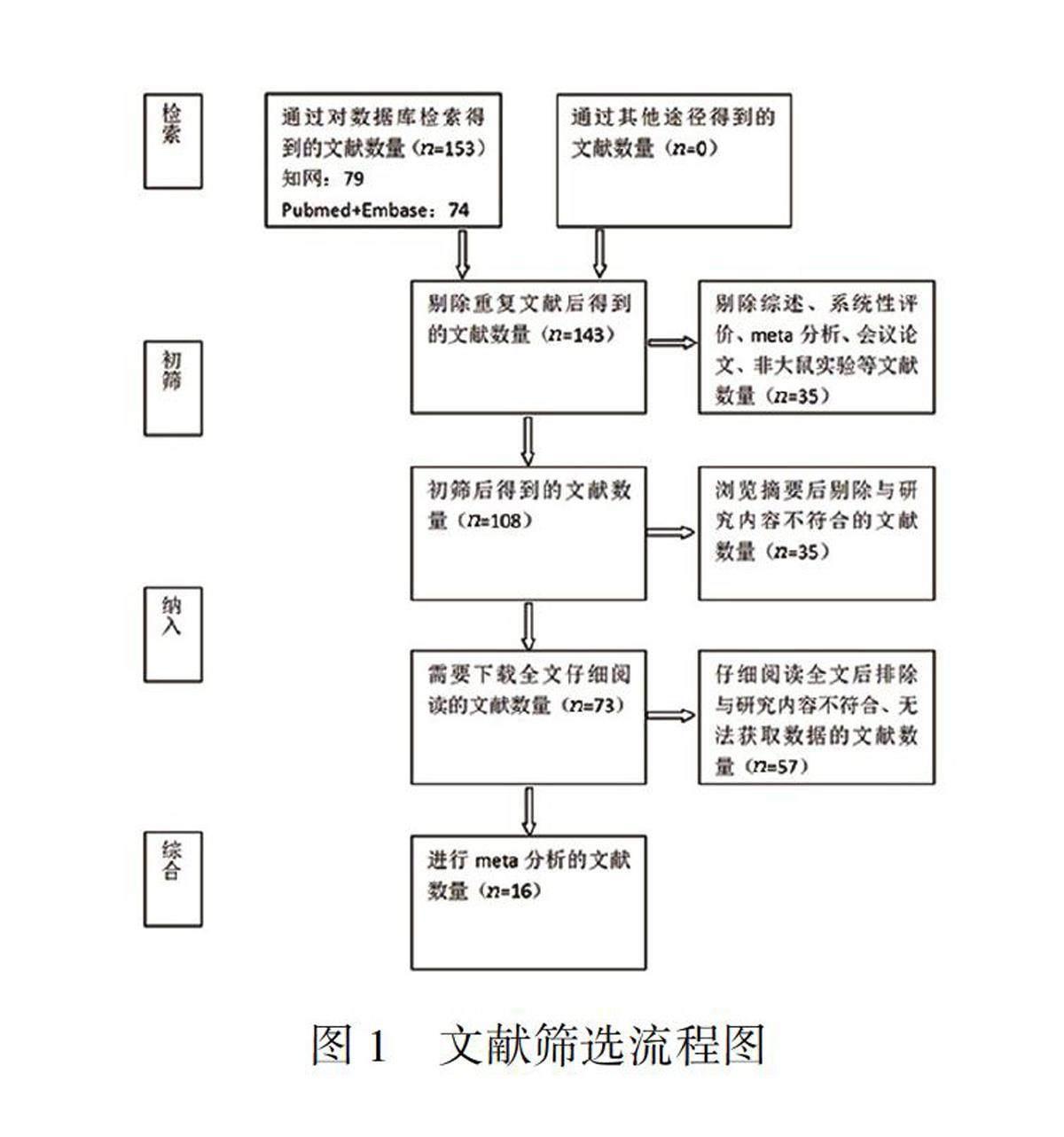
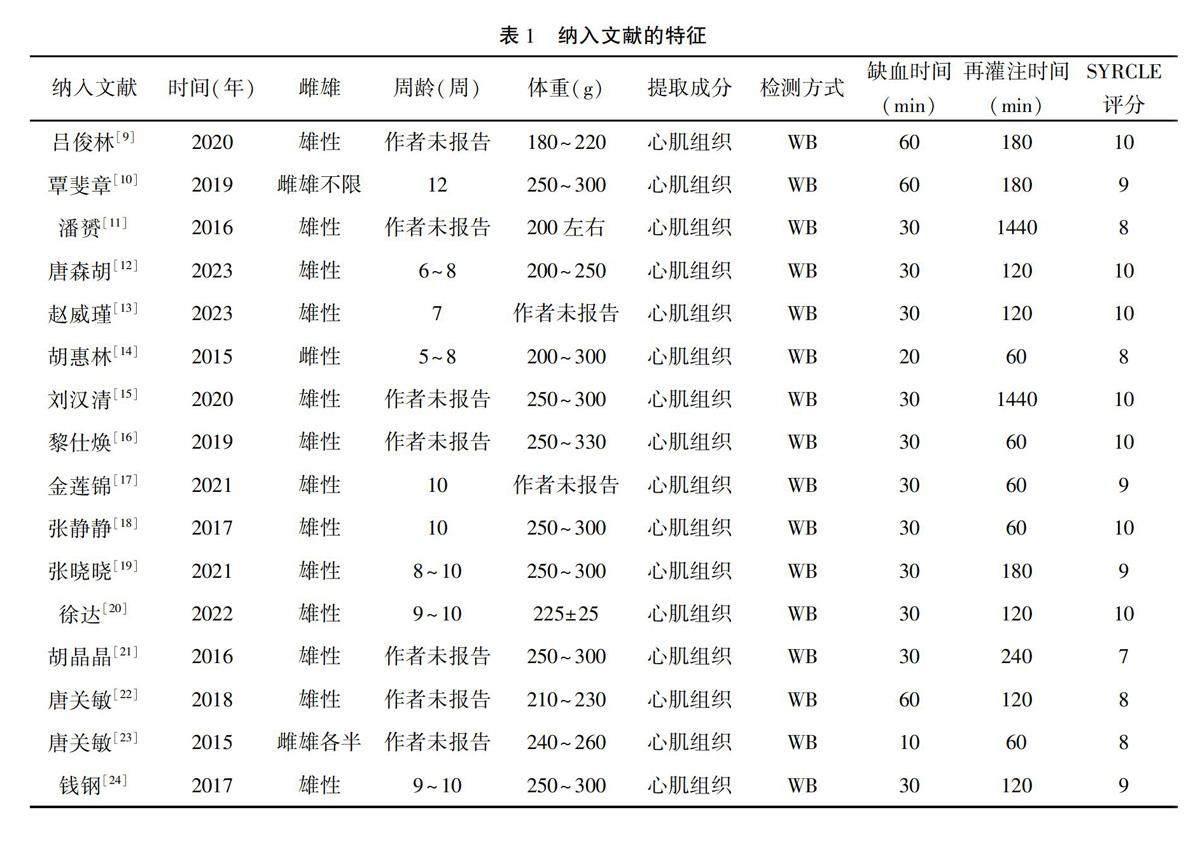
方法在PubMed、Embase及中國國家知識基礎設施(CNKI)數據庫檢索相關文章,最終共納入16篇文獻,從這些文章中提取假手術組、模型組、預處理組的樣本量、均數和標準差,采用SYRCLE動物實驗風險評估工具進行方法學質量評價,應用Stata12.0軟件進行Meta分析。
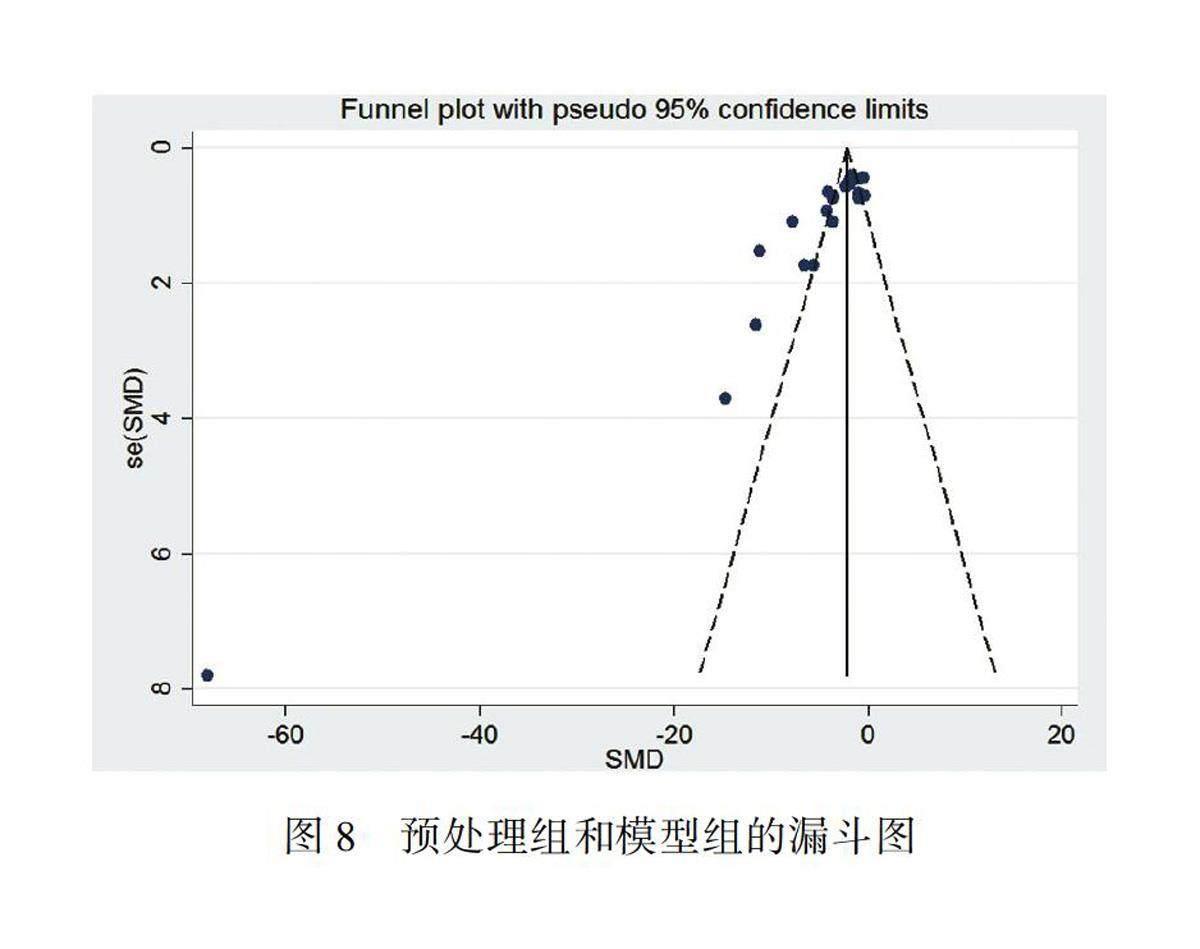
結果MIRI大鼠模型組HMGB1表達水平顯著高于假手術組(SMD=8.66,95%CI:6.49~10.82,P<0.001),MIRI大鼠預處理組HMGB1表達水平明顯低于模型組(SMD=-3.33,95%CI:-4.22~-2.44,P<0.001)。亞組分析表明,不同預處理方式可能導致異質性存在。敏感性分析顯示Meta分析結果可信度較高,而漏斗圖顯示存在發表偏倚。
結論MIRI大鼠HMGB1表達水平升高,通過治療可降低MIRI大鼠HMGB1表達水平。
【關鍵詞】心肌缺血再灌注損傷;高遷移率族蛋白B1;預處理;Meta分析
中圖分類號:R542.2文獻標志碼:ADOI:10.3969/j.issn.1003-1383.2024.05.012
ExpressionlevelsofHMGB1inratswithmyocardialischemia-reperfusioninjury:ameta-analysis
[HJ1*2][HJ]
CENTuan1,LIUYan1,HUANGZhaohe2
(1.DepartmentofCardiovascularMedicine,AffiliatedHospitalofYoujiangMedicalUniversityfor
Nationalities,Baise533000,Guangxi,China;2.GraduateSchool,YoujiangMedical
UniversityforNationalitiesGraduateSchool,Baise533000,Guangxi,China)
【Abstract】ObjectiveToconductameta-analysisontheexpressionlevelsofhighmobilitygroupbox1(HMGB1)inratswithmyocardialischemiareperfusioninjury(MIRI).
MethodsRelevantarticlesweresearchedinPubMed,EmbaseandChinaNationalKnowledgeInfrastructure(CNKI)databases,andatotalof16articleswerefinallyincluded.Samplesize,meanandstandarddeviationofshamoperationgroup,modelgroupandpretreatmentgroupwereextractedfromthesearticles.SYRCLEanimalexperimentriskassessmenttoolwasusedformethodologicalqualityevaluation,andStata12.0softwarewasusedformetaanalysis.
ResultsTheexpressionlevelsofHMGB1intheMIRIratmodelgroupweresignificantlyhigherthanthoseintheshamoperationgroup(SMD=8.66,95%CI:6.49-10.82,P<0.001).TheexpressionlevelsofHMGB1intheMIRIratpretreatmentgroupweresignificantlylowerthanthoseinthemodelgroup(SMD=-3.33,95%CI:-4.22to-2.44,P<0.001).Subgroupanalysisshowedthatdifferentpretreatmentmethodsmightleadtoheterogeneity.Sensitivityanalysisshowedthatmeta-analysisresultsweremorereliable,whilefunnelplotshowedaexistenceofpublicationbias.
ConclusionTheexpressionlevelsofHMGB1inMIRIratsareincreased,andtreatmentcanreducetheexpressionlevelsofHMGB1inMIRIrats.
【Keywords】myocardialischemiareperfusioninjury(MIRI);highmobilitygroupbox1(HMGB1);pretreatment;metaanalysis
據《中國2018年心血管病報告》[1],冠心病是全球范圍內導致死亡和殘疾的主要原因之一,而急性心肌梗死的患病率很高,心肌梗死已經成為世界性公共衛生問題。急性心肌梗死早期經皮冠狀動脈介入治療及藥物溶栓治療可恢復缺血區心肌組織血供,挽救瀕死心肌,減少心肌梗死面積,降低心衰發生率和住院病死率[2]。然而,心肌組織在缺血基礎上恢復血流后損傷并未修復反而加重,甚至發生不可逆的心肌損傷,這一過程稱為心肌缺血再灌注損傷(myocardialischemiareperfusioninjury,MIRI)。目前對MIRI的發生機制尚未完全明確,MIRI在心血管領域研究仍很熱門,國內外學者對MIRI的機理做了大量的研究,模擬這一損傷的進程。……
登錄APP查看全文
猜你喜歡
心腦血管病防治(2016年6期)2017-01-16 08:30:51
風濕病與關節炎(2016年12期)2017-01-14 19:45:07
中國當代醫藥(2016年29期)2017-01-03 22:56:14
中國醫藥導報(2016年30期)2016-12-28 16:48:40
中國醫藥導報(2016年29期)2016-12-27 16:28:02
中國醫藥導報(2016年29期)2016-12-27 13:05:04
現代商貿工業(2016年25期)2016-12-26 14:56:36
中外醫學研究(2016年26期)2016-11-30 02:38:27
云南中醫中藥雜志(2016年9期)2016-11-29 08:02:14
風濕病與關節炎(2016年10期)2016-11-23 07:06:16