虛擬現(xiàn)實技術(shù)在腦卒中康復(fù)的應(yīng)用
2017-11-15 21:40:16謝冬陽管華宗張國輝
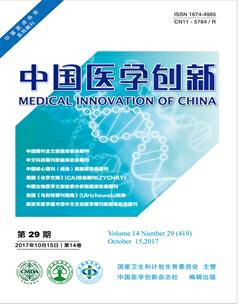
中國醫(yī)學(xué)創(chuàng)新
2017年29期
謝冬陽+管華宗+張國輝
【摘要】 本文旨在介紹虛擬現(xiàn)實技術(shù)在腦卒中后遺癥,包括認(rèn)知障礙、平衡功能障礙、步行功能障礙和上肢功能障礙康復(fù)中的應(yīng)用情況。通過綜述近十年來應(yīng)用虛擬現(xiàn)實技術(shù)于腦卒中后康復(fù)的研究,分析了虛擬現(xiàn)實技術(shù)的優(yōu)缺點,并對虛擬現(xiàn)實技術(shù)在康復(fù)醫(yī)學(xué)領(lǐng)域未來的發(fā)展前景進(jìn)行了展望。結(jié)果表明雖然虛擬現(xiàn)實技術(shù)應(yīng)用于康復(fù)臨床仍有值得進(jìn)一步研究的地方,但近年來的一些隨機對照臨床實驗研究表明,將虛擬現(xiàn)實技術(shù)應(yīng)用于腦卒中后的康復(fù)是有效的。
【關(guān)鍵詞】 虛擬現(xiàn)實; 腦卒中; 康復(fù)
【Abstract】 The aim of the review is to introduce the application of virtual reality(VR) technology on rehabilitation for stroke sequelae including cognitive impairment,balance dysfunction,walking dysfunction and upper limb dysfunction.Studies of VR application on stroke sequelae conducted over the past ten years were reviewed,compared with the traditional rehabilitation methods,analyzed the advantages and disadvantages of virtual reality technology and prospected the future development of virtual reality technology in the field of rehabilitation medicine.The few randomized controlled trials that have been completed show that some applications are effective on the rehabilitation for stroke patients by virtual reality technology although further study is needed.
【Key words】 Virtual reality; Stroke; Rehabilitation
First-authors address:Yueyang Hospital of Integrated Traditional Chinese and Western Medicine,Shanghai University of Traditional Chinese Medicine,Shanghai 200437,China
doi:10.3969/j.issn.1674-4985.2017.29.035
腦卒中(stroke)又稱腦中風(fēng)或腦血管意外(cerebrovascular accident,CVA),是指急性起病,由于腦局部血液循環(huán)障礙所導(dǎo)致的局限性或全功能障礙,癥狀持續(xù)時間至少達(dá)24 h或者引起死亡的臨床癥候群。我國流行病學(xué)資料顯示,腦卒中患者在人口死因順序中居第二位,全國每年新發(fā)腦卒中患者約200萬人,每年死于該病的患者約150萬人,存活的患者人數(shù)(600~700)萬,存活者中有70%以上有不同程度的功能障礙,其中40%為重度殘疾。腦卒中的具體臨床表現(xiàn)為認(rèn)知功能障礙、運動功能障礙、言語功能障礙、情感障礙和其他功能障礙等[1]。
虛擬現(xiàn)實(virtual reality,VR),是一種計算機仿真系統(tǒng),可以用來創(chuàng)建和體驗虛擬世界。VR概念最早是由美國的VPL公司創(chuàng)始人Jaron Lanier于1989年提出的,經(jīng)過將近30年的發(fā)展,VR已經(jīng)集合了仿真技術(shù)、計算機圖形學(xué)、多傳感技術(shù)、人工智能技術(shù)、網(wǎng)絡(luò)技術(shù)等多種計算機前沿技術(shù),具有現(xiàn)……
登錄APP查看全文
猜你喜歡
廣東醫(yī)科大學(xué)學(xué)報(2020年6期)2020-02-06 06:00:56
特別健康(2018年2期)2018-06-29 06:13:44
今日健康(2016年12期)2016-11-17 13:04:21
中國實用醫(yī)藥(2016年24期)2016-10-17 06:05:29
中國實用醫(yī)藥(2016年24期)2016-10-17 05:56:32
中國實用醫(yī)藥(2016年24期)2016-10-17 05:47:48
中國實用醫(yī)藥(2016年24期)2016-10-17 05:30:14
養(yǎng)生保健指南(2016年4期)2016-03-22 11:53:54
中國衛(wèi)生(2014年6期)2014-11-10 02:30:50
中國中醫(yī)藥現(xiàn)代遠(yuǎn)程教育(2014年23期)2014-03-01 04:33:45