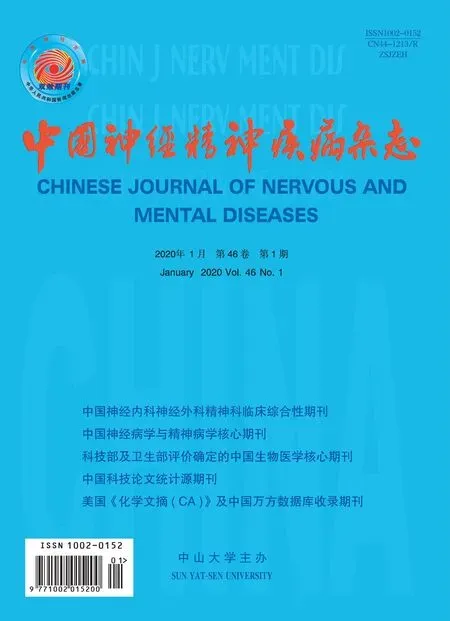
ICD-11精神、行為及神經(jīng)發(fā)育障礙分類主要變化☆
2020-01-11 14:42:10王善梅許允帥錢麗菊李功迎
中國(guó)神經(jīng)精神疾病雜志
2020年1期
王善梅許允帥 錢麗菊 李功迎
《國(guó)際疾病與相關(guān)健康問題統(tǒng)計(jì)分類》(International StatisticalClassification ofDiseasesand Related Health Problems,ICD),是在世界衛(wèi)生組織(WHO)的領(lǐng)導(dǎo)下由全球多個(gè)國(guó)家的研究中心共同起草的疾病分類標(biāo)準(zhǔn),旨在為不同醫(yī)療資源下的廣大醫(yī)務(wù)工作者在臨床診斷及治療方案選擇上提供有效的工具。2019年5月25日舉行的第72屆世界衛(wèi)生大會(huì)審議通過了第11次修訂版本 (ICD-11),并決定從2022年1月1日開始在全球范圍內(nèi)投入使用。與ICD-10相比,ICD-11中“精神、行為及神經(jīng)發(fā)育障礙”在疾病分類方面有較大變化。本文就ICD-11該部分分類主要變化進(jìn)行介紹,以增進(jìn)臨床工作者的理解。
1 ICD-11精神、行為及神經(jīng)發(fā)育障礙的整體變化
ICD-11關(guān)注疾病的分類,而非疾病的全面評(píng)估和治療。ICD-11與ICD-10相比,該部分拆分13類疾病,整合與重組3類疾病,新增3類疾病,刪除2節(jié)疾病。
ICD-11嘗試按照發(fā)育觀點(diǎn)對(duì)診斷分組進(jìn)行排序,其21種疾病分別是:神經(jīng)發(fā)育障礙(neurodevelopmental disorders),精神分裂癥與其他原發(fā)性精神病性障礙(schizophrenia or other primary psychotic disorders),緊張癥(catatonia),心境障礙(mood disorders),焦慮及恐懼相關(guān)障礙(anxiety and fear-related disorders),強(qiáng)迫及相關(guān)障礙(obsessive-compulsive or related disorders),應(yīng)激相關(guān)障礙(disorders specifically associated with stress),分離(dissociative disorders),喂食及進(jìn)食障礙(feeding or eating disorders),排泄障礙(elimination disorders),軀體痛苦和軀體體驗(yàn)障礙(disorders of bodily distressorbodily experience),物使用和成癮行為所致障礙 (disorder due to substance use and addictive behaviours),沖動(dòng)控制障礙(impulse control disorders),破壞性行為和反社會(huì)障礙(disruptive behaviour or dissocial disorders),人格障礙及相關(guān)人格特質(zhì)(personality disorders and related traits),性欲倒錯(cuò)障礙(paraphilic disorders),做作障礙(factitious disorders),神經(jīng)認(rèn)知障礙(neurocognitive disorders),未在他處歸類的妊娠、分娩及產(chǎn)褥期伴發(fā)精神及行為障礙(mental or behavioural disorders associated with pregnancy,childbirth and the puerperium,not elsewhere classified),在他處歸類的心理或行為因素影響的障礙或疾病 (psychological or behavioural factors affecting disorders or diseases classified elsewhere),與歸類于他處疾病相關(guān)的繼發(fā)性精神和行為綜合征(secondary mental or behavioural syndromes associated with disorders or diseases classified elsewhere)。
2 主要疾病診斷標(biāo)準(zhǔn)的變化
2.1 精神分裂……
登錄APP查看全文
猜你喜歡
初中生學(xué)習(xí)指導(dǎo)·提升版(2023年8期)2023-09-12 10:26:19
保健醫(yī)苑(2022年1期)2022-08-30 08:39:40
海峽姐妹(2020年9期)2021-01-04 01:35:44
VOGUE服飾與美容(2020年9期)2020-09-02 14:47:26
家庭醫(yī)學(xué)(下半月)(2020年2期)2020-05-11 02:07:18
基層中醫(yī)藥(2020年10期)2020-02-13 15:45:52
獸醫(yī)導(dǎo)刊(2016年6期)2016-05-17 03:50:35
山東青年(2016年1期)2016-02-28 14:25:25
當(dāng)代修辭學(xué)(2014年3期)2014-01-21 02:30:44
公務(wù)員文萃(2013年5期)2013-03-11 16:08:37