
修訂版PEP 五(下)Unit 4 When is Easter? Part A
2016-04-16 07:01:14王姣枝袁小燕
小學教學設計(英語) 2016年3期
王姣枝 袁小燕
教學過程
Step 1.Warm-up激趣熱身,有效鋪墊。
1.播放歌曲“The twelve months”,師生齊唱。
2.Greetings.
3.Brain storm:Say out the festivals quickly.教師利用多媒體,快閃有關節日的圖片,學生迅速反應。
4.Strongest brain:Listen and judge“Yes”or“No”.If you say “Yes”,please stand up.If you say “No”,please sit down.出示之前快閃的所有圖片,讓學生聽音判斷句子正誤。
For example:
1.China’s National Day is in October.
2.Christmasisin November.
...
8.Easter is in April.
復習關于復活節的相關活動和物品,張貼有關復活節兔子和籃子的卡片,將學生分為A,B兩大組,讓學生知道本節課的評價方式就是撿彩蛋,收獲多者為勝。
設計意圖:課前利用有關月份的英文歌曲渲染課堂氣氛,復習鞏固了12個月份單詞,由頭腦風暴過渡到節日單詞的學習,最強大腦游戲將節日單詞和月份單詞有機結合起來,既是對前期知識的復習鞏固,又是對本節課學習的一個有效鋪墊。快節奏的師生互動,生動有趣的評價方式,有效調動了課堂氣氛和學生的學習熱情。
Step 2.Presentation
1.文本建構:搭建語言支架
T:Please answer my questions.
How many months are there in a year?What’s your favourite month?
Ask some students to answer.Then let students guess.
What’s my(the teacher’s)favourite month?
If they can’t guess correctly.I’ll tell them.I like the month because of Mother’s Day.So they can say May.
T:Yes,I like May best because there are some special days in May.
出示五月日歷,讓學生帶著問題聽第一遍錄音,回答“What’s the first special day?
What’s the second special day?”將學生回答正確的圖片和文字同時展示出來;再帶著問題聽第二遍錄音并回答:When is May Day?When is Mother’s Day?在日歷上將學生的正確答案圈出來,在學生聽音回答之后,及時評價獎勵,將A,B兩組所得彩蛋放進各自籃子里。

看上圖,引導學生表達:
There are some special days in May.The first special day is May Day.It’s on May 1st.The second special day is Mother’s Day.It’s on May 10th this year.
給出語言支架,讓學生和著音樂練習chant。
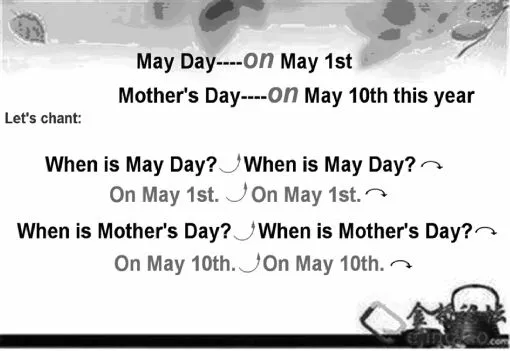
設計意圖:通過看五月的日歷聽音回答兩組問題,整體輸入文本支架,既在語境中理解了新詞“special days”,又突破了本課重點句型:When is...?It’s on...
2.文本重構:聚焦、內化文本核心
(1)進入書本P38最后一部分,讓學生看圖連線。請一名學生在課件上連線,集體訂正,然后讓學生根據文本內容,新編chant,教師及時給予評價獎勵。
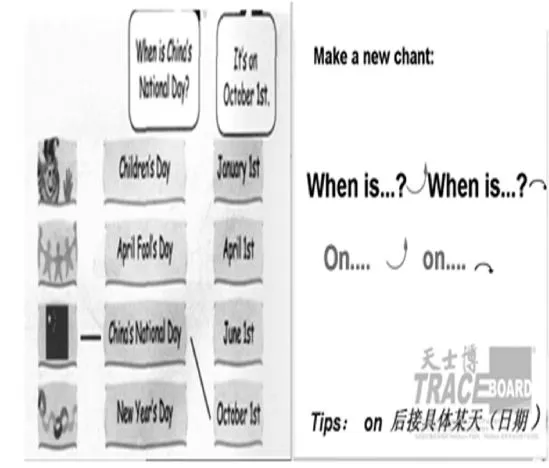
設計意圖:通過整合教材,進一步突破核心句型;通過新編chant,強化知識點,實現知識輸出。
(2)課件呈現 Let’s try 情境圖,問學生:
Who are they?Zhang Peng and Mr Jones.
What’s Zhang Peng doing?He is running.
Why is he running?Maybe he will have a sports meet.
When is the sports meet?
Let students listen and tick.Listen again and check the answers.
設計意圖:觀察情境圖,討論圖片內容,感知背景語言,為聽力學習做好鋪墊,并檢測聽力效果。
(3)通過 Let’s try 答案引出April,出示April的日歷。告訴學生:There are some special days in April.請一個學生在日歷上圈出“special days”。
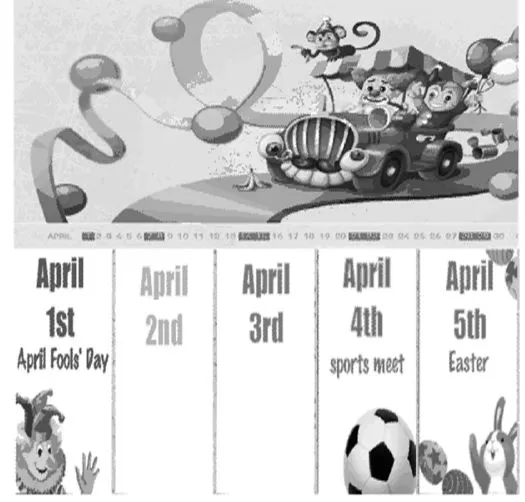
然后指著日歷問學生“When is April Fool’s Day?It’s on April 1st.When is Easter?It’s on April 5th this year.”,同時板書在黑板上的四線三格中。學生根據示范跟讀句型,在練習本上抄寫重點句型。
設計意圖:進一步感知理解“special days”,通過問、答、讀、寫突破本課核心句型:When is April Fool’s Day?It’s on April 1st.When is Easter?It’s on April 5th this year.
(4)播放 Let’s talk 錄音,讓學生聽錄音還原對話。
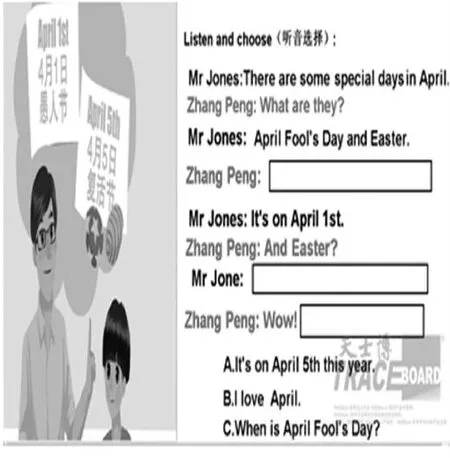
設計意圖:挖空文本重點句型,在聽力還原的過程中重構文本。
(5)T:Now let’s listen and repeat.Pay attention to the following tips.播放錄音兩遍,學生逐句跟讀,并出示朗讀技巧小提示。
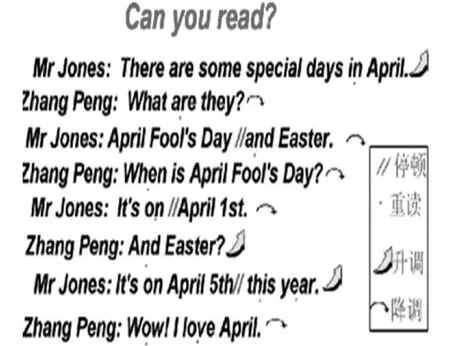
設計意圖:模仿跟讀,讓學生能夠按照意群和正確的語音、語調朗讀短文,突破本節課的重點。
(6)分角色朗讀課文。先觀看教學光盤分角色跟讀,然后學生分角色朗讀、表演,教師及時評價鼓勵。
設計意圖:分角色朗讀有利于還原對話,分角色表演體現了對話課教學的特點,幫助學生深入理解感受文本內容。
Step 3.Practice
1.文本創構:設置情境,輸出文本。
(1)課件呈現語言支架和三組圖片,先用一組作示范,然后讓學生根據圖片信息新編對話。全班認真傾聽,教師及時給予評價鼓勵。
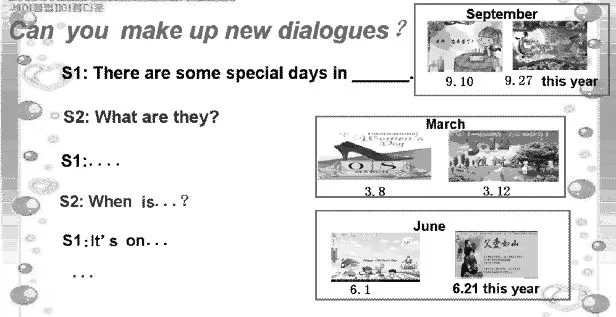
設計意圖:通過情境設置,為學生提供一個真實的語言輸出環境,讓學生有話可說,自然輸出,練習核心句型,自然習得語言。通過文本創構,達成整體輸出的目標。
(2)讓學生把新編的對話寫下來,在全班展示。
設計意圖:聽說讀寫目標全面達成。
Step 4.Sum-up
1.讓學生總結:What have you got in this class?
2.Homework:課后搜集一些特殊的節日單詞與相關知識,和同學談論:When is...?It’s on...
3.小組評比。
猜你喜歡
福建中學數學(2023年5期)2024-01-25 17:41:36
中學生數理化·中考版(2022年10期)2022-11-10 09:37:46
閱讀(快樂英語高年級)(2020年8期)2020-01-08 02:21:16
制造技術與機床(2019年10期)2019-10-26 02:48:08
電子制作(2018年18期)2018-11-14 01:48:06
智慧少年·故事叮當(2018年11期)2018-05-14 11:48:18
護士進修雜志(2017年3期)2017-02-14 07:19:35
小學生作文(中高年級適用)(2016年3期)2016-11-11 06:30:23
小學教學參考(2015年20期)2016-01-15 08:44:38
語文知識(2014年1期)2014-02-28 21:59:13
- 小學教學設計(英語)的其它文章
- time 應有的“家常味道”
——以譯林新版《英語》六(下)Unit 4 Road safety為例 - 與繪本,讓英語學習飛
——以冀教版《英語》(三起)三(下)Unit 1整合教研活動為例 - 學
——以譯林新版《英語》四(下)Unit 6 Whose dress is this?(Story time)為例 - 優化板塊教學設計激發學生學習興趣
——譯林新版《英語》四(下)Unit 6 Fun time &Cartoon time 磨課 - me 板塊的教學探索
——以譯林新版《英語》五(下)Unit 4 Seeing the doctor為例 - 譯林新版《英語》五(下)Unit 3 Asking the way(Story time)