產出導向法指導下的初中英語寫作教學實踐與思考
2022-04-29 22:19:22鐘潔
教育視界(外語教學) 2022年2期
*本文系南京市教學研究第十三期課題 “群文閱讀影響下的初中英語模塊教學的實踐研究”(課題編號:2019NJJK13-L33)的階段性研究成果。
【設計理念】
產出導向法提倡學用一體,利用輸出驅動、輸入促成、選擇學習和以評為學四個教學假設,創設以教師主動和師生共建為前提的教學流程。譯林版英語教材中每個單元以輸出任務為驅動,經過單元內容、語言和話語結構的輸入促成,最終通過Task板塊達成寫作輸出。在Task板塊教學中,教師可以利用產出導向法的“驅動—促成—評價”循環鏈設計教學,通過加強輸入性語言學習和產出性語言運用之間的聯系,克服寫作課中常見的學用分離問題,提高學生的寫作能力,進而提升學生語言能力、思維品質等學科核心素養。
【教學內容分析】
本節課的教學內容是譯林版初中英語八年級上冊Unit 5 Wild animals的Task板塊,主要任務是用英文完成一篇關于瀕危動物的報告。本單元屬于本冊教材的第二大模塊,該模塊主題為“Nature and the environment”,旨在通過帶領學生了解野生動物的習性與生存現狀,培養其保護野生動物、關心生態環境的意識。
本課以Task板塊中Simon撰寫的一篇關于熊的報告為示范案例,通過“Simon的寫前構思筆記”“依據寫前構思筆記完成的報告”和“同伴討論,自由創作”三部分內容幫助學生達成寫作目標。
【教學目標】
經過本節課的學習,學生能夠:
1. 利用寫前構思筆記整理思路,完成一篇關于瀕危動物的報告。
2. 理解構思要點的內部拓展以及要點之間的關聯,并用合適的語言形式進行報告類文體寫作。
3. 在了解瀕危動物的基礎上,思考保護野生動物與生態環境對人類社會生活的影響,進而增強環保責任意識。
【教學過程】
一、呈現任務,輸出驅動
驅動是產出導向法的首要環節,包括呈現交際場景、提出產出任務和學生嘗試產出,其目的是激發學生的產出欲望,調動學生的學習積極性。
上課伊始,教師呈現一些瀕危動物的圖片,引導學生討論其現狀。隨后,教師呈現寫作任務,利用輸出任務激發學生產出的欲望。師生對話如下:
師:There are many wild animals in danger. (出示瀕危動物圖片)Do you know them?
(學生討論瀕危動物現狀)
師:Wild Animals Club newsletter calls for reports on animals in danger. This will let more people know the animals situations and help save them. Can you write such a report to help? Do you know how to finish a report on animals in danger?
生:We need to introduce the animal, about its name, looks and living environment.
生:We can use some pictures to make the report vivid, but I think a report is difficult to write.
[設計意圖:單元初始板塊已經提出了產出驅動任務,但是距離本節課時間已久且交際場景不夠明確。因此,教師通過提問和復現瀕危動物的圖片,呈現本節課的交際場景,明確寫作任務,激發學生進行產出的積極性和主動性。]
二、分層指導,促成產出
促成環節是產出導向法的核心。教師需要引導學生選擇性學習書面語篇、視頻等輸入性材料,從中選擇產出任務所需的文章結構、語言和觀點。
(一)結構促成
為幫助學生學會使用筆記構思文章結構,教師呈現Simon為寫好一份瀕危動物報告而準備的構思筆記,引導學生掌握報告類文體常見的語篇結構。接著,教師引導學生評價筆記內容,分析報告中除了looks、food、abilities、qualities、danger,還能增加哪些要點。師生對話如下:
師:What do you find in Simons notes? How many parts are there?
生:There are 5 parts. They are looks, food, abilities, qualities and danger.
師:Whats the function of these points?
生:They can help Simon write a report.
師:Yes, maybe. Can you organize one paragraph about the first point — looks?
生:Bears are big and heavy. They have large bodies, short and strong legs. They also have large paws and short tails.
師:Excellent! You use the details to describe one point of the bears. Can you guess how many paragraphs are there in Simons report?
生:Five.
師:You are right. Each point can become an independent paragraph. What do you think of Simons notes? Are they perfect? If not, can we make them better?
生:I think we can add one more point, protection, and talk about what we can do to protect bears.
師:You can put this wonderful point into your own report.
[設計意圖:結構促成聚焦文章的邏輯結構和語篇意識。結構促成的訓練能夠幫助學生提升謀篇布局的能力。通過學習構思筆記的功能、組成部分等,學生能夠掌握構思筆記對于文章結構的規劃作用。在此基礎之上,教師倡導學生評價筆記內容,以評為學,培養學生獨立思考能力和批判性思維。]
(二)語言促成
教師引導學生根據構思筆記的內容,完成Simon的報告。接著,教師引導學生在語篇情境中理解和識記報告中的新單詞。最后,教師引導學生分析和評價報告中語言表達的邏輯性、連貫性、豐富性及說服力。師生對話如下:
師:Please help Simon finish his report with the information in the notes. There may be some new words. Have a guess of their meanings in the context.
(呈現單詞paw、tail、insect及相應圖片)
師:Its good to learn some new words about the bears. Now, please read Simons report carefully again, and find out the meaningful words and phrases that you like best. Lets begin with the first paragraph.
(學生細讀報告第一段)
生:I think the words are simple, but the writer talks about the bear in whole and then in details.
師:You mean the logic order — from general to specific?
生:Yes.
師:Actually this order makes a report very logical, which is very necessary when you are writing a report.
師:How about the second paragraph? Any word or phrase that you think is perfect?
(學生細讀報告第二段)
生:I think “but” is good. It tells us there are different kinds of bears and they like different things.
師:Yes. “But” is a very typical conjunction. It can compare or contrast two things and also make the writing cohesive. We should try to use some conjunctions in our writing.
師:Anything special in Paragraphs 3 and 4?
(學生細讀報告第三與第四段)
生:Simon uses “can do” “be good at” to talk about bears abilities.
師:Thats right. We can use different expressions to make our sentences more colourful. Any other expressions can you think of?
生:Be able to. Bears are able to run very fast.
師:In our daily learning, we can collect the synonyms so we will have more choices in writing. Many of you like the last paragraph best. Which word do you prefer?
(學生細讀報告最后一段)
生:Sadly, should, otherwise, there may be no left ...
師:What can you feel from these words?
生:The writers strong feelings and opinions.
師:Thats right. We can easily feel the writers emotions about the wild animals in danger. That makes the report more persuasive.
[設計意圖:語言促成的重點是引導學生關注具體的語言表達。詞、句的使用分析不能與文本割裂。教師通過提問、對比、評價等方式,引導學生在語篇情境中學習新單詞的意義及用法,賞析不同的語言表達,體會保護野生動物話題的報告類文體的語言特點。]
(三)觀點促成
寫作不僅要求語言準確,注重行文內在邏輯,還要體現思維含量,關注學生思維品質的培養。
教師通過之前鋪墊的新增觀點protection,鼓勵學生結合文本內容,整合本單元觀點,提出保護瀕危動物的具體行為人和相應做法。隨后,教師根據報告內容和動物愛護者為金絲猴發聲的一段留言,引導學生思考人類和自然的關系。師生對話如下:
師:Still in the last paragraph, the writer mentions that we should take action to stop this. Maybe we can think further and deeper in this direction. So, who will take action? What actions will they take?
生:The government can make more laws to protect bears.
生:Buyers should refuse to buy things from their fur or bodies.
生:We students can write more reports to tell others about the situation of bears.
師:Wonderful. Maybe you can think more and write them in your reports. Looking at the last sentence of the report, have you ever imagined the world without bears or other wild animals? What will the world without wild animals be like?
生:Humans will feel very lonely.
生:The world will not be colourful as now.
師:Thats right. Maybe we should hear more voices(出示為金絲猴發聲的動物愛護者留言).
師:What other thoughts do you get from the animal lovers words?
生:More animals are in danger too because of humans behaviours.
生:Humans will hurt themselves if they continue to kill or eat animals.
師:I like your ideas! Can you further explain them?
生:We should protect wild animals not only because they are in danger or may disappear, but also because protecting them is also protecting humans as well. We, the animals, the environment, are as a whole.
[設計意圖:觀點促成關注學生思維品質的培養。教師引導學生分析和揣摩文字和圖片中傳遞的信息、觀點、情感和態度,一方面培養學生“看”的技能,另一方面促進其發散思維,提出自己的觀點。]
三、以評促學,產出評價
評價旨在了解學生的任務完成情況,檢驗學生的學習成果,就疑難點和普遍出現的問題進行補救性教學,同時也為下一步教學方案的制訂和調整提供參考。
以動物愛護者的留言為鋪墊,教師播放《我們誕生在中國》紀錄片中金絲猴淘淘的一段英文視頻,鼓勵學生搜集、記錄并整理信息,依據筆記和本課所學知識,完成一篇關于金絲猴的報告。
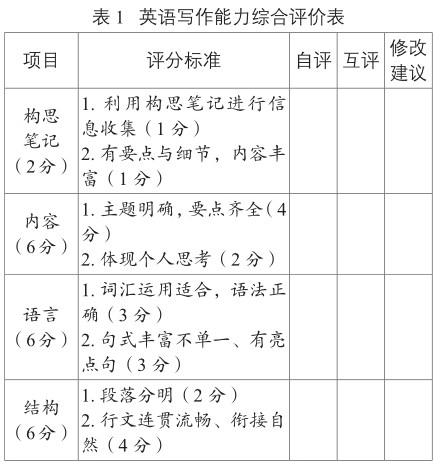
在產出任務展示階段,教師首先組織學生運用英語寫作能力綜合評價表(見表1),完成自評。接著,學生在小組內部交換作品,開展組內評價。每個小組選出一名代表,展示評價表,指出一篇習作的優缺點,并給出改進建議。教師根據學生的發言,就一些常見錯誤進行補救性教學,引導學生根據建議自主修改作文。最后,教師以一篇學生作品為例,從內容、語言和結構層面進行師生共評。
[ 設計意圖:《普通高中英語課程標準(2017年版2020年修訂)》提出,要突出學生在評價中的主體地位,提倡學生開展自評和互評,加強學生之間、師生之間評價信息的互動交流。運用綜合評價表進行自評與互評,既能檢測學生寫作任務的達成程度,又能促進學生互相交流學習,在同伴學習中取長補短,提升寫作能力。]
【教學反思】
一、精選材料,提升促成效果
寫作課實施產出導向法具有一定難度,其中促成環節的效率至關重要。時長控制不好,會縮短學生自主寫作時間,影響寫作產出;促成環節質量也將影響學生產出任務的質量。因此,教師要以教材文本為基礎,選取合適、精準的輸入性材料。例如,本課構思筆記能夠幫助學生掌握寫作結構,連詞、同義詞組的表達有助于學生理解語言形式等。同時,除了教材文本,教師也要拓展延續性的輸入材料。例如,為金絲猴發聲的動物愛護者的留言以及相關紀錄片為學生自主產出搭設了情境與素材的腳手架。
二、以評促學,關注學用一體
產出導向法提倡以評促學,主張在教師專業引領下,學生邊評邊學,邊學邊評,打破“學”與“評”的界限,將評價作為學習的強化、深入階段。以評促學,不應只停留在最后的評價階段,而應貫穿整節課。例如,在結構促成環節,教師有意識地引導學生評價Simon的構思筆記;在語言促成環節,教師以學生點評報告語言為主要形式,開展語言賞析活動。學生在評價中學習、分析與欣賞,思維品質與寫作綜合能力不斷提升。產出導向法倡導學用一體,輸入性學習和產出性運用緊密結合,兩者有機聯動。本節課促成階段的學習促使學生邊學邊評,為寫作產出服務,體現了學中用、用中學、學用結合的思想。
(鐘潔,江蘇省南京市第一中學初中部,郵編:210002)
猜你喜歡
石油瀝青(2021年4期)2021-10-14 08:50:44
文苑(2020年4期)2020-05-30 12:35:30
小學生作文(中高年級適用)(2018年3期)2018-04-18 01:24:47
南方人物周刊(2017年32期)2017-10-28 22:48:36
南風窗(2016年26期)2016-12-24 21:48:09
華北電力大學學報(社會科學版)(2016年4期)2016-12-01 03:59:30
南風窗(2015年22期)2015-09-10 07:22:44
少兒科學周刊·少年版(2015年4期)2015-07-07 21:11:17
南風窗(2015年7期)2015-04-03 01:21:48
中國教育技術裝備(2015年19期)2015-03-01 02:43:07