
人工智能大背景下的醫學圖像處理教學改革探討
2020-12-07 06:08:03韓貴來李海霞
計算機時代
2020年11期
韓貴來 李海霞
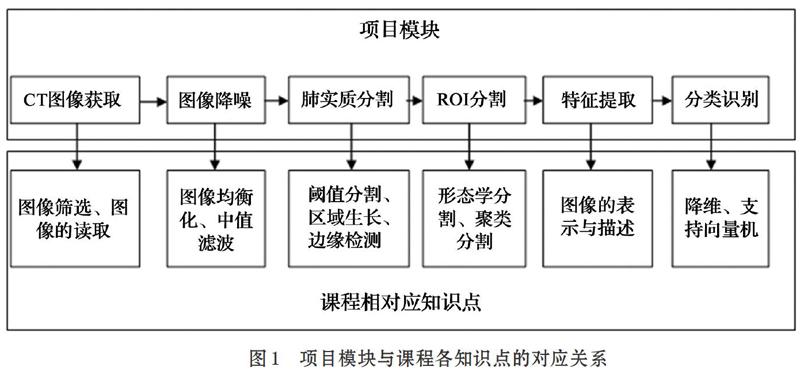
摘? 要: 為了更好地適應人工智能時代發展需求,在醫學圖像處理教學過程中融入人工智能內容。通過對傳統的醫學圖像處理教學內容知識進行重構,以項目開發的形式進行醫學圖像處理教學改革。實踐表明,融合人工智能技術的醫學圖像處理教學改革,更能充分調動起學生學習的積極性和主動性,使學生真正做到學有所用,學以致用。
關鍵詞: 醫學圖像處理; 人工智能; 教學改革; 項目開發
中圖分類號:G642.0? ? ? ? ? 文獻標識碼:A? ? ?文章編號:1006-8228(2020)11-117-03
Abstract: In order to better adapt to the needs of the development in the era of artificial intelligence, the content of artificial intelligence is integrated into the teaching process of medical image processing. Through the reconstruction of the traditional teaching content knowledge of medical image processing, the teaching reform of medical image processing is carried out in the form of project development. The practice shows that the teaching reform of medical image processing integrating artificial intelligence technology can fully arouse the enthusiasm and initiative of students, truly achieve that what they learned is useful and their learning is for the practice.
Key words: medical image processing; artificial intelligence; teaching reform; project development
0 引言
人工智能技術快速發展,已經從研究領域進入到應用層面。醫學人工智能作為一個重要的細分領域, 正逐步在醫療領域發揮重要作用。2017年7月,國務院印發了《新一代人工智能發展規劃》,提出要發展智慧醫療,實現醫學影像識別、病理分型和智能診斷等。到2020年,我國醫學影像市場規模將達到7000億元。隨著采集的醫學影像數據量越來越大,如今醫院往往缺乏足夠的讀片人員,因此,對于能夠快速處理影像數據的人工智能技術需求十分巨大。人工智能用于影像處理具有多項優勢。
首先,人工智能可以大批量快速地處理影像數據。只要計算能力夠大,人工智能便可以一次性處理大量影像數據。更重要的是,人工智能不會感到疲勞,只要機器正常,可以連續24小時不停地工作。而醫生工作時間過長就會產生疲勞,從而增加漏診和誤診的概率。
其次,人工智能判斷更加客觀、準確。微軟2014年提出的ResNet 深度學習網絡最深高達152 層,利用殘差的思想將ImageNet大規模圖像分類競賽的Top-5錯誤率降到了3.57%[1]。……
登錄APP查看全文
猜你喜歡
西安航空學院學報(2022年2期)2022-07-04 07:45:42
IT經理世界(2018年20期)2018-10-24 02:38:24
小康(2017年16期)2017-06-07 09:00:59
成才之路(2016年25期)2016-10-08 10:03:04
成才之路(2016年25期)2016-10-08 10:00:36
成才之路(2016年25期)2016-10-08 09:51:08
科技視界(2016年20期)2016-09-29 12:59:03
科技視界(2016年20期)2016-09-29 11:20:38
科技視界(2016年20期)2016-09-29 11:16:19
南風窗(2016年19期)2016-09-21 16:51:29
