Unit 6 Do you like bananas? Section A 1a—2c教學設計及評析
2018-07-25 17:39:46楊柳王志君
黑龍江教育·中學 2018年5期
楊柳 王志君
一、教材內容分析
本單元主要圍繞“談論對食物的喜好”這一交際功能展開,并以like為例,進一步學習實義動詞在一般現在時中的用法。Section A 部分主要讓學生使用動詞like詢問他人是否喜歡某種食物,學習一般現在時第一人稱和第二人稱的肯定句、否定句和一般疑問句的構成以及回答。在學習一些食物名稱時,讓學生初步了解可數名詞、不可數名詞的概念,并進一步歸納、總結名詞復數的構成規律和用法。1a-1c呈現了本單元核心詞匯和句型A: Do you like...? B: Yes, I do./ No, I dont.并讓學生嘗試運用該句型與同伴就彼此的飲食喜好進行問答。2a-2c部分繼續圍繞“準備生日派對”這一話題,進行聽說教學。聽力中呈現出like第一人稱的肯定句I like...和否定句 I dont like...
本節課是一節聽說課。
二、教學目標
1.語言知識目標
①學習有關食物的詞匯: banana, hamburger, tomato, ice-cream, salad,strawberry, pear, milk, bread.
②掌握以下知識目標:Do you like bananas? Yes I, do./No, I dont./ I like bananas./ I dont like bananas.
2.語言技能目標
①聽力技巧指導,聽關鍵詞,快速記錄;
②學會使用動詞like詢問他人是否喜歡某種食物。
3.情感態度
通過學習一些中西方典型食品,學生了解中西方飲食文化差異;通過談論飲食喜好,學生養成良好的飲食習慣。
三、教學重、難點
教學重點:熟練掌握有關食物的詞匯和詢問他人喜好的句式。
教學難點:正確使用表示食物的可數名詞、不可數名詞和既可數又不可數名詞。可數食物名詞的詞形變化,歸納可數名詞變復數的構成規律和讀音。
四、教學步驟
Step 1 Lead-in
T: I want to have a birthday party.I have many things for you.Now, look at the picture, do you know them? Do you like bananas? OK, today lets learn the new lesson Unit 6 Do you like bananas? Section A 1a-2c. (Write “Unit 6 Do you like bananas? Section A 1a-2c” on the blackboard.)
Step 2 New words
1.Present the new words.
T: Whats the picture about?
S1: Food.
T: What are they? Lets learn the new words.(Show pictures to teach the names of the food such as “banana, hamburger, tomato,ice-cream, salad, strawberry, pear, milk, bread.”)
2.Read the new words together.
3.Say the English words according to the Chinese meaning.
設計意圖:教師以要開生日派對為話題,導入關于對食物喜好這一新課并通過展示圖片,讓學生直觀地學習核心詞匯,學生學習的積極性被調動起來,全面參與,共同進步。
Step 3 Grammar
1. Countable nouns
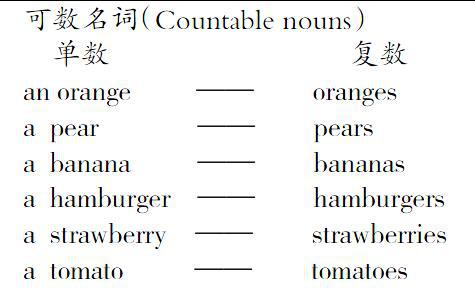
T: Look at these words(an orange, a pear, a banana, a hamburger, a strawberry, a tomato), we can find out they are “an or a” , so they are countable nouns.We can change them into plural forms.Look!
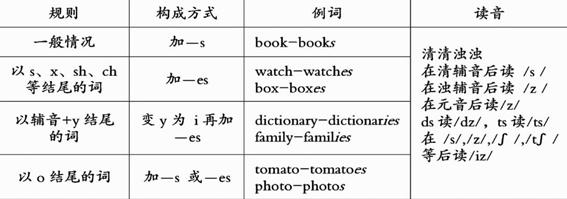
2.Rules for changing the singular forms into plural forms.
T: Now let me teach you the rules for changing the singular forms into plural forms.
名詞變復數的部分規則如下:
T: Read after me, pay attention to the pronunciation of the plural forms.
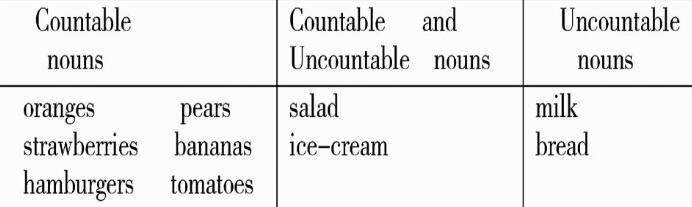
3.Countable nouns and Uncountable nouns.
T: Fill in the blanks using the new words about the food.
Which words are countable nouns? Which are uncountable?
And which are countable and uncountable?
設計意圖:通過學習食物名詞,學生能區分這些有關食物的名詞是可數名詞、不可數名詞,還是既可數又不可數名詞,并掌握可數名詞變復數的變化規律及復數名詞的讀音。
Step 4 New drills
1.Present the new drills.
T: (Show bananas in front of the class.) I like bananas.Do you like bananas?
S1: Yes, I do./ No, I dont.
(Write down the sentence structure on the blackboard.)
2.Practice the drills.
T: Now ask and answer, practice the sentence structure.
S1: Do you like...?
S2: Yes, I do./ No, I dont.
設計意圖:通過展示香蕉實物,老師介紹喜歡的食物—香蕉,引起學生的興趣,然后操練新句型,提醒學生like后面的名詞是可數名詞的復數形式或不可數名詞,同時呈現食物圖片與句型,逐一練習,以此突破重點句式。
Step 5 1a Match the words with letters
T: Open your books.Match the words with the letters.(First look at the new words, say out the Chinese meanings of these words.Then look at the pictures of these food in the book, say out the English words.)
設計意圖:通過書上圖片,學生能看圖說單詞,并能看單詞說出食物名稱,鞏固新學詞匯。
Step 6 1b Listening
T: I have three friends, do you want to know what they like and dislike ?Look at 1b.Listen and number the conversations.(After listening, ask students to read the conversations together.Let students pay attention to the tones of these sentences.)
設計意圖:通過聽力練習,鞏固所學句型。通過跟讀聽力,提醒學生讀三組對話時的音調。
Step 7 1c Practice
T: Work in pairs.Practice the conversations and make your own conversations.
Model: S1: Do you like pears?
S2: Yes, I do./ No, I dont.
設計意圖:根據表情符號,準確判斷出對食物的喜好,操練鞏固所學句型。
Step 8 New drills
1.Present the new drills.
T: I have an orange now, do you like oranges?
S: Yes, I do.Do you like oranges?
T: No, I dont.I dont like oranges.I like strawberries.(Write down the sentence structure “I like.../ I dont like ...” on the blackboard.)
2.Practice.
T: Look at the screen, tell me your likes and dislikes.
I like...
I dont like...
設計意圖:教師以橙子為例與學生進行對話,以此導出新句型I dont like.../ I like...,并提醒學生like 后面接可數名詞復數形式或不可數名詞,攻克教學難點。
Step 9 2a, 2b listening
T: I want to invite my friends to my birthday party, well what do they like? Listen and circle the food you hear.(Listen again.Fill in the blanks and check the answers.)
T: Role play the conversations.Boys and girls work in two groups.
設計意圖:通過前面的訓練,學生應該對所學的生詞很敏感,聽力練習要求聽出關鍵詞。在播放聽力后,要求學生能迅速準確寫出這些單詞,此活動幫助學生鞏固所學單詞。男女生分角色讀對話后,教授lets句式。
Step 10 Group work
T: Do you want to come to my birthday party? Now work in groups with the new drills.Let me know what you like and dislike, then Ill buy them for you.
設計意圖:通過小組練習,培養學生的合作意識,鼓勵他們可創造性編寫對話,進一步鞏固本節課所學句型和核心詞匯。
Step 11 Summary
1.Vocabulary about food.
2.Likes and dislikes.
T: At last ,give you a saying “An apple a day keeps doctor away.” We should have a good eating habit to keep healthy.
Homework.
Write down what you like and dislike.
板書設計:
Unit 6 Do you like bananas? Section A 1a-2c
四、教學評析
1.創設情境,自然導入
七年級學生活潑好動,且善于接受新事物。因此,為了激發學生對英語課堂內容的興趣,老師利用一張全是食物的大圖片,引發所有學生思考“都有什么好吃的”,然后,把英語單詞同實物或情景直接聯系起來,增強語言的真實性、形象感,易于調動和保持學生的學習興趣。
2.情境貫穿,詞句滲入
對于英語學習初級階段的學生來說,教師采用直觀教學的方式,使其一開始就把實物與英語直接聯系起來,獲得一個直觀印象。利用兩張圖片(一張圖是一個蘋果,另一張圖是多個蘋果)來呈現名詞單復數變化,讓抽象的語法知識點變得既客觀具體又貼近學生的生活。在教授新知識的過程中,繼續以“開生日派對”為活動情境,并通過表情符號表現出對食物的喜好,從而理解I like...和 I dont like... 的表達句式,通俗易懂,并能記憶深刻。
3.一聽一說,鞏固深入
學中有練,練中有學,新授與鞏固融為一體。聽力語料的主題內容承載著重點語言知識。聽力前的活動能使學生感知聽力課文中出現的新語言知識,如核心詞匯、句型,所以在學習聽力活動會產生障礙的詞匯及必要的語言知識后,按整節課開生日派對這一情境設計問題,通過聽力訓練,聽出關鍵詞,快速記錄下來,鞏固所學核心詞匯。
引導學生積極主動地模仿聽力材料——模仿著去讀、模仿著去說。通過模仿使學生進入英語學習的最佳狀態并獲取英語課程的基本知識。本堂課以小組表演、角色朗讀形式強化鞏固所學句式,pair work 展示表演鍛煉了學生的膽量,激勵學生敢于在大眾面前開口說話,克服心理障礙,提高語言交際能力,培養學生合作探究式學習。
見習編輯/李夢迪
猜你喜歡
中華胰腺病雜志(2021年1期)2021-02-26 11:28:36
山東醫藥(2020年34期)2020-12-09 01:22:24
甘肅教育(2020年14期)2020-09-11 07:57:50
中華胰腺病雜志(2019年4期)2019-08-29 08:52:20
作文世界(小學版)(2018年4期)2018-10-16 17:13:34
東方教育(2017年19期)2017-12-05 15:14:48
唐山文學(2016年2期)2017-01-15 14:03:59
快樂作文·低年級(2016年12期)2017-01-03 20:52:44
快樂作文·低年級(2016年6期)2016-06-24 18:58:40
體育師友(2013年6期)2013-03-11 18:52:18