初中英語語言材料的有效性輸入設計初探
2017-07-27 07:50:52陳惠燕
中學課程輔導·教學研究 2017年16期
關鍵詞:初中英語
陳惠燕
摘要:語言的輸入是輸出的前提,初中英語教學可以從語言材料的有效性輸入著手,設置真實的語境,結合模塊話題,巧妙設計教學,做到語言材料的輸入有效、高效,進而提高初中英語教學的實效性。本文從課文教學中語言材料的輸入入手,結合教學實例闡述了基于話題模塊的語言材料的有效性輸入。
關鍵詞:初中英語;語境;有效性輸入
中圖分類號:G632.0 文獻標識碼:A 文章編號:1992-7711(2017)06-0032
一、問題的提出
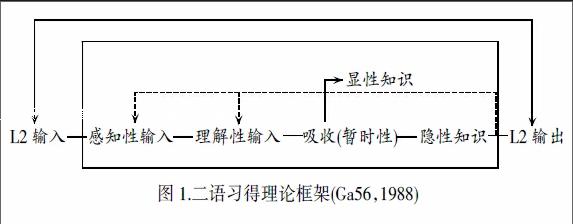
初中英語的教學過程包含英語語言材料的輸入和輸出兩個過程。語言材料的輸入與輸出在語言學習和交際中相輔相成、相互促進。Krashen(1985)的輸入理論認為:輸入是語言習得的根本途徑[1]。Ellis(1994)里提到Gass所提出的理論框架,該框架對二語習得的過程做了一個概括性的說明,如下圖所示:
可見,語言的習得過程是“輸入——吸收——輸出”的過程,輸入是輸出的必要前提。
語言材料的輸入除了有利于培養學生的語感,提高學生對語言運用的靈敏度和準確性,還具有幫助學生積累一些有用的語言素材的作用。然而許多初中英語教師在組織課堂教學的過程中,只重視對語言知識的傳授,忽視了學生對語言的感受性學習和對有用語言素材的積累。由于教師對教學中語言材料輸入不夠重視,導致了諸如學生記不住單詞,英語語言表達能力較低等教學問題。筆者認為教師可以從設置真實的語境,結合模塊話題著手,巧妙設計教學,提高初中英語教學語言輸入的實效性。
二、基于話題模塊的有效性輸入設計
1. 明確語言目標
首先,教師在設計語言輸入活動前必須明確語言輸入的目標。以人教版初中英語七年級下冊Unit5 Im watching TV為例,教師需明確本單元的功能目標是用現在進行時談論人們正在做什么,話題是日常活動。要讓學生談論日常活動,教師需先向學生輸入相關日常活動的詞匯,如:Studying: be doing (ones) homework , be reading (a book) ; Entertainment: be watching TV , be playing computer games ; Sports: be playing soccer ; be swimming 等。除此之外,教師還需讓學生熟悉相關的句型,如,What are you doing ? , Im watching TV .Whats he/she doing? He/She is doing homework.等。
筆者認為,只有教師本身清楚要向學生輸入什么,才能根據目標去設計輸入活動,也只有這樣設計出來的輸入活動才是有效的。
2. 設置真實語境
初中英語的教學缺乏自然習得英語的環境,而語言又需發生在一定的情境中。所以,教師在設計語言輸入活動時,應該設置真實的語言輸入環境,使學生身臨其境,讓學生感知具體的形象,進行感受性的學習。仍然以人教版初中英語七年級下冊Unit5 Im watching TV為例,本單元涉及到新的語法結構——現在進行時,筆者在向學生輸入相關句型時,會設置如下教學步驟:
(The teacher holds a basketball in his hand )
T : Whats this?
S1: Its a basketball.
T : Can you play basketball? (Maybe some students cannot answer the question, teacher may give them smile and encouragement.)
S2: Yes, I can.
(Give the basketball to the student)
T : So, please play basketball for us? (Students may be shy, teacher should try to give them courage . When the student is playing basketball, the teacher asks)
T : Whats he doing? (Give students 2 seconds to think over , students may not answer the question, since its a new sentence. Then teacher give the answer)
T : He is playing basketball. (Pay attention to the pronunciation of“is doing”and “is playing basketball”)
Using other things that prepared by the teacher to practice the sentences again and again.
在這個教學過程中,筆者所設計的輸入活動使學生在一定的真實語境中去感受現在進行時的基本句型,利于學生的感受性學習。
3. 優化雙邊活動
通過之前真實語境的設置,學生對詞匯和句型有了基本的感性認識,在接下來的教學過程中,教師可以通過聽力和閱讀的訓練對學生進行反復的刺激,不斷加深他們對語言材料的印象。筆者仍以人教版初中英語七年級下冊Unit5 Im watching TV為例,談談聽和讀兩個輸入環節中雙邊活動的優化設計問題。
(1)聽力的設計
運用聽的技能來辨別和理解話語。聽的訓練可以結合特定語境練習。以人教版初中英語七年級下冊Unit5 Im watching TV (2a-2b)的聽力教學為例,筆者從聽前、聽中、聽后入手,設計了如下教學步驟:
① Pre-listening.
Before listening, ask students to look at the two questions in activity 2a.
Q1: What is Steve doing?
Q2: Does Steve want to go to the movies?
T: The conversation is talking about what Steve is doing. And from question 1, we know you may give the answer like “...” (Try to help students to give the pattern)
S1: We may answer the question 1 like “ He is + Ving”
T: Clever boy. And what about question 2. We know that there will be two kinds of answers, right?
S2: Yes.
T: And what are they?
S3: They are “Yes, he does.” and “No, he doesnt”
在聽前,教師引導學生預設答案,并告訴學生聽力的主題,幫助學生提前構建聽力框架,對聽力的理解起到一定的作用。
② While-listening.
Activity 1
Play the tape for the first time and ask students to listen only.
Play the tape for the second time and ask students to answer the two questions of activity 2a.
Give students 2 minutes to discuss their answers in pair.
Ask two students to write their answers on the blackboard.
Activity 2
Show the following paragraph, play the tape again and ask students to listen and fill in the blanks.
Jack: Hello, Steve.
Steve: Hi, Jack.
Jack: What (1) you (2) , Steve?
Steve: Im (3) TV.
Jack: Do you want to go to the (4) ?
Steve: That (5) good. This TV show is boring.
Students may not fill in all the blanks for the first time, so teacher may play the tape again.
Walk around the class and give them help if necessary.
Encourage some students to write their answers on the blackboard.
在聽中,教師適時的對課本材料做了整合,活動一的設置讓學生帶著問題聽,這樣學生聽的時候就有針對性,有的放矢聽。同時在核對答案環節,采用了小組活動的形式進行討論,培養學生的合作精神。活動二的設置,讓學生聽力填空,利于學生通篇理解聽力材料,捕捉關鍵詞。
③Post-listening
Play the tape and ask students to repeat the conversation above. Teacher can play the tape sentence by sentence and ask the students to repeat one by one.
聽后的跟讀可以讓學生進一步熟悉聽力材料,培養學生的語感。
(2)閱讀的設計
運用閱讀的技能來辨認文字符號,理解文字的意義。閱讀訓練除了可以是針對課文的有聲閱讀訓練,包括邊聽課文錄音、邊看文字、邊理解詞句意義等,還可以運用選擇、填充、補充、判斷和推理等形式對材料進行處理。
現仍以人教版初中英語七年級下冊Unit5 Im watching TV (3a)的閱讀教學為例,筆者從讀前,讀中,讀后入手,設計了如下教學步驟:
①Pre-reading
T: Before reading the passage, please look at the four pictures in activity 3a. The boy in the first picture is Mike. And what is he doing?
S1: He is playing basketball.
T: Quite good. Youre a clever boy. Now look at picture 2, who is the girl? What is she doing? And what about picture 3 and picture 4. Try to guess.
Divide students into four groups and give them three minutes to discuss with their partners.
Walk around the class and remind students to guess the answer in case they should read the text to find the answer.
T: OK. Times up. Now what are your answers?
Try to encourage several groups to show their opinions.
T: Wow,your answers are all excellent. Now lets begin to read the text and find out who is correct.
閱讀前,教師引導學生觀察課文的插圖,做出適當的預測,通過閱讀前的預測,學生鞏固了本單元的現在進行時的句型:He is + Ving ; She is + Ving . 有助于學生對文章的初步理解,讓學生帶著疑問進行進一步的閱讀,激發他們的求知欲,為讀中任務的完成做鋪墊。
②While-reading
Activity 1: Skimming.
T: Now boys and girls, you have five minutes to read the text, and after reading, try to get the main idea of it.
A. Its a letter about Mikes four pictures.
B. Its a letter about Lindas four pictures.
C. Its a letter about Ginas four pictures.
這個教學活動意在培養學生快速閱讀的能力。教師設置較為簡單的問題,學生通過快速閱讀得以完成,于此同時,略讀又可以訓練學生快速獲取文章主要信息的能力,利于提高學生的閱讀速度。
Activity 2: Careful Reading.
T: Now you have 10minutes to read the passage and try to choose the correct answers of these questions. OK, begin.
1. The letter is from
A. Linda. B. Mike. C. Gina.
2. Where is Mike playing basketball?
A. At school. B. At home. C. At the pool
3. Who is Linda?
A. She is Mikes sister.
B. She is Mikes pen pal.
C. She is Ginas pen pal.
4. Whats Gina doing?
A. She is playing basketball.
B. She is swimming.
C. She is doing her homework.
Ask several students to show their answers.
T: Now read the letter again and number the pictures in the right order.
Walk around and give the help if necessary.
T: So after reading the letter, you have the answers to the questions before reading that you have guessed, right?
細讀是讀者通過仔細閱讀文章細節,接受、記憶、分析閱讀材料的閱讀方法。學生通過細讀,從文章找到某一特定的信息,從而更進一步理解文章。
③ Post-reading
Read the passage and ask students to repeat.
Give students 5minutes to read the letter by themselves.(Give help if necessary)
Encourage several to read it out.
在讀后的任務設計中,先讓學生跟讀然后朗讀。筆者在設計一些情節較為生動的閱讀材料時,經常讓學生分角色朗讀文章,培養學生在朗讀中發掘文章深度的能力。
三、反思與體會
通過上述分析和論述,教師在設計有效的輸入活動時應該做到明確語言目標、設置真實語境、優化雙邊活動。除此之外,筆者認為,教師在設計聽和讀有效性活動時還應注意以下幾點:
首先,是教師在對學生進行聽力訓練時,不僅要將聽力原文和答案教給學生,更要教會學生聽力技巧,授之以漁,教學生如何理解聽力內容。
其次,是教師要有意識地增加學生的文化背景知識,提高學生對閱讀和聽力材料的文化背景的預設能力。
再者,是指導學生進行課外的泛聽,由于課時有限,教師應該指導學生選擇合適的聽力材料,提高學生聽力技能。幫助學生選擇難度適中的課外閱讀材料,使其有一定的量的積累。
最后,是在設置Post-reading 任務時,模仿性的寫作是很好的任務設計。如人教版初中英語七年級下冊Unit5 Im watching TV (3a)的閱讀教學中,筆者會在讀后任務中讓學生完成3b的寫作任務。
總之,語言的輸入是輸出的必要前提。初中英語教學過程中語言輸入活動的設計,要圍繞英語課程標準的要求,設置一定的真實語境,結合不同的聽的訓練和讀的訓練,由易到難,由機械到靈活,幫助學生積累豐富的語言材料,培養他們聽的技能和讀的技能,從而促進其說和寫能力的提高。
參考文獻:
[1] Krashen S. The Input Hypothesis : Issues and Implications[M].NY:Longman. 1985.
[2] Rod Ellis. The Study of Second Language Acquisition[M] .Oxford University Press. 1994.
[3] 全玉梅,林雪玲,何閩娥,楊延從,楊鵬輝. 廈門市初中新課程英語學科教學指導意見(試行).2010
[4] 教育部.英語課程標準(實驗稿)[S].北京:北京師范大學出版社,2001.
[5] 廖傳風.語境與語境教學法[J].外語界,2000(4).
[6] 胡壯麟,朱永生,張德錄.系統功能語法概論[M].長沙:湖南教育出版社,1987.
(作者單位:福建省廈門市巷西中學 361000)
猜你喜歡
校園英語·月末(2022年3期)2022-05-10 11:13:01
甘肅教育(2020年18期)2020-10-28 09:07:08
甘肅教育(2020年2期)2020-09-11 08:01:42
甘肅教育(2020年2期)2020-09-11 08:00:38
甘肅教育(2020年21期)2020-04-13 08:08:44
云南教育·中學教師(2019年10期)2019-08-13 07:18:14
瘋狂英語·新策略(2017年7期)2018-01-03 06:51:20
學周刊(2016年23期)2016-09-08 08:57:34
散文百家(2014年11期)2014-08-21 07:16:54
散文百家(2014年11期)2014-08-21 07:16:08