基于AHP—FCE模型的不同類型蔬菜經營主體風險綜合評價
2016-01-08 09:14:30于潔喬立娟王文青王芹
湖北農業科學
2015年23期
關鍵詞:層次分析法
于潔 喬立娟 王文青 王芹
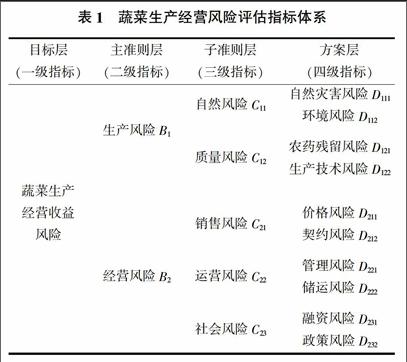
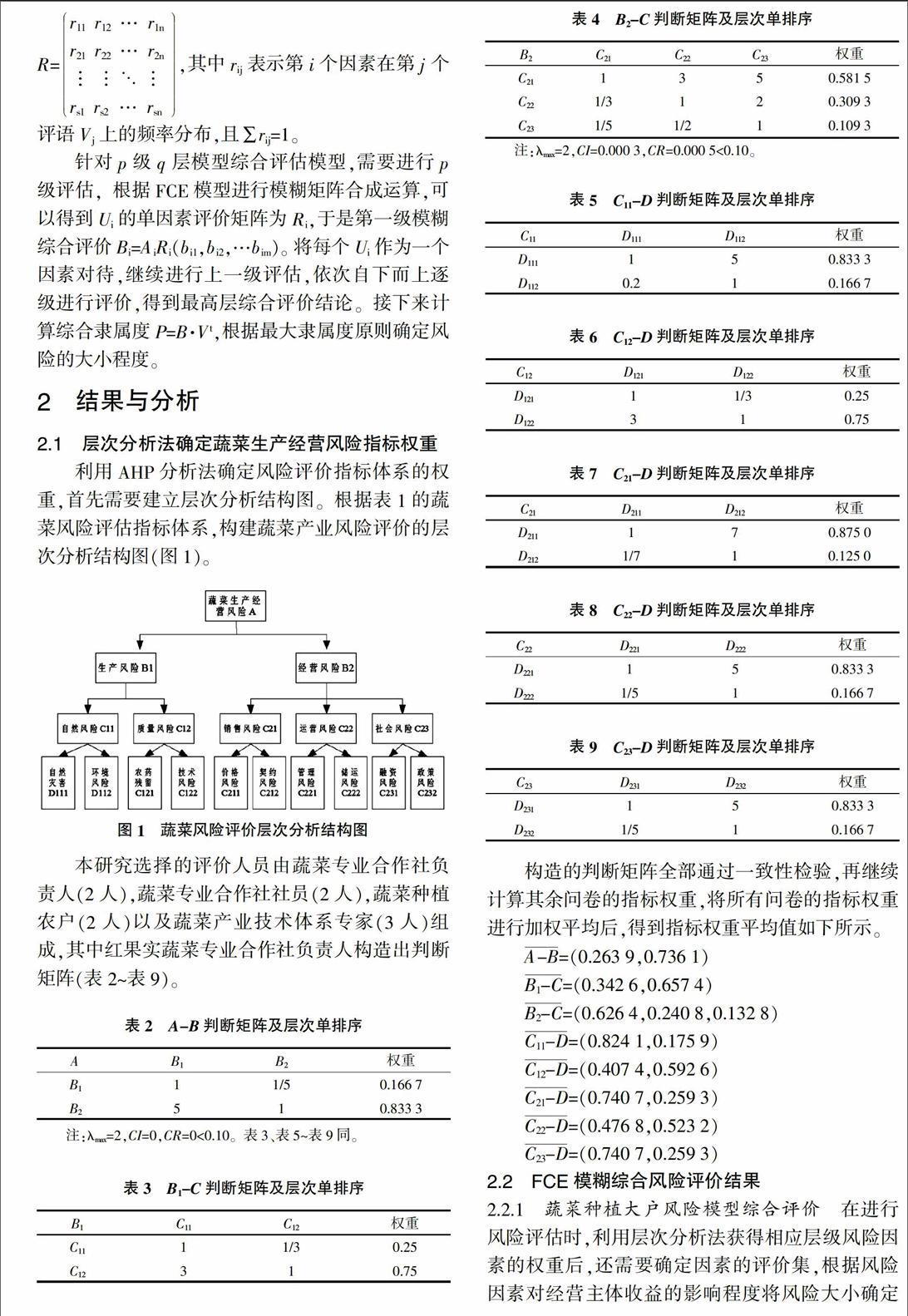
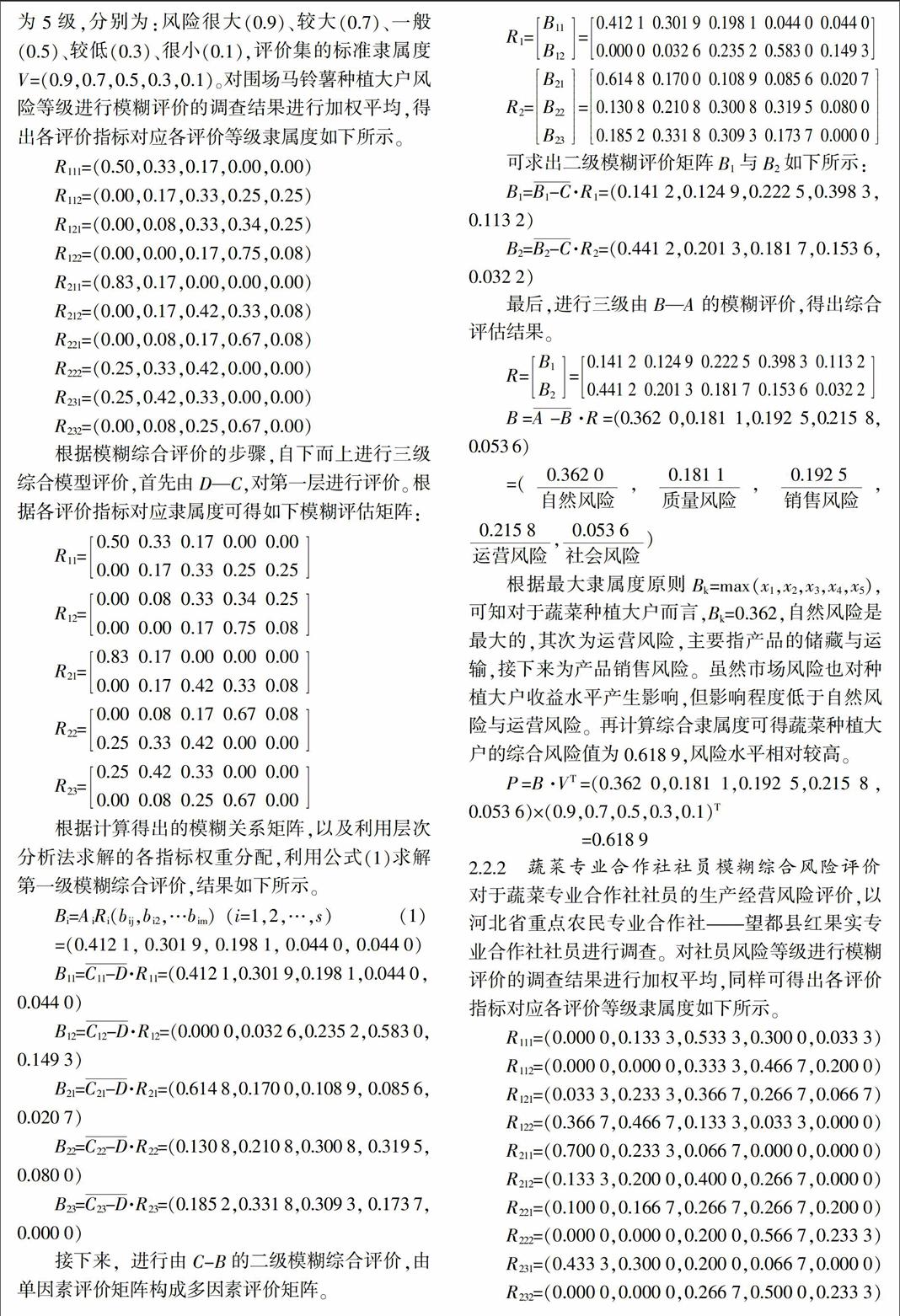
摘要:在實地調查基礎上,選擇蔬菜家庭種植戶、種植大戶以及專業合作社作為研究對象,采用AHP—FCE方法構建二級三層模糊綜合評價模型,對生產經營中的自然風險、質量風險、銷售風險、經營風險、社會風險水平進行估計。模型估計結果表明,從風險管理角度出發,蔬菜產業生產經營主體組織模式中,蔬菜專業合作社組織形式更有利于風險的控制與管理。
關鍵詞:蔬菜經營主體;風險評價;層次分析法;模糊綜合評價模型
中圖分類號:F304 ? ? ? ?文獻標識碼:A ? ? ? ?文章編號:0439-8114(2015)23-6096-06
DOI:10.14088/j.cnki.issn0439-8114.2015.23.075
Risk Assessment of Different Types of Vegetables Operators Based on AHP-FCE Model
YU Jiea,QIAO Li-juanb,WANG Wen-qingb,WANG Qinc
(Agricultural University of Hebei, a.School of Business; b.College of Trade & Economics; c.Library, Baoding 071001, Hebei, China)
Abstract: On the basis of field survey, a fuzzy comprehensive evaluation model was constructed by using the AHP-FCE method. Choosing vegetable family farmers, planting large, professional cooperatives as the research object, this paper evaluated the natural risk, quality risk, marketing risk, management risk, social risk in vegetables production and operation. The results indicate that vegetables professional cooperative organization is more advantageous to risk control and management than other management subject organization mode in vegetable industry.
Key words:vegetables operators;risk assessment;analytic hierarchy process;fuzzy comprehensive evaluation model
蔬菜產業是重要的民生產業,對促進農民增收,提高國民生活質量具有重要的戰略意義。1998年,中國農業部提出建設“菜籃子工程”,2011年蔬菜產量超過糧食成為中國第一大農產品,人均年蔬菜占有量達到480 kg[1]。為了滿足消費者對蔬菜品質、種類與數量的要求,中國各蔬菜主產區相繼建立蔬菜生產基地。蔬菜產業示范園區進行蔬菜專業化與規模化種植。與此同時,蔬菜專業合作社、蔬菜種植企業、蔬菜種植大戶、家庭農場等新型規模化經營主體的迅速發展,提高了蔬菜產業化水平[2]。對于蔬菜產業而言,由于生產經營過程中風險的復雜性與多樣性,受蔬菜種植成本上升、自然災害頻發、市場價格波動幅度增大、深加工落后、產品標準化程度低等因素制約,蔬菜經營主體面臨市場風險、自然災害風險、生產技術風險、物流風險以及儲藏風險等多種風險因素,影響蔬菜產業可持續發展[3]。……
登錄APP查看全文
猜你喜歡
價值工程(2016年31期)2016-12-03 23:13:03
中國市場(2016年41期)2016-11-28 05:25:17
中國市場(2016年40期)2016-11-28 03:26:35
現代經濟信息(2016年25期)2016-11-24 08:26:52
中小企業管理與科技·下旬刊(2016年11期)2016-11-18 08:42:46
大學教育(2016年11期)2016-11-16 20:27:55
價值工程(2016年29期)2016-11-14 01:02:43
企業技術開發·中旬刊(2016年10期)2016-11-12 16:51:06
現代經濟信息(2016年19期)2016-10-20 20:58:28
中國市場(2016年35期)2016-10-19 02:03:21