茅臺(tái):恰如其分的醉
2015-12-16 10:34:16孫曄
國際人才交流 2015年8期
文、譯/孫曄
茅臺(tái):恰如其分的醉
If you're tipsy you're at the tipping point
文、譯/孫曄
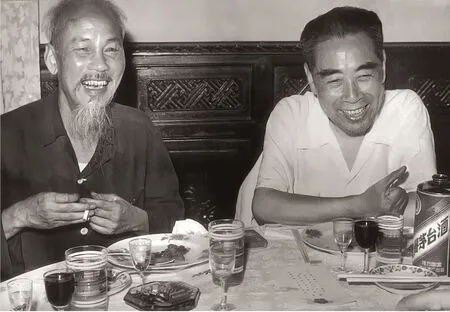
周恩來總理用茅臺(tái)酒宴請(qǐng)中外嘉賓
每年的農(nóng)歷九月初九,位于貴州茅臺(tái)鎮(zhèn)的茅臺(tái)酒廠都會(huì)舉行祭祀典禮來紀(jì)念白酒界的先輩和那些傳承了數(shù)千年的釀造工藝,這對(duì)茅臺(tái)人而言是最神圣而莊嚴(yán)的儀式。
Refined techniques and expert tasters produce liquor’s distinctive flavor
用茅臺(tái)人的話來說,尊重?cái)?shù)千年延綿下來的傳統(tǒng),或許是茅臺(tái)酒能長(zhǎng)盛不衰的一個(gè)重要原因吧。
Why travel for hours for a 30-minute ritual at a distillery hundreds of kilometers from Guiyang, capital city of Guizhou province?
At Kweichow Moutai, China’s most recognized liquor producer,the annual worship ceremony that falls at 9 am on the ninth day of September by the lunar calendar is considered paramount.
10月的茅臺(tái)鎮(zhèn)總是飄著綿綿細(xì)雨,空氣中伴著茅臺(tái)那醉人的酒香,祭祀儀式開始,人們用三項(xiàng)儀式來祭奠古老的釀酒先輩。
祭壇上滿滿地?cái)[放著紅高粱、小麥等釀造茅臺(tái)酒的主要原料,釀酒師們認(rèn)為只有用最樸質(zhì)的釀酒材料才能表達(dá)他們對(duì)先輩的崇敬和感激。
By honoring the traditions that go back thousands of years, company officials say, one may finally uncover the secret to the enduring fame of this type of baijiu, or white liquor.
伴著祭文吟唱的聲音,好似釀酒先輩們?cè)谑稣f和叮囑著后輩在傳承釀酒精髓的同時(shí)不要忘記開拓和創(chuàng)新。兩千多人在祭酒儀式上三叩首,感謝上蒼對(duì)茅臺(tái)的恩賜,承諾會(huì)保持優(yōu)良的釀酒傳統(tǒng),使茅臺(tái)繼續(xù)香飄萬里。
On this rainy late October morning in the town, also named Moutai, three rounds of sacrifices were made to liquor-making ancestors. Sorghum and wheat, as well as clean water the basic ingredients of Moutai making were offered. Tall incense sticks were lighted. Orations that promised the ancestors to keep the traditions going were chanted. Finally, 2,000 participants attending the ritual bowed three times to the gods that traditionally are believed to help produce Moutai.
被稱為國酒的茅臺(tái)以其獨(dú)有的釀造工藝和深厚的歷史積淀在市場(chǎng)上受到人們的追捧。 茅臺(tái)酒所采用的最原始的方式進(jìn)行原料添加,對(duì)于人力的要求是非常高的。成堆的高粱要通過人工灑熱水進(jìn)行潤料,隨后工人要用鏟子不斷翻拌,制酒工人必須在兩小時(shí)內(nèi)完成6噸糧食的第一次翻拌,然后每隔一段時(shí)間進(jìn)行一次翻拌,重復(fù)數(shù)次之后進(jìn)入下一道工序,將高粱和小麥酵母混合放進(jìn)地窖發(fā)酵坑中,通過高溫堆積發(fā)酵,漸漸形成茅臺(tái)酒的特殊芳香物,也就是人們常說的醬香。
A bottle of 500 milliliter standard Moutai sells for 1,099 yuan ($180; 145 euros). In 2013, 17,000 tons of the liquor was sold, and revenue was 40.2 billion yuan.
茅臺(tái)酒廠的專業(yè)品酒師鄧青青表示,單單針對(duì)茅臺(tái)酒芳香味的品鑒就足以作篇學(xué)術(shù)論文,可見想要用幾個(gè)詞簡(jiǎn)簡(jiǎn)單單地描述清楚茅臺(tái)酒的芳香是很困難的。人們說的醬香不過是對(duì)茅臺(tái)酒的獨(dú)特香味的概述,想要品鑒出茅臺(tái)酒中蘊(yùn)藏的其他的芳香就因人而異,你可以從中品出菠蘿亦或是梅子的芳香。根據(jù)個(gè)人的記憶中味道的不同,會(huì)品出不一樣的茅臺(tái),但無論你品出的是蘋果的芳香還是其他芳香,那都是茅臺(tái)最真實(shí)的芳香。茅臺(tái)不僅是醬香型白酒的典范,也是白酒的鼻祖。
茅臺(tái)的基酒制作工藝也是別具匠心的,9次蒸煮、8次發(fā)酵、7次取酒就好像經(jīng)歷重重磨礪,每一次磨礪都能得到不一樣的味道,最終才能制成獨(dú)特的茅臺(tái)酒。茅臺(tái)的基酒要經(jīng)過至少3年的土陶缸窖藏,才能進(jìn)行勾兌調(diào)味,作為釀造茅臺(tái)的技術(shù)核心,勾兌調(diào)味完全依靠茅臺(tái)在白酒釀造工藝上的經(jīng)驗(yàn)積累,是茅臺(tái)品酒師舌尖上的舞蹈。
我們都知道每一個(gè)土陶缸中裝的茅臺(tái)基酒都是不一樣的,它們之間或多或少總是存在細(xì)微的差別,但是所有經(jīng)過勾兌調(diào)味的基本都能形成茅臺(tái)醬香統(tǒng)一的標(biāo)志性的味道。
And Moutai, also billed as the national liquor of China, has its timehonored craft and history to thank, officials say.
The seasonal steps of adding ingredients involve a lot of manual labor. Sorghum lying in piles is soaked with hot water by hand. Barefoot workers then constantly aerate the piles with shovels, they spend two hours of aeration for every six tons of grain, officials say.
The grains are allowed to rest and then go through this several times until the next stage, where they are put in dungeon-like fermentation pits with wheat-originated yeast and gradually acquire their famous sauce aroma scent.
Subtle scents, from pineapple to preserved plum, are woven into the liquor, and some come out more than others, depending on the taster. But according to Deng Qingqing, a certified baijiu-taster and manager of a workshop at Moutai, the sauce smell cannot be pinned down in scientific terms. It is all about recognizing the integral, complex scent that is Moutai and comparing it with one’s own experience, Deng says.
“Where one might detect a whiff of apple fragrance, another may remember it as something else, but both will be able to tell real Moutai from others.”
The distilling is done in seven steps, each time separating a batch of base liquor that assumes its own flavor. Three years after aging in clay pots, they are ready for blending. This step, easily the most intriguing part of Moutai production, relies almost entirely on experts’palates.
Each clay pot of base liquor has its own nuanced aroma from individual procedures such as the hand-turning, but blending will merge them to form the signature Moutai fragrance and taste. It is a taste that company officials say has no standardized formula.
“We are still studying the ingredients of Moutai.” says Ji, the 76-yearold chairman.
So it is the blenders, relying on their sensitivity and experience, whoproduce a consistent stream of Moutai despite variations in batches.
“在茅臺(tái)工作期間,我已經(jīng)喝了將近兩噸的茅臺(tái)酒。”已經(jīng)76歲的季克良表示,到現(xiàn)在他們都還在研究茅臺(tái)酒,想要完全解開茅臺(tái)芳香的密碼。
菜肴年年味不同,而茅臺(tái)卻能依靠勾兌師的經(jīng)驗(yàn)和敏感度保持著優(yōu)良的口感體驗(yàn),給飲酒人品質(zhì)如一的保證。經(jīng)得起時(shí)間的錘煉的精湛釀酒工藝是茅臺(tái)可以脫穎而出并成功從萬國博覽會(huì)上攬得金獎(jiǎng)享譽(yù)中外的原因。
讓茅臺(tái)人可以津津樂道的故事簡(jiǎn)直是汗牛充棟。
20世紀(jì)30年代紅軍長(zhǎng)征經(jīng)過茅臺(tái)鎮(zhèn),感受到了茅臺(tái)的魅力,溫暖了艱難時(shí)期長(zhǎng)征的中國軍人的心,振奮了軍隊(duì)的士氣。中國白酒文化博物館的導(dǎo)游林穎說:“茅臺(tái)酒對(duì)鼓舞長(zhǎng)征紅軍的士氣起到了關(guān)鍵的作用。”
1949年10月1日新中國成立,舉國歡慶的日子,這樣的日子怎能少了酒,而茅臺(tái)就是放在國宴上的那瓶酒。1971年中國重返聯(lián)合國合法席位,作為宴會(huì)用酒的茅臺(tái)“見證”了那激動(dòng)人心的時(shí)刻。1972年美國總統(tǒng)尼克松訪華,拉開了中美建交的新篇章,時(shí)任總理周恩來用茅臺(tái)招待了尼克松。(至今茅臺(tái)酒廠主樓前還豎立著周恩來的塑像,他是國酒茅臺(tái)之父)。
葡萄酒獨(dú)特細(xì)致的品酒方式不適用于茅臺(tái)這樣的烈性白酒。
白酒也有屬于自己的獨(dú)特品鑒方法,對(duì)于那些想要更進(jìn)一步細(xì)細(xì)品味白酒的人而言,茅臺(tái)酒廠專業(yè)品酒師鄧青青給出的建議或許值得參考。
她通過一瓶陳年茅臺(tái)(它的年限是保密的)演示了如何品鑒茅臺(tái),這同時(shí)也是辨別真假茅臺(tái)酒的方法。
第一步是觀其色,真正優(yōu)質(zhì)的茅臺(tái)會(huì)有明顯的掛杯痕跡,且似絲綢一般,透明清澈,隨著酒年限的增加,會(huì)呈現(xiàn)一絲絲啤酒色。
第二步是聞其味,茅臺(tái)有標(biāo)志性的醬香,雖然每個(gè)人感受到的氣味不盡相同,但茅臺(tái)的醬香卻是沁人心脾,讓人心情舒暢的。
最后就是嘗其味。讓茅臺(tái)輕輕地布滿你的舌頭,感受到茅臺(tái)豐富的味道,舌尖上的甘甜,舌苔兩側(cè)的微酸,以及舌根的絲苦。絲滑的茅臺(tái)進(jìn)入喉嚨,有經(jīng)驗(yàn)的喝酒人在入喉后就知道酒的度數(shù)(53度)。
真正的茅臺(tái)喝了之后不會(huì)上頭,即便是飲用大量的茅臺(tái),醉酒反應(yīng)也很快會(huì)消失。但是最好按個(gè)人的量走,喝到似醉非醉的點(diǎn)是最好的。
That time-honored method is part of the reason why Moutai stands out, officials say, including at the 1915 Panama-Pacific Exposition, where it won a gold medal and first made its name abroad.
There are other stories that people at people like to tell.
Like the healing, warming power Moutai had on the Red Army when it passed through Moutai town and took the liquor with them during their arduous mid-1930s Long March, a journey pivotal to the army’s survival.
“They used it to cure the wounds, and warm up and boost their spirits in very hard times,” says Lin Ying, a guide at the local Museum of the Culture of Chinese Liquor. “Moutai invigorated them.”
The drink was on the banquet table on the night of Oct 1, 1949, on the founding of the People’s Republic of China. It was taken to New York to the United Nations for the celebratory occasion when China joined the international body in 1971. Late premier Zhou Enlai entertained former US president Richard Nixon with the liquor during the latter’s crucial 1972 visit. (A statue of Zhou now stands in the front of Moutai’s main building.)
The meticulous tasting techniques used for fine wines do not apply to Moutai, a hard liquor made to be downed in shots from tiny cups.
But there are ways to appreciate this strong drink for those wishing to study it more closely, and they are also useful if you are trying to distinguish the authentic Kweichow Moutai from others. Certified baijiu taster Deng Qingqing, from the company, offers some tips for savoring the drink, using a bottle of “old”Moutai (whose exact age is kept confidential) for demonstration. First, Deng says, observe the liquid in the cup. Real Moutai should adhere a little to the cup’s side and have a slightly oily look. A watery look is not good. Real Moutai should be clear, acquiring a little tinge of beer-like gold as the years pass.
Then sniff the liquid for the signature “sauce aroma”. Though the exact nature of the Moutai scent often differs for different tasters, the fragrance should be pleasant and clean.
Savor Moutai by spreading a thin layer on the tongue. Moutai should demonstrate a complex combination of flavors, bringing a small sweet sensation to the tip of the tongue, tartness to the sides and a little bitterness at the back of the tongue. The liquor should go down smoothly. Also, a seasoned drinker should be able to distinguish the strength of the alcohol (53 percent) at this stage.
It is best to drink moderately and responsibly, not exceeding the point of slight tipsiness, a euphoric stage that drinkers consider the best thing about Moutai.
國際游客“偏愛”中國3大城市
Three Chinese Cities Become Popular Travel Destinations
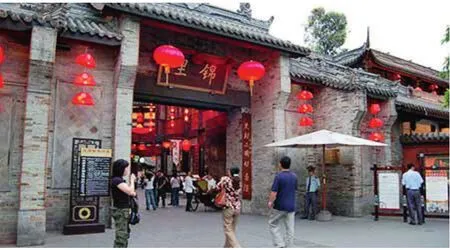
美國萬事達(dá)卡最新發(fā)布世界旅行目的地指數(shù)研究顯示,2009年至2015年,中國的成都、西安和臺(tái)北三大城市接待的國際游客人次大幅增長(zhǎng),并在全球增速排行榜上分別排名第二、第六和第七。報(bào)告顯示,受益于近年來城市吸引的大量投資,成都近年來接待的入境游客人次增長(zhǎng)迅猛,今年入境游客人次將從2009年的48萬猛增至149萬,增長(zhǎng)速度全球第二,僅次于斯里蘭卡首都科倫坡。
MasterCard has released their Global Destination Cities Index ranking popular travel destinations, showing that three Chinese cities have shot up the list in terms of international tourist numbers.Specifically, Chengdu, Xi’an and Taipei each ranked at second, sixth, and seventh places on the index in terms of international tourists received from 2009-2015. The report showed that Chengdu made an especially huge leap. The city, having benefited from receiving a large amount of investments, went from attracting just 480,000 tourists in 2009 to getting 1.49 million in 2015. It ranked second only to Colombo, Sri Lanka.
外國人在北京、上海購物可離境退稅
Tax-Free Shopping Available for Beijing and Shanghai Departures

2015年7月1日起,北京市和上海市開始實(shí)施離境退稅政策。北京和上海也成為境外旅客購物離境退稅政策擴(kuò)圍的首批實(shí)施城市。在此之前,中國僅在海南試點(diǎn)這一政策。退稅物品的退稅率為11%。換句話說,如果境外旅客在退稅商店買了1000元的退稅物品,理論上可以拿到110元的退稅款。
Beijing and Shanghai began to implement a tax refund policy for departing international visitors on July 1, becoming the second and third places in China to have such a policy. The tax deduction rate stipulated by the new policy will equate to 11%. In other words, if international visitors make a purchase worth 1000 RMB, they can theoretically receive up to a 110 RMB discount in tax reductions.
外國人在京購房流程簡(jiǎn)化
House Purchasing Made Easier for Foreigners in Beijing

境外個(gè)人在北京購房,可以不用再提交紙質(zhì)的《境外個(gè)人在境內(nèi)居留狀況證明》,市住建委和市公安局將對(duì)境外人員的購房資格進(jìn)行聯(lián)網(wǎng)審核。按照國家的相關(guān)政策,此前,境外個(gè)人(不含港澳臺(tái)居民和華僑)在境內(nèi)購房,要在境內(nèi)工作超過一年。因此,在購房時(shí),需要提交相應(yīng)的居留證明。北京則需要提供紙質(zhì)版的《境外個(gè)人在境內(nèi)居留狀況證明》。這次變化與境外人員購房資格標(biāo)準(zhǔn)沒有任何關(guān)系,其實(shí)就是實(shí)際操作中,居留狀況已經(jīng)實(shí)現(xiàn)了聯(lián)網(wǎng)審查,所以本著方便辦事人的原則,取消了紙質(zhì)版資料的提交,直接使用聯(lián)網(wǎng)審查。
Foreigners looking to buy a house in Beijing no longer need to submit a hardcopy form proving their residence status in China. Instead, the affiliated authorities will be able to check the information online.According to the national policy, foreigners buying houses in China have to work for over a year and provide proof of their residency for that time. Up until now, Beijing had required that proof to be a hard copy. Now, however, that process has been made electronic.