
蘄艾食用歷史追溯調(diào)查與安全性評(píng)價(jià)
2024-11-19 00:00:00楊芳李蘇火彤輝秦曉燕秦平陳國(guó)勛
安徽農(nóng)業(yè)科學(xué)
2024年21期
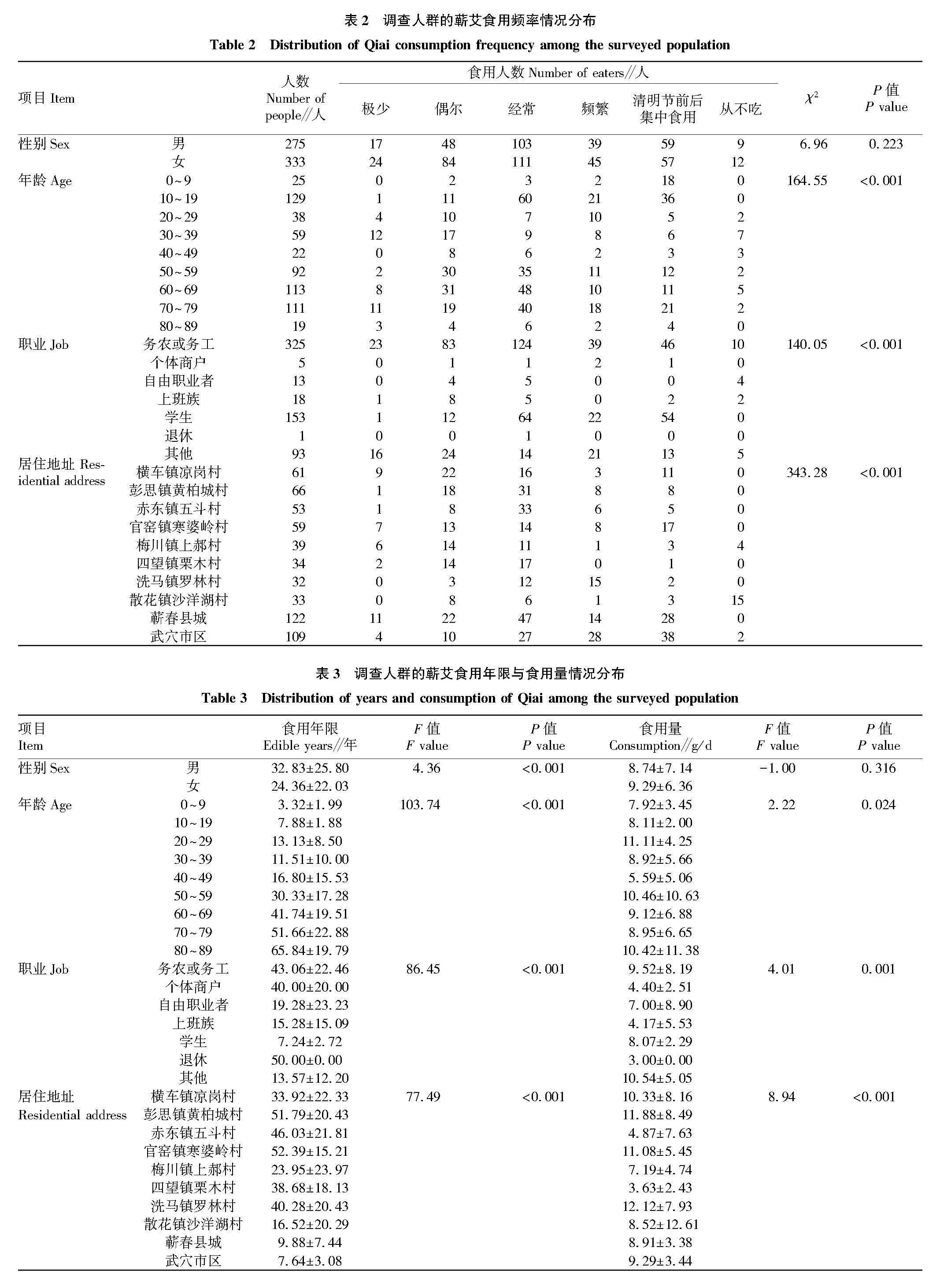
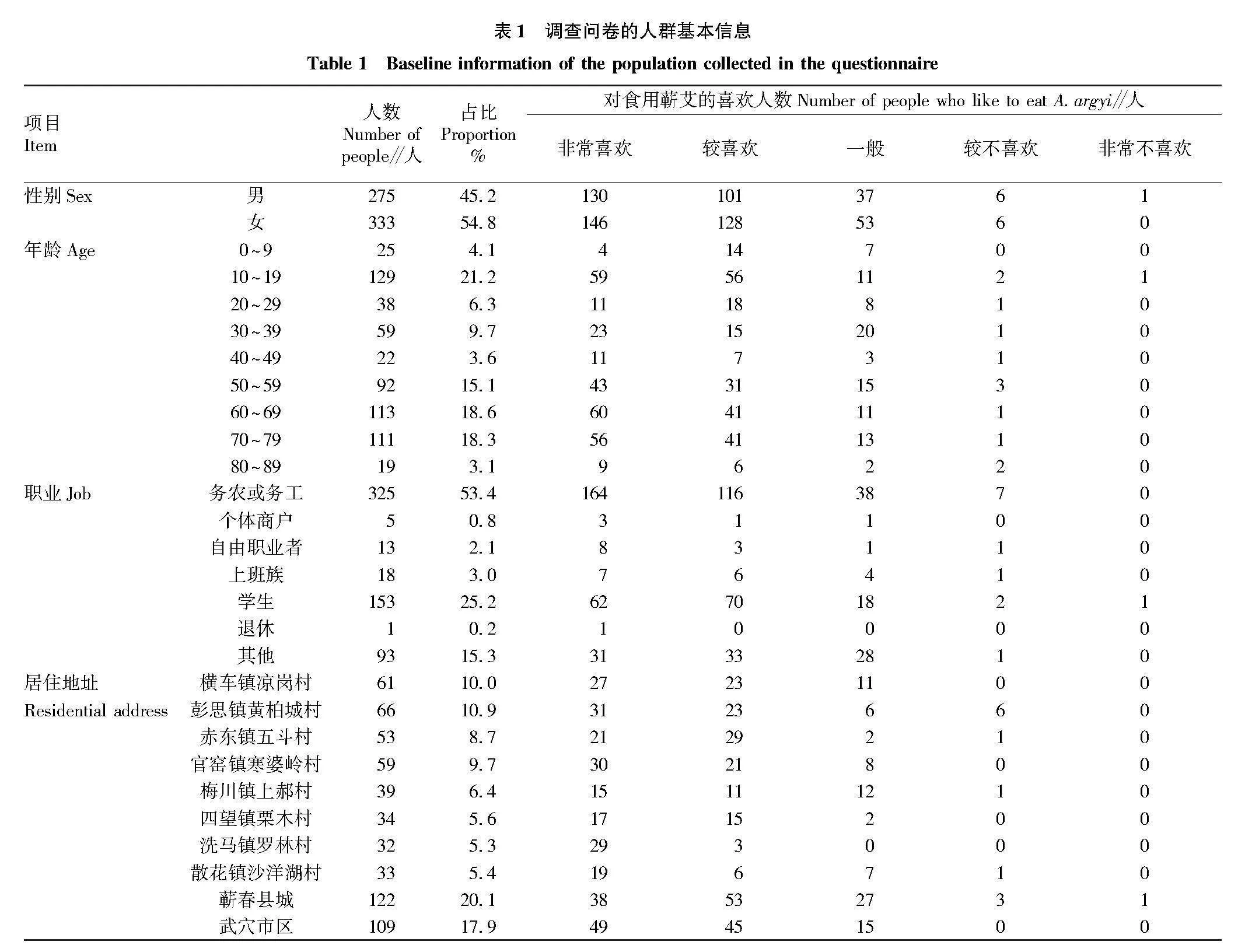


摘要 [目的]探究蘄艾的可食用性,為湖北省蘄艾食品安全地方標(biāo)準(zhǔn)的制定及風(fēng)險(xiǎn)評(píng)估提供參考依據(jù)。[方法]開(kāi)展典籍中艾的食用歷史考證、蘄春及周邊地區(qū)食用歷史調(diào)查及大鼠經(jīng)口急性毒性試驗(yàn)。[結(jié)果]艾的食用歷史最早可追溯到唐代,湖北省蘄春及周邊地區(qū)居民均有食用蘄艾的習(xí)慣,成年人的平均食用年限35.14年,每日食用量9.04 g。食用方式主要包括鮮艾葉、艾草糕點(diǎn)、艾草面食、泡茶、藥用、泡酒等,未出現(xiàn)不良反應(yīng)。鮮嫩蘄艾葉高溫處理粉大鼠經(jīng)口急性毒性試驗(yàn)結(jié)果顯示其LD50大于7.5 g/kg,屬實(shí)際無(wú)毒物質(zhì)。[結(jié)論]鮮嫩蘄艾葉可作為一種安全的潛在食藥兩用資源,為全方位多途徑開(kāi)發(fā)新的食品提供思路。
關(guān)鍵詞 蘄艾;食用歷史;急性毒性試驗(yàn);安全性
中圖分類(lèi)號(hào) TS201.6 文獻(xiàn)標(biāo)識(shí)碼 A 文章編號(hào) 0517-6611(2024)21-0144-05
doi:10.3969/j.issn.0517-6611.2024.21.031
開(kāi)放科學(xué)(資源服務(wù))標(biāo)識(shí)碼(OSID):
Historical Tracing Investigation and Safety Evaluation of Artemisia argyi Lévl. et Vant. cv. qiai
YANG Fang1,2, LI Su1, HUO Tong-hui1 et al
(1. School of Laboratory Medicine, Hubei University of Chinese Medicine, Wuhan,Hubei 430065;2. Hubei Institute of Qiai Industrial Technology, Huanggang,Hubei 435300)
Abstract [Objective]To explore the edibility of Artemisia argyi and provide reference for the formulation of local food safety standards and risk assessment for A. argyi in Hubei Province.[Method]This study explored the edible applicability of A. argyi through the literature search of historical records and practices, the dietary practice survey in the local populations and the acute oral toxicity test of A. argyi in rats. [Result]The consumption of A. argyi could be traced back to the Tang Dynasty. According to the dietary survey, people who live in Qichun and adjacent areas in Hubei Province had been eating A. argyi for an average time of 35.14 years for adults and daily amount of consumption was 9.04 g. The main forms of A. argyi consumed by the residents include fresh A. argyi leaves, A. argyi pastries, A. argyi noodles, tea brewing, medicinal use and wine brewing, and no adverse reactions had been observed.The results of oral acute toxicity test showed that the LD50 of the processed fresh and tender A. argyi powder was at least greater than 7.5 g/kg, which was actually non-toxic. [Conclusion]Fresh and tender A. argyi leaves may be a safe resource for the food and medicine homologous material, indicating potentials of A. argyi as a source of new foods in all forms and multi-ways.
Key words Artemisia argyi Lévl. et Vant. cv. qiai;Eating history;Acute toxicity test;Security
基金項(xiàng)目 湖北省自然科學(xué)基金項(xiàng)目(2023AFD124)。
作者簡(jiǎn)介 楊芳(1986—),女,湖南慈利人,副教授,博士,從事脂質(zhì)吸收代謝、食藥同源物質(zhì)功能及食品營(yíng)養(yǎng)流行病學(xué)研究。
*通信作者,教授,博士,博士生導(dǎo)師,從事慢性代謝性疾病分子機(jī)制、食藥同源物質(zhì)及生物活性成分功能研究。
收稿日期 2023-12-26
艾(Artemisia argyi Lévl.et Vant)又名艾草、艾蒿、蘄艾、野艾等,是菊科蒿屬多年生草本植物[1]。3 000多年以來(lái),中國(guó)人就以”鮮艾入膳,陳艾入藥”,形成了獨(dú)特的艾草飲食文化[2]。蘄艾(Artemisia argyi Lévl.et Vant.cv.qiai)是艾的栽培種,產(chǎn)于湖北蘄春及周邊地區(qū)[3]。為深入了解蘄艾在產(chǎn)地的食用情況,為其制定地方標(biāo)準(zhǔn)與進(jìn)入食藥同源目錄提供科學(xué)依據(jù),保障蘄艾的食用安全與民眾的健康權(quán)益,該研究通過(guò)對(duì)艾的食用歷史考證、食用歷史調(diào)查及大鼠經(jīng)口急性毒性試驗(yàn)3個(gè)方面探究蘄艾的可食用性,為蘄艾的食用安全性提供強(qiáng)有力的論據(jù),也為全方位多途徑開(kāi)發(fā)新的食品提供思路。……
登錄APP查看全文
 安徽農(nóng)業(yè)科學(xué)
2024年21期
安徽農(nóng)業(yè)科學(xué)
2024年21期
- 安徽農(nóng)業(yè)科學(xué)的其它文章
- 地方高校助力鄉(xiāng)村振興人才培養(yǎng)的困境與對(duì)策研究
- 新時(shí)代勞動(dòng)教育融入生物科學(xué)專(zhuān)業(yè)實(shí)踐教學(xué)體系的創(chuàng)新與實(shí)踐
- 后疫情時(shí)期動(dòng)物診斷學(xué)課程新形態(tài)教學(xué)改革探索
- “兩山”理念下句容市鄉(xiāng)村振興戰(zhàn)略的探索與實(shí)踐
- 鄉(xiāng)村振興背景下社會(huì)主義核心價(jià)值觀引領(lǐng)文明實(shí)踐的內(nèi)涵與路徑
- 新鄉(xiāng)賢參與農(nóng)村基層治理的行動(dòng)邏輯與路徑優(yōu)化研究