新課程標準下初中英語高效課堂的構(gòu)建
2024-09-14 00:00:00潘洋洋
新課程·上旬 2024年20期
高效的初中英語課堂應(yīng)該遵循在體驗中學(xué)習(xí)、在實踐中運用、在遷移中創(chuàng)新的課改理念,引導(dǎo)學(xué)生圍繞真實情境和真實問題,聚焦主題,參與到語言學(xué)習(xí)和運用活動中;堅持以評促學(xué)、以評促教的教學(xué)理念,讓學(xué)生成為評價活動的參與者和合作者。如何將課改理念滲透到教學(xué)實踐中,構(gòu)建高效課堂呢?筆者以人教版八年級上冊一節(jié)聽說課Unit 9 Can you come to my party?(section A 1a~1c)設(shè)計為例,推動學(xué)生積極參與課堂學(xué)習(xí),發(fā)展學(xué)生核心素養(yǎng)。
一、教材分析
本課時是Unit 9 Can you come to my party?A部分第一課時聽說基礎(chǔ)篇。教材1a涉及本課新詞匯,讓學(xué)生通過觀察分析主題圖,進行簡單的口語輸入與輸出。1b為聽力,簡單的對話語篇輸入目標語言,讓學(xué)生完成人名與圖片內(nèi)容的匹配。1c讓學(xué)生大量輸出語言,訓(xùn)練學(xué)生的理解和表達能力。
二、教學(xué)重難點
教學(xué)重點:結(jié)合目標詞匯理解并熟練運用本課表邀請的Can ...句型;對于他人的邀請能用英語表達接受或拒絕;圍繞主題,培養(yǎng)語言技能。
教學(xué)難點:能夠獨立、準確運用have to 和must 表達拒絕,并能給出相應(yīng)的原因。
三、教學(xué)步驟
Step 1:Warming-up and leading-in.
T:Hello,boys and girls. How are you today?I’m really tired and busy these days. I’m going to have my birthday party next week. So,can you come to my party?
S: ...
T:On my birthday party,you will enjoy some beau-tiful music,taste delicious food,dance with your friends and play games. So,can you come to my party?
S: ...
(設(shè)計意圖:為學(xué)生創(chuàng)設(shè)生日派對情境,基于學(xué)生已有的認知水平導(dǎo)入本課話題,激活學(xué)生思維,激發(fā)學(xué)生學(xué)習(xí)興趣。)
Step 2 : Presentation.
T: Unluckily,some of my friends can’t come to my party. Why can’t Mike/Mary/Tom come?Why is that?Can you guess?
S1: Maybe he has to...(prepare for an exam)
S2: Maybe she has to...(meet friends)
S3: Maybe he has to...(go to a/the doctor)
(設(shè)計意圖:利用幻燈片設(shè)置游戲向?qū)W生展示半遮圖片,讓學(xué)生猜測有些朋友不能來參加生日派對的原因。學(xué)生答錯了,教師順勢給學(xué)生呈現(xiàn)本課時中人物不能接受邀請、拒絕邀請的客觀原因。這不僅增加了學(xué)生學(xué)習(xí)詞匯的趣味性,而且提高了學(xué)生課堂參與度,體現(xiàn)了新課標“學(xué)用結(jié)合”的教學(xué)理念。)
T: I’d love to invite more friends to come to my party. Can you come to my party?Please try to think about how to accept or decline an invitation.
S: ...
(設(shè)計意圖:創(chuàng)設(shè)生活情境,為學(xué)生提供信息體驗——在接到邀請后如何運用語言接受或拒絕他人邀請,并給出合理原因。本環(huán)節(jié)旨在讓學(xué)生學(xué)習(xí)理解目標句型,體驗如何在這種場合下正確使用英語做事,發(fā)展邏輯思維能力,體現(xiàn)了新課標學(xué)思結(jié)合教學(xué)理念。)
Step 3: Practicing.
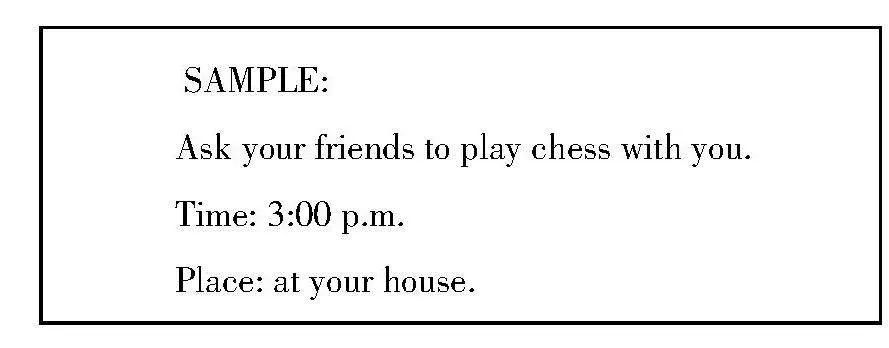
T: Would you like to take part in more activities? There are many invitations in the envelope. Now choose your invitations and invite your deskmate to do another activity.
■
(設(shè)計意圖:設(shè)置圍繞主題的各類邀請話題,讓學(xué)生在信封中盲抽,抽到后,合作運用句型解決實際生活問題,從知識到遷移,使學(xué)生明白知識來源于生活、運用于生活,體現(xiàn)學(xué)思結(jié)合、學(xué)用結(jié)合的課改理念。)
T: Now we’ll have a group competition. Here are some other invitations. Ask and answer questions like this one by one. Pay attention to it,we don’t have time to do the activities. And you must give some reasons. Let’s see who is faster.
(設(shè)計意圖:設(shè)置大轉(zhuǎn)盤游戲,以小組競賽的形式幫助學(xué)生培養(yǎng)語境意識,引導(dǎo)學(xué)生突破語言難點;培養(yǎng)合作意識,促進學(xué)生共同提升,引導(dǎo)學(xué)生積極溝通,提高課堂效果。)
T:Now let’s listen and write the names(Tim, Kay, Anna and Wilson)next to the correct students in the picture.
(設(shè)計意圖:訓(xùn)練學(xué)生聽力,引導(dǎo)學(xué)生觀察分析主題圖內(nèi)容和含義,促進思維從低階向高階發(fā)展,逐漸形成對問題的認知和態(tài)度。)
T:Listen to a conversation and complete the sent-ences this time.
1.Ted (can/can’t)go to the party,because he has to .
2.Tim (can/can’t)go to the party,because he has to .
3.Wilson (can/can’t)go to the party,because he has to .
4.Anna (can/can’t)go to the party,because she has to .
5.Kay (can/can’t)go to the party,because she must .
(設(shè)計意圖:該任務(wù)整合教材知識,促進知識向能力的轉(zhuǎn)化。通過這一語言環(huán)境,學(xué)生能獲取相關(guān)信息,辨析概括主要觀點,形成自主學(xué)習(xí)的能力。)
T: We are going to watch a video to relax ourselves. What’s it about? Please watch it carefully.
S: It’s about a music party. Jack is inviting us to go to his party.
T: Great. Can you come to his party?Please work in groups. One student asks,one of you takes notes, other students answer questions. Then give us a report by writing a letter to Jack. The beginning and ending of the letter I’ve given you. Then give us a report.
S: ...(學(xué)生四人小組合作)
T: Time is up.Which group can give us a report
first?After reporting,we will use the checklist to evaluate
your studying.
S: ...(小組派代表作報告)
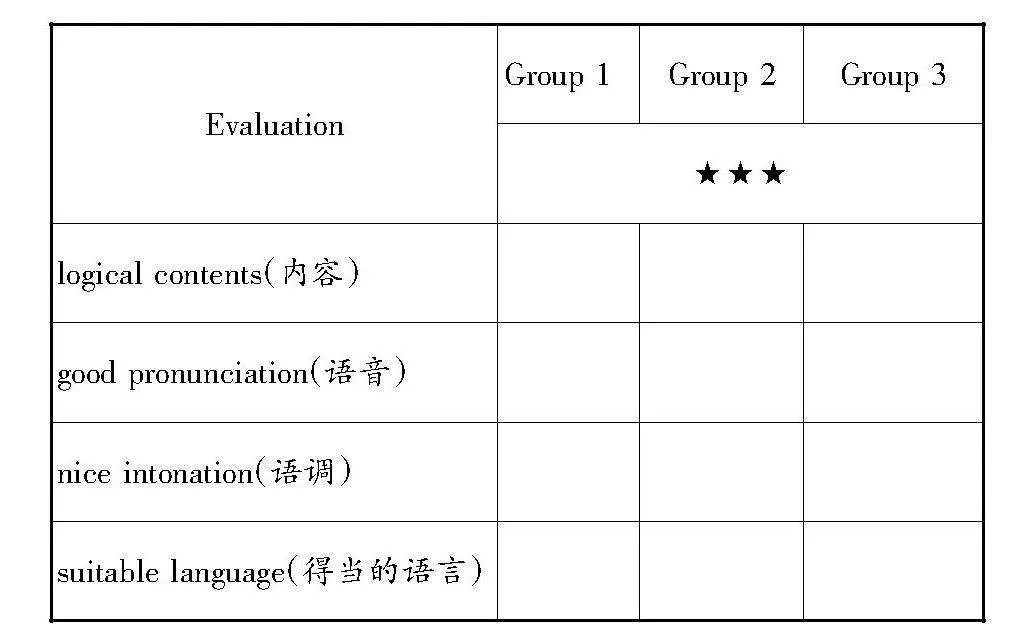
T: Boys and girls,you all finished the reports very well. Now let’s evaluate your performance using the che-cklist and see who is the best winner.
■
(設(shè)計意圖:小組合作探究完成學(xué)習(xí)任務(wù),推動思維發(fā)展,鍛煉社交能力。作報告,小組間互相學(xué)習(xí)、互相競爭,尋找差距。評價量表評價小組任務(wù)完成情況,堅持以評促學(xué)、以評促教,注重“教—學(xué)—評”一體化設(shè)計。)
Step 4: Thinking.
T: Will you be angry or unhappy if anyone can’t go to your party?
S1: Maybe.
S2: I won’t talk to her/him anymore.
T: It’s a bad way to solve the problem. We should get on well with each other.
S3: I think we should be understanding and friendly.
T: Right,we should understand each other and talk in a friendly way,so that we can maintain a longer friendship . Do you think so?
(設(shè)計意圖:這是將教、學(xué)、評融為一體的環(huán)節(jié)。啟發(fā)學(xué)生,把學(xué)習(xí)推向深入,培養(yǎng)學(xué)生的創(chuàng)新意識和解決問題的能力。另外,針對內(nèi)容作出反饋,促進學(xué)生思維的發(fā)展。)
Step 5: Summary.
T: What have you learned from this class?
S1: I learned the sentence pattern“Can you come to...?”
T: Oh,you’ve learned to express how to make an invitation. Great. How about you?
S2: I learned some useful expressions to refuse invitations politely.
T: Can you give us examples?
S2: Prepare for an exam,have the flu,go to the doctor,help my parents with housework.
T:Wow,you’ ve gotten a lot in class. We’ve learned how to make an invitation politely like the sentence pattern “Can you...?”And we learned to how to accept and decline an invitation politely. Pay attention to say sorry to others first when you decline an invitation,then use target vocabularies to give a proper reason why you can’t come. Also,remember to understand each other when someone can’t accept your invitation and speak to others in a friendly way.
(設(shè)計意圖:教師通過問題鏈的方式反饋學(xué)生學(xué)習(xí)效果,檢驗知識的生長程度,促使學(xué)生不斷反思、總結(jié)知識。同時,強化學(xué)生正確的價值觀和積極向上的情感態(tài)度。)
Step 6:Homework.
Level A:Practice conversations using the target
language and the target sentence. Read and write it by yourself.
Level B:Rewrite and polish your report.
Level C: Write an invitation to any other event and
reply your partner’s invitation. If you turn down the invitation,give a good reason.
(設(shè)計意圖:作業(yè)分三個層次,A類學(xué)生和搭檔進行口語練習(xí),發(fā)展用英語簡單交流思維的能力。B類學(xué)生課后深度理解潤色報告,養(yǎng)成良好的學(xué)習(xí)習(xí)慣,加深知識理解和學(xué)習(xí)能力。培養(yǎng)C類學(xué)生語言綜合運用能力,學(xué)創(chuàng)結(jié)合,運用所學(xué)解決現(xiàn)實問題。)
四、教學(xué)反思
高效的初中英語課堂由多種教學(xué)活動組織形成,以獨學(xué)、對學(xué)、群學(xué)的形式呈現(xiàn)學(xué)生對舊知識和新知識的運用與內(nèi)化,以主題為主線達成教學(xué)目標,突出教學(xué)重難點,采用適合學(xué)情的教學(xué)策略讓學(xué)生在參與課堂時理解、感知、體驗知識,樂學(xué)、善學(xué);引導(dǎo)學(xué)生在課堂中學(xué)習(xí)思考、實踐運用、遷移創(chuàng)新,發(fā)展學(xué)生用英語做事的能力,檢驗課堂效果;多元化評價促進學(xué)生學(xué)習(xí),改進教學(xué),完善課堂教學(xué)。
(作者單位:陜西省寶雞市陳倉區(qū)教育體育局教學(xué)研究室)
編輯:常超波
作者簡介:潘洋洋(1986—),女,漢族,陜西寶雞人,寶雞市學(xué)科帶頭人,陜西省教學(xué)能手,研究方向:英語教育教學(xué)。