
Asia for Asia: The Future of Regional Trade
2023-12-18 05:14:15ByNurRidhuanAbhineetKaulandShivinKohli
中國-東盟博覽(政經版) 2023年11期
By Nur Ridhuan Abhineet Kaul and Shivin Kohli
Conversations that tackle trade and Asia typically involve pointing out the regions dynamism and significant untapped potential. What sometimes remains missed is how large this opportunity is, and whether trends and data reveal the same story.
Asia is critical to global trade and is expected to only continue to grow in its importance. The past century saw Asia rapidly growing into the worlds largest manufacturing hub. Having deeply integrated with global supply chains and contributing at least 40% of global trade as of 2020, the region has played a key role in meeting burgeoning demand across the world. However, Asia is finding itself slowly shifting from being a sole producer of goods to becoming a large consuming market. In fact, 12 key Asian markets (the “Asia-12”) are set to lead this journey: Australia, China, Hong Kong, Indonesia, Japan, Malaysia, Philippines, Singapore, South Korea, Taiwan, Thailand, and Vietnam. All of them together account for 88% of trade within Asia today — or around US$6.4 trillion — which constitutes around one-third of global trade in 2020.
Analysis by Access Partnership estimates that trade among the Asia-12 could double to US$13.5 trillion in 2030. Businesses have already begun to recognize this fact. Our survey of nearly 200 businesses in the Asia-12 revealed that around 77% were already preparing for a future where trade within Asia itself could experience accelerated growth. We were pleased to work closely with our partners at UPS to deliver these insights and more as part of our report, Clearing the Runway for Intra-Asia Trade.
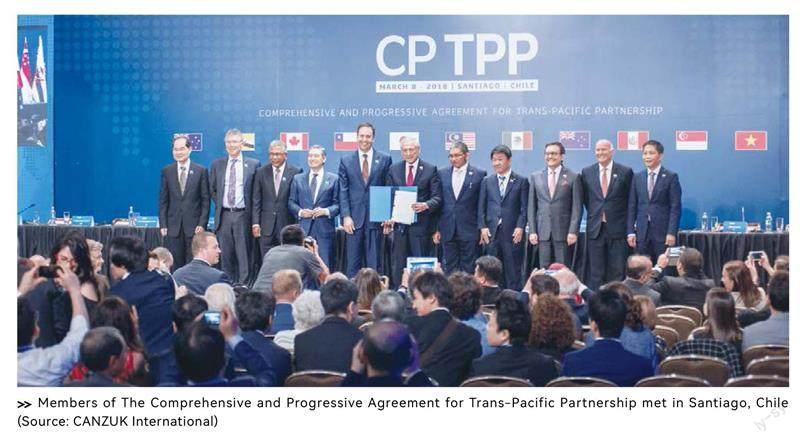
This trade forecast is more than just mere projection, with several key trends already shaping this into reality. For example, the Asia-12 possess a strong, growing middle class and an increasingly urban population. Within the group, it is expected that another half a billion new individuals would join middle class population by 2030, enabling the Asia-12 to have a consuming class of around 1.5 billion people at the end of the period. At the same time, another 209 million more are expected to join urban cities across these economies — or approximately 21 million per year. Ambitious new trade deals such as the Regional Comprehensive Economic Partnership (RCEP), signed by 10 of the Asia-12 economies, and the Comprehensive and Progressive Agreement for Trans-Pacific Partnership (CPTPP), signed by five of the Asia-12, are expected to further deepen trade links by broadening the scope of products included and facilitating easier customs clearance. Finally, supply chain innovation and the need to build greater resilience to disruptions will also drive intra-Asia trade, as more governments and businesses continue developing key infrastructure or integrating digital tools into their ecosystems to promote visibility over their supply chains.
Despite these significant tailwinds, multiple barriers threaten trade growth within Asia today. Inconsistent trade, customs regulations, and tariffs create unnecessary hurdles for businesses and consumers when engaging with traded goods. Major disruptions such as the COVID-19 pandemic created fragmented responses from government, with inconsistent restrictions on trade lanes, labour availability, and logistics support creating significant delays, uncertainty, and spiraling costs. Geopolitical conflicts, meanwhile, are steering the world toward increasingly costly trade disputes that shorten or exclude vulnerable segments of increasingly complex product supply chains and further raise costs of compliance. Finally, micro, small, and medium-sized enterprises (MSMEs) — 97% of businesses in Asia — continue to be left behind in global value chains due to lack of engagement by larger businesses and governments. If left unchecked, these trends could even cause intra-Asia trade to stagnate by 2030, thereby losing out on the opportunity to double.
To ensure that Asia can capture the intra-regional trade opportunity, multistakeholder action across four key areas is crucial. Action by businesses or government alone is not enough to address the key barriers to trade —active involvement by all stakeholders is imperative.
First, governments and businesses must continue develop comprehensive trade deals, especially crafting provisions that drive growth in innovative areas. For example, partnerships that drive growth within the digital economy have become commonplace, such as the Digital Economy Partnership Agreement (DEPA, between Chile, New Zealand, and Singapore) and the Digital Economy Agreement (DEA, between the UK and Singapore). Businesses should also advocate for policies that create supportive environments through chambers of commerce and business associations.
Second, stakeholders must collaborate to harmonise standards for products that move across borders. By ensuring product export and import standards are consistent and transparent across countries, businesses and public agencies can avoid burdensome compliance costs, administrative delays at customs, and even encourage higher quality products across the board.
Third, improving logistics that serve intra-Asia trade will be critical. Logistics industry roadmaps can help improve the logistics infrastructure that facilitate cross-border trade within Asia and encourage businesses and individuals to make investment and upskilling decisions that align with the economys needs. Public sector investments, for instance, can be guided towards ensuring that the logistics sector improves as needed to support growing trade flows.
Finally, building resilience into supply chains is necessary, especially through digital innovation. Coordinated investment in Asian supply chains can improve the efficiency and productivity of existing logistics infrastructure and build resilience. Continuous development and innovation of key trade nodes like ports and roads will also help markets navigate shocks in supply and demand when they arise. As an example, investment in smart ports offers economies a way to tackle congestion or under-capacity through automated port management as operators can detect and troubleshoot problems in real-time. For businesses, capitalizing on high-value, high-growth trade lanes remains imperative, but diversifying into stable, long-term trade lanes will also be critical to withstanding disruptions.
Source: Access Partnership
This article only represents the authors views, not the stand of the magazine.
