
Abstracts of Major Papers
2023-01-05 01:22:06
出土文獻 2022年4期
An Explanation of “明” in the TsinghuaSanBuWeiManuscript:With a Discussion of “粦明” in Bronze Inscriptions
Huang Dekuan
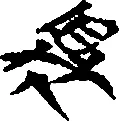
Abstract:The graphused in the TsinghuaSanbuwei參不韋manuscript is a corrupted form of. The graphis used in Chu script as the phonophore ofyan酓,yi翌, andxiong熊. The corrupted form ofis similar toneng能. In fact, theneng能 phonophore in the Chu script forms ofand, is actually this corrupted form of. The word明inSanbuweiis written asqinming欽明in classical texts, and can be translated as “be careful and diligent.” The wordlinming粦明in Western Zhou bronze inscriptions also means “be careful and diligent,” and it is possible that these three words preserve the same ancient idiom.
Key words:Tsinghua Manuscripts,Sanbuwei,/能,明,linming粦明
Moving Beyond the Text to Read the Text: Interpreting SeveralDifficult Sentences inSanBuWeiBased on Scribal Characteristics
Jia Lianxiang
Abstract:Sanbuwei參不韋was copied in two rounds by theBaoxun-scribe. According to the characteristics of this scribe’s calligraphy, we can recognize thatji魝 on slip 72 is an error forge割 and should be read ashai害; thatjie戒 on slips 41 and 94 can be distinguished from the similarly writtenbing兵; that thegu古 written in the same form asyou由on slips 62, 73, and 118 should be read asgu辜; that graphs such asetc. with the phonophoreduo厇, on slips 14, 47, 60, are a variant oftuo橐, meaning is “cover up;” that the graph on slip 44 originally interpreted asmei湄 should be changed toshen, and the sentence read asjisurudian,shensuruhua幾(機)(速)女(如)(電),神(速)女(如)(化). In addition, based on a correction made by theHuangmen-scribe, we can read themin民 inminying民盈 asmi彌. The purpose of this paper’s approach is to show that when faced with distinctive scribal characteristics, difficult problems in the transcription of the text can be solved by moving beyond the text to read the text.
Key words:Tsinghua Manuscripts,Sanbuwei,Baoxun-scribe, characteristics of this scribe’s calligraphy
Supplementary Annotations to Volume Ⅻ of the Tsinghua Manuscripts
Cheng Hao
Abstract:In the TsinghuaSanbuwei參不韋manuscript, the graphwaiand its variants should be read asyi刈, meaning “harvest” when used together withbo播. The three occurrences of the graphbushould be read with the soundmei每 asmu畝 andmou謀, respectively. The graphhuan還 appears many times. Some should be read asying營, while others should be read asying禜, meaning “exorcise.” The newly seen formhas the phonophorebao勹 and should be read asfu伏.Gongfu拱伏, in turn, describes the two movements of cupping one’s hands and prostrating on the ground when praying in front of the god. The graphqion slip 12 is a corruption ofyin殷, which can be read asyin湮.Shanyinnaibeng山殷乃崩 means “the mountain breaks down and collapses.”
Key words:Tsinghua manuscripts,Sanbuwei,yi刈,ying禜,yin殷
A Variant Form of the GraphFafromSanBuWei
Shi Xiaoli
Abstract:In bronze inscriptions from the Shang and Zhou up to the script of the Qin and Han, the form罰 was commonly and rather uniformly used to write the graphfa罰in the sense of “penalty.” In Warring States bamboo and silk manuscripts, a variant form of 罰 occurs composed ofwang網 andxing刑 (orxing型). Previously, this graph was often erroneously interpreted as writingxing刑 “punishment.” Based on the newly published TsinghuaSanbuwei參不韋 manuscript it becomes clear that it should be understood asfa. This observation does not just challenge the uniformity for writingfabut also reflects the complexity of Warring States graph formation.
Key words:Tsinghua manuscripts,Sanbuwei,fa罰,xing刑
Is There a GraphDaoin Oracle Bone Inscriptions
Huang Xiquan

Key words:oracle bone inscriptions,shu,dao, upland rice, lowland rice, ratooning rice
Two Notes on Reading Oracle Bone Inscriptions
Wu Yashuai

Key words:yi驇,er邇,,xi奚
An Attempt to Explain the Newly SeenFuping Jun Bell Stand’s Self-reference
Chen Sipeng
Abstract:The self-reference of a newly seen tiger-shaped Bell Stand of the Lord of Fuping should be interpreted ashuju虎(虡). The bottom of the characterhuis slightly corrupted, and this way of writing can be seen in the Tsinghua manuscripts and other Warring States writings, which also accords with the shape of the vessel. The graphis composed ofyou又 andtu兔, and connotates hunting rabbits. It is a variant form ofju(罝) in oracle bone inscriptions. The graph’s reading asju虡, is supported by analogy of reading 兔in the inscription of Western Zhou Kuang You-vessel 匡卣 astuju兔罝.
Key words:Lord of Fuping, self-reference of a bronze vessel, bell stand,ju罝
Notes on the Qin and Han Name Seals
Wei Yihui
Abstract:In light of transmitted texts and Qin and Han bamboo manuscript material, this paper examines ten examples of two-character personal names from Qin and Han seals. It not only explores the meanings of the personal names, but also discusses the phenomenon of the same names being written by different characters.
Key words:Qin seals, Han seals, two-character personal names
Six Notes on the Anhui UniversityShijingManuscript
Yang Penghua
Key words:Anhui University manuscripts,Shijing, Warring States manuscripts, bamboo and silk
Divinatory Method and the Twenty-eight Lodge Day-count:A New Study ofTheTreatiseofTwenty-eightLodges
Yang Jicheng
Abstract:TheTreatiseofTwenty-eightLodges二十八宿占is an early divinatory text. Judging from its use of twelve stellar lodges and the structure of the divination image, this divinatory method should be relatively close to the Kanyu method represented by the Peking UniversityKanyumanuscript. In early divinatory methods such as Kanyu, there is a twenty-eight lodge day-count arranged according toshuoxing朔星. Thisshuoxingis based on the developments made in divinatory method as represented in the “Zhanyueshuohexing fa” 占月宿何星法 of theHuangdiLongshoujing黃帝龍首經. There is a great similarity between the “Zhanyueshuohexing fa” and the “qiudou shu” 求斗術. At the same time, the twelve stellar lodges ofTheTreatiseofTwenty-eightLodgesis exactly the same as the twenty-eight lodge day-count according to theshuoxiu朔宿, and can thus be used to calculate a similar set of twenty-eight xiu-days. Based on this speculation, we can arrive at a new interpretation of the “zhixin直心” section of theDaybooks日書.
Key words:TheTreatiseofTwenty-eightLodges, “Zhanyueshuohexing fa”,shuoxing, “qiudou shu”, the twenty-eight xiu-day count
Explanation of Three Words in the InventoryManuscripts from the Mawangdui Han Dynasty Tombs
Sun Tao
Abstract:This paper attempts to reinterpret three words in the inventory manuscripts from the Mawangdui Han Dynasty Tombs.Yangshould be read asyang腸,niuyang牛andluyang鹿refers to beef intestines and deer intestines respectively.Yi潱 should be read asyi醷, referring to “plum juice,” a common sour condiment in ancient times. Thehua華 ofhuayu華盂 should refer to carving images and decoration.Qihuahuayu漆畫華盂means a bowl decorated with paint.
Key words:Mawangdui, inventory manuscript, explanation
Three Examples of a Reinterpretations of the Ditto Markin Han Dynasty Bamboo and Silk Manuscripts
Ji Huilin
Key words:bamboo and wooden slips, silk manuscripts, ditto mark
A Study onJiazuin Han Bamboo SlipsUnearthed from Northwest China
Zhao Eryang
Abstract:There are sporadic records about Hanjiazu甲卒 in both historical records and Han bamboo manuscripts. In the historical records of the Han Dynasties,jiazuis sometimes a general term for soldiers, and sometimes refers to ordinary soldiers of the regional kingdoms 郡國. In 1986, among the Han bamboo slips unearthed from Diwan, there were more than a dozen slips with name registers recordingjiazu. Thesejiazuall came from Zhangye Commandery, and their garrisons were based at Lude, Zhaowu, and other counties under Zhangye. There are two forms of name registers: one is organized by military divisions such as Left Division, Middle Battalion, etc.; the other records the counties to which they belonged, such as Zhaowu and Dichi. The majority of thejiazubamboo slips are name registers for food supply. Based on historical records, it can be inferred that these were the food supply records left by Jianshui Houguan 肩水候官 when thejiazustationed in Lude, Zhaowu, and other counties were ordered to gather at the border in order to comprehensively conquer the Xiongnu once and for all in the Xinmang Dynasty. Thesejiazuwere primarily responsible for logistical transport duties during this military operation.Jiazubelonged to the garrison system of the border commandery, and from low to high, the tiers and officers ranged from five (five-leader), ten (ten-leader), team (soldier-clerk), officer (500-men), regiment (1000-men,hou候) to division (commandant).
Key words:Han manuscripts unearthed from Northwest China,jiazu, Diwan, Zhangye Commandery, military establishment
Twenty Notes on the Names in the Jianshui Jinguan Han Slips
Shen Sicong
Abstract:Based on a collation of the Jianshui jinguan Han slips, and with comparison to other unearthed and transmitted materials, this article corrects a number of names in the records. In addition, it corrects a number of mistakes and omissions in related sources.
Key words:Jianshui jinguan Han slips, reading notes on names, corrected transcriptions
Reinterpreting a Passage inXunziBased on theUse of Ligatures in Unearthed Texts
Li Jiaxi
Abstract:InXunZi荀子, the phraseshennühaoertoumashou身女好而頭馬首 should be renderedshennüziertoumashou身女子而頭馬首. Thatnüzi女子 was misinterpreted probably due to a misreading of the ligatures=,=or 好=. The line means that a silkworm has a body shaped like a young girl and a head shaped like that of a horse. According toShanhaiJing山海經,ZhouLi周禮,CanShu蠶書,SoushenJi搜神記, etc., we know that connecting silkworms with young girls and horses was widely shared from the Warring States up to the Wei-Jin period.
Key words:Xunzi,nühao,nüzi, ligature
Study of the Lost BookWushiCited inDunhuang Manuscript P. 2047FupianYiji
Qiang Si
Abstract:The Dunhuang manuscript P. 2047 collected by the National Library of France records the documentFupianYiji輔篇義記, roll 2, written by Xuan Yan 玄儼, a monk in the Tang Dynasty. This book has long been lost. Many other documents are cited in this volume, one paragraph quotes material from theWushi物始, which has important documentary value.Wushiwas written by Xie Wu (謝吳, also known as Xie Hao 謝昊 and Xie Jiong 謝炅) during the Southern Liang Dynasty. It is an early example of books describing the origins of things.Wushiwas lost after the Tang Dynasty and this quotation may present the only source directly preserving its content. On the basis of textual research and analysis of the remains of the lostWushitext, this paper explores the text’s content, style, method of compilation and its use of material, and suggests one of the values of this text is its use in proofreading similar documents such as theShuowen說文.
Key words:Dunhuang manuscripts,FupianYiji,Wushi, lost texts, textual research
What the Single Bamboo Slip Found in Mawangdui TombM2 Tells Us about Text and Ritual in Early China
Luke Waring
Abstract:A single bamboo slip was found at Mawangdui tomb M2 inside the passageway leading to the pit where Li Cang (d. ca. 186 BCE), the Marquis of Dai and Prime Minister of Changsha, was buried. Though almost entirely unnoticed in previous scholarship, the M2 slip has much to tell us about the overlapping textual, ritual, administrative, and funerary practices of early Western Han China. I offer a description of the slip, translations of its contents, a consideration of how it was used at the tomb site, and an analysis of what its archaeological context tells us about the use of talismans in Western Han burials. Specifically, I show that the slip originally formed part of a multi-piece tomb inventory manuscript, and that it was removed and ritually deposited inside the passageway in order to protect the tomb from robbers and malevolent spirits.
Key words:Mawangdui, tomb inventory manuscript, talismans, ritual, Han Dynasty
