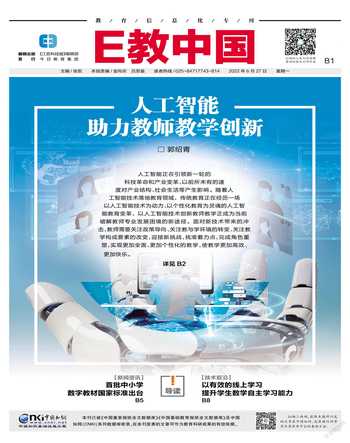
Driving K-12 Innovation: 2022 TECH ENABLERS(Ⅱ) 譯題 基礎(chǔ)教育創(chuàng)新驅(qū)動(dòng)力報(bào)告——2022技術(shù)驅(qū)動(dòng)篇(二)
2022-07-13 20:49:17
江蘇科技報(bào)·E教中國(guó) 2022年10期
Product by CoSN (The Consortium for School Network)美國(guó)學(xué)校網(wǎng)絡(luò)聯(lián)合會(huì)
《基礎(chǔ)教育創(chuàng)新驅(qū)動(dòng)力報(bào)告》是繼《地平線報(bào)告(基礎(chǔ)教育版)》后推出的國(guó)際教育信息化發(fā)展的重要參考報(bào)告,報(bào)告發(fā)布方美國(guó)學(xué)校網(wǎng)絡(luò)聯(lián)合會(huì)(CoSN)為《地平線報(bào)告》發(fā)布方美國(guó)新媒體聯(lián)盟的原有合作伙伴,致力于為基礎(chǔ)教育及學(xué)前領(lǐng)域的教育技術(shù)從業(yè)者提供團(tuán)隊(duì)、知識(shí)和專業(yè)發(fā)展服務(wù),助力創(chuàng)建和發(fā)展更有吸引力的學(xué)習(xí)環(huán)境。
UNTETHERED BROADBAND & CONNECTIVITY
Students’ needs for untethered broadband and connectivity are great; according to CoSN’s Student Home Connectivity Study, more than 85 percent of network traffic in remote learning in the United States is used for video, which requires sufficient upload and download speeds, and 92 percent of students used Wi-Fi to participate in online learning activities outside of the home.
Not only has COVID-19 accelerated the need and implementation of mobile and remote learning, it also revealed how weak the connectivity infrastructure is in homes, schools, and communities around the world. “Connectivity is still a major, major issue. For example, at the first computer science high school in Ohio, which is an incredible school, nearly all of the students don’t have internet access at home or devices at home. Meaning, at a computer science school, they can’t do any computer science homework; everything must happen in class.” said Jeremy Shorr (Jeremy Shorr Educational Consulting, Ohio, U.S.).
There’s no doubt that broadband access and increased connectivity has endless benefits to students and their educators, including the ability to access information and resources outside of the four walls of the classroom — which is why world leaders are taking action to make these benefits a reality for all.
TIPS & RECOMMENDATIONS FROM THE ADVISORY BOARD
CONTINUE TO PRIORITIZE DIGITAL EQUITY
The pandemic shined the spotlight on the digital divide and the need for internet accessibility as a basic right — and a foundational component of Digital Equity.
LEVERAGE OPPORTUNITIES CATA-
LYZED BY THE PANDEMIC
Utilize funding from connectivity and pandemic relief programs in your country. In the United States, leverage funding from the Emergency Connectivity Fund and the Elementary & Secondary School Emergency Relief Fund (ESSER Fund) to solve remote learning challenges around devices and connectivity.
ADVOCATE FOR INTERNET ACCESS BEYOND SCHOOL
“Students and families need access to learning in and beyond school. ... Learning is no longer constrained to the school yard” (Philip Neufeld, Fresno Unified School District, California, U.S.). “Students need connectivity across their daily journey: Wi-Fi in classrooms, buses, community centers, homes and cellular connectivity wherever possible.” The promise of ubiquitous broadband connectivity lies enabling learning anytime, anywhere, for all.
ANALYTICS & ADAPTIVE TECHNOLOGIES
The pandemic brought the inequity long baked into these systems into full view. While viable, going back to “normal” teaching methods was not an equitable or optimal solution. The use of technologies that collect and use data have increased dramatically during the COVID-19 pandemic (nearly 93% of households with school-age children reported some form of distance learning during the pandemic), and they have enabled educators to personalize learning more than ever before.
As IT professionals and educators, we need to consider how this data can personalize teaching methods to give the students a learning experience tailored to their needs. For example, Advisory Board member Norton Gusky (NLG Consulting, Pennsylvania, U.S.) mentioned that we must consider immersive learning opportunities with special populations, like those with social or emotional challenges, to determine how to make them feel more at ease when learning. Advisory Board member Ed McKaveney emphasized that the data gained about students isn’t just for making high-level decisions. “What kinds of data provide value to learning? It’s not just high stakes assessment data or the fact that they [students] click into a tool. How are you trying to use that data or inform instruction for learning?” (Ed McKaveney, Ed.D., Hampton Township School District, AP, U.S.)
TIPS & RECOMMENDATIONS FROM THE ADVISORY BOARD
PROTECT STUDENTS’ RIGHTS
Ensure that educational systems protect students’ rights, both in general and as they relate to data.
COLLABORATE TO LEVERAGE DATA
To make use data to inform instruction and create meaningful analytics, we need to:
collaborate with ed/tech solution providers to improve purpose-designed technologies that can integrate data from a variety of systems;
invest in the organizational capacity (IT professionals, professional development, time for strategic analysis) to ingest and act upon the data;
and leverage insights from new data signals combined with traditional measures to explore what works where, for whom, and when.
KNIT YOUR DATA FABRIC NOW
Because data is the fuel of all Analytics and Adaptive Technologies, getting data practices right can improve equity across your schools on many levels. Getting started with data analytics processing doesn’t need to be cumbersome. Start with establishing a data equity framework to guide you in developing a data culture that is ethical and equitable.
譯文
不受限制的寬帶和網(wǎng)絡(luò)連接
學(xué)生對(duì)無(wú)線寬帶和網(wǎng)絡(luò)連接的需求很大,根據(jù)CoSN的《學(xué)生家庭網(wǎng)絡(luò)連接研究》,美國(guó)遠(yuǎn)程學(xué)習(xí)中超過(guò)85%的網(wǎng)絡(luò)流量用于視頻,92%的學(xué)生使用Wi-Fi在戶外參與在線學(xué)習(xí)活動(dòng),這就需要足夠的上傳和下載速度。
新冠肺炎疫情不僅加速了移動(dòng)學(xué)習(xí)和遠(yuǎn)程學(xué)習(xí)的需求和實(shí)施,還暴露了全球家庭、學(xué)校和社區(qū)的網(wǎng)絡(luò)基礎(chǔ)設(shè)施有多薄弱。美國(guó)俄亥俄州教育顧問(wèn)Jeremy Shorr說(shuō):“網(wǎng)絡(luò)連接仍然是至關(guān)重要的問(wèn)題。例如,在俄亥俄州的第一所計(jì)算機(jī)科學(xué)高中,幾乎所有的學(xué)習(xí)者家中計(jì)算機(jī)都沒(méi)有聯(lián)網(wǎng)或家中沒(méi)有聯(lián)網(wǎng)設(shè)備,這令人難以置信。這意味著這些計(jì)算機(jī)科學(xué)學(xué)校的學(xué)生,在校外不能做任何計(jì)算機(jī)科學(xué)的家庭作業(yè),所有的教與學(xué)都必須發(fā)生在課堂上。”
毫無(wú)疑問(wèn),寬帶接入和不斷增強(qiáng)的連通性為學(xué)生及教育工作者帶來(lái)了無(wú)窮無(wú)盡的好處,包括從課堂之外獲取信息和資源的能力——這就是全球的領(lǐng)導(dǎo)人都在采取行動(dòng)使之成為現(xiàn)實(shí)的主要原因。
咨詢委員會(huì)的提示和建議
繼續(xù)優(yōu)先考慮數(shù)字公平
新冠肺炎疫情的蔓延使人們關(guān)注數(shù)字鴻溝,也關(guān)注到互聯(lián)網(wǎng)可訪問(wèn)性不僅是一項(xiàng)基本權(quán)利,而且應(yīng)當(dāng)是數(shù)字公平的基本組成部分。
充分利用疫情催生的機(jī)會(huì)
充分利用您所在國(guó)家為網(wǎng)絡(luò)連接和疫情提供的緊急救援資金。如美國(guó)利用緊急連接基金和中小學(xué)緊急救援基金的資金,解決開(kāi)展遠(yuǎn)程學(xué)習(xí)所需的設(shè)備和網(wǎng)絡(luò)連接問(wèn)題。
促進(jìn)學(xué)校以外的互聯(lián)網(wǎng)接入
“學(xué)生和家庭需要在校內(nèi)外學(xué)習(xí),學(xué)習(xí)不再局限于校園。”Philip Neufeld(Fresno聯(lián)合學(xué)區(qū),美國(guó)加利福尼亞州)說(shuō),“學(xué)生在日常生活中需要網(wǎng)絡(luò)連接:無(wú)論是教室、公共汽車、社區(qū)中心還是家庭,他們需要盡可能多的網(wǎng)絡(luò)連接。”無(wú)處不在的寬帶連接,才能讓所有人隨時(shí)隨地學(xué)習(xí)成為可能。
分析和自適應(yīng)技術(shù)
新冠疫情的大流行使長(zhǎng)期隱藏于教育系統(tǒng)中的不公平現(xiàn)象充分展現(xiàn)出來(lái)。回歸傳統(tǒng)的教學(xué)方法已經(jīng)不再是一個(gè)公平或最佳的解決方案。在新冠肺炎疫情期間,收集和使用數(shù)據(jù)的技術(shù)應(yīng)用急劇增加(報(bào)告顯示,有近93%的學(xué)齡兒童家庭在疫情期間進(jìn)行了某種形式的遠(yuǎn)程學(xué)習(xí)),它們使教育工作者能夠比以往任何時(shí)候都更有機(jī)會(huì)開(kāi)展個(gè)性化教學(xué)。
作為IT專業(yè)人士和教育工作者,我們需要考慮這些數(shù)據(jù)如何支持個(gè)性化教學(xué),從而為學(xué)生提供適合他們需求的學(xué)習(xí)體驗(yàn)。例如,咨詢委員會(huì)成員Norton Gusky(NLG咨詢公司,美國(guó)賓夕法尼亞州)提到,我們必須考慮特殊人群的沉浸式學(xué)習(xí)機(jī)會(huì),比如有社交或情感障礙的人群,我們必須思考如何讓他們?cè)趯W(xué)習(xí)時(shí)感到更自在。咨詢委員會(huì)成員Ed McKaveney博士(美國(guó)漢普頓鎮(zhèn)學(xué)區(qū))強(qiáng)調(diào),收集的學(xué)生數(shù)據(jù)也不能僅用于高層決策。“什么樣的數(shù)據(jù)能為學(xué)習(xí)提供價(jià)值?絕不僅僅是那些關(guān)鍵的評(píng)估數(shù)據(jù)或者學(xué)生點(diǎn)擊使用了某些工具的事實(shí)。數(shù)據(jù)的使用者要思考如何利用這些數(shù)據(jù),并為學(xué)習(xí)提供相應(yīng)的指導(dǎo)?”
咨詢委員會(huì)的提示和建議
保護(hù)學(xué)生的權(quán)利
確保教育系統(tǒng)能保護(hù)學(xué)生的基本權(quán)利,包括常規(guī)的權(quán)利和與數(shù)據(jù)相關(guān)的權(quán)利。
合作使用數(shù)據(jù)
為了使用數(shù)據(jù)為教學(xué)提供信息并創(chuàng)建有意義的分析,我們需要:
與教育或技術(shù)解決方案提供商合作,通過(guò)改進(jìn)技術(shù)來(lái)整合來(lái)自不同系統(tǒng)的數(shù)據(jù);
在組織能力上加大投入(IT專業(yè)人員、教師專業(yè)發(fā)展、戰(zhàn)略分析時(shí)間),促進(jìn)有效獲取和利用數(shù)據(jù);
將基于新數(shù)據(jù)獲得的啟示與傳統(tǒng)措施相結(jié)合,去探索何時(shí)、何地、為誰(shuí)來(lái)提供什么樣的服務(wù)。
立即構(gòu)建您的數(shù)據(jù)框架
由于數(shù)據(jù)是所有學(xué)習(xí)分析和自適應(yīng)技術(shù)的基礎(chǔ),因此正確收集和使用數(shù)據(jù)可以在多個(gè)層面提高學(xué)校的公平性。數(shù)據(jù)分析處理入門不需要太煩瑣。從建立一個(gè)數(shù)據(jù)公平框架開(kāi)始,以指導(dǎo)您發(fā)展合乎倫理和公平的數(shù)據(jù)文化。
猜你喜歡
音樂(lè)天地(音樂(lè)創(chuàng)作版)(2022年1期)2022-04-26 13:51:10
人大建設(shè)(2020年5期)2020-09-25 08:56:22
快樂(lè)作文(1.2年級(jí))(2020年8期)2020-09-10 07:22:44
南方人物周刊(2017年32期)2017-10-28 22:48:36
南風(fēng)窗(2016年26期)2016-12-24 21:48:09
留學(xué)生(2016年6期)2016-07-25 17:55:29
南風(fēng)窗(2015年22期)2015-09-10 07:22:44
南風(fēng)窗(2015年7期)2015-04-03 01:21:48
小朋友·聰明學(xué)堂(2014年7期)2015-01-15 12:07:06