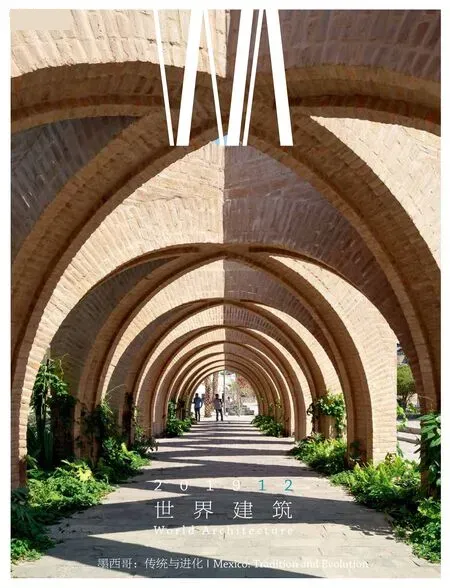
墨西哥:歷史與建筑
2019-12-24 14:14:26瓦妮莎別爾馬VanessaVielma
世界建筑 2019年12期
關鍵詞:建筑
瓦妮莎·別爾馬/Vanessa Vielma
黃華青 譯/Translated by HUANG Huaqing
作者簡介:建筑師,ArchDaily Mexico當地辦公室主管/Architect, Local Office Leader, ArchDaily Mexico

1 特奧蒂瓦坎/Teotihuacaón
論及墨西哥當代建筑的發展,無疑是在討論一個不同的歷史片層、社會邊界的熔爐,這個熔爐與直至今天我們所在的21 世紀初的墨西哥社會、歷史及文化的各個層面及表征依然密切交織。這是一個新的挑戰不斷涌現的時刻,最主要的挑戰便是如何定義新一代墨西哥人的身份;這是一個變遷的時刻,它與廣泛的全球事件相關,同時又與我們的社會風俗及生活方式緊密相關、融為一體。
一開始有必要澄清,墨西哥的歷史淵源便是各種各樣的文化、民族及身份認同的聯合體——遠遠不限于16 世紀初阿茲特克人與西班牙人交戰后的歷史。在這一歷史性相遇之前,在墨西哥與今日美國相鄰的地帶——即所謂的中美洲——居住著超過100 種不同的文化,每一種都有其獨特的建筑、藝術、社會、科學、軍事和政治表達。例如瑪雅人(公元前1500 年至300 年),擁有特色獨具的建筑形式,如紀念性的高臺、金字塔、神廟和石柱;又如阿茲特克人(8 世紀),他們的神廟具有宏大的紀念性,展現出對幾何、對稱及秩序感的高水平掌控,以此表達對神明的敬意。此外還有很多。同一時期,歐洲的伊比利亞半島上,多種天主教、猶太教和穆斯林民族,以及西歐和中歐的若干帝國之間,正經歷著社會、經濟、文化和權力的重構。這是該地區歷經近8 個世紀的阿拉伯統治而達到頂峰的時代;在此之前,各個民族的交鋒已在伊比利亞半島上創造了杰出的文化、藝術及建筑遺產。
所有這些文化與現實,都在今天所謂的“美洲大發現”(1492)找到了匯合點;緊接著就是西班牙人的“大征服”(1519),然后又經歷了“總督轄區”的發展與整合階段,最終在持續10 年的“獨立戰爭”中達到頂峰。整個過程大約持續了3 個世紀,從1492-1519 年到1810-1821 年。在這一系列事件之前,該地區只目睹了一些民族和文化之間的相互統治及共存關系。而在這段整合期之后,我們方可稱之為墨西哥。
與那些土著文明幾乎遭遇滅絕的殖民進程(如北美洲的印第安人)有所不同,墨西哥是一個種族混合的獨特案例,原因包括復雜的政治和軍事聯盟、宗教信仰,還包括各個文明與其自身的城市、基礎設施、天然財富、貿易、科技的相遇,以及它與自然的親密關系。這些聯盟給各方都帶來了好處,有的是為了獲取財富,有的則是為了獲取力量以對抗共同的敵人——阿茲特克帝國,后者當時統治著周邊的若干個民族。在這些民族看來,新到來的歐洲人是一個消滅這個共同敵人的機會,這最終也讓他們甘愿臣服于西班牙人的統治之下。
在方濟各會的僧侶們試圖在新大陸推廣天主教信仰的過程中,他們發現最好的傳教方式就是將上帝的信仰、天主教的儀式及圖像與土著民族的自然信仰結合起來,這也導致了兩種信仰體系的融合,至今依然具有生命力。
盡管大部分土著信仰體系中的神廟和相關構筑物都被拆除——其建筑材料被用于建造新的天主教堂和西班牙帝國統領下的政府建筑,但大部分基礎設施和技術進步皆得到了利用。如今它們依然是墨西哥城中心的基礎所在——包括連接各個次中心的道路網,以及為城市供應飲用水源的查普特佩克輸水渠。
在西班牙人征服的每一塊新領地和文化中,這一過程不斷地重復——在施以新的權力結構的同時,也利用并整合地方的知識、資源和習俗。
這樣的轉變過程是充滿沖突的,但也正是在這個階段,“傳統”誕生了——包括飲食、色彩、建筑、藝術、醫學、音樂,還有很多我們今天認為是墨西哥“傳統”的文化及社會表征。
墨西哥的建筑風格來自西班牙,當然也雜糅著顯著的阿拉伯影響,并與當地人的材料、要素及風格相融合。這創生出一種獨有的建筑表達,功能則適應于統治階級的需求,如天主教會和總督政府。因此,第一批神廟及大型天主教堂的建造,塑造了新西班牙的巴洛克風格——繁縟的裝飾是這一時期建筑風格的標志,來源于當地特殊的石材尺寸以及土著人如畫的裝飾母題,同時基于歐洲建筑的范式和教士的現場指揮。
墨西哥的城鎮發展不斷加速,很大程度上依靠著自然資源和金銀礦的開發和攫取,當然還得益于這里極為有利的地緣位置,便于與美洲大陸其他地區及環太平洋地區建立移民和貿易路線。由此,這塊新領地對于其他國家的吸引力不斷增強,它與北邊那片重要性不斷提升的英帝國殖民地之間的關系也在逐步緊密。
因此,墨西哥在1821 年從西班牙帝國獨立之前,業已生產出一種全新的藝術、文化、技術、社會、政治和宗教上的獨特身份。
1821 年,剛剛形成并獨立的墨西哥尚且處在政治權力的調解過程之中,前幾十年一直深陷內戰陰云。這導致了富裕階層與貧窮階層、鄉村與城市之間的區隔。政府與教會的分離,同時諸如法國、英國和新近建立的美利堅合眾國等國家不斷試圖影響和統治墨西哥,這帶來了不斷迭替的外來影響,另外也在織物、服飾、飲食、武器、藝術等方面塑造了全新的風格——盡管并不是某種明確定義的風格,但無疑受到了社會經濟變遷的強烈影響。
1876 年,波費里奧·迪亞斯掌握政權,一直持續至1911 年,這一段30 余年的時期被稱作“波費里奧時代”。這段時期的重要意義在于,迪亞斯決定開放國外投資,由此帶來一段工業現代化以及鐵路建設的時代;更關鍵的是,墨西哥開始接納法國藝術、烹飪、風俗尤其是建筑風格,產生深遠的影響。
To speak about the development of contemporary Mexican architecture, undoubtedly,is to speak about a melting pot of layers and edges intricately connected with every aspect and expression of Mexican society, history and culture until the first decades of the 21st century,in which we currently live. A moment in which the new challenge arises, a challenge to identify what this new Mexican identity could be, a moment of transition linked to world events at large, but also intimately linked to and blended with our customs and lifestyles.
It is important to start by clarifying that Mexico is born from the union of a wide variety of cultures, peoples and identities, beyond the history of the Aztecs vs. the Spaniards in the early sixteenth century. Before this encounter,in the territory where Mexico and part of the United States meet today, were the regions of Mesoamerica and Aridoamerica, populated by almost a hundred different cultures, each with its own architectural, artistic, social, scientific,military and political expressions. As is the case of the Mayan people (between 1500 and 300 BC) and its very characteristic architectural expressions such as ceremonial platforms, pyramids, temples,steles, as well as the Aztecs (8th century), who with the monumentality and grandeur of their temples mastered geometry, symmetry and sense of order and venerated their gods, only to name a couple.Meanwhile the European counterpart, the territory of the Iberian Peninsula was going through a period of social, economic, cultural and power restructuring between the various Catholic, Jewish and Muslim peoples as well with the kingdoms of Western and Central Europe. This is where a period of approximately eight centuries of Arab rule in this territory culminated, but not before leaving an incredible cultural, artistic and architectural legacy of the various interactions between these peoples.
All these cultures and realities, found their meeting point in what we now call "The Discovery of America" (1492), and then "The Conquest"(1519) by the Spaniards, going through their periods of evolution and integration during the"Viceroyalty" culminating in the ten years that "The War of Independence" lasted. This whole process continued for a period of approximately three centuries between 1492-1519 to 1810-1821. Before these events there were only a series of peoples and cultures trying to dominate each other and live together in the area. It is after this period of integration that we can talk about something called Mexico.
Unlike other conquest processes where the extermination of indigenous peoples was a reality as in the case of Native Americans in North America, the case of Mexico was that of a miscegenation due to a complex process of political and military alliances, religious beliefs and due to the encountering of entire civilisations with their own cities and infrastructure, natural wealth,commerce, technology and a close relationship with nature. These alliances had their conveniences from several sides, some were to obtain wealth and others to obtain power against a common enemy, as the great Aztec Empire, which had dominated the other nearby communities. By them the newly arrived Europeans were seen as an opportunity to end this enemy, which ultimately lead to them remaining under the dominion of the Spaniards.
During the process of the imposition of the Catholic faith by the Franciscan monks, it was found that the best way to do so was to integrate the beliefs in the gods of the indigenous peoples based on nature, with the Catholic rites and iconography,resulting in a syncretism between the two faiths that survives to this day.
Although many temples and structures dedicated to the deities of the indigenous peoples were destroyed in order to use their materials in the construction of the new Catholic temples and buildings for the government of the Spanish Crown,much of the infrastructure and technological progress was taken advantage of as well, and on which the centre of Mexico City is still based on,such as the network of roads that communicated between the different centres, or the road that contained the aqueduct of Chapultepec that supplied drinking water.
In each new territory and culture conquered by the Spaniards this process was repeated, an imposition of a new power structure, while taking advantage of and integrating local knowledge,resources and customs.
These transitions were conflicting, but it was during this period that traditions were born. The kitchen, the colours, the architecture, the art,the remedies, the music and many other cultural and social expressions that we today know as traditionally Mexican.
The architectural style was brought from Spain,which in turn had a great Arab influence, fusing the materials, elements and styles of local people,creating expressions of their own but with uses well defined by the main power groups such as the Catholic Church and the Viceroyalty government.And so the first temples and large cathedrals were built that gave rise to the Baroque style of New Spain, with the elaborate decoration being the hallmark of this architectural style, depending on the size of the stone and the pictorial decoration made by the natives, but based on European patterns and directed by the monks.
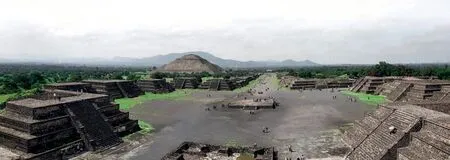
2 特奧蒂瓦坎/Teotihuacaón
這段影響墨西哥的法國建筑風格也被稱作折衷主義建筑,因為它是多種風格的復興,包括:歐洲諸美術學院派系、新藝術風格、裝飾藝術風格、新古典主義風格、新哥特風格等等。繁復的裝飾、傾斜的法式吊頂、石材、寬闊的墻面、高聳的室內、瓷片、大理石、花崗巖、銅制品、彩繪玻璃窗、雕刻菱形石、裸露或隱藏的柱式、垂直或開敞的山形墻、額枋、曲線檐口、陽臺、浮雕、三角墻的泛用、宏大的門廊、帶有盾牌或徽章的裝飾板、柱頭、室內家具和古典主義裝飾、裝飾的天花等等,都是該時期建筑的典型特征。
這些建筑的締造者包括來自各個國家的建筑師,如法國、比利時、意大利、英國、美國等。該時期的代表人物包括阿達莫·博阿里(墨西哥城藝術宮的設計者)、埃米爾·伯納德、馬克西姆·羅生、希爾維奧·康特里、恩厄斯特·布魯內爾。此外還有墨西哥本土的建筑師——其中大部分都曾在國外接受教育和訓練,如曼努埃爾·奧蒂茲·蒙納斯特里奧、貝爾納多·卡爾德隆、伊納西奧·馬奎納、費德里科·馬里斯卡爾。最杰出的建筑師無疑是安東尼奧·里瓦斯·梅爾卡多和埃米利奧·東德。
海外投資、技術、新建筑和藝術風格的到來,幫助創造了城市中的新公司、新工坊,這又一次改變了社會結構,促進了農村到城市的移民活動。也正是在這一時期,藝術風格的表達開始發生變化;在過去幾個世紀居統治地位的宗教建筑和藝術,隨著政教分離而逐漸失去權力。教會的領地、財富和資產皆被收繳,在城市發展中逐步轉變為公共機構和基礎設施。新建的市民建筑則為那些從鄉村遷徙到城市中尋找工作的新家庭提供居所。
農村生活開始轉變為城市生活,手工作坊逐漸繁榮起來,很多商品可以通過更簡便、快速和廉價的方式生產——如織物、鞋子、啤酒、甜品、雪茄、糖、紙、玻璃、油、爆炸物、水泥和各種化工產品。這導向了日常生活習慣、飲食、衣物和傳統的變化,家庭生活在街區和小型社區中享有愈發重要的地位。
這些轉變的發生并非沒有后果。由于移民、政治沖突、土地所有權所導致的城市經濟和社會不平等,以及大部分墨西哥農村地區的日益貧困,墨西哥在1910 年爆發革命,于1917 年終結了“波費里奧時代”。這一歷史事件幾乎與俄國革命和第一次世界大戰同時發生。
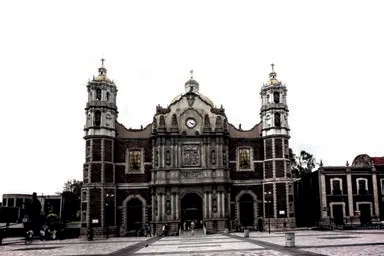
3 瓜達盧佩大教堂(殖民時期)/Basi?lica de Guadalupe(colonial)
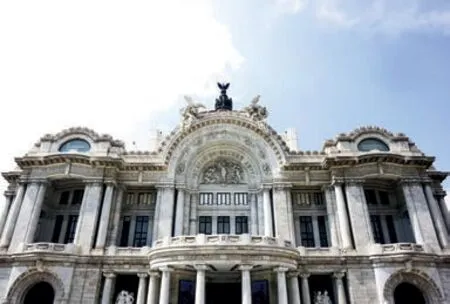
4 墨西哥城藝術宮,阿達莫·博亞里/Palacio de Bellas Artes,Adamo Boari
墨西哥的社會劇變也引發了一場以社會運動為核心的藝術革命,例如由迭戈·里維拉、大衛·阿爾法洛·西凱羅斯、何塞·克萊門特·奧羅斯科等一群壁畫家所領導的藝術運動,胡安·奧戈爾曼等功能主義者倡導的新建筑風格,還有將地域建筑與現代建筑相融合的建筑風格——如廣受認可的路易斯·巴拉甘的作品。
在這一輪政治調整和經濟增長之中,諸如墨西哥城、瓜達拉哈拉等城市的擴張與現代化進程造就了藝術創造和現代主義建筑的高產期,法國、比利時和英國的影響十分明顯,來自這些國家(還包括美國)的工業產品的影響也滲透到1920-1930 年代的城市生活之中。
在這個10 年,西班牙內戰與第二次世界大戰的陰云正在歐洲上空積聚;1938 年墨西哥開采石油之后,引發整個國家的經濟大增長,也吸引了很多歐洲藝術家和建筑師移民至此,包括來自包豪斯學派的建筑師——1939 年,包豪斯的第二任校長漢斯·梅耶移民墨西哥,帶來了全新的建筑思潮。
包豪斯的前衛理念導向功能主義建筑思潮,他們認為建筑必須適應于人及其活動——與過去一直以來的做法恰恰相反——功能和材料成本比外在的美觀更受重視。墨西哥最早的功能主義住宅是由建筑師胡安·奧戈爾曼、壁畫家迭戈·里維拉和弗里達·卡洛設計建造的。
哈利斯科學派是這一系列社會政治運動中一條來自鄉村的路徑,路易斯·巴拉甘(至今為止墨西哥唯一的普利茲克獎獲得者)成功地將空間形式與墨西哥及地中海國家(西班牙、摩洛哥等)的鄉土建筑傳統進行融合,整合了大規模建造的形式語言、獨特的材質、濃烈的色彩、豐富的光影營造,為國際上的極簡主義風格帶去了新的視野。哈利斯科學派的杰出代表還有費爾南多·岡薩雷斯·科塔薩爾——他采取混凝土形式及材料模擬鄉土建筑的風格化塑造更為極致。
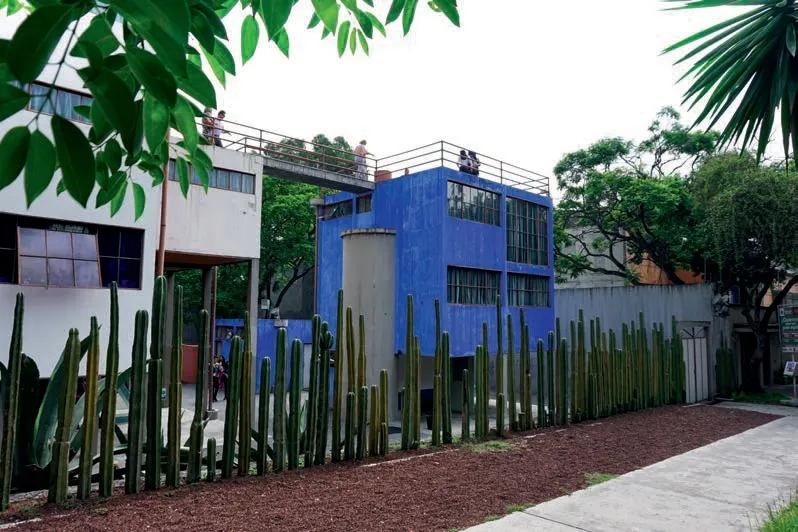
5 工作室住宅,弗里達·卡洛、迭戈·里維拉和胡安·奧戈爾曼/Casa Estudio, Frida Kahlo and Diego Rivera, Juan O'Gorman
The growth of towns and cities was accelerated,in large part due to the extraction of natural resources and gold and silver mining, as well as the beneficial geographical position of the territory for establishing migration and trade routes to the rest of the continent and the Pacific Ocean, increasing the attractiveness of this new territory for other countries, in addition to its latent relationship with the increasingly important colonies of the British Crown in the north.
Thus, Mexico, before its independence from the Spanish Crown in 1821, was already exposed and producing a new artistic, cultural, technological,social, political and religious identity.
In 1821 the newly formed and independent Mexico was still in a process of adjustments of politics and power, with internal wars in its first decades of existence. This lead to a quite marked segregation of social groups between the rich and the poor, the countryside and the city. The separation between the government and the church,as well as other countries, such as France's, the United Kingdom's and the newly formed United States of America's attempts to influence and dominate Mexico lead to an exchange of influences from one side and to other, as well as to the production of new styles in textiles, clothing, food,weapons and art, without having a defined style,but undoubtedly influenced by the strong socioeconomic changes.
In the year 1876 Porfirio Díaz came to power and remained there until 1911, that is, for more than thirty years naming the period that would be called the "Porfiriato". This period of time was crucial due to Díaz deciding to open the country to foreign investment, to a process of industrial modernisation, to the arrival of the railroad and,above all, to the adoption and profound influence of the French style of art, cooking, customs and especially architecture.
This influence of the French style in architecture is also considered as eclectic architecture because it recovers several styles: the currents of European fine art schools, art nouveau, art deco, neoclassical,neo-gothic, etc. Ornamentation, sloping Frenchstyle ceilings, stone materials, wide walls, interior heights, ceramics, marbles, granite, bronze, stainedglass windows, carved quarry, exposed or embedded columns, vertical or open gables, architraves, curved cornices, balconies, floating segments, abundance of pediments, large portals, boards with shields or symbols, capitals, interior furniture and classic decoration, decorated ceilings and ornamentation are all typical to buildings of this period.
Architects of different nationalities were in charge of the production of this architecture, be it French, Belgian, Italian, English or American. Among the highlights of the period was Adamo Boari (Palacio de Bellas Artes), Emile Bernard, Maxime Roisin,Silvio Contri and Ernest Brunel. But there were also Mexican architects, most of them had been trained abroad, such as Manuel Ortiz Monasterio, Bernardo Calderón, Ignacio Marquina and Federico Mariscal.The most prominent were undoubtedly Antonio Rivas Mercado and Emilio Dondé.
The arrival of foreign industries, technology,and new architectural and artistic styles helped the creation of companies and workshops in the cities,changing social structures again, and increasing the migration from the countryside to the city. It is during this moment that artistic expressions began to change; the architecture and religious art so dominant in the previous centuries now lost power due to the division of the government and the church. The territories, wealth and property were expropriated to turn them into public equipment and infrastructure for the growing cities. Civil architecture was making its way to receive new families that migrated from the countryside to the city in search of work.
Rural life began to transform into urban life and crafts and workshops gained strength, giving a new face to what could be produced in a simpler,faster and cheaper ways, such as fabrics, shoes,beers, sweets, cigars , sugar, paper, glass, oils, soaps,explosives, cement and various chemicals. This lead to the changing of daily habits, food, clothing and traditions, and family life gaining even more strength in neighborhoods and small communities.
This period of adjustments could not happen without consequences. Because of economic and social inequality in cities due to migration, political conflicts, land ownership, increasing poverty in the countryside in a mostly rural Mexico, triggered the Mexican revolution in 1910, marking the end of the"Porfiriato", ending in 1917, a historical moment almost coinciding with the Russian Revolution and the First World War.
This important moment of change in Mexican society helped to detonate a whole artistic creation taking the social movements as a centre, such as the one promoted by the group of muralists, Diego Rivera, David Alfaro Siqueiros, José Clemente Orozco, among others, and the new architectural styles of the Functionalists such as Juan O'Gorman and the integrations between regional and modern architecture as the widely recognised work of Luis Barragán.
During a period of adjustments and economic growth, the expansion and modernisation of cities such as Mexico City and Guadalajara brought about a proliferation in terms of artistic production and modernist architectural styles with French, Belgian and British influences, as well as industries of these countries and from the USA, which during the 1920s and 1930s were reflected in urban life.
During this decade, the Spanish Civil War and World War II were brewing in Europe; and in 1938 the Expropriation of Petroleum occurred in Mexico,which was a moment of economic growth for the country, attracting the migration of many European artists and architects from the Bauhaus school giving way to the birth of new schools promoted by Hannes Meyer, the 2nd director of Bauhaus who arrived in Mexico in 1939.
The functionalist movement emerges from the avant-garde principles of Bauhaus, which indicated that the buildings must adapt to people and their activities rather than vice versa, as it almost always had been, affirming that the function and price of materials are valued more than beauty, and so the first functionalist house in Mexico was built by the architect and muralist Juan O'Gorman for Diego Rivera and Frida Kahlo.
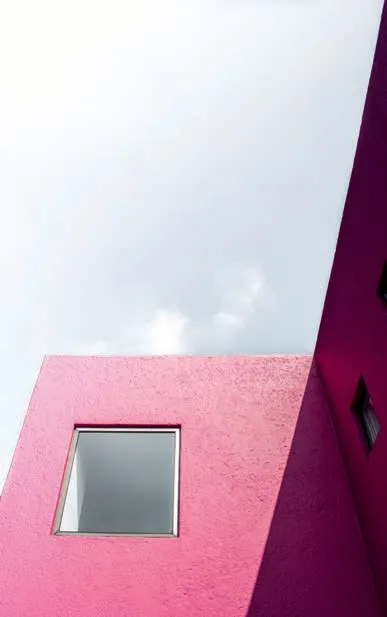
6 吉拉迪住宅,路易斯·巴拉甘/Casa Gilardi, Luis Barraga?n
這一波新的文化交流,不再像500 年前那樣,來自本地人與歐洲人之間的暴力沖突與統治,而是源于新涌現的文化社群與其他文化社群的相遇,他們發現了富饒的體驗土壤,從而在現存建筑基礎上進行創造、而非毀滅它,由此在藝術、哲學、建筑、電影、攝影、廣播和電視等領域發展出全新的表達與合作形式。
技術、汽車、廣播、電視、電影、新工業設計、新產業和新材料,代表了在理性主義和國際化運動影響下的新走向。這也塑造了該時期的建筑趨勢,即整個墨西哥都希望搭上新經濟的快車,尤其是采納新的超級大國輸出的文化浪潮。這一次,信仰體系或生活方式不再需要外力強加,整個國家只想要趕緊接納。
隨著新的生活方式的采納,同時得到拉丁美洲石油業繁榮所激發的經濟增長的支持,墨西哥和巴西成為該時期世界眼中拉丁美洲的代表。同時,墨西哥城在幾年內經歷了極高速的人口增長,而建筑業的速度并不能與之匹配。盡管私人的建造活動持續進行,但也很有必要開啟系列化的整體開發。個人化的建筑表達變得愈發罕見,或者說是集中在一些為特定社會團體工作的建筑師身上。
現代主義,包括其理性主義原則以及國際風格的前衛思潮,隨著一批建筑師傳入墨西哥——這批建筑師包括特奧多羅·岡薩雷斯·德·萊昂、奧古斯丁·赫爾南德茲·納瓦羅、阿布拉罕·薩布魯多夫斯基·克拉維斯基、胡安·索爾多·馬達雷諾、馬里奧·帕尼等等。其中,馬里奧·帕尼可視為這一建筑發展進程的重要參照,他最受認可的作品是一系列住宅公寓,代表作包括阿萊曼總統城市中心、諾阿爾科·特拉特洛爾科城市綜合體。
大尺度建筑也在墨西哥的第一座摩天樓中得到表達——拉丁美洲大廈,由建筑師奧古斯都·H·阿瓦雷茲設計,高183m、45 層,它也成為墨西哥城最具標志性的建筑之一,凝聚著來自美國的資本主義意識形態——即為了地塊價值最大化而竭力征服天空。這棟摩天樓從其建成的1956 年起,一直把持著墨西哥城的制高點,直至1972 年被世界貿易中心大廈超越——后者由吉約姆·羅塞爾·德·拉·拉瑪、華金·阿瓦雷茲·奧多內茲、拉蒙·米凱拉賈雷吉設計,也是當時美國之外的世界最高樓,當然也是拉丁美洲的最高樓。
1990 年代,隨著墨西哥、美國、加拿大之間簽署《北美自由貿易協定》、墨西哥通訊網絡的改良、因特網等技術的大規模商用,墨西哥與世界之間打開了一扇新的窗口,可以接觸到更多的教育、知識、投資、市場和工作機會。同時,里卡多·列戈瑞達也以其在實驗室、工廠、賓館、博物館中所運用的地域性后現代風格及宏偉尺度,在墨西哥建筑史上奠定了很高的地位。
第一波國際化思潮抵達墨西哥時遭到了無視,因為彼時的墨西哥正處在一段完全專注于內部生產的時代。而隨著歐洲的復蘇,建筑教育及行業實踐達到了極高的品質,城市也在危機和機遇并存之中得到改造,藝術、建筑和設計也進入了新的軌道。
這時,墨西哥的新一代建筑師、藝術家和設計師希望能逃離國內的頹靡。從1990 年代中葉至21世紀初,他們紛紛移民歐洲、美國以尋求職業化學位,在“明星建筑師體系”中尋找工作機會,沉浸在一切可能接近新思潮的體驗之中。如今,人的“入侵”和新的沃土出現在了世界的另一端。
這一代墨西哥建筑師經過幾十年的訓練,逐步發展出對其自身文化和傳統的重新定位,同時輔以可觀的全球視野和知識儲備。
這在過去10 年的建筑、城市、織物、時尚、電影、烹飪、設計和藝術生產中已見端倪。墨西哥的祖輩父輩們的材料、顏色、質感、味覺、品性、神性、環境、技術和傳統都得到復蘇和挪用,清晰地體現在這些新作品之中;這些作品不僅貼近本土,也并未忽視當代世界的社會、技術和經濟語境。
2019 年的當代墨西哥建筑師,不再僅作為一名建筑師,而是新墨西哥身份的探索者——這種身份是他們與生俱來、持續生活于其中的,建筑只是其中一種表征形式。他們這樣一群人,每天都在捫心自問:“什么是今天的墨西哥?”□
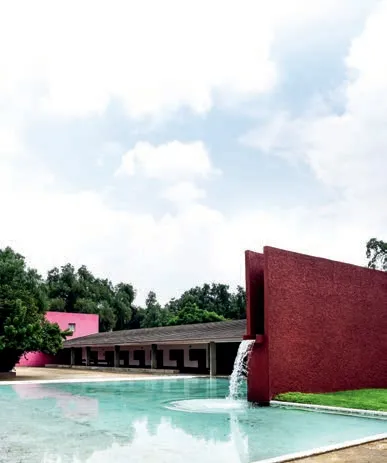
7 圣·克里斯特博馬廄與住宅,路易斯·巴拉甘/Cuadra San Cristoobal, Luis Barragaon(1-7攝影/Photos: ?Rodrigo Flores)
The Jalisco School was a proposal of those socio-political movements demanded by the country, Luis Barragán (the only Mexican Pritzker Prize winner so far) managed to combine the shape of space with forms of vernacular rural architecture of Mexico and Mediterranean countries (Spain-Morocco), integrating a formal language of massive volumes, marked textures, bright colours, light and shadow management in different shades,opening a view towards international minimalism.Other outstanding exponents of the Jalisco School are Fernando González Cortázar with a greater stylisation of concrete forms and materials resembling vernacular architecture.
This new cultural exchange no longer occurred due to violence and domination between indigenous and European peoples as five hundred years before,but rather because a new wave of cultural groups met another wave of cultural groups and found fertile ground to experience, working from the existing architecture without destroying it and developing new forms of expression and collaboration in art,philosophy, architecture, cinema, photography, radio and television.
Technology, the automobile, the radio, the television, cinema, new industrial design and new industries and materials marked new trends influenced by rationalism and the international movement. This marked the architectural trend in Mexico, since the country wanted to get on the new economic, and above all, cultural wave marked by the new superpowers. This time there was no imposition of a belief system or a lifestyle, this time the country wanted to adopt it.
With the adoption of this new lifestyle, growth and economic model supported by an oil boom of a vibrant Latin America, Mexico and Brazil was leading this image in the eyes of the world. But at the same time the rapid population growth of Mexico City accumulated in a few years an excessive contingent of inhabitants without the construction industry following a parallel rhythm.Although private architectural production continued to develop it was necessary to start with serial developments. Individual architectural expression become increasingly rarer or were concentrated in architects working for certain social groups.
Modernism, the principles of rationalism and the avant-garde tendencies of international schools of architecture arrived with architects such as Teodoro González de León, Agustín Hernández Navarro, Abraham Zabludovsky Kraveski, Juan Sordo Madaleno and Mario Pani among others,the latter being a great reference of these serial developments and mostly recognised for the design of multifamily housing complexes, the most iconic being Centro Urbano Presidente Alemán CUPA and the Nonoalco Tlatelolco Urban Complex.
The large-scale architecture also found representation with the first skyscraper in Mexico, Torre Latinoamericana designed by the architect Augusto H. álvarez with a height of 183 metres and 45 floors, becoming one of the most emblematic buildings in Mexico City in the fight for the conquest of the heavens taking full advantage of the lot, a capitalist ideology from the United States. It remained the tallest building in the city from its construction in 1956 until 1972,the year in which the World Trade Centre Tower designed by Guillermo Rossell de la Lama, Joaquín álvarez Ordó?ez and Ramón Miquelajauregui was completed; which obtained the highest skyscraper record in the world outside the United States and therefore in Latin America.
For the 1990s with the signing of the North American Free Trade Agreement (NAFTA) between Mexico, the United States and Canada, the improvement of telecommunications networks,greater commercial access to internet connections for the majority of the population and access to technology, a new window was opened to the world that created access to new opportunities for education, knowledge, investment, markets and work. At this moment Ricardo Legorreta already stood out in the history of architecture in Mexico with his works such as laboratories, factories, hotels and museums of regional postmodern style and monumental scale.
The first sketches of a globalised world confronted Mexico in the face of a reality that it had ignored as it entered a period dictated solely by internal production. A recovered Europe, with an education and architectural production of the highest quality, with cities transformed based on crises and opportunities, now set the course in terms of art, architecture and design.
Mexican architects, artists and designers, now wanted to get out of their lethargy and in the mid- late 1990s and early 2000s, this new generations began to migrate to Europe and the US in search of postgraduate degrees, job opportunities in the "star system" and to soak up all the possible experiences that would allow them to approach these new trends. Now the invasion and the new fertile land were sought from the other side.
With those couple of decades of training of these generations of Mexican architects lead them to find a renewed revaluation of their culture, their traditions, complemented by their global knowledge.
This can be observed in the architectural, urban,textile, fashion, film, kitchen, design and artistic production of the last decade. Works where the recovery and appropriation of materials, colours,textures, flavors, nature, spirituality, environment,techniques and traditions of the Mexico of their grandparents, great grandparents, families and friends, is explicitly expressed by the authors, still easily approachable due to its proximity, all the while without neglecting the contemporary social,technological and economic context.
The contemporary Mexican architect of 2019 is no longer defined only by being an architect, but by being a seeker of that new identity of Mexico in which they were born and where they live, where architecture is only one of their forms of expression.It is somebody who every day asks themselves"What is Mexico today?"□
猜你喜歡
北方建筑(2021年6期)2021-12-31 03:03:54
文苑(2020年10期)2020-11-07 03:15:36
現代裝飾(2020年6期)2020-06-22 08:43:12
現代裝飾(2020年4期)2020-05-20 08:55:08
攝影之友(影像視覺)(2019年2期)2019-03-05 08:27:16
藝術家(2017年3期)2018-01-26 08:54:49
文學自由談(2016年3期)2016-06-15 13:01:16
福建農業科技(2016年10期)2016-03-07 09:46:49
少兒科學周刊·兒童版(2015年6期)2015-11-24 03:49:38
中國工程咨詢(2015年4期)2015-02-14 03:49:56