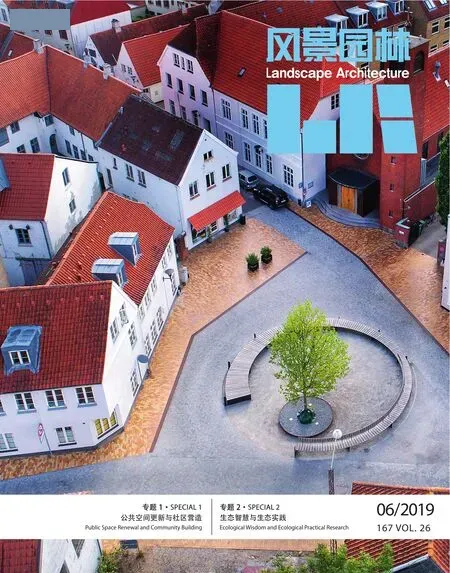
尊重斯德哥爾摩的歷史中心
——騎士島的激活改造
2019-11-30 11:50:40AJ景觀
風景園林 2019年6期
AJ景觀
瑞典國家財產委員會擁有騎士島的所有權與管理權,并計劃對該島上所有的公共空間進行更新和開發,以提高其可達性與吸引力。總的來說,從文化歷史角度來看騎士島很有意思,它具有很高的古文物價值,需要得到尊重和重視。該項目的核心是找到一種更新和修復島嶼的方法,從而在尊重歷史價值的同時滿足現代功能需求。對騎士島南部的改造是島上公共空間更新的第一部分。

1 總平面圖Master plan
當站在騎士島碼頭上時,大海和斯德哥爾摩的神奇景色引人入勝。設計的關鍵條件是沿濱水區域創造可以供人步行與停坐的大面積空間,并在保持開放海港氛圍的同時,對舊的道路鋪裝進行管理。設計者設計了一套靈活使用公共空間的綜合解決方案,將開放空間與之前的碼頭一樣,沿著水濱的形態進行布局。這些大型開放空間既可用于舉行各種活動,也可停放汽車和公交車。設計也對碼頭進行了加寬處理,并在歷史建筑附近創造了更多的空間。碼頭也可用于停泊定期班輪和租賃船。
水面總能為停坐在岸邊的人們創造出充滿吸引力的景觀。騎士島南部項目的長椅是專為該地區設計的,由位于瑞典第二大湖泊韋特恩湖中的韋欣莎島上的國王橡樹木材制作而成。這些寬敞和自由的區域距離騎士島的歷史建筑很近,為人們體驗建筑提供了良好的條件。在建筑之間形成的三角形場地朝南、蔭蔽且安靜,以滿足人們會面和社交的需求。在這些地方,你可以找到沿瑞典最高行政法院的正立面擺放的舒適長椅,以及最高行政法院與西部體育館之間沿著山腳而設置的定制坐凳。
歷史上,騎士島上最接近建筑的區域曾經是開敞而空曠的——地面上覆蓋著不同種類的鵝卵石與花崗巖等天然石材。而新建的鵝卵石區域由于表面不平坦,被設置在了人們鮮少步行的地方。鵝卵石依照傳統方式成排排列,大小不一的石子創造出一種安靜而有趣的美麗路面。廣場的天然石材鋪裝被用于人行和車行2種區域。不同的功能分區由不同顏色的石頭與其表面不同的涂層工藝進行區分。大多數材料包含有循環再利用的舊鋪路磚,它們有的是改造前場地中的,有的是之前被埋在地下的。具有特色的方形“馬石”標志著重要的交匯處,也用不同大小的光滑石板鋪設了一條無障礙輪椅通道,增加了道路鋪裝的多樣性。
碼頭上的樹木在20世紀60年代就已種下,如今已長成參天大樹,為游人提供了積極而良好的場所體驗,并對硬質的停車場進行柔化。設計也新增了一些樹木種植,在對空間進行劃分的同時也提供了更多的綠蔭。

2 由韋欣莎島上的橡木制作而成的長椅Benches with oak from Visings?

3 晴天的騎士島Riddarholmen on a sunny day

4 騎士島整體鳥瞰Bird’s-eye over Riddarholmen

5 特制的長椅Specially designed benches

6 長椅與鵝卵石路面Benches and ground with cobblestones

7 順應石墻走向的特制長椅Specially designed bench following the rock wall

8 緊靠石墻與建筑而延伸的長椅A long bench stretching close to the rock wall and the building
Riddarholmenis owned and managed by Statens Fastighetsverk (The National Property Board of Sweden), which plans to renew and develop all of the island’s public space to make it more attractive and accessible. Overall,Riddarholmenis interesting from a cultural history point of view, and holds great antiquarian values that need to be respected and taken care of. It’s been central in the project to find a way to renew and renovate the island in order to meet contemporary requirements for function while throughout respecting its historical values. The projectS?dra Riddarholmenis the first part of the island’s public spaces to be completed.
When standing by the quays ofRiddarholmen,the scenery of the water and the magical view of Stockholm is striking. Key conditions in the design have been to create large areas for walking and sitting down along the waterfront, and to manage the old paving while preserving the atmosphere of an open harbor. By letting the open space follow the direction of the waterfront, in the same way the old quay did,we created an overall solution with flexible use of the public space. The large open spaces can be used for different kinds of events, as well as for parking cars and buses. The design also allowed the quays to be widened, and more space was created near the historical buildings. The docks may also be used to moor ships, both liner vessels and charted ships.
Water always creates attractive spots for seating. The benches ofS?dra Riddarholmenare specifically designed for the location and are made of the King’s oaks fromVisings?, an island located in Sweden’s second largest lakeV?ttern.The spacious and unrestricted areas close to the historical buildings of Riddarholmen provide good conditions to experience the buildings. The triangular places formed between the buildings are sheltered, south facing, quiet areas to meet and socialize. At these locations, you find comfortable benches along the fa?ade ofKammarr?ttens Hus, and a custom-built bench that follows the mountain foot between Kammarr?ttens hus andV?stra Gymnasiehuset.
Historically atRiddarholmen, the areas closest to the buildings used to be open and empty - coated in different kinds of cobblestone, all natural stone such as granite. The new cobblestone areas are placed where people rarely walk because of their uneven surfaces. The cobbles are traditionally placed in rows. The stones vary in size and create a quiet but interesting and beautiful surface. The natural stone paving of the square is located in both pedestrianand traffic areas. Areas with different functions are defined by differently coloured stones and by the use of different pitching techniques on the surface of the stone. Most of the material consists of recycled old paving that has been found on location, buried in the ground. Characteristic, square, “horse-stones”mark important junctions, and there is a wheelchair accessible passage with a paving of smooth surfaced flagstones of different sizes, that creates additional variety in the paved surfaces.
The trees on the quays were planted in the 1960’s and are now large, impressive trees. They contribute in giving the visitor a positive experience of the area and they soften the impression of the parking lot. A few new trees have been added. They give the spot added shelter and divide it into smaller spaces.
猜你喜歡
北方建筑(2021年6期)2021-12-31 03:03:54
文苑(2020年10期)2020-11-07 03:15:36
現代裝飾(2020年6期)2020-06-22 08:43:12
全體育(2016年4期)2016-11-02 18:57:28
中國科技博覽(2016年2期)2016-04-25 20:32:39
小學生導刊(2016年34期)2016-04-11 00:49:44
少兒科學周刊·兒童版(2015年6期)2015-11-24 03:49:38
科普童話·百科探秘(2015年6期)2015-10-13 07:21:18
科普童話·百科探秘(2015年8期)2015-08-14 07:13:06
科普童話·百科探秘(2015年4期)2015-05-14 07:25:32