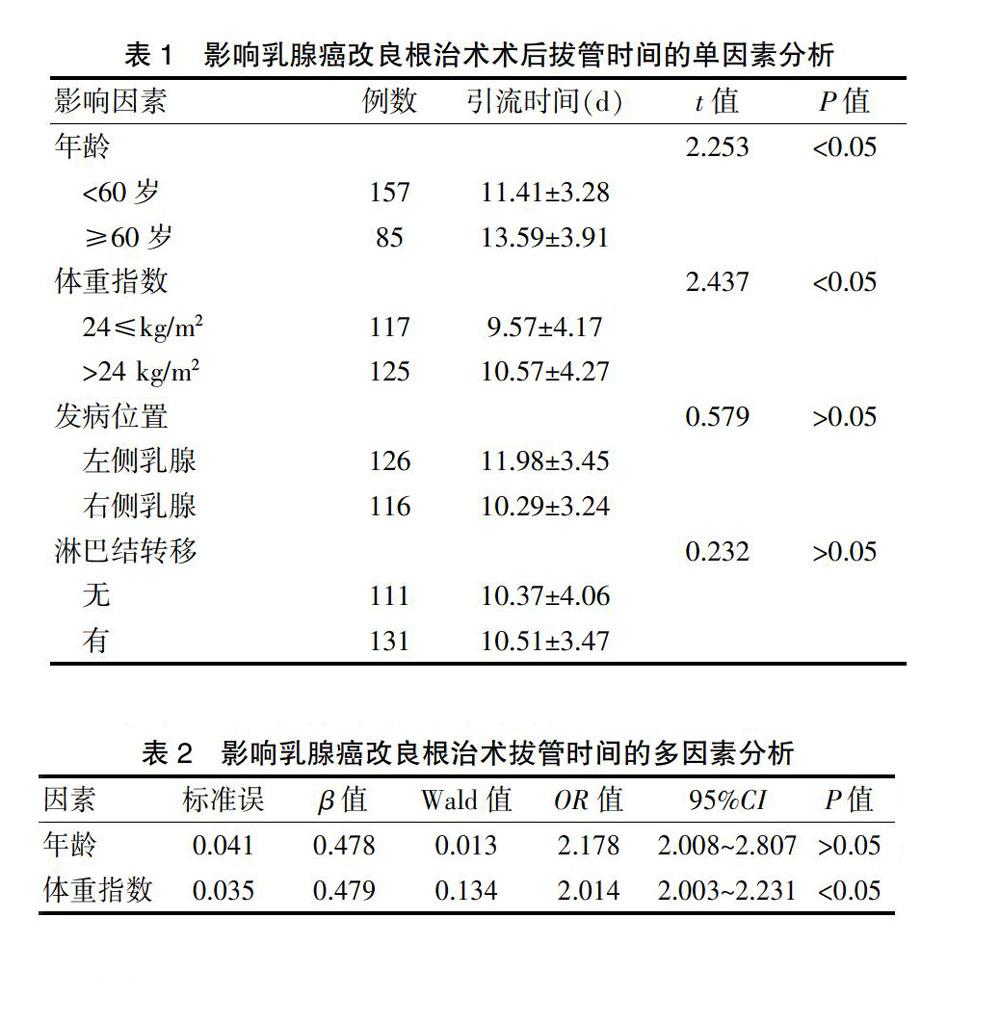
乳腺癌改良根治術后引流管拔管時間的影響因素分析
2019-10-30 02:44:35江金群
中國當代醫藥
2019年24期
江金群
[摘要]目的 探討預留手術器械對降低闌尾切除術后切口感染率的影響。方法 選取2016年1月~2018年6月我院收治的因急性闌尾炎行開腹闌尾切除術的200例患者作為研究對象,根據是否預留手術器械將其分為對照組及實驗組,每組各100例。對照組患者按常規手術進行,不預留手術器械,所有手術器械由手術開始時使用直至關閉腹膜、腹壁切口沖洗、縫合完畢。實驗組患者在手術開始前,預留部分手術器械(1把持針器、2~3把血管鉗、1把線剪、1個皮膚拉鉤、外科手套),在闌尾切除后,關閉腹膜、腹壁切口沖洗,移除術中已使用過的手術器械,更換為事先預留、清潔未污染的手術器械進行腹壁切口縫合。比較兩組患者的手術情況、切口感染發生及術后腸道功能恢復情況。結果 實驗組患者的住院時間明顯短于對照組,差異有統計學意義(P<0.05);對照組患者發生10例術后切口感染,切口感染發生率為10.0%,實驗組患者發生3例術后切口感染,切口感染發生率為3.0%,實驗組患者的切口感染發生率低于對照組,差異有統計學差異(P<0.05);實驗組患者的護理總滿意度為97.56%,對照組護理總滿意度為87.80%,實驗組患者的護理總滿意度高于對照組,差異有統計學意義(P<0.05)。結論 預留手術器械可有效降低行闌尾切除術急性闌尾炎患者的術后切口感染風險,縮短患者住院時間,具有臨床推廣應用的價值。
[關鍵詞]預留手術器械;闌尾切除術;切口感染;預防措施
[中圖分類號] R656.8? ? ? ? ? [文獻標識碼] A? ? ? ? ? [文章編號] 1674-4721(2019)8(c)-0050-03
[Abstract] Objective To investigate the influence of reserved surgical instruments to reduce the incisional infection rate after appendectomy. Methods A total of 200 patients with acute appendicitis who underwent open appendectomy in our hospital from January 2016 to June 2018 were enrolled in the study. The patients were divided into the control group and the experimental group according to whether or not the surgical instruments were reserved, 100 cases in each group. In the control group, according to the routine operation, no surgical instruments was reserved, all surgical instruments were used from the beginning of the operation until the peritoneum and abdominal wall incision were flushed and sutured. In the experimental group, some surgical instruments were reserved before the operation began (1 needle, 2-3 vascular clamps, 1 wire cutter, 1 skin hook, surgical gloves), after the appendectomy, close the peritoneum, abdominal wall incision flush, remove the surgical instruments that have been used during the operation, and replace with the advance leave and clean uncontaminated surgical instruments for abdominal wall incision suture. The operation of the two groups, the incidence of wound infection and the recovery of postoperative intestinal function were compared. Results The hospitalization time of the experimental group was significantly shorter than that of the control group, and the difference was statistically significant (P<0.05). There were 10 cases of incision infection after surgery in the control group, and the incision infection rate was 10.0%. There were 3 cases of incision infection after surgery, the infection rate of incision was 3.0%. The infection rate of the experimental group was lower than that of the control group, the difference was statistically significant (P<0.05). The total nursing satisfaction of the experimental group was 97.56%, the control group total nursing satisfaction was 87.80%. The total nursing satisfaction in the experimental group was significantly higher than that in the control group, and the difference between the two groups was statistically significant (P<0.05). Conclusion The reserved surgical instruments can effectively reduce the risk of incision infection in appendectomy in patients with acute appendicitis, the hospitalization time is shorter and has the value of clinical application.
[Key words] Reserved surgical instruments; Appendectomy; Wound infection; Prophylactic measures
急性闌尾炎是外科常見病,也是最多見的急腹癥[1],絕大多數急性闌尾炎一旦確診,應早期施行闌尾切除術[2],而切口感染是闌尾切除術后最常見的并發癥[3],有文獻報道闌尾切除術后切口感染率可達10%~30% [4],尤其是以化膿性及壞疽性闌尾炎患者、兒童、老年人以及免疫力低下等人群多見[5]。手術切口感染不但會直接影響到切口的正常愈合,還可能造成切口的再次損傷,更嚴重的會導致患者發生全身性感染,對患者的生理與心理造成嚴重影響,同時也增加患者的醫療費用[6-7]。……
登錄APP查看全文
猜你喜歡
今日農業(2022年4期)2022-11-16 19:42:02
河北果樹(2022年1期)2022-02-16 00:41:26
甘肅教育(2020年8期)2020-06-11 06:09:46
河北果樹(2020年2期)2020-01-09 11:15:07
建材發展導向(2019年5期)2019-09-09 09:21:46
中國當代醫藥(2016年30期)2017-01-07 00:45:41
中國實用醫藥(2016年29期)2016-12-26 10:10:31
中國實用醫藥(2016年23期)2016-12-26 09:59:59
今日健康(2016年12期)2016-11-17 12:29:29
中國實用醫藥(2016年26期)2016-11-07 12:22:33