小夫妻結(jié)廬人境隱居做陶
2019-04-22 07:42:24◇文
今日重慶
2019年4期
◇ 文
管永雙和妻子李云杉都是四川美術(shù)學(xué)院畢業(yè),學(xué)習(xí)工藝設(shè)計(jì)陶瓷專業(yè),同班同學(xué),標(biāo)準(zhǔn)的90后。
在上學(xué)時(shí),管永雙第一次跟隨老師到榮昌采風(fēng),就被榮昌上好的陶土驚艷到了。
“這里的陶土細(xì)膩,能做出上等陶藝作品。”于是,2014年畢業(yè)后,管永雙和妻子毅然來(lái)到榮昌區(qū)專心陶藝。兩人開(kāi)始在一家制陶廠做設(shè)計(jì),工作之余師從榮昌陶非物質(zhì)文化遺產(chǎn)傳承人張俊德,學(xué)習(xí)榮昌陶的制作工藝。
一年后,小兩口在安富街道通安村的一個(gè)山坡上租了民居,改造成工作室開(kāi)始自己燒窯制陶。
Both Guan Yongshuang and his wife Li Yunshan graduated from Sichuan Fine Arts Institute, majoring in ceramics process design. They were classmates and both born in 1990s.
When he was at school, Guan Yongshuang was amazed by the superior argil in Rongchang when he followed his teacher to tour and investigate there.
“The argil here is fine and smooth and it can be used to make first-class ceramic works.”
So, after they graduated in 2014, Guan Yongshuang and his wife decided to come to Rongchang to concentrate on the ceramics. At first,they worked in a ceramics factory as designers. After work, they learned from Zhang Junde, inheritor of Rongchang ceramics intangible cultural heritage to study the workmanship of Rongchang ceramics.
One year later, the young couple rented dwellings on a hillside of Tong’an Village, Anfu Street and reconstructed it into studio to start kilning and making ceramics.
重慶榮昌陶與江蘇宜興紫砂陶、云南建水陶、廣西欽州坭興陶并稱“中國(guó)四大名陶”,也是國(guó)家級(jí)非物質(zhì)文化遺產(chǎn),具有“紅如棗、亮如鏡、薄如紙、聲如罄”的特點(diǎn)。一件榮昌陶器制作需經(jīng)過(guò)制胚、裝窯、燒窯三個(gè)部分,歷時(shí)三個(gè)月時(shí)間。
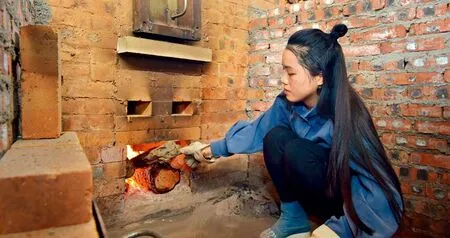
李云杉在窯前添柴,窯火溫度的變化將影響作品的色澤變化
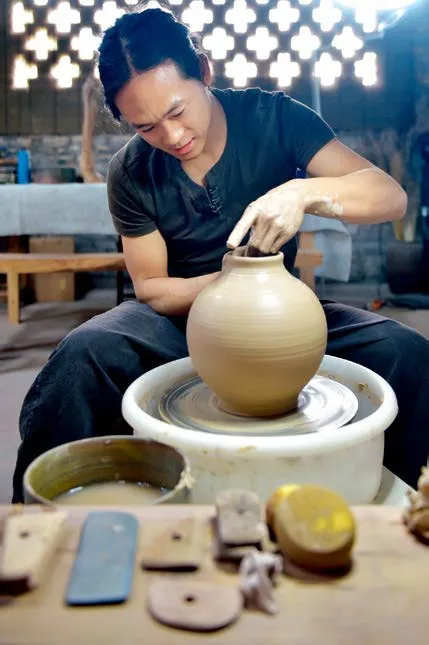
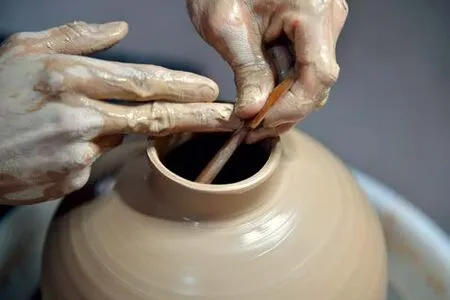
一件陶藝作品在管永雙手中慢慢成型
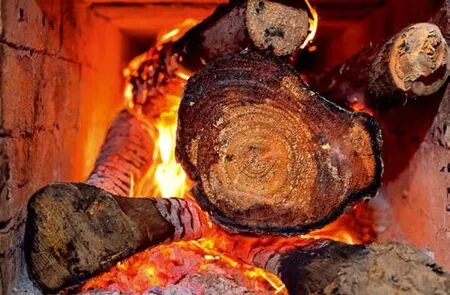
3月27日,在我們來(lái)的前一天,小兩口剛剛將制作好的1000多件陶胚放進(jìn)窯里燒制。他們采用傳統(tǒng)的柴窯燒制,需要半個(gè)月的時(shí)間。在這期間需要日夜不停地守著窯,添加柴火,并且隨時(shí)關(guān)注窯里的溫度變化。加柴的速度和方式、薪柴的種類、溫度變化、天候的狀況、空氣流量等細(xì)微因素,都會(huì)影響窯內(nèi)作品的色澤變化。這些既需要技藝和經(jīng)驗(yàn),也需要汗水和毅力。
我們見(jiàn)到管永雙時(shí),他剛剛守了一個(gè)通宵,妻子李云杉搭個(gè)板凳坐在窯前,邊添柴火邊聽(tīng)丈夫給我們講榮昌陶的制作技藝。……
登錄APP查看全文