物聯網智能家居場景通信耗用分析
2018-06-17 07:56:58樊蓉蔣翊生贠靖洋胡佳怡
移動通信
2018年4期
樊蓉 蔣翊生 贠靖洋 胡佳怡
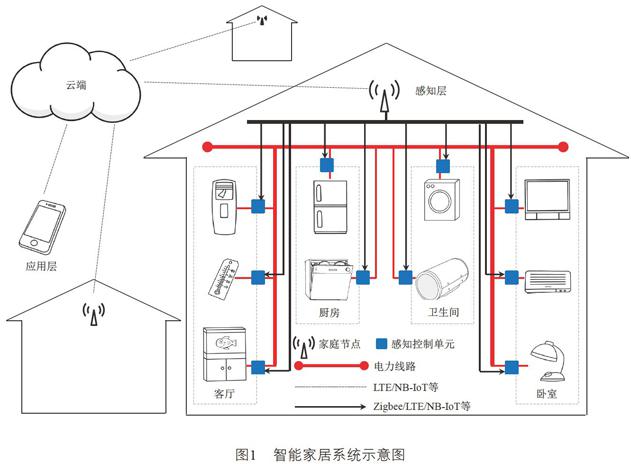
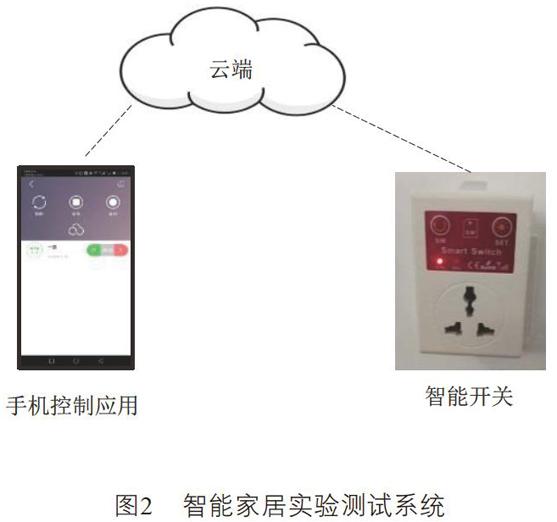
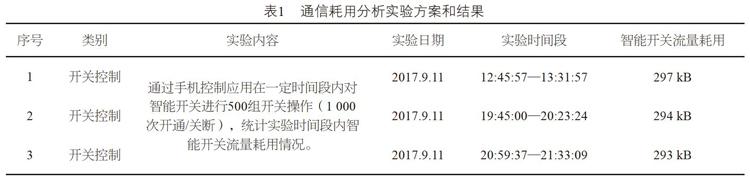
【摘 要】針對物聯網智能家居場景,介紹了智能家居系統的基本架構,設計實驗分析了智能家居系統控制中的通信耗用情況,并根據智能家居需求響應調度應用,對智能家居用戶通信耗用成本的經濟性進行了分析。分析結果表明采用終端感知控制單元和云端直接互聯的智能家居系統架構時,在當前運營商物聯網資費套餐的情況下,用戶通信耗用成本還相對較高。針對物聯網的發展趨勢,對于不同的物聯網業務應用場景,電信運營商可進一步豐富物聯網通信計費方式,增加物聯網資費套餐的多樣性和合理性。
【關鍵詞】物聯網;智能家居;通信耗用;經濟性
Communication Consumption Analysis in IoT Smart Home Scenario
FAN Rong1, JIANG Yisheng1, YUN Jingyang2, HU Jiayi2
[Abstract] For the smart home application scenario in Internet of Things (IoT), the basic architectures of smart home systems are introduced. The communication consumption in the control of smart home systems is analyzed according to experiments. Combined with the response of smart home requirements, applications are to scheduled, and then the economic efficiency of communication consumption cost for smart home users is analyzed. Analysis results demonstrate that, when the smart home architecture with terminal perception control unit and direct cloud connection is used, the communication consumption cost is relatively high in the case of current operators IoT communication tariff packages. According to the developmental trend, telecommunication operators should further enrich the charge modes of IoT communications and increase the versatility and feasibility of IoT communication tariff packages for different IoT service application scenarios.
[Key words]Internet of Things (IoT); smart home; communication consumption; economic efficiency
1 引言
據2017年6月至2017年8月公開發布的統計數據,2017年中國移動、中國電信和中國聯通的物聯網連接(用戶)數分別達到1.3億、0.28億和0.5億。據GSMA移動智庫與中國信息通信研究院發布的研究報告預測,到2020年中國物聯網的連接總數將達到10億,具備廣闊的發展前景。2017年1月工信部發布的《信息通信行業發展規劃物聯網分冊(2016—2020年)》中明確指出“十三五”期間物聯網重點領域應用示范工程包括智能制造、智慧農業、智能家居、智能交通和車聯網等領域。中國移動也推出了面向企業客戶的交通物流、節能環保和智慧城市及面向個人客戶的車聯網、智能家居和智能穿戴等物聯網解決方案。
傳統的用戶側用電家居主要包括空調、冰箱和照明等電氣設備,作為物聯網發展的重點領域,智能家居通過將用戶所需的冷熱電等進行耦合,根據居住者的生活習慣、電網電壓及其他信息進行運行管理,可以實現節能降耗、電網友好和參與需求管理等[1]。……
登錄APP查看全文
猜你喜歡
房地產導刊(2022年4期)2022-04-19 09:04:10
汽車工程師(2021年12期)2022-01-17 02:29:58
汽車工程師(2021年11期)2021-12-21 06:23:12
中國科技博覽(2016年19期)2016-10-19 14:58:22
電腦知識與技術(2016年21期)2016-10-18 22:33:02
中國新通信(2016年16期)2016-10-18 11:00:54
科學與財富(2016年28期)2016-10-14 01:24:06
環球時報(2016-08-01)2016-08-01 07:04:45
四川電力技術(2015年5期)2015-12-19 11:04:54
減速頂與調速技術(2015年4期)2015-03-16 03:39:41