耳穴埋針對全髖關(guān)節(jié)置換術(shù)圍手術(shù)期患者VAS評分及髖關(guān)節(jié)功能影響研究
2017-06-10 09:00:33祝震亞
中國現(xiàn)代醫(yī)生
2017年13期
關(guān)鍵詞:全髖關(guān)節(jié)置換術(shù)
祝震亞
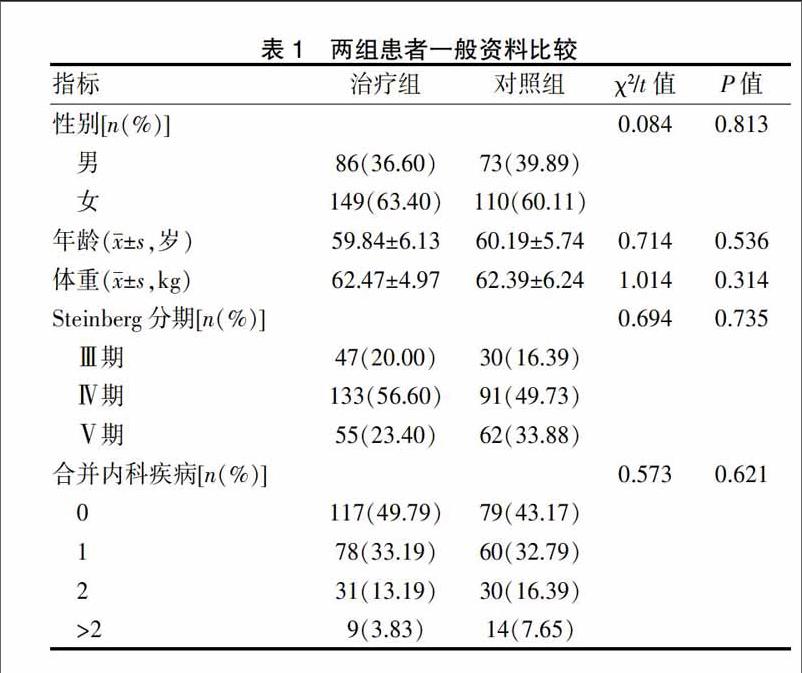
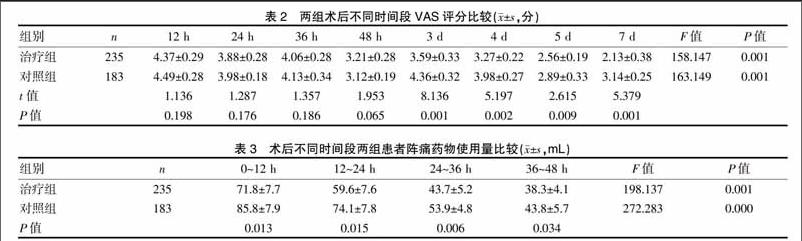
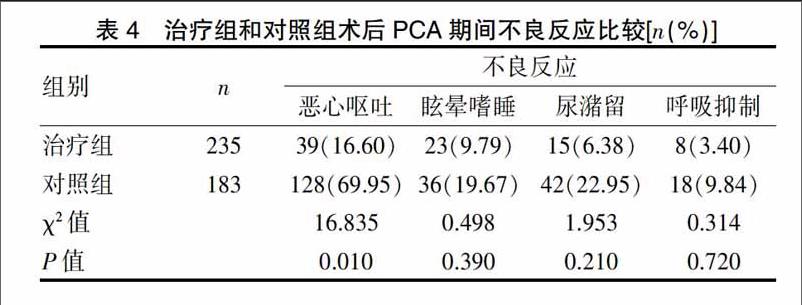
[摘要] 目的 研究耳穴埋針對全髖關(guān)節(jié)置換術(shù)圍手術(shù)期患者VAS評分和髖關(guān)節(jié)功能的影響。 方法 選取2014年3月~2016年3月在我院接受單側(cè)全髖關(guān)節(jié)置換術(shù)來治療晚期股骨頭壞死的患者共418例。根據(jù)治療方法的不同,分為治療組235例采用耳穴埋針治療和對照組183例不采用耳穴埋針治療。詳細記錄兩組患者在不同時間段的VAS評分和鎮(zhèn)痛泵與鹽酸布桂嗪的使用量。收集患者術(shù)后2 d內(nèi)出現(xiàn)的不良反應(yīng)。使用Harris評分量表對兩組患者不同時間段內(nèi)的術(shù)側(cè)髖關(guān)節(jié)功能進行評估和比較。 結(jié)果 兩組患者的基本資料比較無明顯差異;在術(shù)后的48 h以后,耳針組患者的疼痛評分在不同時間段明顯低于對照組,差異有統(tǒng)計學(xué)意義;在不同的時間段,采用耳穴埋針的治療組,鎮(zhèn)痛藥物用量均低于對照組;治療組發(fā)生惡心嘔吐不良反應(yīng)明顯少于對照組;在術(shù)后2周時,治療組的Harris評分要明顯高于對照組,差異明顯。 結(jié)論 耳穴埋針在全髖關(guān)節(jié)置換術(shù)圍手術(shù)期的應(yīng)用,可以起到更好的鎮(zhèn)痛作用,同時可以明顯降低術(shù)后鎮(zhèn)痛藥物的用量,且減少術(shù)后不良反應(yīng)的發(fā)生,可以有效的改善手術(shù)后患者的髖關(guān)節(jié)功能。
[關(guān)鍵詞] 耳穴埋針;全髖關(guān)節(jié)置換術(shù);晚期股骨頭壞死;髖關(guān)節(jié)功能;鎮(zhèn)痛
[中圖分類號] R658.3;R245.9 [文獻標識碼] B [文章編號] 1673-9701(2017)13-0125-04
[Abstract] Objective To study the effect of auricular point needle embedding on VAS score and hip joint function in the patients undergoing perioperative total hip joint replacement. Methods A total of 418 patients who were given unilateral total hip joint replacement in the treatment of advanced femoral head necrosis in our hospital from March 2014 to March 2016 were selected. According to the different treatment methods, the patients were divided into 235 cases in the treatment group with auricular point needle embedding, and 183 cases in the control group without the use of auricular point needle embedding. The VAS score and the usage amount of the analgesic pump and glipizide hydrochloride in different time periods were recorded in both groups. Adverse reactions occurring within 2 days after the surgery were collected. The Harris scale was used to evaluate and compare the hip joint function at the operative side in the two groups of patients at different time periods. Results There was no significant difference between the two groups in the basic data. 48 hours after the surgery, the pain scores of auricular needle group were significantly lower than those in the control group at different time periods, and the differences were statistically significant; at different time periods, the amount of analgesic drugs in the treatment group were lower than those in the control group. the incidence of adverse reactions such as nausea and vomiting in the treatment group was significantly less than that in the control group; at 2 weeks after operation, the score of Harris in the treatment group was significantly higher than that ofin the control group, and the difference was significant. Conclusion The application of auricular point needle embedding in perioperative period of total hip joint replacement can play a better analgesic effect. At the same time it can significantly reduce the amount of postoperative analgesic drugs, and reduce the incidence of adverse reactions after surgery. It can effectively improve the postoperative hip joint function in the patients.
[Key words] Auricular point needle embedding; Total hip joint replacement; Advanced femoral head necrosis; Hip joint function; Analgesia
全髖關(guān)節(jié)置換術(shù)(total hip replacement,THR)是目前在治療晚期股骨頭壞死時一種常用的治療方法。在手術(shù)以后,為了防止出現(xiàn)并發(fā)癥和改善患者的關(guān)節(jié)功能,需要及時的進行康復(fù)訓(xùn)練,這就要求術(shù)后進行有效的疼痛控制[1,2]。……
登錄APP查看全文
猜你喜歡
中國實用醫(yī)藥(2016年30期)2016-12-28 14:34:56
中國實用醫(yī)藥(2016年27期)2016-11-30 11:39:10
中國實用醫(yī)藥(2016年22期)2016-08-19 14:46:23
中國實用醫(yī)藥(2016年22期)2016-08-19 12:32:28
中國實用醫(yī)藥(2016年22期)2016-08-19 12:00:22
中國實用醫(yī)藥(2016年13期)2016-07-05 11:14:07
中國實用醫(yī)藥(2016年13期)2016-07-05 11:13:30
中國實用醫(yī)藥(2016年8期)2016-03-30 23:35:18
中國實用醫(yī)藥(2016年8期)2016-03-30 23:18:07
中國實用醫(yī)藥(2016年4期)2016-02-23 19:54:34