乳腺癌組織中周期素依賴性激酶 10基因啟動子甲基化狀態檢測的臨床意義
2017-03-01 02:42:22李文梅劉佳佳張印坡陸建榮
轉化醫學雜志 2017年1期
關鍵詞:乳腺癌
李文梅,劉佳佳,張印坡,陸建榮
乳腺癌組織中周期素依賴性激酶 10基因啟動子甲基化狀態檢測的臨床意義
李文梅,劉佳佳,張印坡,陸建榮
目的探討乳腺癌組織中周期素依賴性激酶 10(cyclin-dependent kinase 10,CDK10) 基因啟動子甲基化狀態及其與臨床病理參數的聯系。方法應用甲基化特異性聚合酶鏈反應檢測 CDK10 基因啟動子在50例乳腺癌組織及相應癌旁組織中的甲基化狀態并結合臨床病理資料進行分析。結果在乳腺癌組織中CDK10 基因甲基化陽性率為 60%(30/50),癌旁對照組織未出現 CDK10 基因甲基化。 CDK10 基因甲基化同淋巴結轉移與臨床分期顯著相關(P<0.05)。結論CDK10 基因甲基化與乳腺癌臨床分期密切相關,可能是參與乳腺癌發展的重要分子事件。
周期素依賴性激酶 10;DNA 甲基化;乳腺癌
細胞周期素依賴性激酶(cyclin-dependent kinases,CDKs)是細胞周期過程中調控眾多轉錄因子發揮核心作用的重要基因。作為 CDKs家族的新成員,CDK10 基因定位于人染色體 16q24.3,編碼由 360個氨基酸殘基組成的蛋白質[1-3]。 前期研究在雌激素受體(estrogen receptor,ER) 存在的情況下,CDK10基因表達缺失增強乳腺癌細胞對選擇性ER調節劑他莫西芬的藥物抵抗性[4]。 后續研究證實,CDK10基因作為抑癌基因與惡性腫瘤發生、發展密切相關,基因啟動子區域異常甲基化是導致其表達沉默的重要機制之一[5]。 本研究旨在探討乳腺癌癌組織中CDK10 基因啟動子甲基化狀態并聯系臨床病理資料深入分析。
1 材料與方法
1.1 樣本 收集陜西省腫瘤醫院在 2014—2015 年間手術切除并經病理確診的 50例原發浸潤性乳腺癌組織石蠟樣本。 患者中位年齡 50.2(22~71)歲,術前未接受任何放化療和內分泌治療。根據美國癌癥聯合委員會腫瘤淋巴結轉移(tumor node metastasis,TNM)標準(第 6 版)分期,具體臨床病理資料見表 2。 另外收集相應癌旁乳腺組織 10 例作為對照。
1.2 方法
1.2.1 主要試劑 GTpureTM石蠟組織 DNA 提取試劑盒購自上海基因科技公司,EpiTect Kit 與 HotStar Taq 熱啟動酶購自德國 Qiagen 公司;脫氧核苷三磷酸與合成引物購自大連 Takara 公司,其他常規化學試劑均為進口或國產分析純。
1.2.2 基因組 DNA 提取與亞硫氫酸鹽修飾 石蠟組織樣本基因組 DNA 提取使用 GTpureTM石蠟組織DNA 提取試劑盒,以 EpiTect Kit 對樣本進行亞硫酸氫鹽修飾與純化。
1.2.3 甲基化特異性聚合酶鏈反應檢測 CDK10 基因啟動子甲基化狀態 甲基化特異性聚合酶鏈反應(methylation-specific polymerase chain reaction,MSP)反應條件 95 ℃ 預變性 5 min、94 ℃ 變性 1 min、55 ℃退火 30 s、72 ℃ 延伸 1 min,35 個循環。 引物序列見表1。
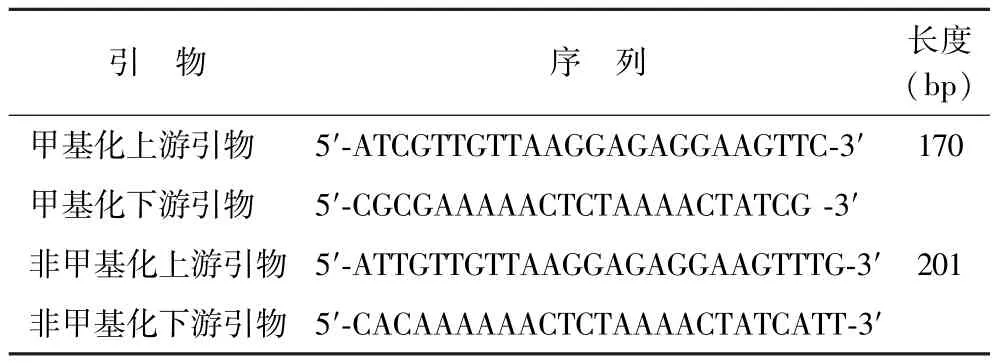
表 1 MSP 引物序列
1.2.4 判定 甲基化狀態判定標準:僅非甲基化引物擴增出相應片段為甲基化陰性;僅有甲基化引物擴增出相應片段即為完全甲基化,甲基化引物與非甲基化引物均擴增出相應片段為不完全甲基化,完全甲基化和不完全甲基化均計為甲基化檢測陽性。
ER 和孕激素受體(progesterone receptor,PR) 表達狀態判定:按腫瘤細胞核無著色為 0 分、<1%為 1分、1%~10%為 2 分、11% ~33%為 3 分、34% ~66%為 4 分、67%~100%為 5 分,染色強度按無、弱、中、強分別評為 0、1、2、3 分。 兩者之和,范圍為 0 ~ 8分,≤2 分為陰性,>2 分為陽性。
人表皮生長因子受體 2(human epidermal growth factor receptor 2,HER2) 表達狀態判定標準:陽性表達定位于細胞膜。 細胞膜無染色,或≤10%的腫瘤細胞染色為“0(陰性)”;>10%的腫瘤細胞呈弱染色,且細胞膜染色不完整,結果為“+(陰性)”;>10%的細胞呈弱至中度染色,細胞膜染色輕度至中度完整,結果為“++(弱陽性)”;>10%的腫瘤細胞呈細胞膜強染色為“+++(陽性)”。
1.3 統計學處理 應用 SPSS 17.0 軟件,計數資料用率表示,組間比較采用 χ2檢驗,P<0.05 為差異有統計學意義。
2 結果
2.1 乳腺癌組織中 CDK10 基因啟動子甲基化狀態50 例乳腺癌組織中,30 例檢測出 CDK10 基因甲基化陽性(60%),而在 10 例癌旁組織中未出現 CDK10基因甲基化(圖 1)。
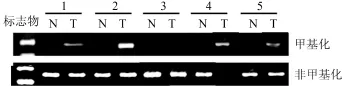
圖 1 MSP 檢測乳腺癌組織(T)與癌旁組織(N)中CDK10 基因甲基化狀態
2.2 CDK10 基因甲基化與臨床病理參數的關系CDK10 基因甲基化有淋巴結轉移高于無淋巴結轉移(P=0.043),臨床 TNM 分期Ⅲ /Ⅵ期高于Ⅰ/Ⅱ期(P=0.037)。 CDK10 基因甲基化與患者年齡、腫瘤大小、ER、PR 和 HER2 表達狀態等因素無關(表 2)。
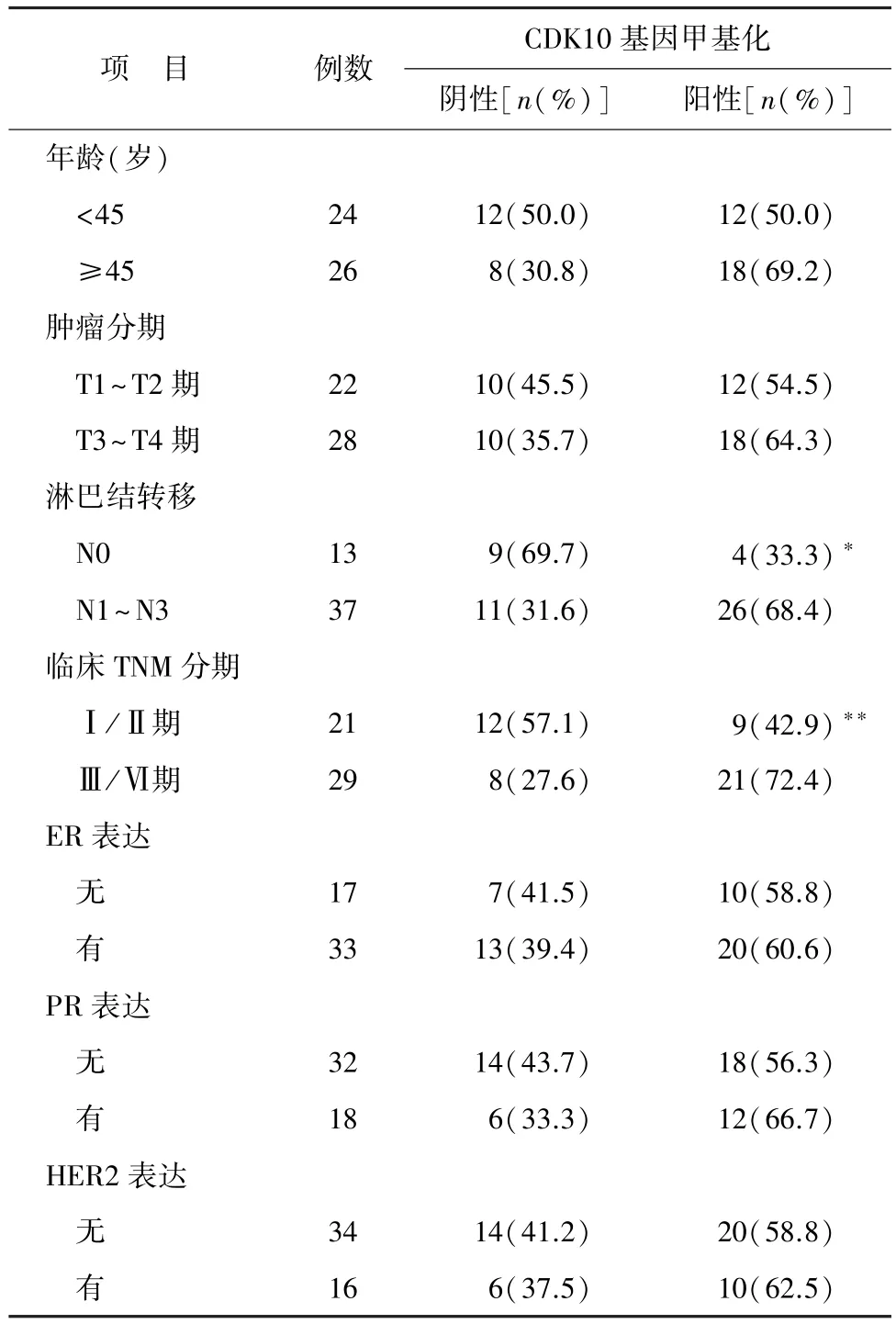
表 2 CDK10 基因甲基化與臨床病理參數的關系
3 討論
CDK10 基因在細胞周期進程中受到諸多信號通路的精細調控,參與調節神經發育、肝臟纖維化、腫瘤形成等多種生理與病理過程[4-7]。 在惡性腫瘤形成過程中,多數 CDKs基因作為癌基因高表達激活細胞過度增殖;而 CDK10 基因卻呈現潛在的抑癌基因特性,在腫瘤細胞中過表達 CDK10 基因可逆轉腫瘤細胞的惡性生物學行為[2-5]。
本研究課題組前期應用免疫組織化學法對CDK10 基因在乳腺癌中的表達狀態進行了檢測,發現 CDK10 基因表達缺失與乳腺癌淋巴結轉移、臨床TNM 分期和患者總生存期密切相關,CDK10 基因表達可作為乳腺癌預后評判的獨立指標[8]。
抑癌基因的失活除突變、雜合性缺失等原因外,基因啟動子區域 CpG 島甲基化是其失活的又一重要機制[9]。 本研究課題組前期研究證實基因啟動子高頻甲基化是造成 CDK10 基因表達下調的重要原因,通過外周血樣本檢測 CDK10 基因甲基化有望作為鼻咽癌診斷篩查、監測復發轉移以及判斷其對放化療效果反應的生物學指標[4]。 然而,對于 CDK10基因甲基化在乳腺腫瘤中的研究目前鮮見相關報道。本研究發現,CDK10 基因甲基化在乳腺癌組織中的陽性率為 60%(30/50),而癌旁組織未出現 CDK10基因甲基化,提示 CDK10 基因甲基化發生具有腫瘤特異性。 進一步結合臨床病理資料統計分析,發現CDK10 甲基化與腫瘤淋巴結轉移、病理分型密切相關。 深入研究 CDK10 基因甲基化在乳腺癌發展中的作用與臨床意義,有望為開發臨床診斷的分子標志物、確定研發臨床治療的藥物靶點以及制定有效的個體化治療方案提供理論和實驗依據。
[1] 游顏杰,李文梅,劉佳佳,等.細胞周期素依賴性激酶 10與腫瘤[J].國際腫瘤學雜志,2014,41(11):811-812.
[2]Zhong XY,Xu XX,Yu JH,et al.Clinical and biological significance of Cdk10 in hepatocellular carcinoma[J].Gene,2012,498(1):68-74.
[3]Yu JH,Zhong XY,Zhang WG,et al.CDK10 functions as a tumor suppressor gene and regulates survivability of biliary tract cancer cells[J].Oncol Rep,2012,27(4):1266-1276.
[4]You Y,Yang W,Wang Z,et al.Promoter hypermethylation contributes to the frequent suppression of the CDK10 gene in human nasopharyngeal carcinomas[J].Cell Oncol(Dordr),2013,36(4):323-331.
[5]Iorns E,Turner NC,Elliott R,et al.Identification of CDK10 as an important determinant of resistance to endocrine therapy for breast cancer[J].Cancer Cell,2008,13(2):91-104.
[6]Yeh CW, Kao SH, Cheng YC, et al.Knockdown of cyclindependent kinase 10(cdk10)gene impairs neural progenitor survival via modulation of raf1a gene expression[J].J Biol Chem,2013,288(39):27927-27939.
[7]Guen VJ,Gamble C,Flajolet M,et al.CDK10/cyclin M is a protein kinase that controls ETS2 degradation and is deficient in STAR syndrome[J].Proc Natl Acad Sci USA,2013,110(48):19525-19530.
[8]You Y, Li H, Qin X, et al.Decreased CDK10 expression correlates with lymph node metastasis and predicts poor outcome in breast cancer patients--a short report[J].Cell Oncol(Dordr),2015,38(6):485-491.
[9]You Y,Chen Y,Zheng X,et al.Aberrant methylation of the PTPRO gene in peripheral blood as a potential biomarker in esophageal squamous cell carcinoma patients[J].Cancer Lett,2012,315(2):138-144.
Clinical significance of the cyclin-dependent kinase 10 gene promoter methylation in breast cancer
LI Wenmei1, LIU Jiajia1, ZHANG Yinpo2, LU Jianrong3
(1.Department of Pharmacy, Luohe Medical College, Luohe Henan 462000, China;2.Pathological Diagnosis and Research Center, Luohe Medical College, Luohe Henan 462000, China;3.Department of Pathology, Cancer Hospital of Shaanxi Province, Xi’an Shaansi 710061, China)
ObjectiveTo investigate the methylation status of the cyclin-dependent kinase 10(CDK10)gene promoter in breast cancer.MethodsMethylation-specific polymerase chain reaction was performed to observe CDK10 gene promoter methyation in 50 cases of breast cancer tissues companied with their adjacent non-cancerous tissues.The relationship between CDK10 gene methyation and clinical pathological parameters were also analyzed.ResultsMethylated CDK10 gene was frequently observed in 60.0%(30/50)of primary tumors,but not in any normal tissue. CDK10 gene methylation was significantly correlated with lymph node metastasis and TNM staging of tumors(P<0.05).ConclusionCDK10 gene methylation may possess a significant function in the development of breast cancer.
Cyclin-dependent kinase 10(CDK10) ; DNA methylation; Breast cancer
R737.9
A
2095-3097(2017)01-0020-03
10.3969/j.issn.2095-3097.2017.01.005
2016-11-30 本文編輯:張在文)
河南省教育廳高等學校重點科研項目應用研究計劃(15B320003)
462000 河南 漯河,漯河醫學院藥學系(李文梅,劉佳佳),病理診斷與研究中心(張印坡);710061 陜西 西安,陜西省腫瘤醫院病理科(陸建榮)
猜你喜歡
中老年保健(2022年6期)2022-08-19 01:41:48
現代臨床醫學(2022年1期)2022-02-12 02:04:58
甘肅科技(2020年20期)2020-04-13 00:30:42
中國生殖健康(2019年2期)2019-08-23 08:11:42
中國生殖健康(2019年6期)2019-01-06 09:20:12
中國生殖健康(2019年5期)2019-01-06 09:16:40
幸福家庭(2019年14期)2019-01-06 09:15:38
祝您健康(2018年5期)2018-05-16 17:10:16
癌癥進展(2016年9期)2016-08-22 11:33:20
中國組織化學與細胞化學雜志(2016年4期)2016-02-27 11:16:08