
基于3種富營養(yǎng)化評(píng)價(jià)方法的錦江河水質(zhì)風(fēng)險(xiǎn)評(píng)估
2024-12-03 00:00:00張友郭子棟李干蓉強(qiáng)小燕田丹
安徽農(nóng)業(yè)科學(xué)
2024年22期
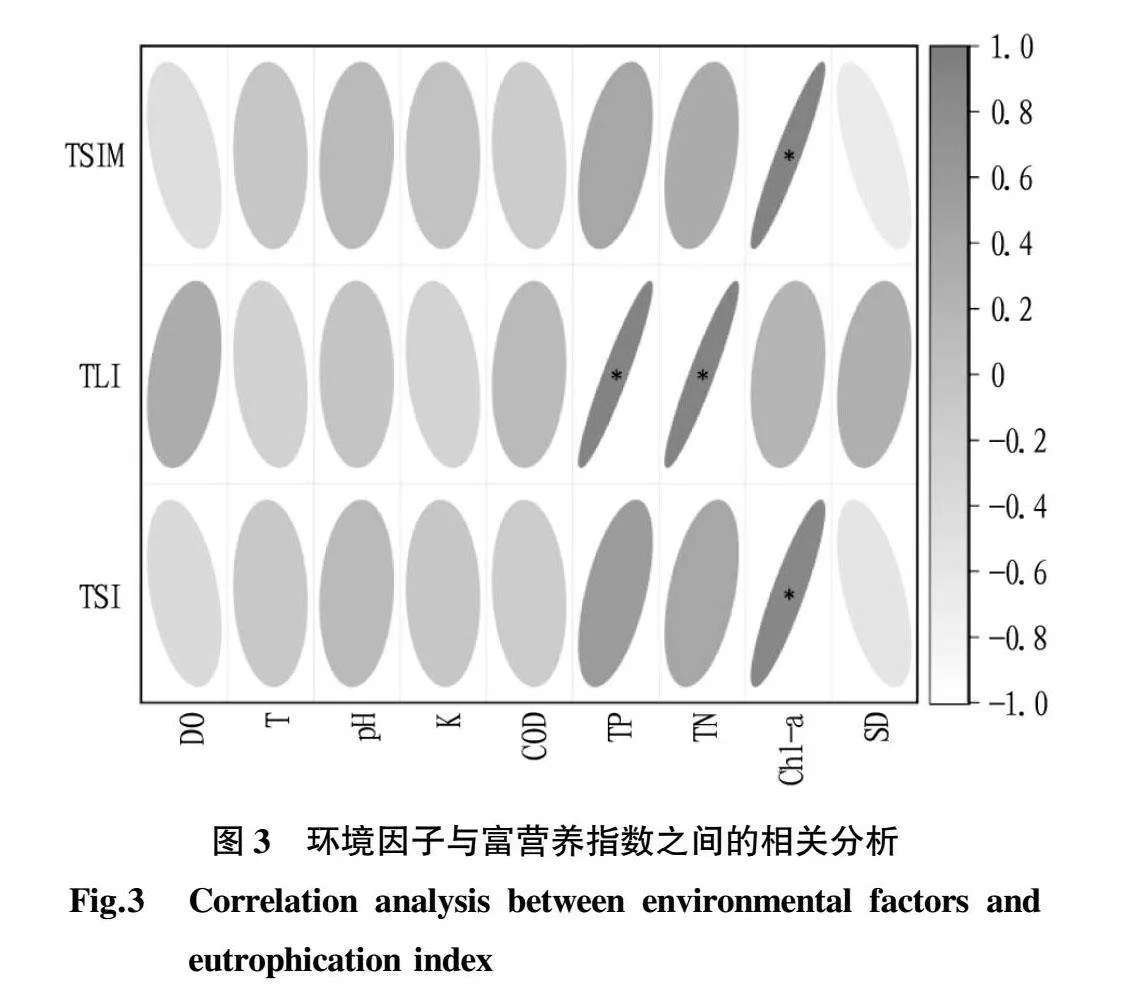
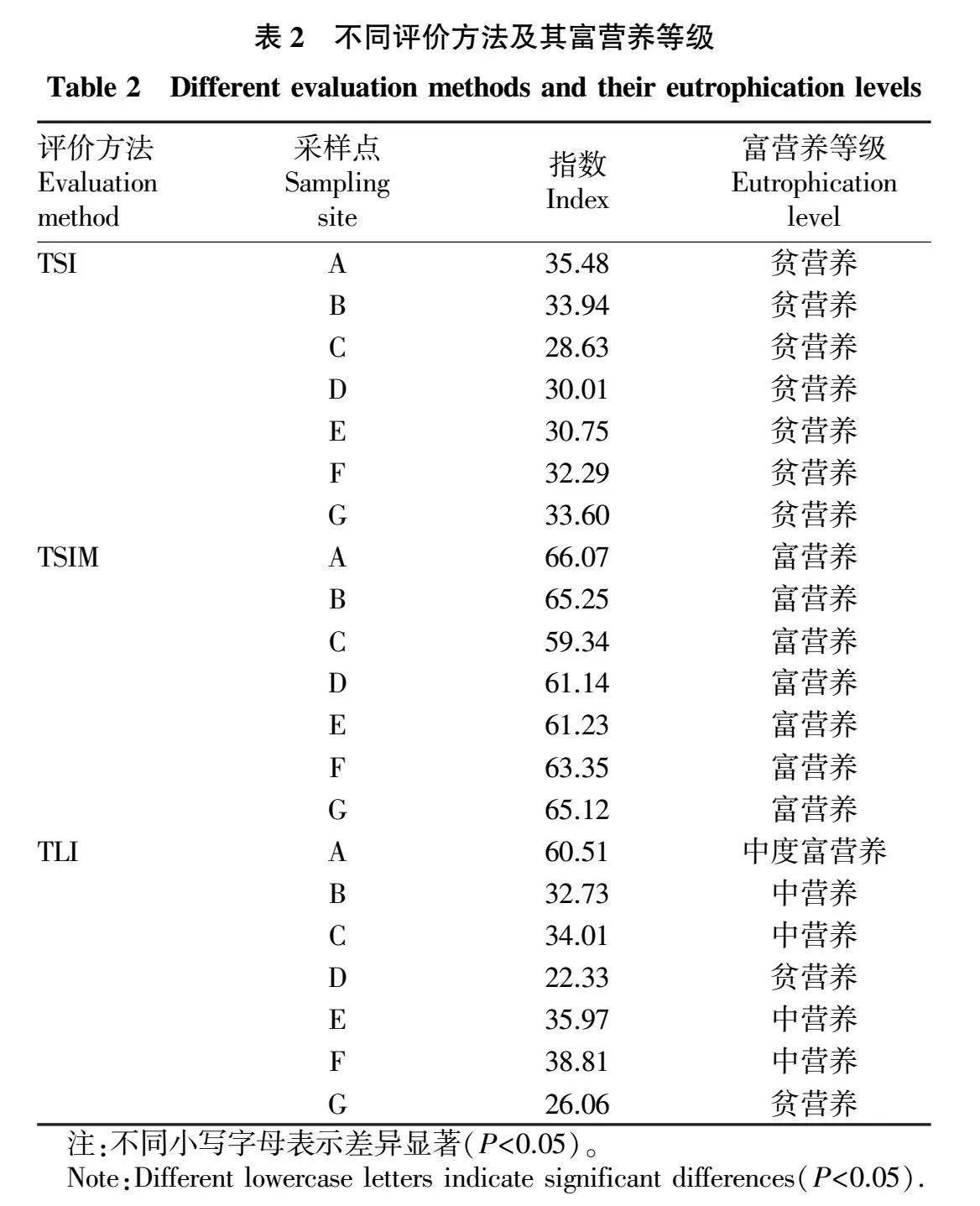
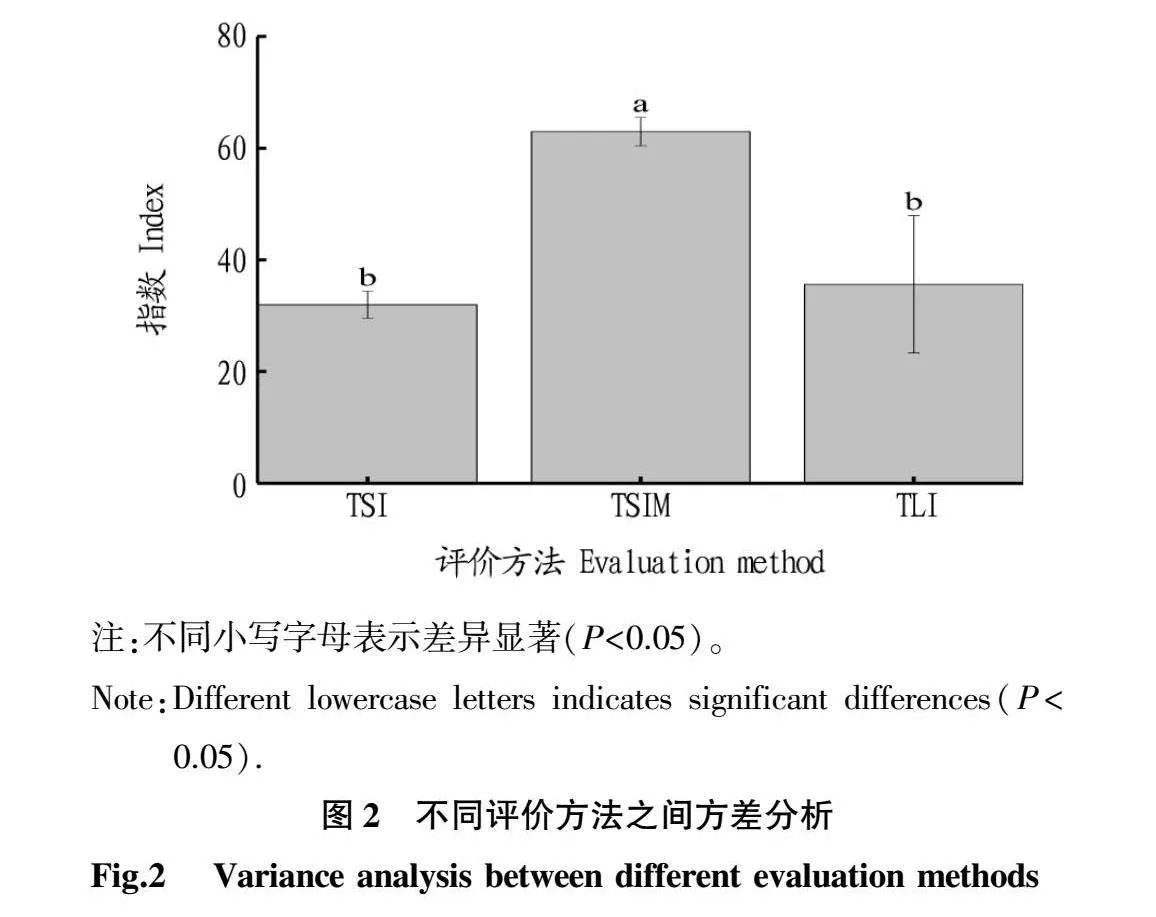
摘要 以銅仁市錦江河為例,采集并分析水體理化指標(biāo),運(yùn)用卡爾森營養(yǎng)狀態(tài)指數(shù)(TSI)、修正的營養(yǎng)狀態(tài)指數(shù)(TSIM)、綜合營養(yǎng)狀態(tài)指數(shù)(TLI)3種方法評(píng)價(jià)其錦江河水體營養(yǎng)富化水平,并且通過數(shù)理統(tǒng)計(jì)分析方法,分析不同評(píng)價(jià)方法之間的差異以及環(huán)境因子對(duì)評(píng)價(jià)方法的影響。結(jié)果表明:評(píng)價(jià)方法不同,導(dǎo)致水體富營養(yǎng)化評(píng)價(jià)結(jié)果不同,錦江河水體按照TSI、TSIM和TLI評(píng)價(jià)方法,其結(jié)果分別為貧營養(yǎng)、富營養(yǎng)和中營養(yǎng)水平。單因素方差分析表明,TSIM與TSI和TLI差異顯著(P<0.05),TSI與TLI差異不顯著(P>0.05);相關(guān)分析表明,Chl-a與TSI、TSIM呈現(xiàn)顯著正相關(guān)(P<0.05),TN和TP與TLI呈現(xiàn)顯著正相關(guān)(P<0.05)。TSI和TSIM主要表征藻類的生長狀況,TLI則更加專注于氮和磷水平。綜合而言,相較于TSI和TSIM法,TLI采用多種環(huán)境因子的加權(quán)方式,更能科學(xué)地反映水體的富營養(yǎng)化狀態(tài)。
關(guān)鍵詞 富營養(yǎng)化;評(píng)價(jià)方法;水質(zhì);風(fēng)險(xiǎn)評(píng)估;錦江河
中圖分類號(hào) X 824 文獻(xiàn)標(biāo)識(shí)碼 A 文章編號(hào) 0517-6611(2024)22-0066-04
doi:10.3969/j.issn.0517-6611.2024.22.012
開放科學(xué)(資源服務(wù))標(biāo)識(shí)碼(OSID):
Risk Assessment of Water Quality in Jinjiang River Based on Three Nutrient Enrichment Evaluation Methods
ZHANG You, GUO Zi-dong, LI Gan-rong et al
(Tongren Polytechnic College, Tongren,Guizhou 554300)
Abstract Taking Jinjiang River in Tongren City as an example, the physicochemical indicators of the water body were collected and analyzed. Three methods, Carlson’s trophic state index (TSI), modified trophic state index (TSIM) and trophic level index (TLI), were used to evaluate the nutrient enrichment level in Jinjiang River water. Mathematical statistical analysis was used to examine differences between the different evaluation methods and the influence of environmental factors on them. The results showed that different evaluation methods lead to different results in eutrophication assessment of water bodies. According to TSI, TSIM and TLI evaluation methods, the results of Jinjiang River water body were assessed as having oligotrophic, eutrophic and mesotrophic conditions, respectively. Single-factor analysis of variance showed that a significant difference between TSIM and TSI/TLI (P<0.05), while no significant difference was observed between TSI and TLI (P>0.05). Correlation analysis showed Chl-a was significantly positively correlated with TSI and TSIM (P<0.05), while TN and TP were significantly positively correlated with TLI (P<0.05). TSI and TSIM mainly characterized the growth status of algae, while TLI focused more on nitrogen and phosphorus levels.Overall, compared to TSI and TSIM methods, TLI adopted a weighted approach of multiple environmental factors, which could more scientifically reflect the eutrophication status of water bodies.
Key words Eutrophication; Evaluation method;Water quality;Risk assessment;Jinjiang River
水體富營養(yǎng)化是水生生態(tài)系統(tǒng)和飲用水安全的嚴(yán)重威脅,是全球水污染和生態(tài)退化的主要原因之一[1-2]。因此,針對(duì)水體富營養(yǎng)化的研究長期以來一直是水生態(tài)環(huán)境領(lǐng)域研究的重點(diǎn)[3-4]。喀斯特地區(qū)占地球陸地面積的12%,其含水層為世界人口的20%~25%提供了供水[5]。中國西南喀斯特地區(qū)是世界上分布最廣泛的喀斯特地區(qū),影響著長江流域數(shù)億人的飲用水安全[6]。西南喀斯特地區(qū)是水土流失和面源污染重要的發(fā)生區(qū)[7],大量營養(yǎng)物質(zhì)隨著地表徑流、泥沙進(jìn)入湖庫,造成受納水體嚴(yán)重的水質(zhì)污染和富營養(yǎng)化,對(duì)城市、農(nóng)村居民飲用水安全產(chǎn)生極大威脅與危害[8-9]。……
登錄APP查看全文
 安徽農(nóng)業(yè)科學(xué)
2024年22期
安徽農(nóng)業(yè)科學(xué)
2024年22期
- 安徽農(nóng)業(yè)科學(xué)的其它文章
- 農(nóng)業(yè)教育?科技?人才一體化協(xié)同發(fā)展研究——以廣西為例
- 農(nóng)民學(xué)院發(fā)展視角下的海南鄉(xiāng)村振興大學(xué)發(fā)展研究
- 涉農(nóng)高校信息類專業(yè)“知農(nóng)愛農(nóng)”情懷的培育價(jià)值和路徑研究
- 差序格局視域下農(nóng)民生態(tài)倫理困境及對(duì)策研究
- 蘇州農(nóng)村人居環(huán)境整治及日常管護(hù)費(fèi)用支出現(xiàn)狀與改進(jìn)策略
- 鄉(xiāng)村振興背景下我國農(nóng)村環(huán)境治理的可視化分析