新生兒低體溫預防和處理的最佳證據總結
2024-11-08 00:00:00蘇麗娜楊雪蘭方曉純周立平鄒文霞
循證護理
2024年21期

Summary of the best evidence for the prevention and treatment of neonatal hypothermia
SU Lina,YANG Xuelan,FANG Xiaochun,ZHOU Liping,ZOU Wenxia*Guangdong Provincial Hospital for Women and Children Health Care,Guangdong 510000 China*Corresponding Author ZOU Wenxia,E-mail:Zouwenxia3861@126.com
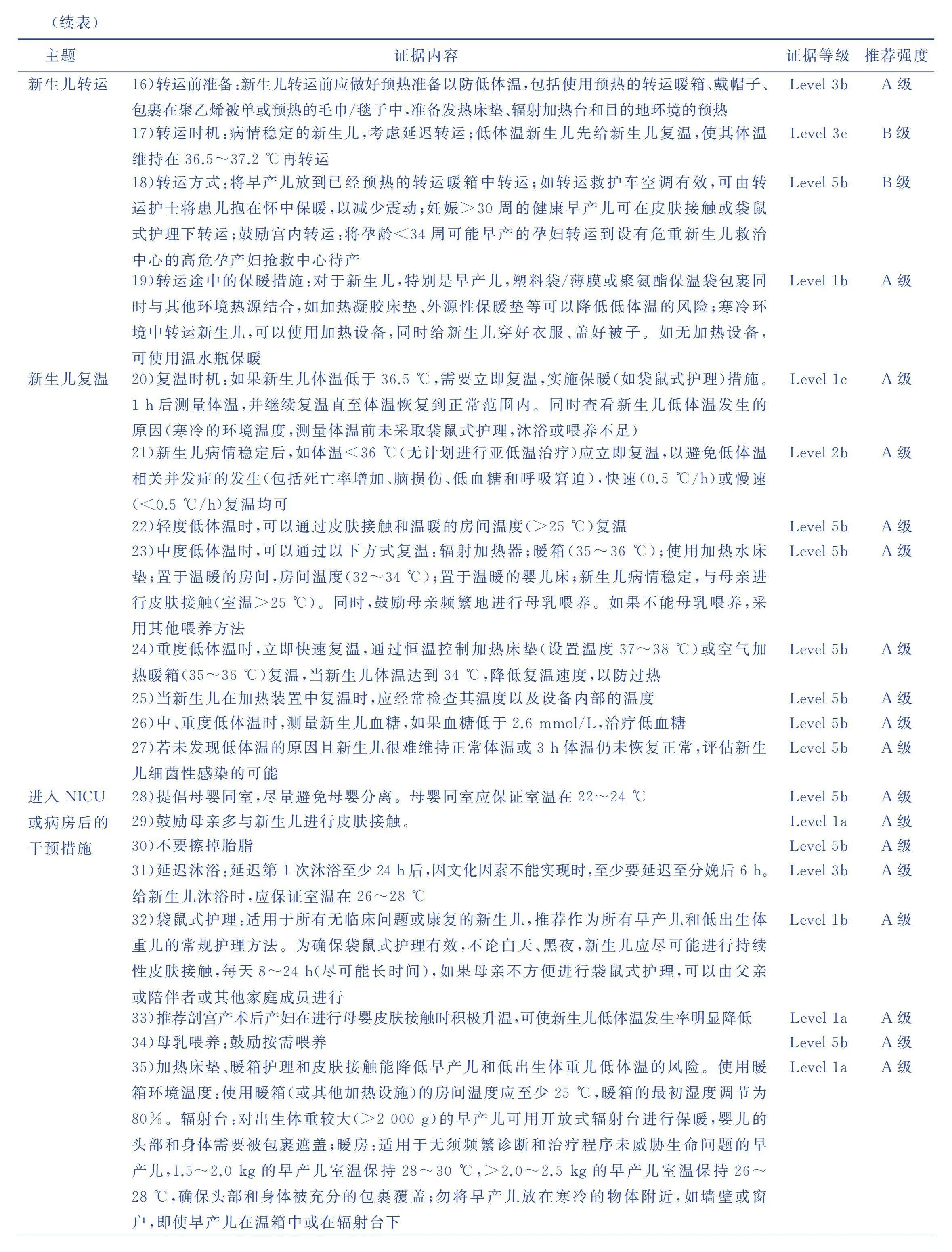
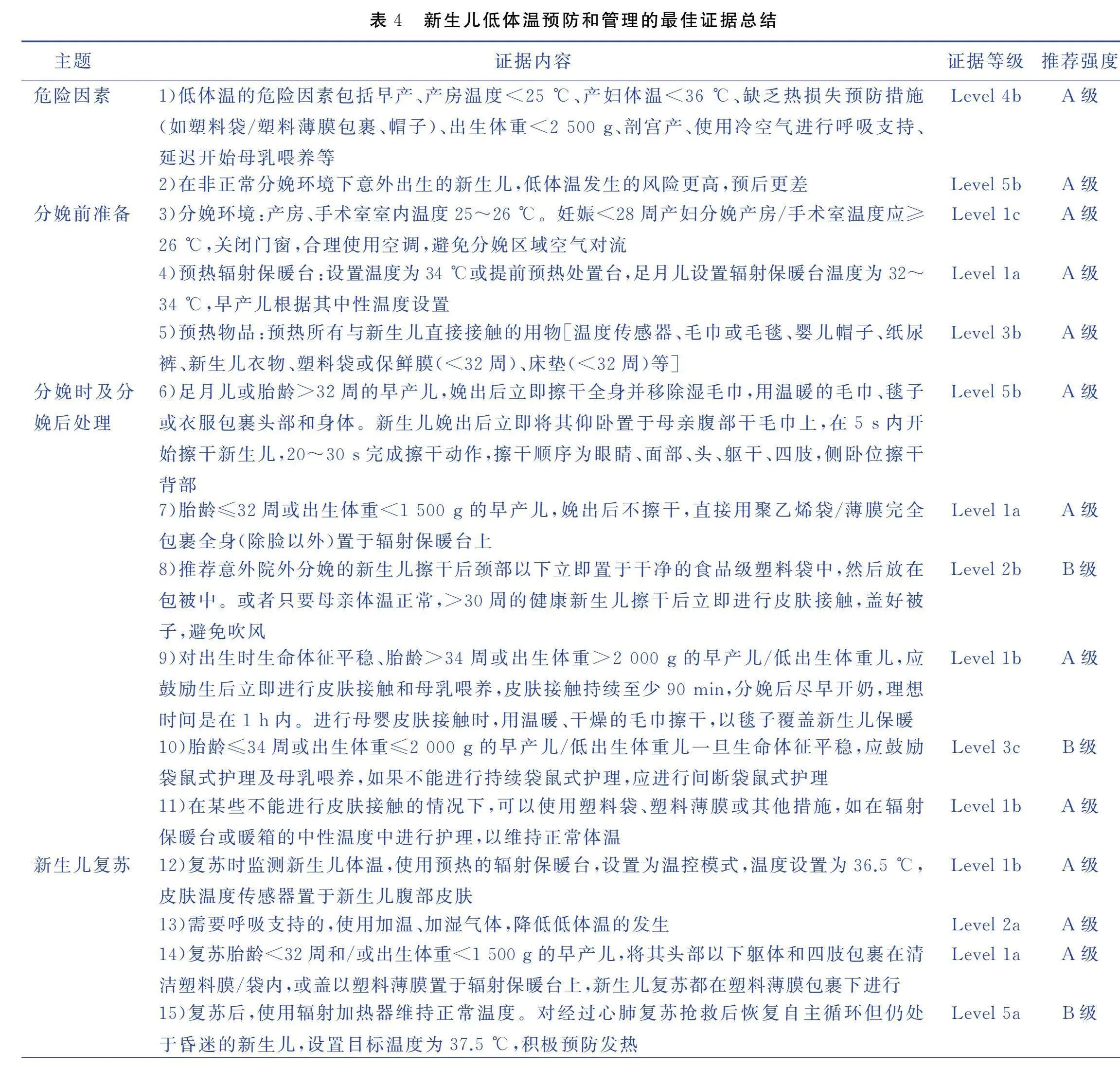
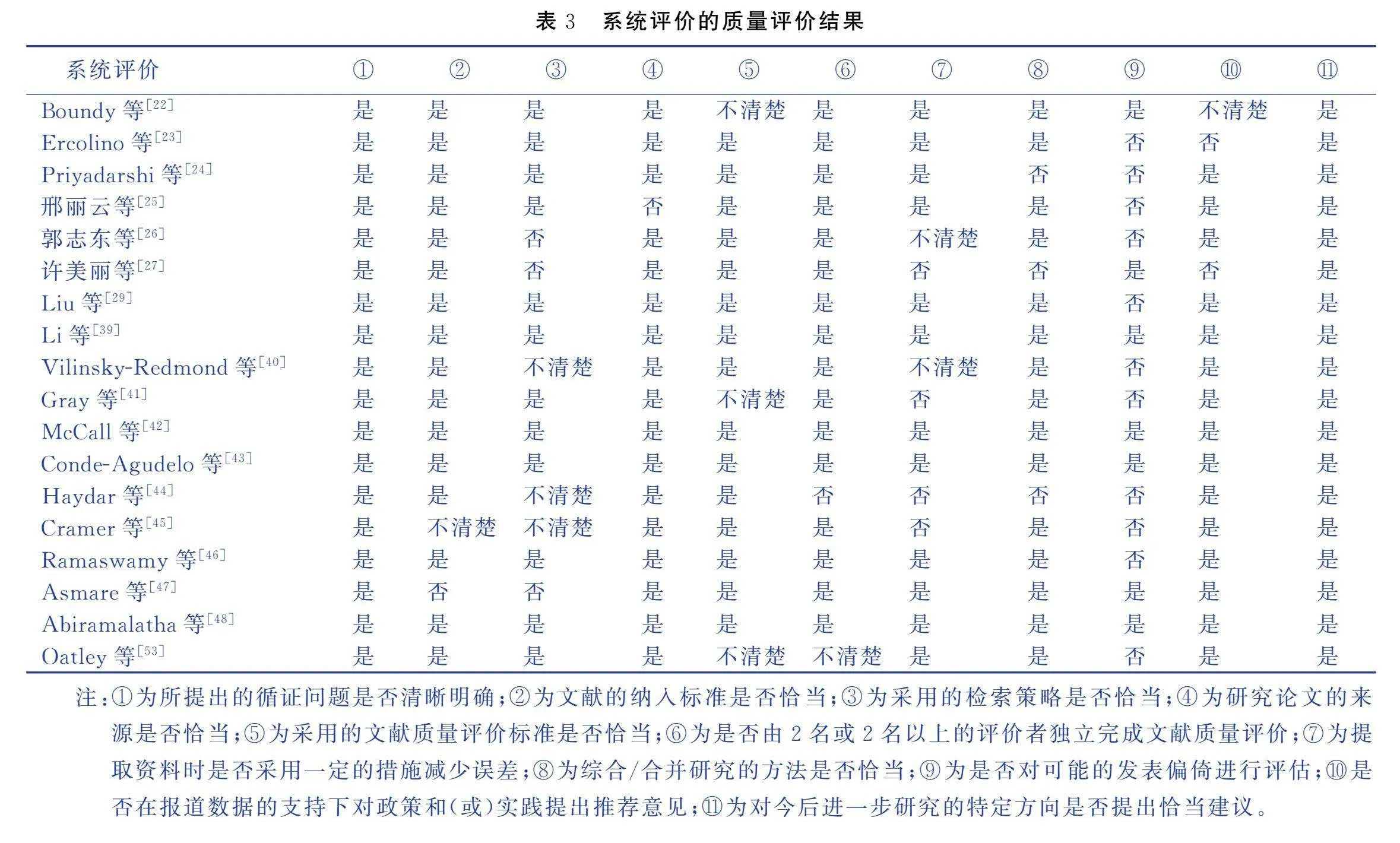
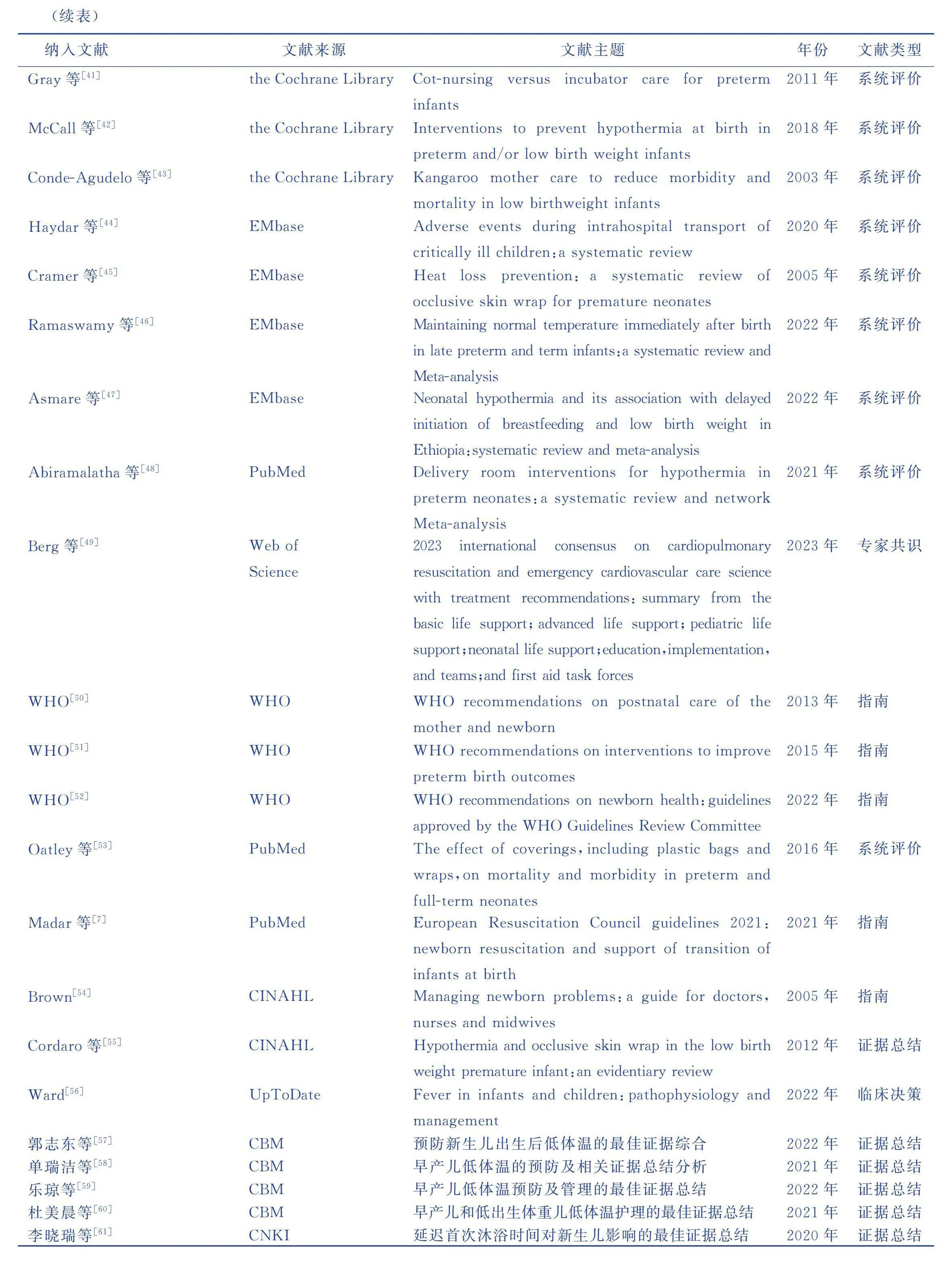
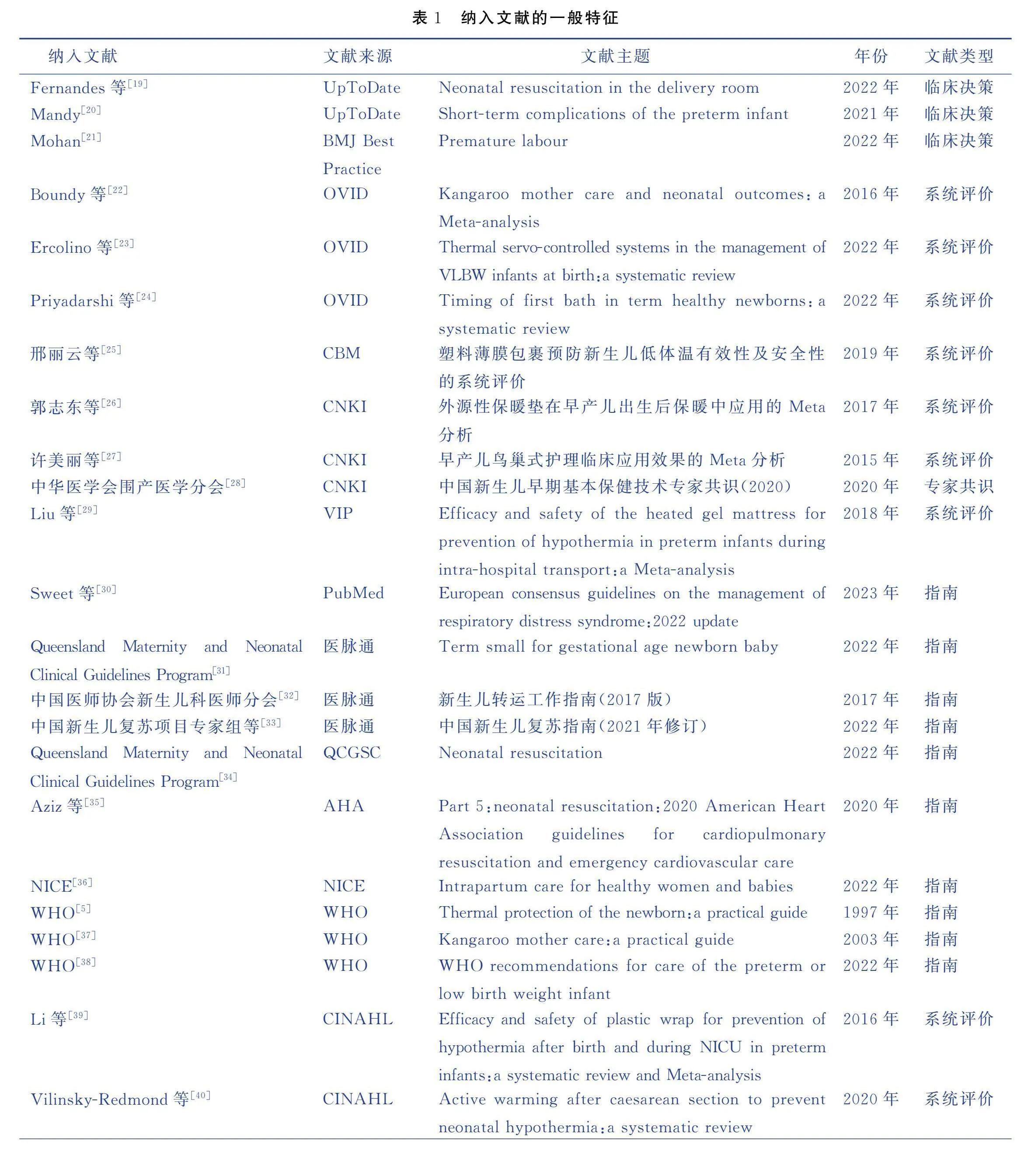
Abstract Objective:To retrieve,evaluate,and summarize the best evidence for the prevention and treatment of neonatal hypothermia in China and abroad,in order to provide a reference for clinical practice and reduce the incidence of neonatal hypothermia.Methods:The "PICO" strategy was used to establish the question,and the "6S" evidence model was used to systematically retrieve relevant literature,including clinical decision-making,systematic review,evidence summary,clinical practice guidelines,etc.The search time limit was from the establishment of the database to October 20,2023.Two researchers who had received evidence-based training independently conducted literature quality evaluation and evidence extraction.Results:A total of 45 articles were included,including 4 clinical decision-making articles,18 systematic reviews,15 guidelines,2 expert consensus articles,and 6 evidence summaries.A total of 45 pieces of best evidence were summarized from 9 aspects:risk factors,preparation before delivery,management during and after delivery,neonatal resuscitation,neonatal transfer,neonatal rewarming,intervention measures after entering the NICU or ward,temperature monitoring,and quality management.According to the feasibility,suitability,clinical significance,and effectiveness attributes of the evidence,39 A-level and 6 B-level recommended pieces of evidence were determined.Conclusions:The summarized best evidence for the prevention and management of neonatal hypothermia in China and abroad can provide an evidence-based basis for clinical medical staff.
Keywords neonate;hypothermia;prevention;evidence-based nursing;best evidence;evidence summary
摘要 目的:檢索、評價并總結國內外關于新生兒低體溫預防和處理的最佳證據,為臨床實踐提供參考,降低新生兒低體溫的發生。方法:采用“PICO”方法確立問題,按“6S”證據模型系統檢索相關文獻,包括臨床決策、系統評價、證據總結、臨床實踐指南等,檢索時限為建庫至2023年10月20日。由2名經過循證培訓的研究人員獨立進行文獻質量評價與證據提取。結果:共納入45篇文獻,包括臨床決策4篇、系統評價18篇、指南15篇、專家共識2篇、證據總結6篇,總結危險因素、分娩前準備、分娩時及分娩后處理、新生兒復蘇、新生兒轉運、新生兒復溫、進入新生兒重癥監護病房(NICU)或病房后的干預措施、體溫監測、質量管理9個方面,共45條最佳證據,根據證據的可行性、適宜性、臨床意義、有效性屬性,確定39條A級、6條B級推薦證據。結論:總結的國內外新生兒低體溫預防和管理最佳證據,可為臨床醫務人員提供循證依據。
關鍵詞 新生兒;低體溫;預防;循證護理;最佳證據;證據總結
doi:10.12102/j.issn.2095-8668.2024.21.004
新生兒低體溫通常定義為新生兒體溫<36.5 ℃[1]。目前,新生兒低體溫仍是全球性問題,全球新生兒低體溫發生率為52.5%[2]。我國新生兒低體溫發生率為31.0%[3],早產兒低體溫發生率為63.5%,極低出生體重兒和超低出生體重兒低體溫發生率分別為89.3%和89.6%[4]。新生兒由于體溫調節中樞尚未發育成熟,體表面積大,皮下脂肪較少等因素,極易通過蒸發、輻射、對流、傳導等途徑迅速丟失熱量[5]。新生兒從母體較高的宮內環境溫度娩出至產房溫度(22~26 ℃),皮膚溫度每分鐘下降0.3 ℃,直腸溫度每分鐘下降0.1 ℃,導致其在短時間內體溫下降2~3 ℃,體熱丟失可達0.837 J[6]。……
登錄APP查看全文