不同城市的相同制作
2024-06-30 00:26:04
歌劇 2024年5期
小瓊:如今,大量跨越國界的歌劇聯合制作出現。這種做法,不僅有助于降低成本,還可以更有效地利用創意和表演人才。
小薇:事實上,上海歌劇院已經與許多世界知名的歌劇院建立了合作關系。今年夏天,上海歌劇院將推出與英國皇家歌劇院聯合制作的《蝴蝶夫人》。
小瓊:今天我想分享一些關于同一部歌劇、同一個演員陣容,在四個月的時間里,在兩個城市上演的觀演心得。
小薇:我記得你今年1月去雅典看了娜迪亞·布朗熱(1887—1979)和拉烏爾·普格諾(1852—1914)的歌劇《死亡之城》(1914),該劇由紐約的彈射歌劇團演出。布郎熱是包括丁善德在內的許多20世紀著名作曲家的老師,這部作品的上演受到很多關注。我看到消息,上個月彈射歌劇團帶來了《死亡之城》的紐約首演。
小瓊:該作品被改編為室內歌劇上演。在雅典,演出的場地是2017年建成開放的斯塔夫羅斯·尼亞爾科斯基金會文化中心的另類舞臺。這個場地是一個最先進的適應性空間,能“變身”成一個容納200至300人的黑匣子劇院(這讓我想起了上海交響樂廳室內樂廳的設計)。在紐約的演出場地,位于紐約大學斯歌爾柏表演藝術中心,那是一個更為傳統的劇院,有700個座位和一個鏡框式舞臺。
小薇:這在規模上形成了巨大反差!舞臺表演怎么樣?
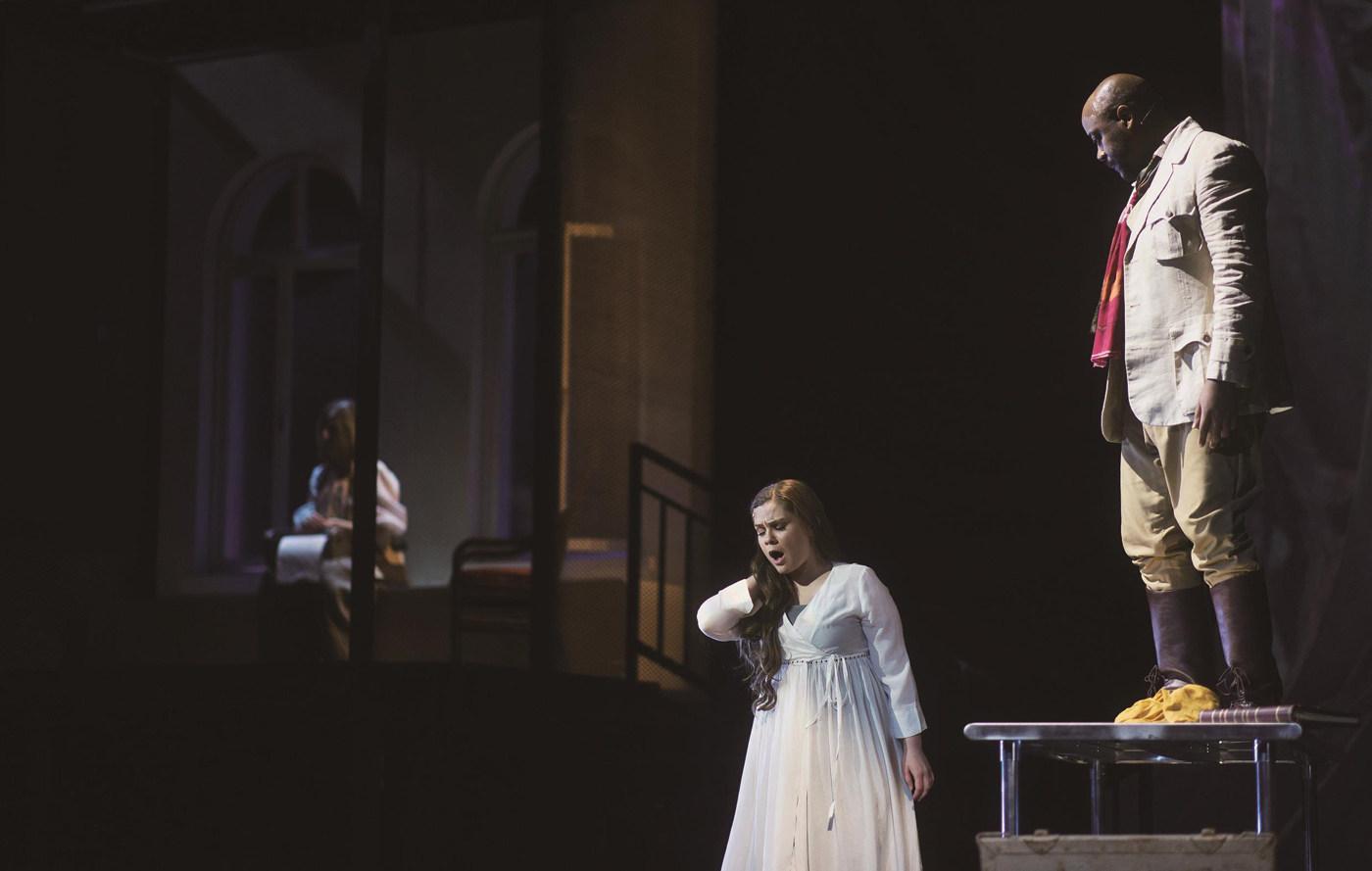
小瓊:正如你所想象的那樣,在雅典,你可以從零開始建造自己的舞臺,那里沒有樂池(音樂家們被安置在右邊,面向觀眾)。舞臺設計師安德洛瑪刻·查爾方特巧妙地創造了一個三面向觀眾開放的房間。還有一個重要的道具——一張長桌——被放在左邊(雅典版),但在紐約,它被移到了右邊,改變了舞臺的平衡(這顯然是導演羅賓·瓜里諾想要的)。
小薇:我可以從現場照片中看到,大片的白布為投影提供了便利。那歌手和音樂家呢?
小瓊:指揮家尼爾·戈倫領銜相同的演員陣容,但希臘版和美國版的樂隊組合是不同的。我在觀看演出時覺得很開心:反復聆聽同一部作品,真的能提高一個人對布朗熱音樂語言的鑒賞能力。
Joan: These days, so many operatic co-productions are set up across national borders, which helps not only reduce cost, but also efficiently utilize creative and performing talents.
Valery: Indeed, the Shanghai Opera House has set up alliances with so many world-renowned houses. Coming up this summer is the co-production of Madama Butterfly with the Royal Opera House at Covent Garden.
Joan: Today I want to share some observations about the same opera production, with the same cast, appearing in two cities within the span of four months.
Valery: I remember you went to Athens in January for La ville morte (1914), an opera by Nadia Boulanger(1887?1979) and Raoul Pugno (1852?1914), performed by the New York-based Catapult Opera. It was a true discovery, since Boulanger was such a famous teacher to many composers of the last century, including Ding Shande. I read that Catapult Opera just put on the New York premiere of La ville morte last month.
Joan: It was arranged as a chamber opera, and in Athens the venue was the Alternative Stage of the Stavros Niarchos Foundation Cultural Center, which opened in 2017. This Alternative Stage was a state-ofthe-art adaptable space, a black-box theater seating 200 to 300. (In fact, it reminds me of the design of the Chamber Hall of the Shanghai Symphony Hall.) In New York, its the NYU Skirball Center for the Performing Arts, a much more conventional theatre that seats 700 with a proscenium stage.
Valery: This is a serious contrast in scale! What about the staging?
Joan: As you can imagine, in Athens you construct your own stage from scratch, and theres no orchestra pit (musicians were placed on the right, facing the audience). The scenic designer Andromache Chalfant ingeniously created a room that opened on three sides to the audience. An important prop—a long table—was placed on the left (Athens), but in New York it shifted to the right, changing the balance of the stage (clearly something director Robin Guarino wanted).
Valery: I can see from the photos large swathes of white cloth provided the surface for projections. What about the singers and musicians?
Joan: Conductor Neal Goren led the same cast but the instrumental ensemble was different in Greece and America. I had a great time watching the performances: repeat listening really enhances ones appreciation of Boulangers musical language.
猜你喜歡
鳳凰動漫(軍事大王)(2022年3期)2022-06-17 01:47:32
鳳凰動漫(軍事大王)(2022年1期)2022-04-19 11:35:30
音樂天地(音樂創作版)(2021年3期)2021-05-25 12:05:06
小哥白尼(趣味科學)(2019年2期)2019-04-17 02:18:30
歌劇(2017年11期)2018-01-23 03:41:29
歌劇(2017年11期)2018-01-23 03:41:20
歌劇(2017年7期)2017-09-08 13:09:37
歌劇(2017年4期)2017-05-17 04:07:32
好孩子畫報(2014年6期)2014-07-25 03:20:04
聲屏世界(2014年1期)2014-02-28 15:17:26