基于多目標優化理論的耦合無關恒壓輸出型LCC/S補償感應電能傳輸系統
2023-12-26 03:29:46焦超群楊俊峰吳曉康
電工技術學報 2023年24期
焦超群 楊 旭 楊俊峰 魏 斌 吳曉康
基于多目標優化理論的耦合無關恒壓輸出型LCC/S補償感應電能傳輸系統
焦超群1楊 旭1楊俊峰1魏 斌2吳曉康2
(1. 北京交通大學電氣工程學院 北京 100044 2. 中國電力科學研究院有限公司 北京 100192)
基于傳統完全諧振參數設計方法的感應電能傳輸(IPT)系統只有在發射線圈和接收線圈完全耦合時才能表現出最佳性能。實際的IPT系統多為變耦合系統,耦合系數變化可能導致輸出電壓大范圍波動和效率降低等問題。該文提出一種基于多目標優化理論的補償拓撲參數設計方法,在耦合系數和負載變化的情況下仍然可以獲得相對恒定的輸出電壓且能夠高效運行。首先,利用基波近似分析法建立LCC/S補償IPT系統的系統方程。其次,以補償參數為優化變量,以減小輸出電壓波動、提升系統效率為優化目標,以電感最大通過電流、電容最大承受電壓和零電壓開關為約束條件建立多目標優化模型。然后,利用多目標粒子群優化(MOPSO)算法求解所建立的多目標優化模型,并得到Pareto最優解集。最后,根據實際需要,從Pareto最優解集中選擇合適的補償方案,并進行仿真分析和實驗驗證。實驗結果表明,優化方案的電壓波動率(VFR)約為傳統方案的45%,且優化方案的最低傳輸效率(87.5%)仍大于傳統方案的最高傳輸效率(86.3%)。該方法可用于優化滿足耦合和負載無關恒定輸出、高效率、零電壓開關等特性的補償拓撲。
感應電能傳輸 多目標優化 耦合無關恒壓輸出 多目標粒子群優化(MOPSO)算法 Pareto解集
0 引言
感應電能傳輸(Inductive Power Transfer, IPT)系統由于具有較高的功率水平和效率特性,已成為無線電能傳輸(Wireless Power Transfer, WPT)領域的主要研究方向[1-2]。IPT系統具有安全、靈活、可靠、美觀等優點,可應用于電動汽車、消費電子、植入式醫療設備、水下電氣設備等領域,是替代傳統有線充電方式的有效解決方案[3-5]。
基于完全諧振的IPT系統僅在發射和接收線圈完全耦合時才能表現優異的性能[6-7]。然而,線圈之間發生偏移是不可避免的,可能引起系統輸出波動較大或效率降低等問題[8-11]。為了在耦合系數變化條件下獲得相對恒定的輸出并高效運行,專家學者提出了多種解決方案,主要分為控制策略、磁耦合機構設計和補償拓撲三類[12-13]。其中,控制策略能夠得到精確輸出,但是當負載和耦合系數在較寬范圍內變化時,變換器的調控需求增加,可能會導致控制復雜、效率降低和不穩定等問題[14]。另外,額外增加的變換器也會帶來額外的成本、體積和質量。磁耦合機構僅在某個方向偏移時,耦合系數基本保持不變,系統抗偏移范圍有限[15]。
補償拓撲可以降低IPT系統控制復雜度,提升其可靠性和穩定性。基于傳統完全諧振補償參數設計方法的基本補償拓撲(S/S、S/P、P/S、P/P)不具有抗偏移能力[16],高階補償拓撲的抗偏移能力也有限[17-18]。文獻[19-20]利用混合型補償拓撲提升IPT系統的抗偏移能力,一個拓撲的輸出增益與耦合系數成正比;另一個拓撲的輸出增益與耦合系數成反比。混合型補償拓撲的增益之和在一定范圍內保持相對恒定,但是增加了線圈和補償元件的數量,系統的成本和復雜性也相應增加。另外,文獻[21]提出了重構拓撲方法,以提升系統的抗偏移能力。然而,重構拓撲需要額外的檢測電路和控制策略,增加了系統復雜性,降低了運行可靠性。
除了補償拓撲結構設計,補償參數優化也能夠提升IPT系統的抗偏移能力。文獻[22]提出了一種原邊感性、副邊容性的補償方法,在寬耦合范圍內實現了穩定的輸出。文獻[23]提出了一種基于枚舉法的S/S補償拓撲參數設計方法,以減小偏移條件下輸出電壓的波動。文獻[24]建立了功率波動的偏微分方程,利用解析法優化了LCC/S補償參數。然而,以上方法均未考慮IPT系統的傳輸效率問題。文獻[25]提出了一種基于粒子群優化的S/CLC補償參數設計方法,實現了較高的抗偏移能力和效率。然而,由于采用了加權求和法將多個目標函數合并為一個目標函數,各目標函數的權重需要人為選取,無法精準確定。文獻[26]建立了補償參數多目標優化模型,并利用分支減少優化導航求解器求解所提出非線性優化模型。但該方法仍需建立和求解偏微分方程,建模和求解過程比較復雜。文獻[27]提出了一種基于非支配排序遺傳算法Ⅲ的拓撲結構和參數同步優化方法。然而,該方法沒有進一步分析多目標優化得到的Pareto(帕累托)最優解集,缺乏IPT系統輸出電壓波動和效率折中方案的分析。
本文突破了傳統完全諧振參數設計方法的局限性,將IPT系統補償參數設計問題轉化為多目標優化問題。與單目標優化只能得到唯一解不同,本文建立了多目標優化模型并利用多目標粒子群優化(Multi-Objective Particle Swarm Optimization, MOPSO)算法求解得到了Pareto最優解集。決策者根據實際需要確定各目標權重,從Pareto最優解集中篩選出合適的設計方案,以確保IPT系統在耦合系數和負載變化條件下仍然能夠獲得相對恒定的輸出電壓,同時能夠高效運行。
1 基于諧振的LCC/S補償拓撲性能分析
1.1 基于LCC/S補償拓撲的IPT系統建模

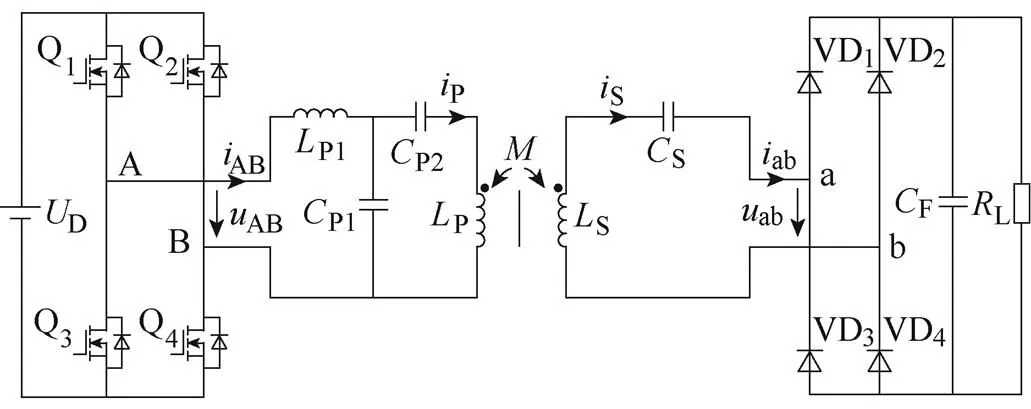
圖1 基于LCC/S補償拓撲的感應電能傳輸系統
利用基波近似分析(Fundamental Harmonic Approximation, FHA)法對圖1所示的IPT系統進行分析。設AB和AB分別為AB和AB的基波有效值,ab和ab分別為ab和ab的基波有效值,P和S分別為發射線圈和接收線圈的電流的有效值。設逆變器的輸出電壓的調制占空比為50%,則逆變器的輸出電壓AB以及整流橋的輸入交流等效電阻eq滿足

根據式(1),可得到基于LCC/S補償拓撲的IPT系統等效電路如圖2所示。基于互感理論建立了該系統的阻抗模型,阻抗定義及其關系可表示為

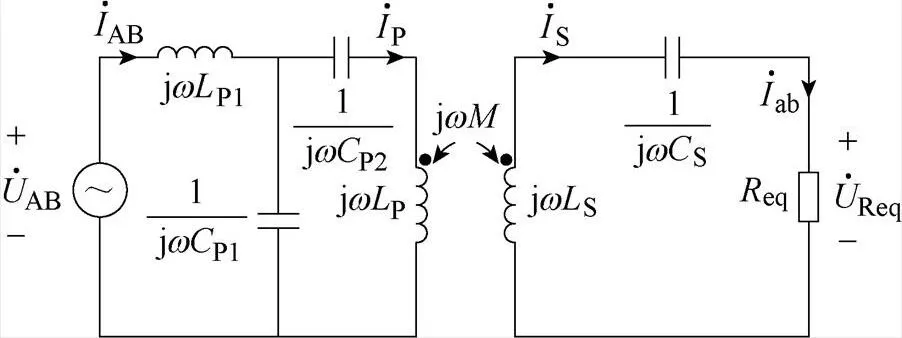
圖2 基于LCC/S補償拓撲的IPT系統等效電路

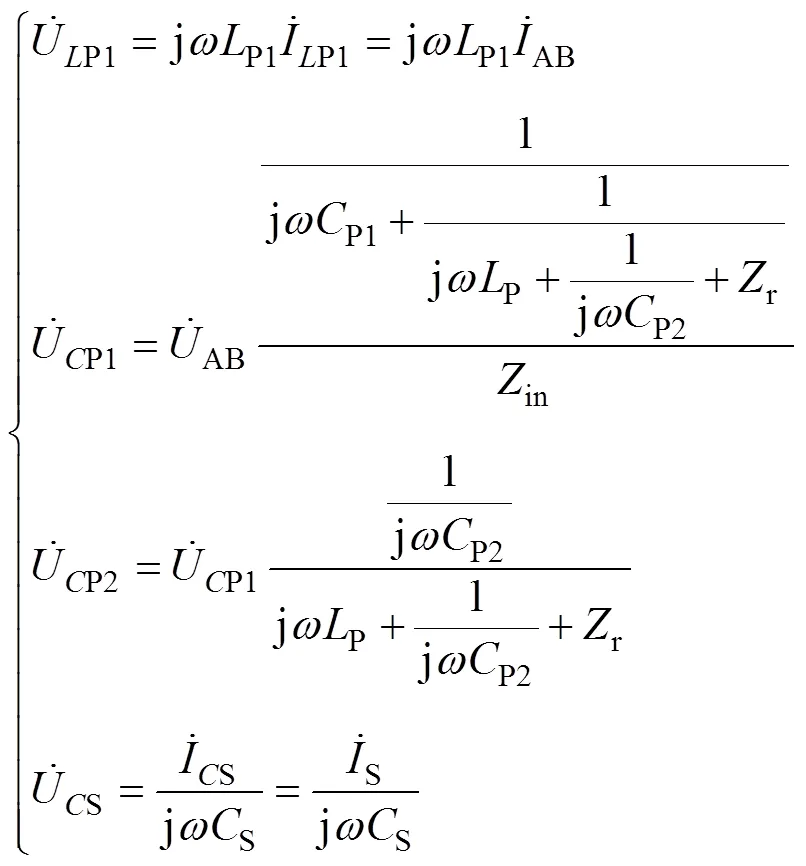
LCC/S補償拓撲的每個元件的兩端電壓為


1.2 傳統完全諧振補償方法輸出特性分析
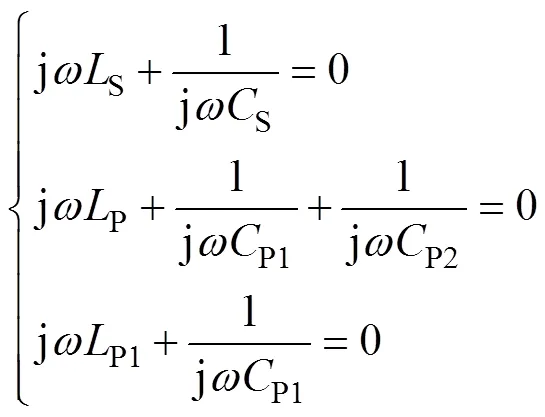
傳統的補償參數設計方法采用完全諧振的思想。當系統處于完全諧振狀態時,滿足
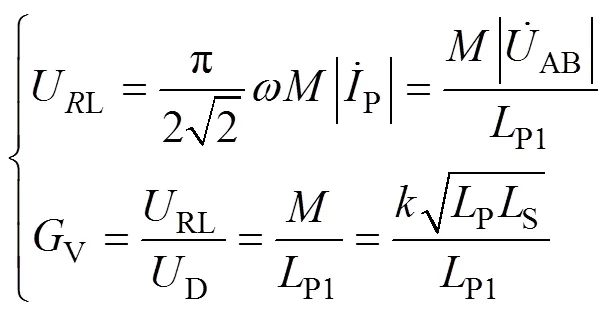
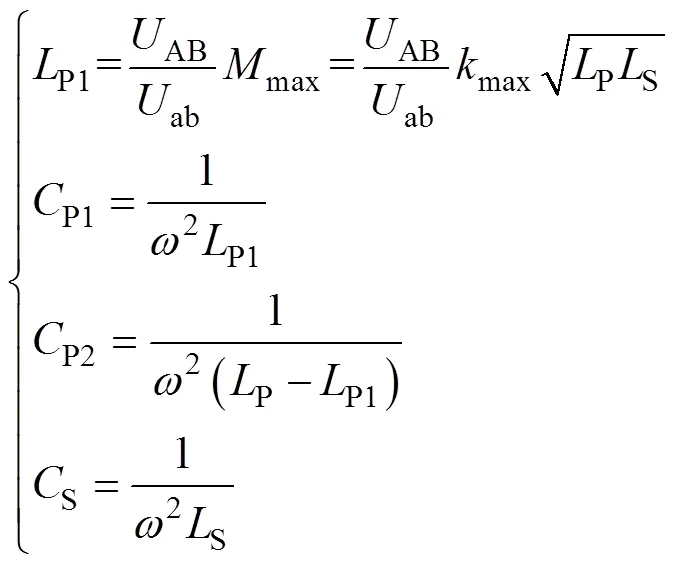
式中,為IPT系統的耦合系數。由式(8)可知,IPT系統的電壓增益不受負載影響,但與互感成正比。當IPT系統工作在完全諧振狀態時,LCC/S補償拓撲的4個參數需滿足
2 耦合無關恒壓輸出型補償拓撲優化模型
2.1 多目標優化問題描述
為了實現耦合無關恒壓輸出,同時確保系統高效運行,需要建立IPT系統多目標優化模型。多目標優化問題由優化變量、目標函數、系統方程和約束條件組成。通用的多目標優化模型的簡要描述為


2.2 多目標優化建模
2.2.1 目標函數
1)減小輸出電壓波動


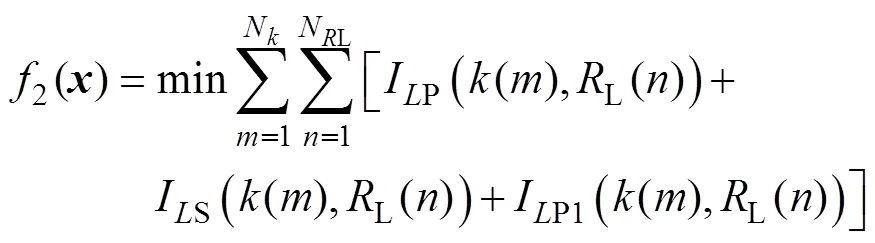
2)減小電感電流應力


3)減小輸入阻抗角
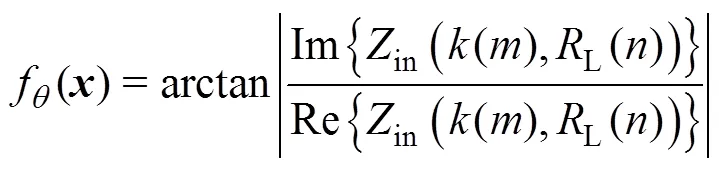
減小輸入阻抗角的函數描述為


2.2.2 約束條件
1)電壓約束
每個電容器都有相應的最大耐壓值,如果電壓超過了極限,電容器就容易擊穿。電容器兩端的電壓受以下條件的限制

2)電流約束
每個電感都有相應的最大允許通過電流值,如果電流超過了這個極限,電感就容易發生短路。通過電感器的電流受以下條件的限制

3)零電壓開關約束
為了減少開關損耗,提高IPT系統效率,系統應工作在零電壓軟開關(Zero Voltage Switching, ZVS)條件下,即IPT系統的輸入阻抗應為感性。輸入阻抗角用角度表示,其數學表達式為
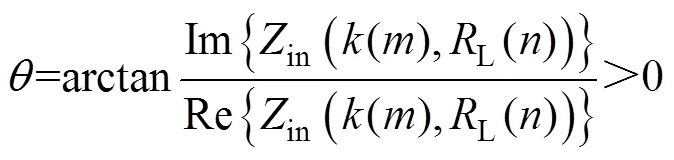
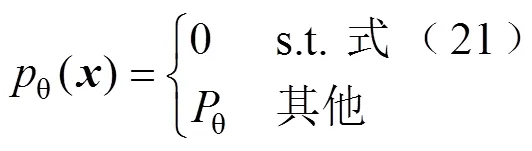
有約束優化問題可以轉化為無約束優化問題進行求解。無約束優化問題的目標函數為有約束優化問題的目標函數加上相關懲罰項。對于可行域外的解,懲罰項為正,即對該粒子進行懲罰;對于可行域內的解,懲罰項為0,即不做任何懲罰。因此懲罰項促使無約束優化問題的解落在可行域內。對于電容電壓應力約束,罰函數定義為

同理,對于電感電流應力約束,罰函數定義為
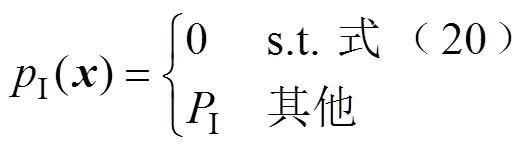
對于零電壓開關約束,罰函數定義為

2.3 多目標優化問題求解
2.3.1 MOPSO算法流程
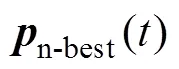
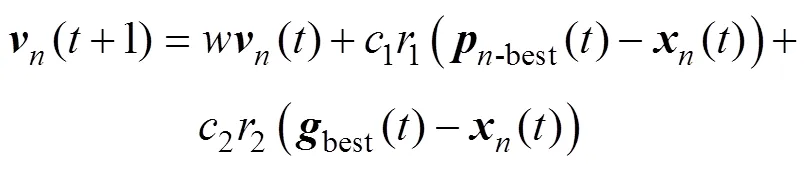

C. A. C. Coello等在PSO算法中引入Pareto最優求解多目標優化問題,稱為MOPSO算法。MOPSO算法流程如圖3所示,步驟如下:①參數初始化;②速度和位置更新;③適應度計算;④個體最優位置更新;⑤檔案更新;⑥全局最優向量更新;⑦重復步驟②~步驟⑥,直到滿足循環條件結束[28-29]。其中,步驟⑤檔案更新共包括三輪:首先,根據支配關系進行第一輪粒子群篩選,可得到Pareto最優解集并存入檔案庫;然后,根據支配關系對檔案庫的粒子群進行篩選,去除劣解;最后,若種群數量超過存檔閾值,則根據自適應網格法進行清除,網格將被重新劃分[28-29]。
2.3.2 求解空間和最大粒子速度


圖3 MOPSO算法流程

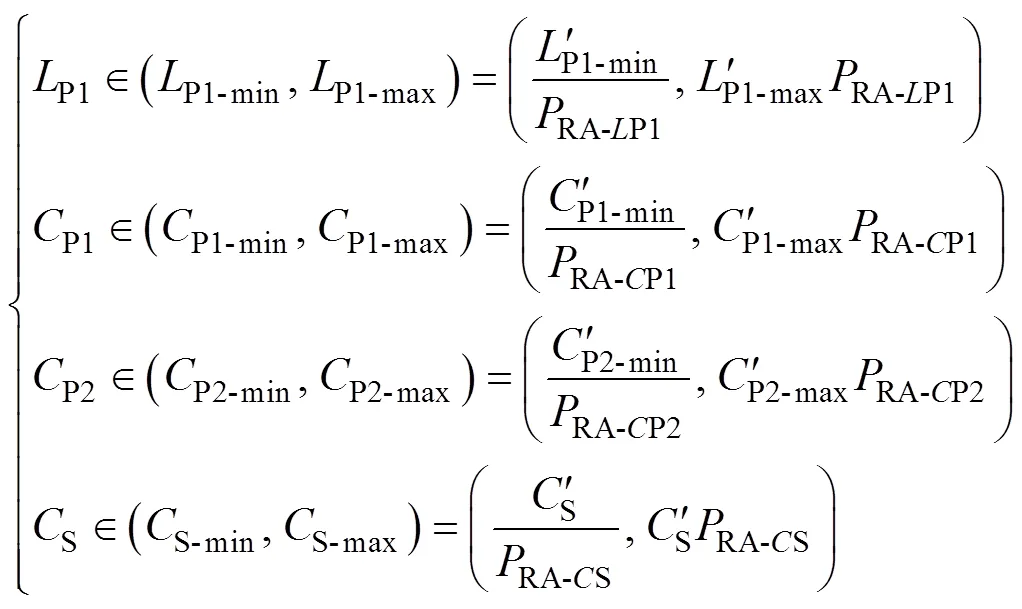
根據式(28)和式(29),可得到多目標粒子群優化(MOPSO)算法的補償參數求解空間為

3 優化實例和性能分析
3.1 優化實例


表1 IPT系統相關參數
將表1的參數代入式(9),可得到基于LCC/S補償的IPT系統在完全諧振下的補償拓撲參數,見表2。根據式(28)、式(29)和表1的參數可得到求解空間參考值,見表2。此外,MOPSO算法的相關參數設置值見表3。
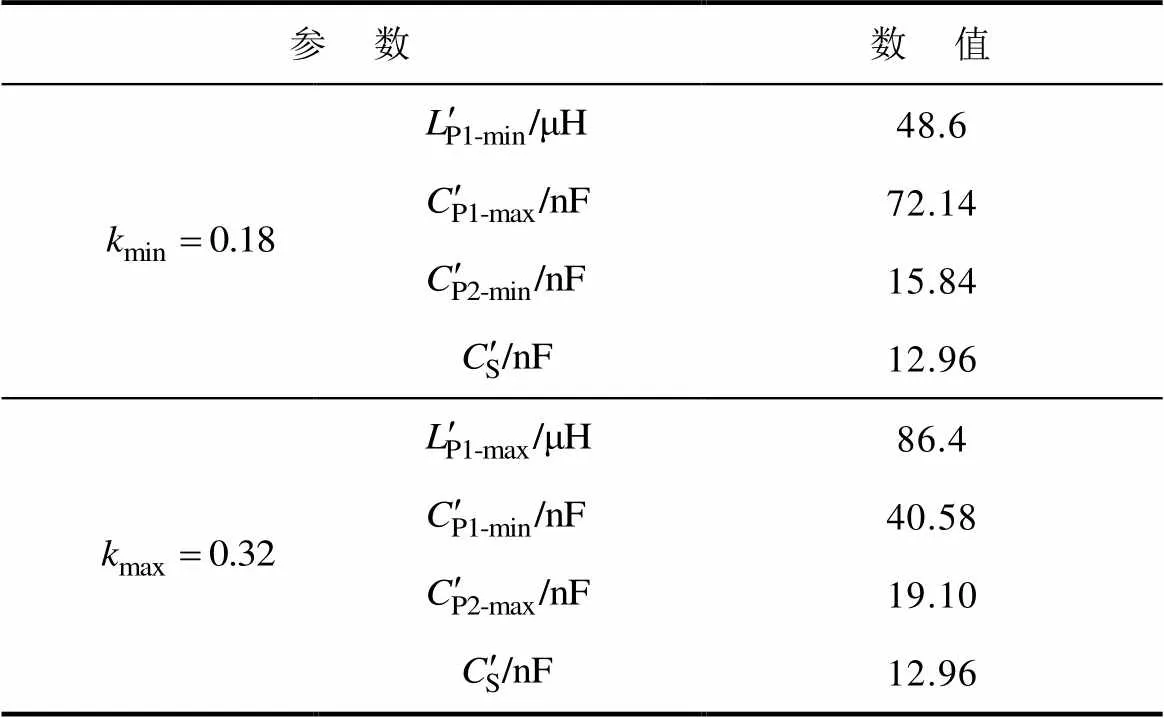
表2 傳統的參數值和解空間的參考值

表3 MOPSO算法的相關參數
3.2 收斂和敏感度分析
基于MOPSO算法得到的Pareto前沿收斂過程如圖4所示,隨著迭代次數的增加,Pareto前沿逐漸“減小”,分布逐漸變得光滑均勻,優化結果逐漸收斂。當迭代次數為80時,帕累托前沿基本固定,并與迭代次數為200時的帕累托前沿重疊如圖8所示,表明MOPSO算法求解該多目標優化模型的收斂速度較快。
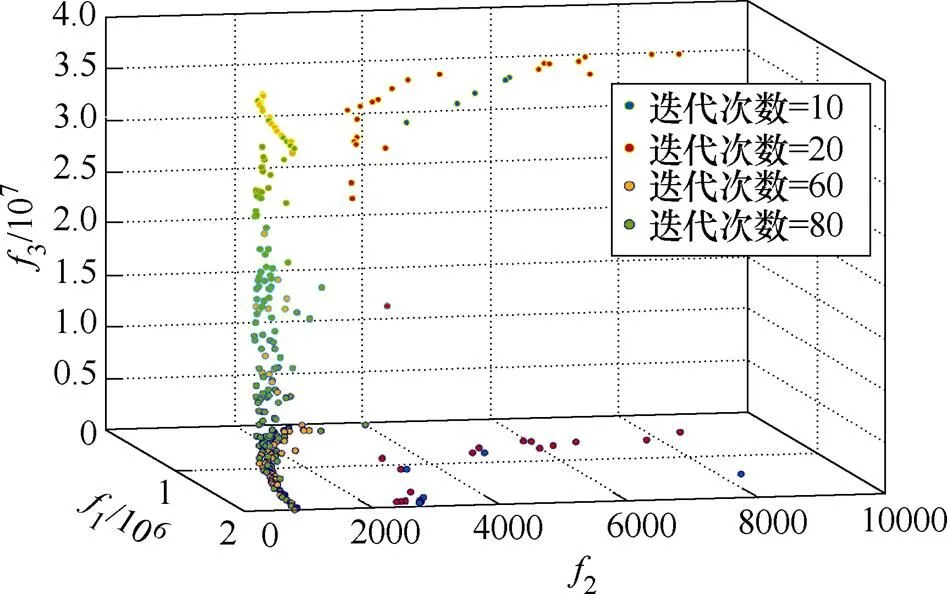
圖4 MOPSO算法的收斂性
當輸入電壓變化時,IPT系統的Pareto前沿對比如圖5所示。當輸入電壓從80 V增大到120 V時,Pareto前沿幾乎重合,三種不同輸入電壓的適應度函數值接近。在不同輸出電壓要求下,IPT系統的Pareto前沿對比如圖6所示。當輸出電壓在80~120 V范圍內變化時,Pareto前沿變化趨勢一致,均能夠獲得較好的適應度函數值。因此,MOPSO算法對輸入和輸出變量變化不敏感,所建立的多目標優化模型與MOPSO算法具有較好的兼容性。

圖5 不同輸入電壓下的Pareto解
3.3 Pareto最優結果
MOPSO算法經過200次迭代,檔案庫中先后生成的所有解如圖7所示(3D圖)。整個算法運行時間約為20 s,最終計算結果收斂到Pareto前沿,如圖8所示(2D圖)。

圖6 不同輸出電壓下的Pareto解

圖7 200次迭代的所有解

圖8 Pareto最優解
3.4 仿真分析
從圖8可以看出,電壓波動和電感電流應力不能同時達到最優,而輸入阻抗角(Input Impedance Angle, IIA)與兩者沒有呈正相關或負相關。因此,以電壓波動最小為最高優先級,以電感電流應力和輸入阻抗角為主要參考因素,在解A附近選擇三個相鄰解,分別用方案Ⅰ、方案Ⅱ和方案Ⅲ表示,相關參數見表4。不同耦合系數和負載下的輸出電壓、輸入阻抗角、電感電流應力和電容電壓應力分別如圖9~圖12所示。選定方案與傳統方案進行的比較和分析結果見表5。
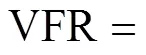

表4 基于權衡分析法選擇的解決方案

表5 傳統方案和選定方案對比
4 實驗驗證
4.1 實驗裝置
為了驗證所提方法有效性,搭建了實驗樣機并與傳統方案進行比較。雖然方案Ⅱ的電壓波動率VFR小于方案Ⅲ,但方案Ⅱ的4個補償參數值都大于方案Ⅲ。受補償元件尺寸、體積和成本的限制,補償參數值不能太大,優化方案Ⅲ更加實用。因此,僅對傳統方案和方案Ⅲ進行驗證和對比分析。

4.2 實驗結果

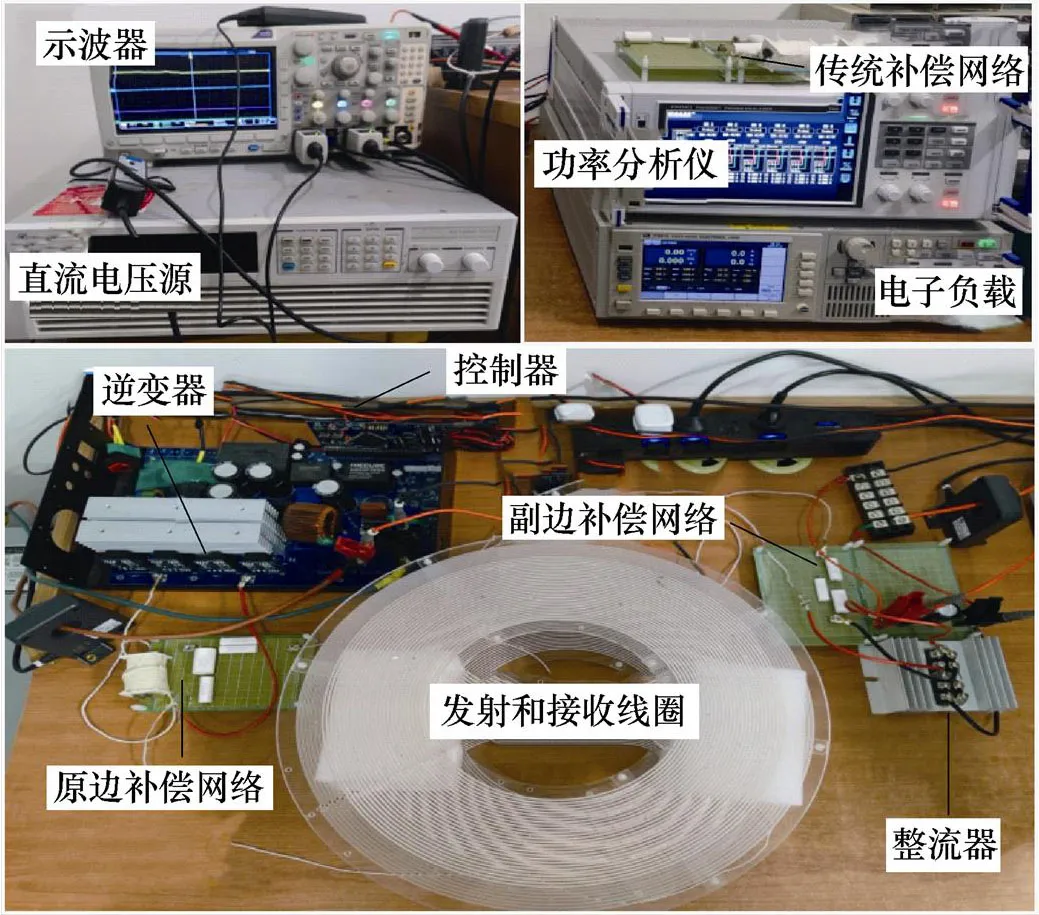
圖13 IPT系統實驗樣機

圖14 實驗波形和DC-DC效率
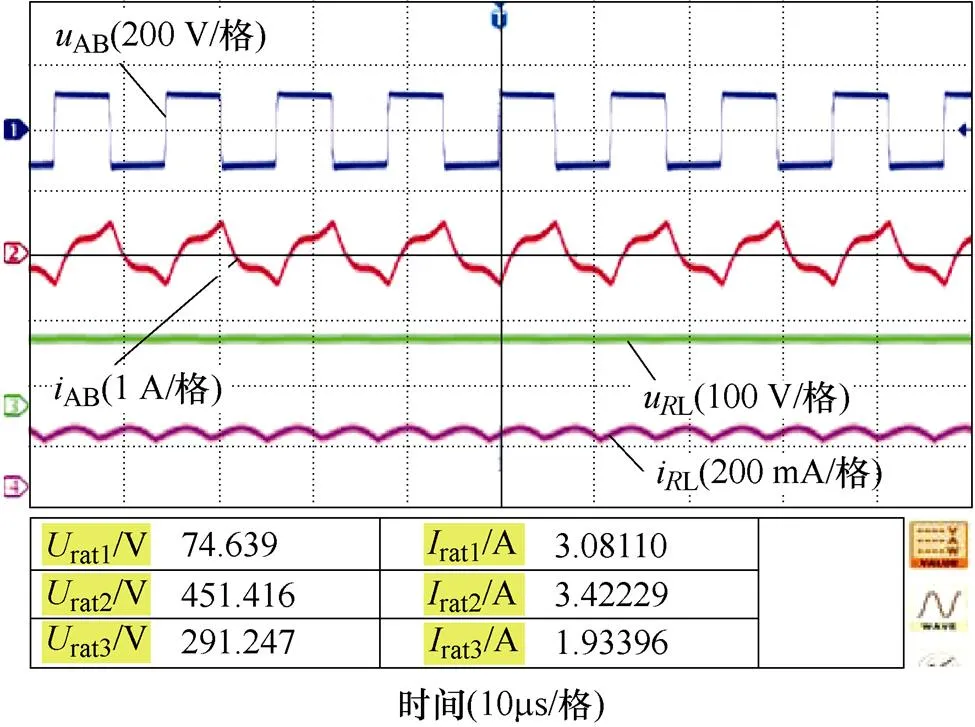

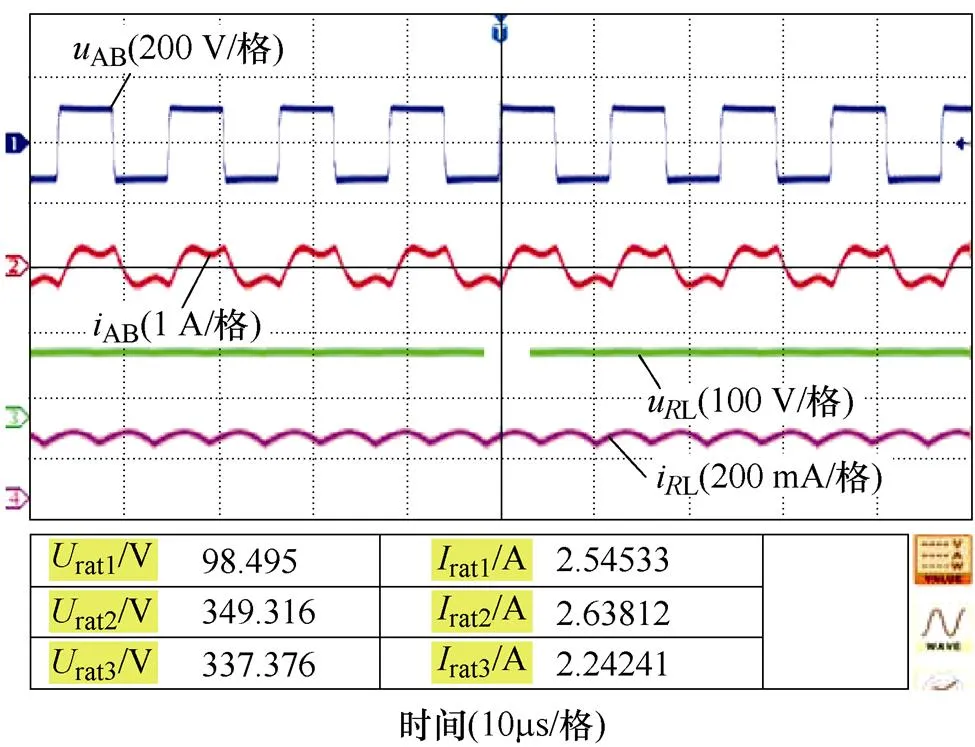
圖15 實驗波形和元器件應力
Fig.15 Experimental waveforms and component stresses

(a)傳統方案
(b)優化方案
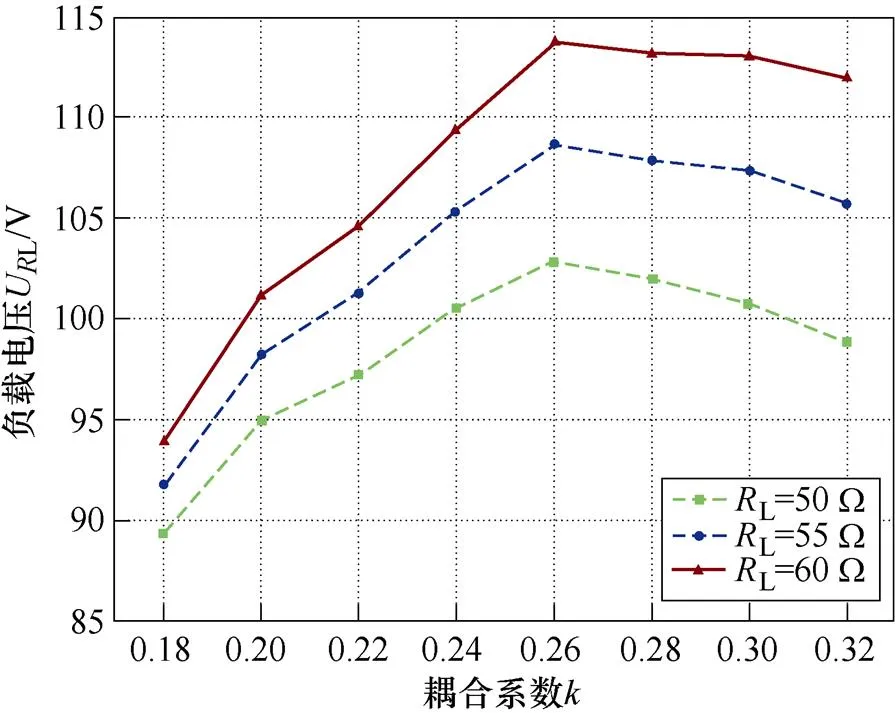
圖16 輸出電壓隨耦合系數和負載變化曲線
Fig.16 Output voltage versus coupling coefficient and load

(a)傳統方案

(b)優化方案
圖17 效率隨耦合系數和負載變化曲線
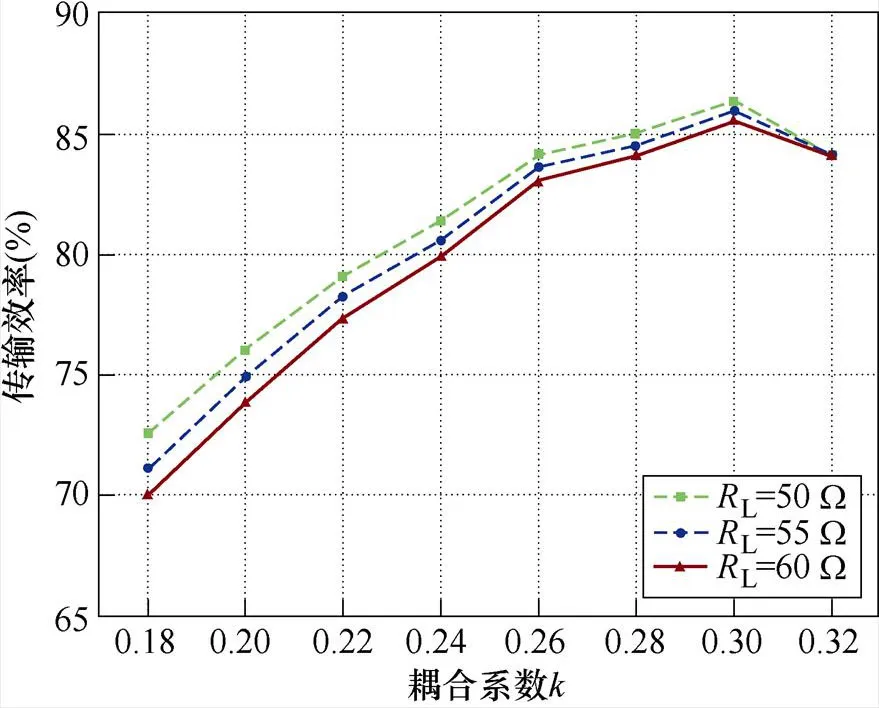
Fig.17 Efficiency versus coupling coefficient and load
綜上所述,優化方案的輸出電壓波動、DC-DC效率均優于傳統方案。實驗與理論分析基本一致,從而驗證了基于多目標優化理論的補償拓撲參數設計方法的有效性。基于傳統補償方法的IPT系統發射線圈電流與負載和耦合系數無關,系統的輸出電壓對耦合系數非常敏感。基于多目標優化方法的IPT系統的發射線圈電流與耦合系數呈負相關,可以跟蹤和補償耦合系數對IPT系統輸出電壓的影響。優化方案的補償參數值均小于傳統方案的補償參數值,相應的寄生電阻也小于傳統方案。優化方案的發射線圈電流與耦合系數呈負相關,使得接收線圈電流基本不變。因此,優化方案能夠在耦合系數和負載變化范圍內高效運行。此外,通過合理的開關選擇方案可以進一步降低逆變器、整流器等開關元件的損耗,不在本文討論范圍之內。
5 結論

[1] Zhang Zhen, Pang Hongliang, Georgiadis A, et al. Wireless power transfer-an overview[J]. IEEE Transactions on Industrial Electronics, 2019, 66(2): 1044-1058.
[2] 薛明, 楊慶新, 章鵬程, 等. 無線電能傳輸技術應用研究現狀與關鍵問題[J]. 電工技術學報, 2021, 36(8): 1547-1568.
Xue Ming, Yang Qingxin, Zhang Pengcheng, et al. Application status and key issues of wireless power transmission technology[J]. Transactions of China Electrotechnical Society, 2021, 36(8): 1547-1568.
[3] Covic G A, Boys J T. Inductive power transfer[J]. Proceedings of the IEEE, 2013, 101(6): 1276-1289.
[4] Li Zhenjie, Zhu Chunbo, Jiang Jinhai, et al. A 3-kW wireless power transfer system for sightseeing car supercapacitor charge[J]. IEEE Transactions on Power Electronics, 2017, 32(5): 3301-3316.
[5] 陳凱楠, 蔣燁, 檀添, 等. 軌道交通350kW大功率無線電能傳輸系統研究[J]. 電工技術學報, 2022, 37(10): 2411-2421, 2445.
Chen Kainan, Jiang Ye, Tan Tian, et al. Research on 350kW high power wireless power transfer system for rail transit[J]. Transactions of China Electro- technical Society, 2022, 37(10): 2411-2421, 2445.
[6] 謝文燕, 陳為. 基于組合補償網絡的抗偏移恒流輸出無線電能傳輸系統研究[J]. 電工技術學報, 2022, 37(6): 1495-1512.
Xie Wenyan, Chen Wei. Research on anti-offset constant-current output wireless power transfer system based on combined compensation network[J]. Transactions of China Electrotechnical Society, 2022, 37(6): 1495-1512.
[7] 孫淑彬, 張波, 李建國, 等. 多負載磁耦合無線電能傳輸系統的拓撲發展和分析[J]. 電工技術學報, 2022, 37(8): 1885-1903.
Sun Shubin, Zhang Bo, Li Jianguo, et al. Analysis and development on topologies of multi-load magnetic- coupling wireless power transfer system[J]. Transa- ctions of China Electrotechnical Society, 2022, 37(8): 1885-1903.
[8] Vu V B, Ramezani A, Trivi?o A, et al. Operation of inductive charging systems under misalignment conditions: a review for electric vehicles[J]. IEEE Transactions on Transportation Electrification, 2022, 9(1): 1857-1887.
[9] 陳陽, 楊斌, 彭云爾, 等. 感應式無線電能傳輸系統抗偏移技術研究綜述[J]. 中國電機工程學報, 2023, 43(14): 5537-5559.
Chen Yang, Yang Bin, Peng Yuner, et al. Review of anti-misalignment technology in inductive wireless power transfer system[J]. Proceedings of the CSEE, 2023, 43(14): 5537-5559.
[10] 陸遠方, 黎祎陽, 楊斌, 等. 考慮線圈參數變化的SS型動態無線電能傳輸系統參數優化設計方法[J].電工技術學報, 2022, 37(18): 4537-4547.
Lu Yuanfang, Li Yiyang, Yang Bin, et al. Parameter design method for SS compensated dynamic wireless power transfer system considering coils’ parameters variations[J]. Transactions of China Electrotechnical Society, 2022, 37(18): 4537-4547.
[11] 張獻, 韓大穩, 沙琳, 等. 一種共享磁通多耦合模式的無線電能傳輸系統抗偏移方法[J]. 電工技術學報, 2022, 37(21): 5359-5368.
Zhang Xian, Han Dawen, Sha Lin, et al. An anti- offset method under flux-sharing multi-coupling mode for wireless power transmission system[J]. Transactions of China Electrotechnical Society, 2022, 37(21): 5359-5368.
[12] 陳永洪, 黎祎陽, 楊斌, 等. 基于多中繼線圈結構的無線電能傳輸系統恒流/恒壓輸出方法[J]. 電力系統自動化, 2022, 46(20): 147-154.
Chen Yonghong, Li Yiyang, Yang Bin, et al. Constant-current/constant-voltage output method for wireless power transfer system based on multi-relay coil structure[J]. Automation of Electric Power Systems, 2022, 46(20): 147-154.
[13] 胡秀芳, 王躍, 呂雙慶, 等. 基于諧波狀態空間的無線電能傳輸系統建模和穩定性分析[J]. 電力系統自動化, 2022, 46(11): 121-130.
Hu Xiufang, Wang Yue, Lü Shuangqing, et al. Modeling and stability analysis of wireless power transfer system based on harmonic state space[J]. Automation of Electric Power Systems, 2022, 46(11): 121-130.
[14] 王黨樹, 董振, 古東明, 等. 基于雙邊LCL變補償參數諧振式無線充電系統的研究與分析[J]. 電工技術學報, 2022, 37(16): 4019-4028.
Wang Dangshu, Dong Zhen, Gu Dongming, et al. Research and analysis of resonant wireless charging system based on bilateral LCL variable compensation parameters[J]. Transactions of China Electrotechnical Society, 2022, 37(16): 4019-4028.
[15] Dai Zhongyu, Wang Junhua, Zhou Haikuo, et al. A review on the recent development in the design and optimization of magnetic coupling mechanism of wireless power transmission[J]. IEEE Systems Journal, 2020, 14(3): 4368-4381.
[16] Li Weihan, Zhao Han, Deng Junjun, et al. Comparison study on SS and double-sided LCC compensation topologies for EV/PHEV wireless chargers[J]. IEEE Transactions on Vehicular Technology, 2016, 65(6): 4429-4439.
[17] Liu Y C, Zhang Jiantao, Tse C K, et al. General pathways to higher order compensation circuits for IPT converters via sensitivity analysis[J]. IEEE Transactions on Power Electronics, 2021, 36(9): 9897-9906.
[18] Borage M, Tiwari S, Kotaiah S. Analysis and design of an LCL-T resonant converter as a constant-current power supply[J]. IEEE Transactions on Industrial Electronics, 2005, 52(6): 1547-1554.
[19] Zhao Lei, Thrimawithana D J, Madawala U K. Hybrid bidirectional wireless EV charging system tolerant to pad misalignment[J]. IEEE Transactions on Industrial Electronics, 2017, 64(9): 7079-7086.
[20] Villa J L, Sallan J, Sanz Osorio J F, et al. High- misalignment tolerant compensation topology for ICPT systems[J]. IEEE Transactions on Industrial Electronics, 2012, 59(2): 945-951.
[21] Mai Ruikun, Chen Yang, Li Yong, et al. Inductive power transfer for massive electric bicycles charging based on hybrid topology switching with a single inverter[J]. IEEE Transactions on Power Electronics, 2017, 32(8): 5897-5906.
[22] Feng Hao, Cai Tao, Duan Shanxu, et al. A dual-side detuned series-series compensated resonant converter for wide charging region in a wireless power transfer system[J]. IEEE Transactions on Industrial Elec- tronics, 2018, 65(3): 2177-2188.
[23] 任潔, 劉野然, 岳鵬飛, 等. 基于參數優化法的輸出抗偏移感應電能傳輸系統研究[J]. 中國電機工程學報, 2019, 39(5): 1452-1461.
Ren Jie, Liu Yeran, Yue Pengfei, et al. Study on anti-misalignment inductive power transfer system based on parameter optimized method[J]. Proceedings of the CSEE, 2019, 39(5): 1452-1461.
[24] Feng Hao, Cai Tao, Duan Shanxu, et al. An LCC compensated resonant converter optimized for robust reaction to large coupling variation in dynamic wireless power transfer[J]. IEEE Transactions on Industrial Electronics, 2016, 63(10): 6591-6601.
[25] Yao Yousu, Wang Yijie, Liu Xiaosheng, et al. Particle swarm optimization-based parameter design method for S/CLC-compensated IPT systems featuring high tolerance to misalignment and load variation[J]. IEEE Transactions on Power Electronics, 2019, 34(6): 5268-5282.
[26] Ramezani A, Narimani M. Optimized electric vehicle wireless chargers with reduced output voltage sensitivity to misalignment[J]. IEEE Journal of Emerging and Selected Topics in Power Electronics, 2020, 8(4): 3569-3581.
[27] Chen Weiming, Lu Weiguo, Iu H H C. Compensation network optimal design based on evolutionary algorithm for inductive power transfer system[J]. IEEE Transactions on Circuits and Systems I: Regular Papers, 2020, 67(12): 5664-5674.
[28] Coello C A C, Lechuga M S. MOPSO: a proposal for multiple objective particle swarm optimization[C]// Proceedings of the 2002 Congress on Evolutionary Computation, Honolulu, HI, USA, 2002: 1051-1056.
[29] Coello C A C, Pulido G T, Lechuga M S. Handling multiple objectives with particle swarm optimi- zation[J]. IEEE Transactions on Evolutionary Com- putation, 2004, 8(3): 256-279.
Coupling-Independent Constant-Voltage Output LCC/S Compensation Inductive Power Transfer System Based on Multi-Objective Optimization Theory
11122
(1. School of Electrical Engineering Beijing Jiaotong University Beijing 100044 China 2. China Electric Power Research Institute Beijing 100192 China)
The inductive power transfer (IPT) system based on the traditional full resonance parameter design method presents the best performance only when the transmitting and receiving coils are fully coupled. Usually, the primary coil is fixed, and the position of the secondary coil is uncertain for human factors, causing lateral and longitudinal misalignment of the magnetic coupling mechanism. This misalignment of the magnetic coupling mechanism directly leads to the variation of the coupling coefficient, which may lead to a wide range of output voltage fluctuation and efficiency reduction. To obtain a relatively constant output voltage and operate efficiently under coupling coefficient and load variations, this paper overcomes the limitations of the traditional full resonance parameter design method, transforming the compensation topology parameter design problem into a multi-objective optimization problem.
Firstly, after analyzing full resonance compensation parameters, the system equations of the IPT system with LCC/S compensation topology are established using the fundamental harmonic approximation (FHA) method. A multi-objective optimization model is established. Herein, compensation topology parameters are used as optimization variables, and output voltage fluctuation reduction and system efficiency improvement are as the optimization objectives. The constraints are maximum inductance passing current, maximum capacitor withstanding voltage, and zero voltage switching (ZVS). Then, a case is designed, and the multi-objective particle swarm optimization (MOPSO) algorithm is used to solve the multi-objective optimization model. Three optimization schemes are selected from the Pareto optimal solution set according to the actual needs, and the simulation analysis is carried out. Finally, based on the multi-objective optimization theory, an experimental platform is built to verify the coupling-independent constant output characteristics and efficient operation characteristics of the compensation parameter design method. The experimental results show that when the coupling coefficient of the IPT system varies in the range of 0.20~0.32, and the equivalent load resistance varies in the range of 50~60W, the output voltage fluctuation rate (VFR) of the optimized scheme is less than 9.0%. In the whole range of coupling coefficient and load variation, the minimum efficiency is 87.5%, and the maximum efficiency is 93.2%. Compared with the efficiency of the traditional scheme (70.0%~86.3%), the efficiency of the optimized scheme is also greatly improved.
Different from single-objective optimization, which provides only a single solution, the multi-objective optimization model established in this paper can get the Pareto optimal solution set through the MOPSO algorithm. The decision maker determines the weight of each object according to the actual needs and selects the appropriate design scheme from the Pareto optimal solution set. Thus, the IPT system can still obtain a relatively constant output voltage and operate efficiently when the coupling coefficient and load change. This method has high flexibility and wide applicability. It is suitable for optimizing compensation topologies that satisfy features like coupling and load-independent constant output, high efficiency, low device stress, zero voltage switching, and more.
Inductive power transfer, multi-objective optimization, coupling-independent constant voltage output, multi-objective particle swarm optimization (MOPSO) algorithm, Pareto solutions
TM724
10.19595/j.cnki.1000-6753.tces.230325
中央高校基本科研業務費專項資金資助項目(2023JBZX006)。
2023-03-20
2023-06-02
焦超群 男,1976年生,副教授,博士生導師,研究方向為電磁場理論及其應用、大功率IGBT器件、無線電能傳輸技術等。E-mail: chqjiao@bjtu.edu.cn
楊 旭 男,1987年生,博士研究生,研究方向電力電子變換器、無線電能傳輸技術等。E-mail: yangxuican@bjtu.edu.cn(通信作者)
(編輯 陳 誠)
猜你喜歡
工業設計(2022年8期)2022-09-09 07:43:20
房地產導刊(2022年5期)2022-06-01 06:20:14
建材發展導向(2021年12期)2021-07-22 08:06:48
建材發展導向(2021年7期)2021-07-16 07:07:52
中學生數理化(高中版.高二數學)(2021年12期)2021-04-26 07:43:48
軍民兩用技術與產品(2021年10期)2021-03-16 06:05:30
中學生數理化(高中版.高考數學)(2021年12期)2021-03-08 01:28:50
北京測繪(2020年12期)2020-12-29 01:33:58
裝備制造技術(2019年12期)2019-12-25 03:06:46
中國洗滌用品工業(2019年4期)2019-05-11 09:27:34