Prospects for a New Era in China’s Engagement with International Law and Dispute Settlement
2023-02-06 02:21:02ByDiegoMejiaLemos
國際人才交流 2023年1期
By Diego Mejia-Lemos
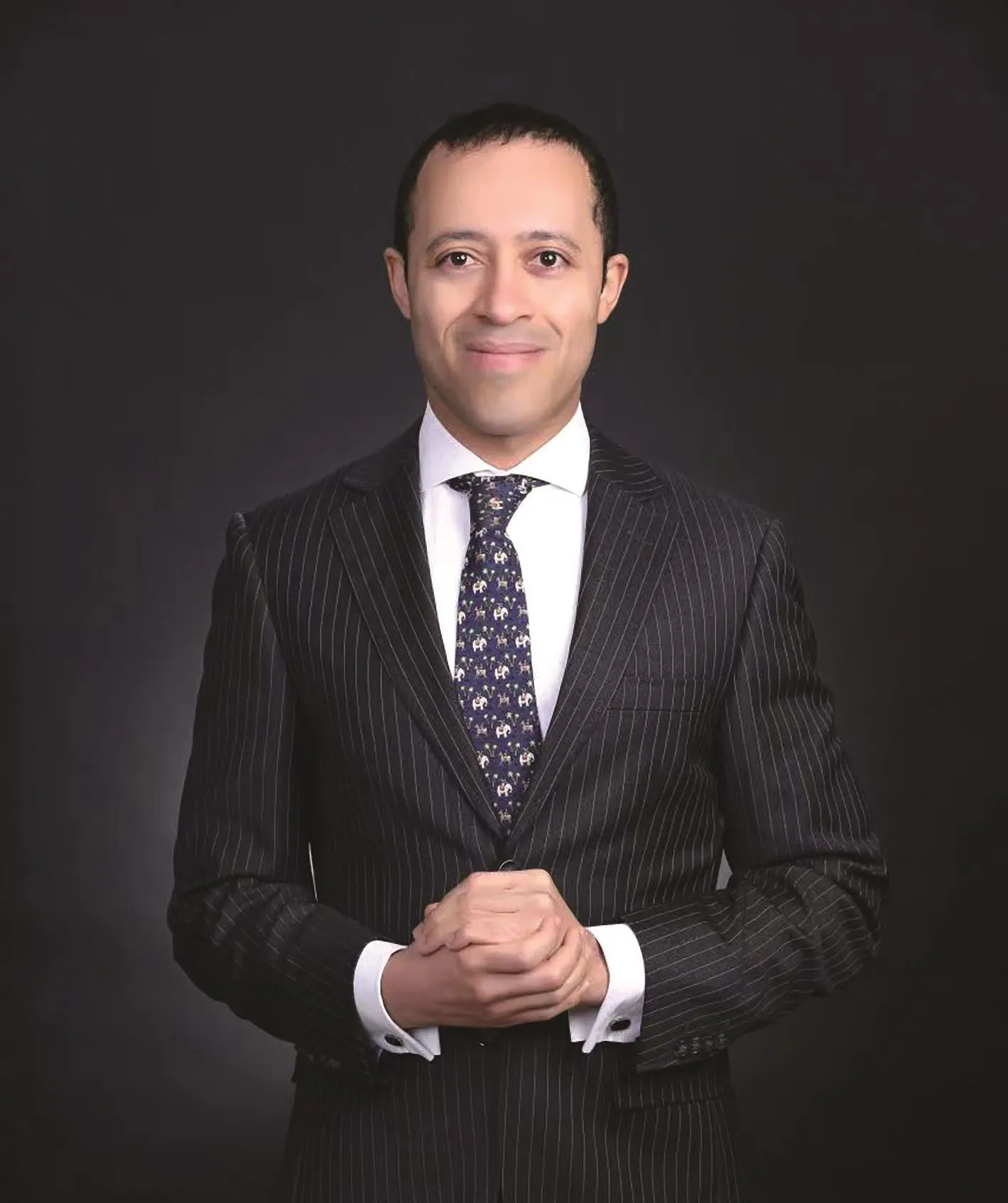
Diego Mejia-Lemos(哥倫比亞籍),西安交通大學法學院青年拔尖人才,副教授,博士生導師。研究領域為國際法、國際爭端解決等。Mejia-Lemos教授畢業于紐約大學(碩士)和新加坡國立大學法學院(碩士、博士),2021年以全職教授身份加入西安交通大學法學院。Diego Mejia-Lemos (Colombia) has been appointed as a distinguished research associate professor at Xi’an Jiaotong University (XJTU) School of Law, within the framework of XJTU’s“Young Talent” programme.His research fields include international law, international dispute settlement.He holds graduate degrees from New York University (NYU) and the National University of Singapore (NUS).He joined XJTU School of Law as a full-time professor in 2021.
This short essay aims to share my impressions as a foreign expert who has had the unique opportunity to witness, while currently based in Xi’an, the 20th CPC National Congress,held in Beijing from 16 October 2022.I have been kindly asked to share these impressions with my colleagues at Xi’an Jiaotong University (XJTU), particularly its School of Law and Silk Road Institute for International and Comparative Law, august scholarly institutions of which I am very proud to have latterly become a member.
In early 2021, I joined XJTU, in my capacity as a Distinguished Research Associate Professor, appointed within the framework of XJTU’s Young Talent Support Plan.This appointment adds to my diverse experience in academia and practice, having lived and worked in the Americas, Europe, and, for most of the last decade, Asia, notably in Singapore.In fact, before my current appointment, I had held several positions, having been, among others, part of Freshfields Bruckhaus Deringer’s public international law and international arbitration group in Paris, France, and of the international bureau of the Permanent Court of Arbitration in The Hague, The Netherlands,as well as a post-doctoral fellow at the National University of Singapore.In addition, at XJTU, I currently act as a doctoral supervisor to a growing group of talented students hailing from China and other countries and as a principal investigator as well, leading research projects generously funded by two major grants, namely a grant tied to my faculty position and a research grant recently awarded by China’s Ministry of Science and Technology, following a very highly competitive selection process on the national level.
The Congress undoubtedly constitutes a highly significant and historical milestone in China’s history, with very substantial ramifications for China and the world at large, given China’s unparalleled status as the world’s most long-standing great civilization, whose cultural traditions and language date back to at least five millenia, and as the world’s largest economy,having already surpassed the size of the United States’ economy in terms of gross domestic product (GDP) on a purchasing power parity (PPP) basis, according to the World Bank.Furthermore, as Xi’an is a city at the center of traditional Chinese culture, having been China’s capital during various dynasties,witnessing the above-referenced events while living in Xi’an has made this experience a historical one in another, more personal, sense.
I have watched the speech delivered by President Xi Jinping twice, both its live broadcast (in Chinese, to train my listening skills) and its recorded version (with a simultaneous translation into English).In his speech, he reported on China’s progress over the past quinquennium and charted China’s path for the future amidst challenges of a magnitude not seen but once in a century, as he appositely noted.I was very impressed by the speech’s comprehensiveness and highly systematic nature.It touches on many epochal challenges faced by societies not only in China but across the world, on both local and global levels, and sets out programs and policies oriented explicitly towards solving various significant issues, ranging from social inequality to the balance between economic development and various societal concerns, including climate change.As a foreign expert, I found it very encouraging to realize that these multiple ideas and policies, grounded upon China’s vast cultural and intellectual traditions, may pave the way for further international cooperation, creating the potential for mutually beneficial and fruitful outcomes for China and its present and future partners across the world.Such openness is also directly reflected in China’s strong desire to attract talent, as explicitly highlighted in the speech, thus creating concrete opportunities for professionals like me to pursue projects and, in doing so, to contribute to the Chinese people.
The main view I formed is that China remains committed to continuing and expanding upon its successful policies of opening up and, thus, of creating opportunities for international cooperation on various levels, notably in the economic sphere.These prospects are not only indicated by the multiple policies highlighted in the speech, which, it seemed to me,aims to strike a balance between continuity and change, but are also evidenced by specific deeds.Indeed, recently, China,alongside Singapore, was among the first states to ratify the Regional Comprehensive Economic Partnership (RCEP), which is widely believed to constitute the world’s largest free trading bloc.The RCEP adds to an extensive network of other international agreements on economic cooperation concluded by China with an increasing number of other states, most prominently international investment agreements, promoting and protecting Chinese investors abroad—underpinning China’s dual role as importer and, increasingly, exporter of capital—as well as foreign investors in China.
A vital change highlighted in the speech, and which I had heard of in various media previously, is an emphasis on attaining high quality development as an overarching feature in the continuation of previous and existing, as well as in the formulation of new, economic policies, whether internally or externally oriented.Those policies in which an emphasis on high quality development is to be implemented include, most prominently, the Belt and Road Initiative (BRI), a practical approach that has proven a fertile ground for international cooperation, having generated a vast amount of continuously growing scholarly literature on the international dispute settlement aspects of BRI projects.Indeed, international arbitral institutions such as the China International Economic and Trade Arbitration Commission (CIETAC), the Singapore International Arbitration Centre (SIAC), and the Hong Kong International Arbitration Centre (HKIAC), have engaged explicitly with the BRI, by updating their arbitration rules and adopting specific BRI-related guidelines.
In addition to the engagement of international arbitral institutions in the region and across the world, there are other developments in the form of policies actually implemented and directly involving Xi’an, such as the establishment of Chinese international commercial courts, two of which were inaugurated in June 2018 by the Chinese Supreme People’s Court,and one of which is based in Xi’an, as an important city of the BRI’s ‘Belt’ and, historically, a terminus of the silk road, which inspired the BRI.Indeed, the silk road serves as a significant historical antecedent for the BRI, epitomizing China’s peaceful and prosperous interactions with the world through commerce,traces of which can still be found in Xi’an’s diverse population and culinary traditions, to my delight, as a Xi’an resident.
To the above policies, one must notably add the continuous engagement of China with general multilateralism and major multilateral fora, paramount among which is the United Nations (UN), where China continues to play a significant role and to assume even greater responsibilities, commensurable with its standing within the UN, as a permanent member of the UN Security Council.The widening scope and greater depth of commitments within the UN on China’s part are of utmost importance to the international community and the vitality of the system of international law, which underpins international cooperation and the peaceful settlement of international disputes.
In sum, as far as international law and international dispute settlement are concerned, China’s renewed commitments in these fields and the opportunities portended by its policies and responsible engagement with the rest of the world at large may usher in a new era in China’s engagement with international law and international dispute settlement.