跨越二十六載的非洲之情
2022-05-30 10:48:04何賢君薛文春
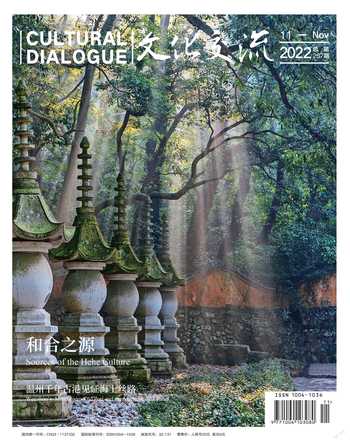
文化交流 2022年11期
關鍵詞:博物館
何賢君 薛文春


一位非洲友人曾經說過,和合文化作為中華文化的精髓之一,在非洲不少地方廣為流傳,弘揚光大。而把和合文化帶到非洲的正是一個師范類的高校——浙江師范大學。
浙師大于1996年開始與非洲結緣,二十六年的深厚情誼,見證了和合文化在非洲的開花結果。如今,浙師大由于深耕非洲研究,已逐漸成為中國非洲區域國別研究的學術高地、非洲事務咨詢的重要智庫、涉非人才培養的重要基地和對非民間外交的重要力量。
三大平臺推動中非合作
浙師大的新月湖畔,有一座敞亮的四層樓。棕黑色的楹聯式門牌,刻著一行金黃色的字:浙江師范大學非洲研究院。如今,這里已經成為中國非洲研究的一支重要生力軍。
浙師大基于長期的學術研究和實踐,創造性地提出了中非共建共享共通的知識、情感、行動體系架構,其中,非洲研究院、非洲博物館、中非智庫論壇作為體系架構的三大實踐“主平臺”不斷得以發展和延伸,浙師大也由此走出了一條地方高校特色辦學的新路。
浙師大非洲研究院的創建之路要追溯到2006年。“當時,有人建議我,在國內高校創辦一個實體性研究機構,發揮智庫功效服務中非合作。”非洲研究院院長劉鴻武回憶說。第二年,身為云南大學非洲研究專家的他,來到浙師大創立非洲研究院,提出以學科建設為本體的“五位一體”智庫發展思路,即“學科建設為主體,智庫服務為功用,媒體傳播為手段,扎根非洲為前提,中非合作為路徑”。
經過十幾年的努力,如今,這一學科建構起了從本科到碩士、博士學位點完整的課程體系、教材體系、師資體系和人才培養體系。一批富有情懷、學有專攻的中非學者成長起來,產出了一系列原創性的成果,有的研究填補了相關領域的空白。自2007年建院以來,浙師大非洲研究院專注非洲發展和中非合作兩大領域的研究,2020年成為國家教育部與浙江省“省部共建非洲研究與中非合作協同創新研究中心”。
浙師大非洲博物館作為國內首個和非洲相關的綜合性博物館,業已成為傳播非洲文化的“立體教科書”。館藏非洲藝術品1000多件,接待國內外參觀者十幾萬人次,到上海、寧波、杭州等城市舉辦巡展10余場……交談中,劉鴻武從相冊中翻出一張泛黃的照片遞給筆者。照片中的他一襲白衣,半蹲在一個桁架上刷油漆。身后一塊木板上寫著5個大字:非洲博物館。這是當年他親自參與建館時的留影。如今,非洲博物館二期工程“中非交流博物館”正在籌建中,計劃今年年底開館。
“非洲是人類藝術生活的重要搖籃,這是一個把生活變成藝術、又把藝術變成生活的地方。”分管博物館工作的副院長楊文佳說。筆者走進博物館,立刻就被熱烈而動感的非洲本土音樂所吸引。襯著溫柔的橘色燈光,各類造型夸張、風格迥異的藝術品擺放在展示臺上,散發出濃濃的異域風情。國之交在民相親。非洲博物館重塑了參觀者對非洲的認知,也為非洲朋友們帶來了家的感覺。
為了讓中非雙方和整個發展中國家的學術界、思想界、智庫界有主動設置議題、創設概念、貢獻知識、提供思想的意識與能力,2011年,由浙師大牽頭操辦的中非智庫論壇誕生。創辦以來,論壇每年分別在中國和非洲舉行,設置了“新世紀第二個十年的中非關系”“新形勢下中非如何維護與拓展共同利益”“中非關系的提升與中非軟實力建設”等重要議題,為中非合作戰略貢獻了巨大力量。中國和非洲上千位高端學術人才,通過這一對話平臺進行思想碰撞和交流,推進了中非學術思想界的合作。2012年,中非智庫論壇正式納入中非合作論壇框架,成為中非民間對話的固定機制。
深入非洲傳播中國文化
1996年,浙師大選派了漢語教師赴喀麥隆教授漢語,傳播中國文化。多年來,浙江師范大學通過孔子學院的平臺,致力于非洲本土的中文教育。該校國際處處長、國際中文教育實踐與研究非洲基地執行主任徐麗華教授表示,孔子學院在中非人文交流等領域發揮了橋梁和窗口作用,在構建中非命運共同體的過程中起到了重要的助推作用。
2007年起,浙江師范大學先后與喀麥隆雅溫得第二大學、莫桑比克蒙德拉內大學、坦桑尼亞達累斯薩拉姆大學和南非西開普大學合作成立4所孔子學院。10多年來,浙江師范大學已先后派出數百名漢語教師,先后培養了數萬名通曉中文的非洲“中國通”,其中有近千名漢語專業的畢業生。
麥曉晴是喀麥隆雅溫得第二大學孔子學院漢語教師志愿者。“你好,這里是雅溫得第二大學孔子學院……”一天下午,初來喀麥隆的她坐在出租車上,突然聽到了熟悉的中文,當時的她激動壞了。
不僅能讓身在異國他鄉的她聽到中文,同時還是一檔教中文、普及中國文化的節目,這讓參與其中并從事漢語教育事業的她倍感自豪:“漂洋過海來到遙遠的喀麥隆是值得的。”更讓她沒想到的是,司機突然用中文跟她對話了起來。“你好!今天天氣真好!”雖然發音不是很準,但能夠感受到司機對漢語的熱愛。“我一遍一遍地教,他一遍一遍地跟著學,連帶著后面的乘客也跟著我念起來了。”在這小小的車廂里,伴隨著廣播里傳來的中文歌聲與主持人的實用漢語教學,麥曉晴與司機、乘客也展開了一堂生動的漢語課。下車前,司機還向麥曉晴打聽去哪里可以學漢語,“他想讓他兒子學習中文,然后到中國留學”。司機說起中文時臉上的笑容,讓她至今難忘。
除了培養漢語專業學生外,在浙江師范大學幫助下,這4所孔子學院通過“一院多點”的方式,將漢語學習輻射到了更廣范圍。
從對中國知之甚少到“漢語熱”不斷升溫,越來越多的非洲人對會說漢語、交中國朋友表現出極大的熱情。通過孔子學院,浙江師范大學不僅向非洲四國人民傳播漢語、推廣中華文化,還加深了中非之間的傳統友誼。
“我想您Amanda,不要忘了我!”“老師,我今天讀了您寫的詩《水要蒸發》,很想念您!”……這是浙師大公派教師蔣玲月結束為期兩年的漢語教學,從莫桑比克回國后收到的來自當地學生的祝福。
幾名志愿者圍在當地居民的炭爐旁做西紅柿炒蛋;第一次端著餃子向當地鄰居示好,換來了巧克力蛋糕;自己指導的學生出現在湖南衛視“漢語橋”大賽舞臺上并榮獲非洲組第七名;學生在中秋晚會現場忘情地朗誦她指導的漢語詩歌;她的聲音出現在馬普托車載電臺的訪問節目上……如今,每每收到學生從微信、郵箱、社交媒體平臺發來的問候,她的腦海中都會泛起自己在莫桑比克的記憶漣漪。每條留言,每聲問候,她都會輕聲朗讀很多次。
雙向交流搭建友誼之橋
浙江師范大學還通過多平臺培養涉非人才,助力“一帶一路”民心相通,每年有1000多名非洲留學生在校學習。學校積極承擔對非人力資源培訓項目,十多年來,共承辦200多個對非研修項目,共有來自49個非洲國家和地區的4000余名高級教育官員和大中小學校長、智庫專家、教師等參加研修,不少人已成為非洲政界、學界的重要人物。2010年,學校還成立了全國高校首家融人才培養、人員培訓、學術研究、商務咨詢于一體的實體性中非國際商學院,同時在國際文化教育學院建立對非漢語國際教育本科專業與碩士專業,與南非斯坦陵布什大學合作,在非洲三國建立海外實訓基地,招收中國和非洲國家的本科生、研究生,迄今已培養中國“非洲通”和非洲“中國通”人才萬余人。
約羅 · 迪亞洛(Yoro · Diallo)來自馬里,畢業于法國巴黎第一大學,2013年作為外交官來華任職,現在是浙江師范大學非洲研究院馬里籍高級研究員、非洲博物館館長、非洲法語國家研究中心執行主任。
從小,他對中國就有著特殊的感情。他父親是馬里一所學校的校長,而這所學校就是中國援建的。那時,學校里經常播放中國歌曲,雖然當時年紀小,他還是學會了一些。
有一年,他母親生病,看了很多醫生都不見好,最后被援助馬里的一位中國醫生治好了。打聽后才知道,這位醫生來自“金華”,那是他第一次在心里記下了“金華”這座城市的名字。
2011年,約羅 · 迪亞洛第一次來到金華,就參觀了浙江師范大學的非洲博物館。“當時館內藏品還不多,我發現沒有自己家鄉馬里的藏品,就向學校表達了捐贈意愿。”約羅 · 迪亞洛回憶道。為了實現自己的愿望,2014年,當他再次因為工作交流來到浙江師范大學時,就向非洲博物館捐贈了收藏多年的5件馬里藝術品,“我捐贈的這些工藝品也填補了該館馬里藏品的空白,我很自豪”。
來到浙師大任職后,他梳理和豐富了博物館內的藏品,研究來了它們的文化內涵,時常向中國的學生介紹這些國家的地理、人口、族群、語言,以及藝術與傳統習俗,促進中非兩國文化交流。
來自坦桑尼亞的王曉樂,現在是浙師大漢語國際教育專業的一名學生。從小,他就對中國和漢字充滿好奇。“我家在坦贊鐵路邊,鐵路是中國援建的,鐵路旁超市里的商品上很多都是漢字。”小時候,他和很多非洲人一樣愛看李小龍的電影,向往去中國。
2017年,來到浙師大學習漢語國際教育,這也成了他夢想的起點。“在金華5年多時間里,好多金華朋友夸我漢語說得好,說我是個‘老金華。”但王曉樂并不滿足,他更想學習中國傳統文化,融入中國人的生活,變成一個能讀懂中國的老外,做一個“中國通”。除了在課堂上學習漢語,他還走進金華的大街小巷,交中國朋友。他學習了中國剪紙、參加劃龍舟比賽,還常去雷鋒文化館做志愿者。
“我愿是一座金華橋,連接金華與非洲的文化交流。”2021年,他用母語斯瓦希里語翻譯中國防疫注意事項宣傳語,為在華外籍人士提供語言服務;他開抖音號,幫助很多在坦桑尼亞學習工作的中國朋友學習斯語;他參與浙師大學術公共紀錄片《重走坦贊鐵路》的拍攝,為紀錄片創作歌曲;他聽說了陳望道的故事,還嘗試用斯語翻譯《共產黨宣言》……
如今,有不少外國朋友問他金華怎么樣?他總會不厭其煩地向他們“種草”,并邀請他們來金華、來中國。“我想讓更多非洲人了解中國文化,看到真實美好的中國。”將來,他希望自己能成為記者或文化傳播者,為中非文化交流貢獻力量。明年,學校還準備讓他去給即將赴非洲孔子學院當志愿者的老師們上課,教授斯語和非洲文化。
據悉,10多年來,浙江師范大學培養了中非研究博士、碩士300多人,還承辦了數十期國家級別的涉非高端人才研修班,累計培訓非洲高端人才4000人次,其中不少學員已成為在非洲各國非常有影響力的人物。
African Friendship Spanning Twenty-Six Years
By He Xianjun Xue Wenchun
An African friend said, as part of the quintessential Chinese culture, the Hehe culture has been widely spread and carried forward in many parts of Africa. Zhejiang Normal University (ZJNU) brought the Hehe culture to Africa in 1996 from an academic highland in China for country-specific African studies, a think tank for African affairs consulting, a base for Africa-related training and as a force in non-governmental diplomacy with Africa.
In a spacious four-story building by the Crescent Lake in ZJNU, with its brown-black couplet-style door number plate engraved with the words “Institute of African Studies, Zhejiang Normal University” in a golden color, you can find a new force in African studies in China. The university creatively proposed a system of common knowledge and action for China-Africa co-construction and sharing, whose main practice platforms are Institute of African Studies, Africa Museum and China-Africa Think Tank Forum, so that ZJNU has embarked on a new path for running a local university.
Liu Hongwu, chief of the institution which plays the role of a think tank to serve China-Africa cooperation, recalled how in 2007, as an African research expert at Yunnan University, he moved to ZJNU and proposed the idea of a “five-in-one” think tank with discipline construction as the main body, think tank service as the functional operator, media communication as the means, rooting in Africa as the foundation, and China-Africa cooperation as the path. After years of hard work, this entity has formed a complete system of curriculum, teaching materials, teachers and talent training with programs from bachelors to masters and doctoral degrees. A group of enthusiastic and professional Chinese and African scholars have grown up and produced a series of publications. The Institute of Africa Studies has focused on African development and China-Africa cooperation, and in 2020, it became the national “Research Center for African Studies and China-Africa Innovative and Synergetic Cooperation.”
As the first comprehensive museum on Africa in China, the Africa Museum has become a “3D textbook” for the dissemination of African culture. The museum has more than 1,000 pieces of African art; it has received more than 100,000 domestic and foreign visitors; it has held a dozen touring exhibitions in Shanghai, Ningbo, Hangzhou and other cities. Now, the second-phase project, China-Africa Exchange Museum is scheduled to open soon.
“Africa is an important cradle of human artistic life, a place that turns life into art and art back into life,” said Yang Wenjia, deputy dean in charge of museum work. Walking into the museum, one would be immediately attracted by enthusiastic and dynamic African music. Against the gentle orange light, various artworks with exaggerated shapes and in different styles are placed on the display stands, exuding a strong exotic atmosphere. The friendship between countries lies in their peoples mutual affinity. The Africa Museum reshapes the visitors perception of Africa and brings the feeling of a “home from home” to African friends.
In order to provide the academia, thinkers and think tanks in both China and Africa and the entire developing countries with a platform to set topics, create concepts, contribute knowledge and ideas, the China-Africa Think Tank Forum led by ZJNU was born in 2011. Since its inception, the forum has been held in China and Africa respectively every year. Important topics like “China-Africa relations in the second decade of the new century”, “How do China and Africa maintain and expand common interests in the new situation” and “The promotion of China-Africa relations and the construction of China-Africa soft power” have contributed enormously to China-Africa cooperation. Thousands of scholars from China and Africa have brainstormed and exchanged ideas through this dialogue platform, and promoted the cooperation between the academic and ideological circles in China and Africa. In 2012, the China-Africa Think Tank Forum was formally incorporated into the framework of the Forum on China-Africa Cooperation as a fixed mechanism for China-Africa people-to-people dialogues.
In 1996, ZJNU sent language teachers to Cameroon to teach Chinese and spread Chinese culture. Over the years, it has devoted itself to Chinese teaching in Africa through the platform of the Confucius Institute. Professor Xu Lihua, director of the International Office and executive director of the African Base for International Chinese Education Practice and Research, said that the Confucius Institute has played a role of a bridge and window in China-Africa humanistic exchanges.
Since 2007, ZJNU has established four Confucius Institutes in cooperation with the University of Yaoundé II in Cameroon, Eduardo Mondlane University in Mozambique, the University of Dar es Salaam in Tanzania and the University of the Western Cape in South Africa. It has dispatched hundreds of Chinese teachers and trained tens of thousands of African “China hands” who are proficient in Chinese, including nearly 1,000 graduates majoring in Chinese language.
Mai Xiaoqing is a volunteer Chinese teacher at the Confucius Institute at the University of Yaoundé II in Cameroon. “Hello, this is the Confucius Institute at the University of Yaoundé II ...” One afternoon, when she was sitting in a taxi in Cameroon for the first time, she suddenly heard familiar Chinese, and she was so excited at the time. Being in a foreign country, she could not only hear Chinese, but also a program that teaches Chinese and popularizes Chinese culture. For her, who is involved in Chinese education, she felt a sense of pride: “Its worth it to go as far as Cameroon.” What surprised her even more was that the driver suddenly started a conversation with her in Chinese. “Hello! The weather is so nice today!” Although the pronunciation was not so good, she could feel the drivers love for Chinese. In this small car, accompanied by the singing of Chinese songs on the radio and the hosts practical Chinese teaching, Mai Xiaoqing, driver and passengers also started a lively Chinese class. The driver asked Mai Xiaoqing where to learn Chinese, “He wanted his son to learn Chinese and then study in China.” The smile on the drivers face speaking about Chinese is unforgettable to this day. In addition to cultivating Chinese majors, with the help of ZJNU, these four Confucius Institutes have radiated Chinese learning to a wider range through the “one institute with multiple campuses” approach.
Zhejiang Normal University also cultivates African-related talents on multiple platforms and helps people to connect with people along the Belt and Road. Over a thousand African students enroll here every year. It has undertaken over 200 human resources training programs for Africa in a dozen years, enrolling more than 4,000 senior education officials and presidents of universities, middle and primary schools, think tank experts and teachers from 49 African countries and regions, and many of them have become important figures in African political and academic circles, including the current President of the Central African Republic Faustin Archange Touadera. In 2010, ZJNU established the first China-Africa International Business School that integrates training, academic research and business consulting in a Chinese university, as well as undergraduate and masters programs for international education in Chinese for Africa at its College of International Culture and Education. In cooperation with Stellenbosch University in South Africa, it established overseas training bases in three African countries and enrolled undergraduate and postgraduate students from China and African countries. So far, more than 10,000 Chinese “Africa hands” and African “China hands” have been trained.
Yoro Diallo is from Mali and graduated from University of Paris I. He came to China as a diplomat in 2013 and is now a Mali senior researcher at the Institute of African Studies, director of the Africa Museum, executive director of the Center for the Studies of African French-speaking Countries. Since childhood, he has had a special affection for China. His father is the principal of a school in Mali, which was built with Chinese aid. Chinese songs were frequently played in the school and he learned some of them. One year, his mother fell ill, and after seeing many doctors, she was finally cured by a Chinese doctor in Mali. He managed to find out that the doctor was from “Jinhua”, and that was the first time he wrote down the name of the city in his mind.
In 2011, when Yoro Diallo first came to Jinhua, he visited the Africa Museum. “At that time, there were not many collections in the museum. I found nothing from my hometown of Mali, so I expressed my willingness to donate to the university.” In 2014, when he came to ZJNU again for work exchange, he donated five pieces of Malian art that he had collected many years ago. “I am proud that these handicrafts I donated fill the gap in the museums collection of Mali.” After coming to teach at the University, he sorted out and enriched the collections in the museum, and studied their cultural connotations. He often introduced the geography, population, ethnic groups, languages, as well as arts and traditional customs of these countries to Chinese students to promote China-Africa Cultural exchanges.
Ayube Tewele Damiani, who goes by his Chinese name Wang Xiaole, from Tanzania is currently a student majoring in Teaching Chinese to Speakers of Other Languages. Since childhood, he has been curious about China and Chinese characters. “My home is by the Tanzania-Zambia Railway, built with assistance from China. Many commodities in the supermarkets next to the railway have Chinese characters on them.” Like many Africans, he loved watching Bruce Lees movies and longed to go to China. In 2017, he came to Zhejiang Normal University, which became the starting point of his dream.
“For more than 5 years in Jinhua, many Jinhua friends praised me for speaking Chinese well, saying that I am an ‘old Jinhua.” But Wang Xiaole was not satisfied. He wanted to learn traditional Chinese culture, integrate into Chinese life, and become a foreigner who can read China as a “China hand”. In addition to learning Chinese in class, he also walked into the streets of Jinhua and made Chinese friends. He learned Chinese paper cutting, participated in dragon boat races, and often volunteered at the Lei Feng Cultural Center.
“I would like to be a bridge connecting the cultural exchanges between Jinhua and Africa.” In 2021, he translated the slogans of Chinas epidemic prevention precautions into his native language Swahili, providing language services for foreigners in China; he opened a TikTok account to help Chinese friends who are studying and working in Tanzania to learn his language. He participated in the filming of ZJNUs public documentary Traveling Along the Tanzania-Zambia Railway Again and composed songs. After hearing the story of Chen Wangdao, he also tried to translate The Communist Manifest into Swahili.
Nowadays, many foreign friends ask him what Jinhua is like? He would always go out of his way to share information and invite them to Jinhua and China. “I want more Africans to understand Chinese culture and see the real and beautiful China.” In the future, he hopes to become a journalist or cultural communicator and contribute to China-Africa cultural exchanges. Next year, ZJNU plans to ask him to tutor the teachers who will be volunteering at the Confucius Institutes in Africa, teaching them Swahili and African culture.
It is reported that over the past 10 years, Zhejiang Normal University has trained more than 300 doctors and masters in Chinese and African studies, and has hosted dozens of training courses for Africa-related officials from Chinese central ministries and commissions, and has trained 4,000 African professionals, many of whom have become influential figures in African countries.
猜你喜歡
金橋(2022年6期)2022-06-20 01:35:58
好日子(2022年3期)2022-06-01 06:22:06
今日農業(2022年4期)2022-06-01 06:12:38
小獼猴智力畫刊(2022年3期)2022-03-29 01:09:44
金橋(2022年2期)2022-03-02 05:43:00
金橋(2022年2期)2022-03-02 05:42:52
小太陽畫報(2020年4期)2020-04-24 09:28:22
走向世界(2018年11期)2018-12-26 01:12:44
中外文摘(2017年20期)2017-09-30 06:40:48
童話王國·原創版(2016年4期)2016-11-23 16:06:06