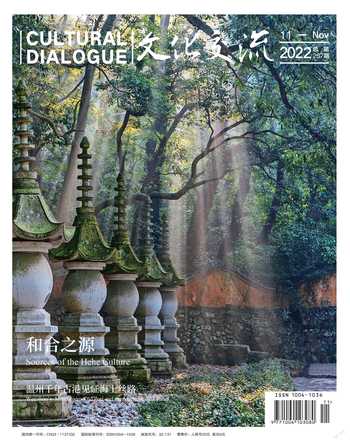
和合之源
2022-05-30 10:48:04何善蒙
文化交流 2022年11期
關鍵詞:文化
何善蒙
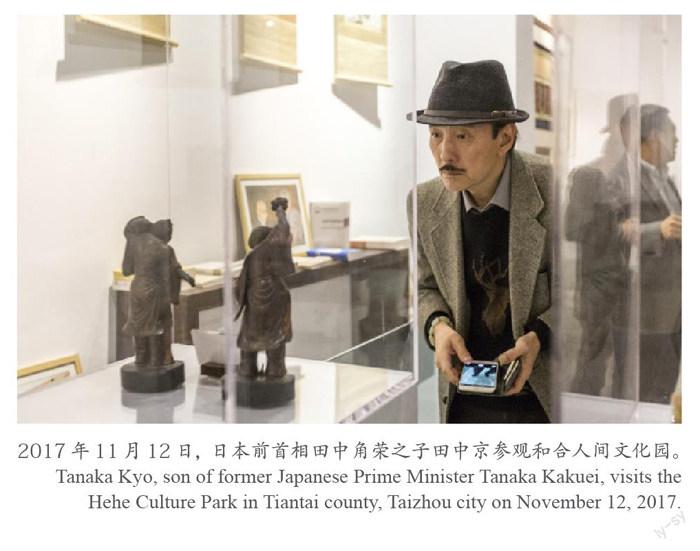
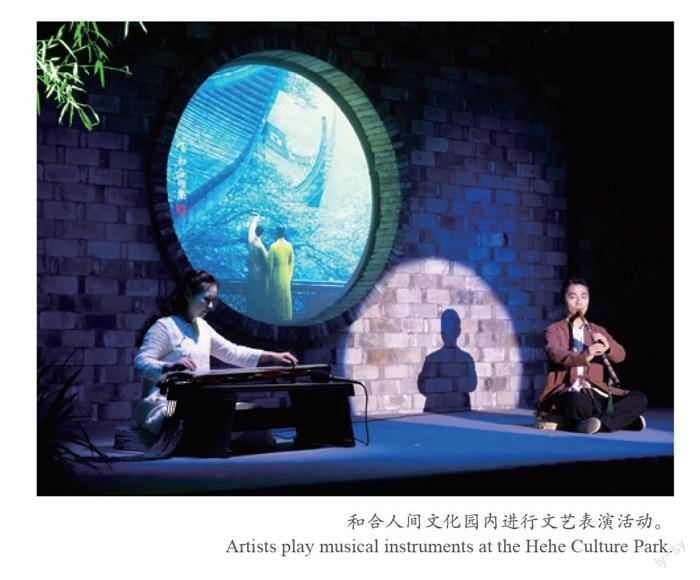
和合作為一種理念,是中國傳統哲學最為本質的特征之一,體現了中國古人在解決自我存在、社會發展等問題時所具有的圓融通達的智慧。由此,中華文明在豁達開放、兼容并蓄的胸襟之下,生生不息,傳承至今,成為一種獨特的文明形態。和合的思維方式和價值理念被廣泛接受,從這個意義上來說,和合文化是中華文化的精髓。
和合:獨特的文化形態
所有的文化在歷史的長河中都是經過不斷沖刷沉淀的,有一些因子是必然被拋棄的,或者是因為自身特性,或者是因為不合乎時代的要求。總之,這樣的選擇和沉淀在持續地發生著,由此構成一種文化傳統的豐富內涵,而這個披沙揀金的過程,實際上也就是一種文化特性的確立過程。由此,在人類的文明歷史上,有了中華文化、西洋文化、埃及文化、印度文化等不同的文化形態。
那么,什么是中華文化?這確實是一個非常難以回答的問題,因為我們的祖先留給我們的文化傳統非常豐富,這種豐富不僅是表現形式上的豐富,而且也是內涵上的深刻。每一個時代的中華文化都在不斷地改變,使得我們甚至無法準確判定中華文化是一種怎樣的具體形態。《周易》說,“窮則變,變則通,通則久”,可能也正是在這樣一種動態變化過程中,中華文化獲得了強大的生命力,成為中華民族的精神支柱,融入中華民族的血脈之中。當然,既然中華文化成為一種文化形態,我們自然是可以去討論它的內在特質的。這個時候,我們可以很清楚地發現,其實強調和合是中華文化的一個非常明顯的特點,也就是中華傳統文化區別于其他文化形態的最為突出的特性。
由此,我們可以說,雖然中華文化在具體表現形態上有著豐富的內容,但是,在這些內容的背后,和合精神成為一貫的傳統,成為傳統中國人的基本行為方式和價值追求,深入傳統中國人的精神內核,由此呈現出一種獨特的文化形態。
和合:名山的精神信仰
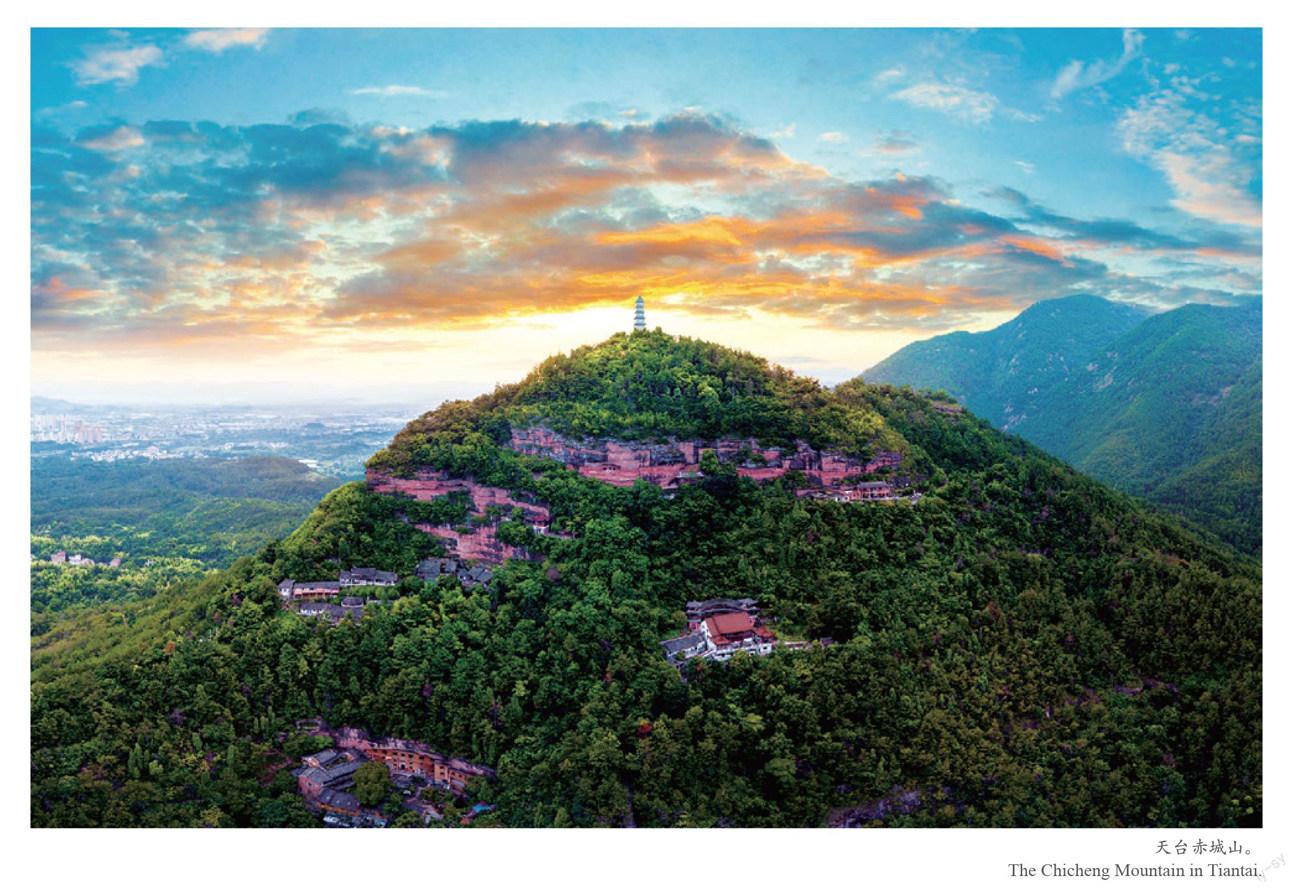
作為中國名山,天臺山因東晉章安令孫綽的《游天臺山賦》而聲名遠播,從那個時候開始,天臺山的山水神秀就逐漸成為文人雅士所向往的地方,而唐詩之路的出現,則彰顯了天臺山孕育的這種文化風格的獨特性。當然,孫綽的《游天臺山賦》中除了對山水神秀的描寫之外,更注重的是山水和宗教文化的融合,正所謂“玄圣之所游化,靈仙之所窟宅”。
從此后天臺山文化的發展來說,無論是佛教還是道教,都視天臺山為圣地,佛宗道源的地位由此而確立。因此,在歷史上,天臺山就是宗教文化的圣地,是隱逸的理想之所,宗教文化和隱逸文化的結合,成為天臺山文化意義中最為深刻的內涵。而后,智者大師入天臺,其所創立之天臺宗,在《法華經》“會三歸一”的智慧啟迪下,以“一心三觀”“圓融三諦”“一念三千”“性具實相”“性具善惡”等基本命題,實現了對于南北朝時期佛教各種異說的融合和超越,其哲學思辨能力可以說完全超越了此前中國古代的所有哲學家(包括出世的和世俗的),正如日本著名哲學家、佛學家池田大作所言:“在佛教史的長河中,如果認為釋迦是首先提出佛教根本原理的圣人,那么就可以說,天臺(智者)是把這種佛法的根本原理形成一種哲學體系、理論體系的哲人。我認為佛法作為一種理論,在天臺(智者)的身上已達到頂峰。”
逮至宋代,金丹派南宗之祖張伯端,其所著《悟真篇》,在會通三教、道禪融全的基礎上,開創了道教發展史上重要的金丹派南宗傳法體系,即道教南宗。智者大師的天臺宗哲學和張伯端的道教南宗內丹學,雖然在義理層次上是有差異的,但是,作為一種以和合為基礎的宗教哲學的表達,兩者在各自的傳統中都產生了極為深遠的影響,由此,也為天臺山和合文化確立了最為堅實的宗教哲學內涵。天臺山文化,作為一種和合文化,在歷史上呈現出了強大的影響力。
當然,作為一種和合文化特征的彰顯,以及作為中華和合文化典型形態的確立,天臺山文化則是與寒山、拾得作為“和合二圣”的形象在中華傳統文化中被廣泛接納密切相關的。
寒山和拾得,作為產生于中唐時期天臺山的兩個情義篤厚而又行為特立的形象,在歷史上受到諸多的關注,而其詩歌更是因為風格清雋自然而受到了歷代文人的追捧。但是,在正統的文化界,終究因為其特異性而被排除在外,因此,關于他們的史料相當少。然而,在民間,由于對他們之間情誼的尊崇和喜愛,寒山、拾得取代萬回成為中國民間具有廣泛影響力的和合神,從而在民眾的日常生活中影響深遠。
這也說明和合不僅是一種文化理念,更是一種精神信仰,尤其是在信仰的基礎上,它反映出了普通民眾對于和合的期許。由此,清雍正十一年(1733),雍正帝在尊崇和合精神,倡導民族和合、社會和諧的背景之下,敕封天臺山寒山大士為“妙覺普度和圣寒山大士”,封天臺山拾得大士為“圓覺慈度合圣拾得大士”,并稱“和合二圣”。這樣,作為和合精神的象征,寒山、拾得成了民眾所崇拜并得到“官方認證”的偶像。
誠然,若要談中華文化,也就離不開儒家思想。天臺山雖然是以佛道文化揚名海內外,但是儒學在這個區域中的發展,也表現出非常明顯的和合的特質。南朝齊大臣顧歡當年隱居天臺山,其所代表的就是非常明顯的儒道融合的傳統,而后來在臺州區域的儒學發展中,這種特點被明顯地繼承了下來。這種繼承有著兩個非常直接的因素。首先是基于移民的特點,臺州境內很多姓氏均是魏晉以來(尤其是南宋)隨著北方氏族南遷而來,這種移民的特質強化了和合的必然性,而其基本的文化根源則是儒家的家族傳統。其次,則是由于天臺山和合文化的傳統對于此地的儒學發展產生了極為關鍵的影響。由此,在歷史上,我們可以看到,臺州區域的儒學具有極高的包容性,這也是和合在儒學層面的直接表現。晚清臺州學者王棻曾撰《臺學統》,該著作收錄了自晉以來迄于清末的339位臺州儒學人物,實際上就是對臺州區域儒學傳統的一次梳理,而其所表現出來的基本立場就是“不立門戶、漢宋兼融”,這就是一種非常明顯的和合的特色。而這種和合不僅是對儒學內部觀念持包容的態度,對于佛教和道教的內容,同樣是兼容并蓄,比如說,佛教天臺宗的思想以及道教南宗的思想對于臺州區域的儒學思想,就有著比較明顯的影響。這種互補融合的態度,在臺州成為一種普遍的現象。
天臺山和合文化,不僅在歷史上發揮過非常重要的作用,為中外文化的第一次碰撞提供了和合共存的樣本(即佛教天臺宗的產生),為三教融合提供了臺州樣板(道教南宗和臺州儒學都是在這個意義上的和合),更為重要的是,這樣的和合文化也在今天的臺州實踐中發揮著積極的作用,不斷地為社會發展的臺州模式提供著精神和文化的動力。因此,它毫無疑問是以一種鮮活的文化形態而存在于臺州今日的現實生活之中。
和合:深遠的世界意義
和合文化,作為中華優秀傳統文化,在中國的歷史上發揮了重要的影響,塑造并影響了傳統中國人的思維方式和生活理想,從而形成了中華民族獨特的精神境界。這樣的和合文化,同樣走出了國門,影響了日韓、東南亞和歐美等國家和地區的文化形態,在世界的文化進程中,深深地刻下了源自中國的和合文化的烙印。
文化對于一個民族傳統的影響是具體的、細致的,當談到和合文化對于世界的影響時,我們也可以從天臺宗的廣泛傳播、濟公的和合精神深入人心、寒山詩在日本美國的深刻影響等文化的細部看到和合文化所留下的印記,并直接感受到和合文化在海外的傳播、接納和影響。
作為中國佛教的第一宗,天臺宗在佛教發展史上有著極為重要的意義,揭開了中國佛教發展的新階段,智者大師本人亦被譽為“東方小釋迦”而備受僧俗的尊崇。天臺宗東傳日本,要從著名的鑒真和尚說起。鑒真是南山律祖道宣的三傳弟子,曾師從天臺宗章安灌頂的弟子弘景法師學習戒律和天臺教義,因此鑒真也可以說是章安灌頂的再傳弟子。從天寶二年到十二年,鑒真于十年間六次渡海,歷盡艱辛,終告成功。他東渡時帶到日本的各種典籍中,“天臺三大部”(《摩訶止觀》《法華玄義》《法華文句》)等天臺宗的主要教典全部在內,從而揭開了天臺宗流傳日本的歷史序幕。鑒真在日本傳播天臺宗教義,激發了日本僧人研習天臺教觀的興趣。傳教大師(最澄)在東大寺研習鑒真帶來的天臺宗的教籍,深深皈依三諦一如的無上教法并萌發入唐求法的愿望,于唐貞元二十年(804)與弟子義真一起入唐,跟隨天臺宗十祖道邃大師研習天臺教法并受菩薩戒,第二年學成回國,在比睿山延歷寺正式創立了日本天臺宗。
日本天臺宗,對日本佛教的發展有著深刻的影響,甚至被稱為“日本文化之母”,日本大乘佛教的宗派,都是從比睿山的日本天臺宗衍化而派生出來的,比如日本的圓通念佛宗、凈土宗、凈土真宗、臨濟宗、曹洞宗、日蓮宗等,其創始人都曾于比睿山始學天臺宗,然后才創立各具特色的宗派。從這個意義上來說,日本天臺宗也就成為日本佛教諸宗的開山祖。正如日本佛教天臺宗座主山田惠諦所說:“沒有(中國)天臺宗開祖智者大師,就沒有日本天臺宗,也就沒有后來日本各宗派的興起。”
天臺宗在日本不僅形成了強大的佛教發展態勢,同時,藉由佛教的發展也深刻地影響到日本民眾生活的各個層面,諸如茶道、能劇、音樂、文學等,從而豐富了日本民眾的精神生活,其影響既全面而又深遠。而在東亞的朝鮮半島,東南亞的越南、泰國、新加坡、緬甸、馬來西亞、印度尼西亞以及歐美國家等,天臺宗的傳入時間雖然有遲或早的差別,但是,天臺宗的義理都受到了廣泛的傳播、接納,并產生了積極的社會影響。從智者大師開創天臺宗到今日,一千四百余年的法脈流傳,以和合為基本價值的天臺宗,它的影響不僅是佛教層面的,也是社會和精神層面的,它帶給這個社會的價值是多層面、立體和綜合的。
在天臺山和合文化中,濟公是一個非常重要而又特殊的形象,給民眾的世俗生活帶來了極為深遠的意義。如果我們把佛教分成義學(義理)和禪修(實踐)兩個層面來理解,濟公形象最為重要的意義屬于后者,即其主要影響在于佛教與現實社會生活的關系之上。目前,它在新加坡、馬來西亞、泰國等東南亞國家及歐美地區的華人社區中擁有廣泛影響,如在這些華人社區中倡導的“以德化民”“濟世扶危”等價值觀念,與濟公形象所體現的和合精神是一脈相承的。濟公作為最為核心和最具有號召力的神祇之一,受到了世界各地民眾的歡迎。
在和合文化的海外傳播中,最為顯著的成就當然要數《寒山詩》的域外影響了,這也是中外文化交流史上的一個極為突出的例子。寒山(包括豐干、拾得)的詩歌,在域外(尤其是在日本和美國)獲得了極為崇高的地位。在日本,伴隨著佛教禪宗的傳入,在宋元之際《寒山詩》也傳入日本,并且廣為流傳,受到了高度的評價,寒山也被公認為禪宗的大詩人。幾百年來,寒山詩在日本都有著穩固的地位。這有兩個原因:一個原因是,有禪宗意味的詩在日本社會獲得的評價和所處的地位尤其高,在日本的傳統里,許多一流的詩人都是僧人,寫佛教意味很濃的詩,《寒山詩》中的禪宗意味受日本各階層讀者所歡迎;另一個原因是,日本人一向青睞中國詩里白話成分較多的詩,如白居易和元稹在日本的地位很高,很大原因也是其詩較為通俗易懂,寒山的詩簡明、流暢,這正合日本人之所好,故能成為評價很高的詩人。日本對于寒山詩的深刻接受,不僅表現在將寒山詩的禪意內化成自身文化因素,還表現在成為了與外部溝通的橋梁。寒山詩在近代傳入西方世界(特別是美國),就是以日本作為傳播媒介,并非直接從中國本土傳播出去的。而后來的“寒山熱”也正是在此基礎上形成的,甚至被曾經轟動一時的美國所謂“垮掉的一代”(the beat generation)奉為了“祖師爺”,影響了美國社會將近20年。
這是一種非常有趣的跨文化交流的現象,對于生活在1000多年前的寒山而言,這樣的結果是未曾料到的。寒山的名字是不朽的,寒山的價值是永恒的。如今,“垮掉的一代”和“嬉皮運動”早已成為時代的烙印,但是寒山影響卻遠未止息。
美國作家查爾斯 · 弗雷澤(Charles Frazier)的代表作Cold Mountain ,于1997年一經面世就受到熱烈歡迎,連續四十五周名列《紐約時報》暢銷書榜,因“描寫了人與土地復雜的關系及情感”而獲美國國家圖書獎、美國書商協會年度圖書大獎,并在當時成為美國十大暢銷書之一,被評論界譽為近代以來“美國文學中的巨作之一”,與《飄》并稱為“20世紀美國文學雙璧”。該書講述的是美國南北戰爭結束之際,一位士兵為了自己的愛人而返回家園所經歷的多災多難的旅途。由曾經導演《英國病人》摘得奧斯卡金像獎的安東尼 · 明格拉(Anthony Minghella)執導、好萊塢影星妮可 · 基德曼(Nicole Kidman)和裘德 · 洛(Jude Law)主演的小說同名影片《冷山》(中文譯名)一經上映,就廣受好評,斬獲國際大獎。
在弗雷澤小說的扉頁有著兩條引文,一條是達爾文的,還有一條就是從寒山詩中來的:“Men ask the way to Cold Mountain. Cold mountain: there is no through trail.——Han Shan”(人問寒山道,寒山路不通。)這兩條引語實際上是表明了全書的主題,前者表明對戰爭的無可奈何,后者則是寄托了主人公對于可望卻不可及的美好生活之向往。
天臺山和合文化在海外廣泛傳播并發生深刻影響的事實說明,和合文化的精神價值不僅符合中華民族對于美好生活的渴望,也體現了世界各地民眾的生活理想,這是人類對于美好生活的共同期許。因此,它可以跨越國界,成為全人類的共同價值理想和生活信念。
(作者系浙江大學哲學學院教授、臺州學院和合文化研究院院長)
Sources of the Hehe Culture
By ?He ?Shanmeng
The Hehe culture, which embodies the idea of harmony but not uniformity, is the essential feature of traditional Chinese philosophy, reflecting the wisdom of ancient Chinese in resolving self-existence and social development. As a result, Chinese civilization, with an open-minded and inclusive mind, has continued to grow and has been passed down to this day as a unique civilization form. The way of thinking and values of Hehe are widely accepted. In this sense, the traditional Chinese culture is a kind of Hehe culture, which is the essence of Chinese culture.
In the history of human civilization, there have been different cultural forms such as the Chinese culture, the Western culture, the Egyptian culture and the Indian culture. So, what is the Chinese culture? This is indeed a very difficult question to answer, because our cultural traditions are too rich, not only in form, but also in connotation. The Chinese culture is constantly changing, so that we cannot even accurately determine what kind of specific form it is. It is in such a dynamic process that the Chinese culture has gained a strong vitality, become the spiritual pillar of the Chinese people, and integrated into their blood. At present, the emphasis on Hehe is a distinct feature of the Chinese culture, and in a sense, its distinctive feature. But behind these contents, the spirit of Hehe has become a consistent tradition, the basic behavior and value of the Chinese people.
Tiantai Mountain became famous for “Ode to Tiantai Mountain”, a piece written by Sun Chuo (314-371), magistrate of Zhangan (in present-day Taizhou city). Since then, its beautiful landscape has been attracting poets and scholars in droves, and the emergence of “Tang Poetry Road” undoubtedly demonstrated this cultural style. Sun Chuo naturally linked this landscape with religious culture.
Both Buddhists and Taoists regarded Tiantai Mountain as a holy place — a holy place of religious culture and an ideal place for reclusion, which constituted the most profound cultural significance of Tiantai Mountain. After that, Master Zhiyi (538-597) entered Tiantai and founded the Tiantai Sect of Buddhism, inspired by the wisdom of Lotus Sutra. His basic propositions realized the integration and transcendence of various different theories of Buddhism in the Southern and Northern Dynasties (420-589), and his philosophical thinking and reasoning arguably surpassed previous philosophers in ancient China, as the famous Japanese philosopher and Buddhist scholar Daisaku Ikeda said: “In the long history of Buddhism, if you think that Sakyamuni is the sage who first proposed the fundamental principles of Buddhism, then it can be said that Tiantai (Zhiyi) is the philosopher who formed a philosophical and theoretical system from the fundamental principles. I think Buddhism, as a theory, reached its peak in Tiantai. ”
In the Song dynasty (960-1279), Zhang Boduan (987-1082), founder of the Nanzong (Southern Lineage) of Taoism, wrote the classic Wuzhen pian (literally “Folios on Awakening to Reality/Perfection”). By integrating of the three teachings of Confucianism, Buddhism and Taoism, and integrating Taoism with Chan (Zen) Buddhism, he created an important system — the Southern Lineage, in the history of Taoism. Both Buddhist Tiantai philosophy and Taoist Inner Alchemy, although different in the level of rationality, had a profound impact in their respective traditions as an expression of religious philosophy based on Hehe. As a manifestation of the Hehe culture, Tiantai Mountain culture is closely related to the acceptance of Hanshan and Shide as “Two Gods of Hehe” in the Chinese tradition.
Hanshan and Shide, as a pair of unique characters in Tiantai Mountain in the seventh century, have received a lot of attention in history, and their poems have been praised by literati of all dynasties because of their clear and natural style. However, in the orthodox cultural history, they are barely mentioned. On the other hand, due to the respect and love for their friendship, Hanshan and Shide are widely regarded as the Gods of Hehe among the Chinese people. This also shows that Hehe is not only a cultural concept, but a spiritual belief, and it reflects the expectations of ordinary people for Hehe. In 1733, under the background of respecting the spirit of Hehe and advocating national unity and social harmony, Emperor Yongzheng (1678-1735) conferred the title “Two Gods of Hehe” on Hanshan and Shides.
When speaking of Chinese culture, we cannot do without Confucianism. Although Tiantai Mountain is famous for its Buddhist and Taoist culture, the development of Confucianism in this area shows another unique feature of Hehe. Many residents in Taizhou had been migrants from the northern clans since the third century (especially in the twelfth century), and this characteristic strengthened the inexorable development of Hehe, or Confucian family traditions. The tradition of Hehe culture in Tiantai Mountain also had a crucial influence on the development of Confucianism. So Confucianism in Taizhou was highly inclusive, which is also a direct manifestation of Hehe at the level of Confucianism. This complementary and inclusive attitude has become a common phenomenon in Taizhou.
The Hehe culture in Tiantai Mountain not only played a very important role in history, but also provided a sample of harmony and coexistence for the first collision of Chinese and foreign cultures (that is, the emergence of the Tiantai Sect of Buddhism), hence a Taizhou model for the integration of the three teachings (Southern Taoism and Taizhou Confucianism are Hehe combined in this sense). More importantly, such a Hehe culture plays an active role in the practice of Taizhou today, and continuously provides the spiritual and cultural impetus for the Taizhou model of social development. Therefore, it is undoubtedly a kind of vivid cultural form that exists in the social reality of Taizhou.
Hehe culture, as a fine traditional Chinese culture, not only shaped and influenced historically the Chinese peoples way of thinking and life ideals, thus forming their unique spiritual realm, it has also influenced the cultural forms of Japan, Korea, Europe and the United States. In the global cultural development, it has deeply engraved its imprint. The influence of culture on a nations tradition is specific and detailed: the widespread and far-reaching influence of the Tiantai Sect, the deeply rooted Hehe spirit of Ji Gong (1130-1209) in the public, and international reach of Hanshans poetry are the best proofs.
As the first sect of Chinese Buddhism, the Tiantai Sect opened a new stage in the history of Buddhism in China. It spread to Japan with the famous monk Jianzhen (or Ganjin, 688-763), who had studied precepts and the Tiantai teachings from Master Hongjing (634-713). Jianzhen crossed the sea six times in 10 years. Among the various classics that he brought to Japan, there were major teachings of the Tiantai Sect, which piqued the interest of Japanese monks. After completing his studies in Tiantai, Saichō or Dengyō Daishi (767-822) returned home and officially founded the Japanese Tendai Sect at Enryakuji Temple in Mount Hiei, which has a profound influence on Japanese Buddhism, and is even called the “Mother of Japanese Culture”. The sects of Japanese Mahayana Buddhism are all derived from the Tendai Sect of Mount Hiei, such as the the Pure Land Sect, the Rinzai Sect and the Nichiren Sect, since all their founders learned the teachings of the Tendai Sect in Mount Hiei before they established their own. In this sense, Japanese Tendai Sect was the “mother” of Japanese Buddhism.
The Tendai Sect not only engendered a strong Buddhism in Japan, but also deeply affected various aspects of Japanese peoples life through the development of Buddhism, such as tea ceremony, Noh drama, music, literature, thus enriching their life. Although the Tiantai Sect was introduced to the Korean Peninsula, Vietnam, Thailand, Singapore, Myanmar, Malaysia, Indonesia, Europe and the United States, among other places, at different times, the principles of the sect have been widely known and accepted.
For the Hehe culture, Ji Gong is a very important and special image, which brings profound significance to peoples secular life. If we divide Buddhism into two levels, meaning theory and meditation (practice), the most important meaning of Ji Gongs image belongs to the latter, that is, his main influence lies in the relationship between Buddhism and real life. At present, it has a wide range of influence in the Chinese communities in Singapore, Malaysia, Thailand and other Southeast Asian countries, as well as in Europe and the United States. For example, the values advocated in these Chinese communities, such as “changing people for the better through moral education” and “helping the world and helping those in danger”, are in line with his Hehe spirit.
During the process of the Hehe cultures overseas spread, the most notable achievement is perhaps the international influence of Hanshans poetry, which is also a very prominent example in the history of Sino-foreign cultural exchanges. The poetry of Hanshan (including Fenggan and Shide) has gained a highly respected status outside the territory (especially in Japan and the United States). In Japan, along with the introduction of Zen Buddhism, Hanshans poetry was introduced in the 13th century, and widely circulated and highly praised, and he was recognized as a great Zen (or Chan) poet. His poetry has remained popular in Japan for hundreds of years for two reasons. The first is that poems with a sense of Zen enjoy a particularly high status in Japanese society. In Japanese tradition, many first-class poets are monks who write poems with strong Buddhist connotations; another reason is that Japanese have always welcomed Chinese poems with more vernacular elements. For example, Bai Juyi (772-846) and Yuan Zhen (779-831) are more highly regarded in Japan than in China. Concise and fluent writing is exactly what the Japanese prefer. Japans acceptance of Hanshans poetry is not only reflected in the internalization of the Zen meaning of the poetry into its own culture, but also in the fact that it has become a bridge of communication. The introduction of Hanshans poetry into the Western world (especially the United States) came by way of Japan as a communication medium, not directly from China, and the “Cold Mountain Fever” later was formed on this basis, which was regarded as ushering in the “beat generation” in the US, as Hanshans poetry influenced American society for nearly 20 years.
The American writer Charles Fraziers masterpiece Cold Mountain, very popular when it was published in 1997, was listed on the New York Times bestseller list for 45 consecutive weeks, and won the National Book Award for “depicting the complex relationships and emotions between men and their land”. It was praised by critics as “one of the masterpieces in American literature” in modern times, on a par with Gone with the Wind. Directed by Academy Award-winning Anthony Minghella, and starring Nicole Kidman and Jude Law, the film Cold Mountain was also widely acclaimed and won international awards. The epigraph of the novel includes two quotations, one from Darwin (“It is difficult to believe in the dreadful but quiet war of organic beings, going on in the peaceful woods, smiling fields.”), and the other from two lines of a poem by Hanshan (which literally means “cold mountain” in Chinese): “Men ask the way to Cold Mountain. Cold Mountain: there is no through trail.” These two quotations summarize the theme of the whole book. The former shows the helplessness of men towards war, and the latter expresses the protagonists yearning for a beautiful life that is elusive but unattainable.
猜你喜歡
中國德育(2022年12期)2022-08-22 06:16:18
湖北教育·綜合資訊(2022年4期)2022-05-06 22:54:06
金橋(2022年2期)2022-03-02 05:42:50
金橋(2022年1期)2022-02-12 01:37:04
英語文摘(2019年1期)2019-03-21 07:44:16
小天使·一年級語數英綜合(2018年9期)2018-10-16 06:30:16
西部大開發(2017年8期)2017-06-26 03:16:12
西部大開發(2017年8期)2017-06-26 03:15:50
人民中國(日文版)(2015年10期)2015-04-16 03:53:52
人民中國(日文版)(2015年9期)2015-03-20 15:08:05