婺劇:浙中亮麗金名片
2021-06-24 14:08:06王曉明
文化交流 2021年4期
王曉明
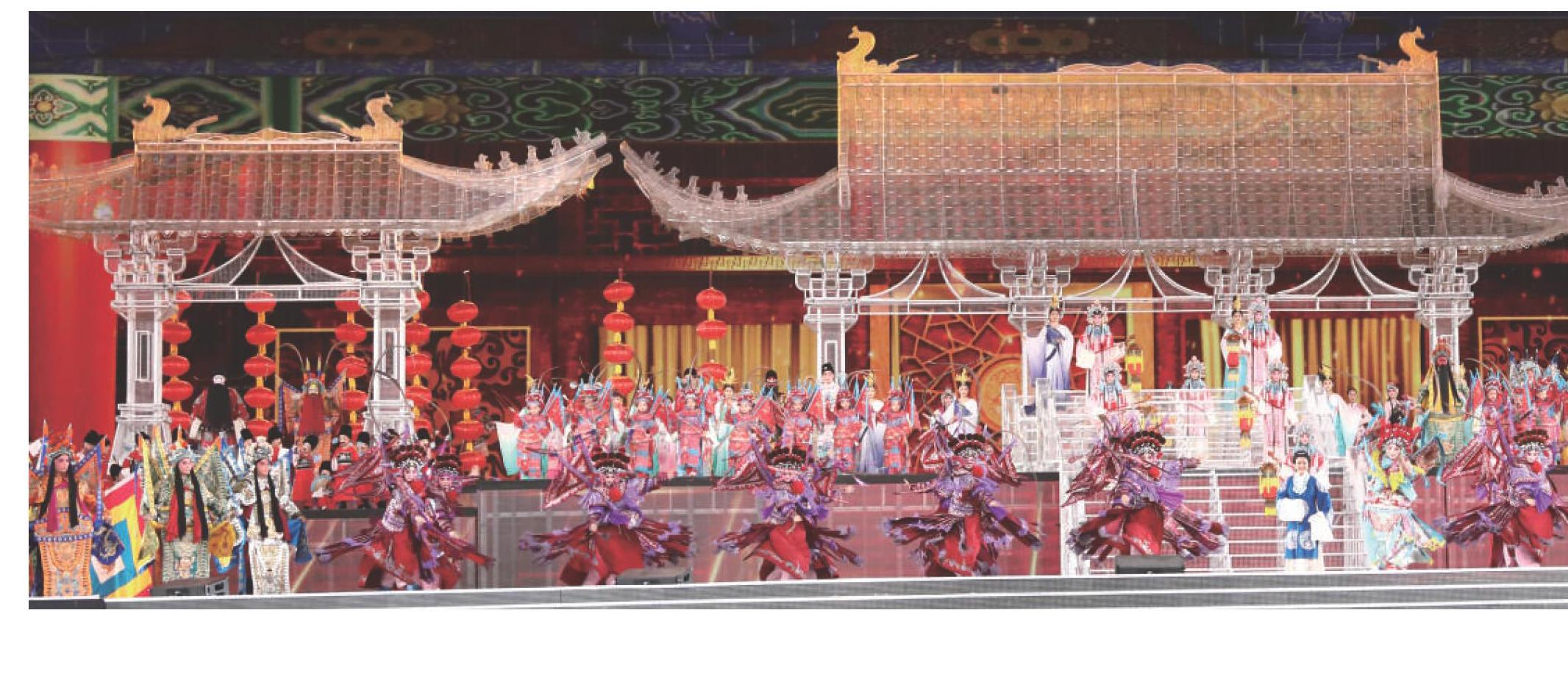
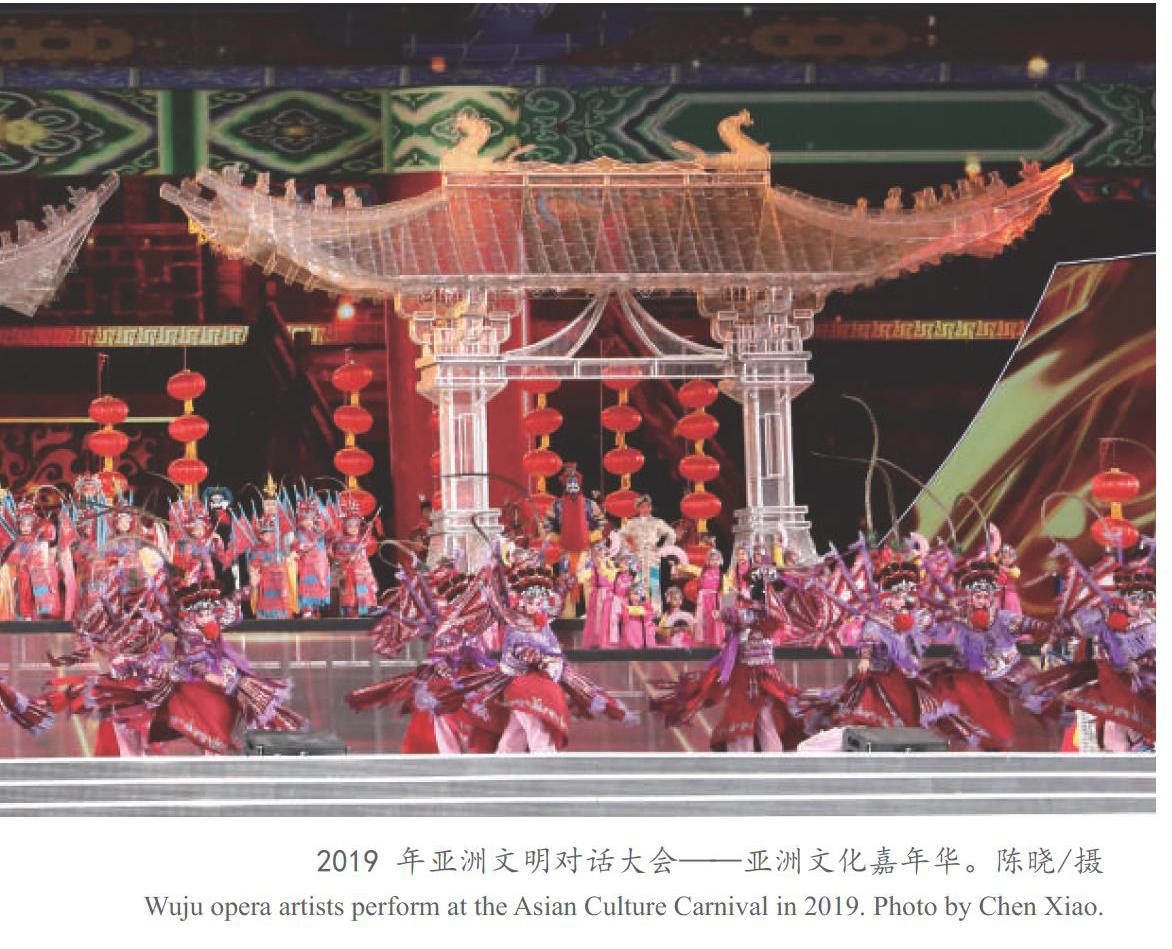

萬年上山文化的發(fā)掘,表明浙江中西部是人類稻作文化最早的發(fā)源地,而婺劇就是這一文化成熟發(fā)展的一個(gè)標(biāo)志與結(jié)晶。如今,它已成為浙江光彩奪目的金色名片和文化印記。
一
婺劇這個(gè)名稱,一直到新中國(guó)成立之后才正式被叫響,過去長(zhǎng)期稱為“金華戲”,是流傳在金衢一帶六種戲曲聲腔(即高腔、昆曲、亂彈、徽調(diào)、灘簧、時(shí)調(diào))的合稱。
姍姍來遲的名稱后面,有著古老劇種非同尋常的500多年發(fā)展歷程和絢爛光焰。
中國(guó)最早的戲曲形式“南戲”誕生于溫州,作為溫州通向廣闊內(nèi)地的關(guān)口,這些戲文早早就在金華的土地上回響。戈陽腔從西邊涌進(jìn),昆腔從東邊流入,徽調(diào)尾隨徽商從北邊南下,加上金華土生土長(zhǎng)的表演形式——灘簧、時(shí)調(diào),南腔北調(diào)在盆地里匯聚交融,一起熱烈地唱響大地。
外來戲曲進(jìn)入金華方言區(qū),演員們便嘗試著用本土方言演唱,在音樂上也逐漸向本地曲調(diào)靠攏。眾多的南腔北調(diào)融匯貫通,競(jìng)爭(zhēng)重組,優(yōu)勢(shì)互補(bǔ),一種名為“三合班”,“二合半”的獨(dú)特表演形式漸漸形成,一種特色獨(dú)具的本地唱腔開始咿呀響起。
婺劇就這樣在農(nóng)耕文明的沃土上扎根萌芽,它很像一株順?biāo)鞯暮堂纾酥蟻肀蓖奈幕骺邕^山脈、越過江河。而一旦在丘陵上扎下根須,它就貪婪地汲取豐富的本土養(yǎng)分,匯攏四面八方各具特色的色澤音調(diào),拔節(jié)分蘗,揚(yáng)花吐穗,成長(zhǎng)為本土藝術(shù)園地里飽滿豐實(shí)的水稻。
二
在全國(guó)300多種至今仍在演出的戲曲劇種里,婺劇農(nóng)民化、地域化特點(diǎn)獨(dú)特且鮮明,它從來就是魚米之鄉(xiāng)生長(zhǎng)的一棵稻穗,而不是庭院樓閣里養(yǎng)植的一株蘭花。
“什么藤結(jié)什么瓜,什么人說什么話。”婺劇唱詞里說的,全是本地農(nóng)民愛聽的話。字字入心、句句入耳,淋漓酣暢、心花怒放。
婺劇大小劇目500多個(gè),不少是連臺(tái)本戲。許多戲反映忠奸斗爭(zhēng),讓愛憎分明的農(nóng)民們時(shí)而看得熱淚盈眶,時(shí)而恨得牙關(guān)咬碎。而更多的則是反映社會(huì)生活,一幅幅、一個(gè)個(gè)充滿生活情趣的畫面場(chǎng)景,洋溢著忠孝節(jié)義、尊老愛幼、扶正祛邪,見義勇為等中華優(yōu)秀傳統(tǒng)理念。
農(nóng)民們天性純樸善良、愛憎分明,因此要求情節(jié)故事無論如何曲折離奇,人物命運(yùn)無論怎樣大起大落,都一定要有“大團(tuán)圓”結(jié)局。好人有好報(bào),惡人遭天譴,皆大歡喜。那些歡笑和眼淚化作一粒粒善良種子,播撒進(jìn)一代代觀眾的心田,成為他們今后評(píng)判事非、鑒別真?zhèn)巍⒔逃优淖杂X準(zhǔn)繩。
稻米養(yǎng)育農(nóng)民的肉體,婺劇培育農(nóng)民的精神。
婺劇表演地點(diǎn)長(zhǎng)期都在農(nóng)村露天草臺(tái),或是廟宇祠堂。看臺(tái)下熙熙攘攘,全是些布衣、農(nóng)民和手工業(yè)者。這樣的演出場(chǎng)合,勢(shì)必逼迫演員努力去展現(xiàn)粗獷、夸張、濃烈,去載歌載舞、邊唱邊做、滾打摸爬,處處出戲而入戲。久而久之,形成了婺劇“文戲武做,武戲文做” 的鮮明特色,以及“大花過頭,老生平耳,小生平肩,花旦平乳,小丑平臍”的特殊表演風(fēng)格。
婺劇“文戲武做”的特點(diǎn),突出地體現(xiàn)在《斷橋》一折。在京劇和昆、越等劇種同名折子戲里,都是表現(xiàn)優(yōu)雅細(xì)膩的感情戲。偏偏婺劇以強(qiáng)烈表現(xiàn)柔情,以粗獷反襯細(xì)膩,以高難度的武功表露人物細(xì)致的情感。戲高潮時(shí)大鑼大鼓、跌宕起伏,演員滿臺(tái)飛舞,雷霆萬鈞里見俠骨柔情,劇烈沖撞中顯情感真誠(chéng)。因此,它在全國(guó)諸多同名戲曲中異軍突起,被周恩來總理譽(yù)為“天下第一橋”。
不僅“文戲踏破臺(tái)”,婺劇還 “武戲慢慢來”“一戲一招”,充滿理性地處理“動(dòng)與靜”“粗與細(xì)”等藝術(shù)關(guān)系,不時(shí)在舞臺(tái)上展現(xiàn)一幅幅極具雕塑感的畫面,美感形式獨(dú)特。
婺劇的許多動(dòng)作直接來自生活,同時(shí)還保留許多古老儺戲、百戲、目蓮戲的表演動(dòng)作和程式,也因此被梅蘭芳先生視為“京劇祖宗”,是許多專家學(xué)者眼里的戲曲 “活化石”。
婺劇最華美的部分,其實(shí)在于它的音樂,其中最為人稱道的是從金華民歌中移植繼承的那部分,如“小桃紅”“三五七”,許多曲牌已是現(xiàn)代樂隊(duì)在重大場(chǎng)合演出的保留曲目。
三
“三耕一閑”,當(dāng)冬季雪花開始緩緩飄落,農(nóng)家一年四季最閑適的時(shí)節(jié)隨之來臨。“咚咚鏘鏘”的婺劇鑼鼓聲這時(shí)格外響亮。
家傳耕讀,乘閑時(shí)扮作生旦凈丑;
戲?yàn)榫啵Y(jié)局后仍是士農(nóng)工商。
許多鄉(xiāng)間戲迷自發(fā)聚集,你演花旦,我扮小生,你敲鑼鼓,我拉二胡,一個(gè)個(gè)農(nóng)民業(yè)余劇團(tuán)鑼鼓喧天地登場(chǎng)。劇本是現(xiàn)成的,曲調(diào)是固定的,演得好不好是一回事,但那份認(rèn)真快樂全都寫在一張張質(zhì)樸的臉上。演得好的漸漸搭起固定班子,取個(gè)好聽的名號(hào)叫 “品玉班”“文錦社”,或者“大連升班”“大榮華班”……從此踏上職業(yè)化道路,許多婺劇班社就這樣自發(fā)聚集,逐漸成熟、走紅。
四
“三熟豐收創(chuàng)歷史,十月農(nóng)閑戲一場(chǎng)”。
在幾百年的漫長(zhǎng)歲月里,看戲是鄉(xiāng)間難得的社交良機(jī),也是鄉(xiāng)村又一個(gè)盛大的節(jié)日。雖然那些舞臺(tái)簡(jiǎn)陋,不過是村口臨時(shí)搭起的木臺(tái),或者宗族祠堂狹小的戲臺(tái),但只要消息傳開,頓時(shí)舉村歡騰,眼睛一眨,大小板凳已黑壓壓地?fù)沓梢黄瑪D滿場(chǎng)院。
演戲照例不舍晝夜;正午紅日當(dāng)空,“咚咚鏘”鑼鼓聲照樣響起。老人們一個(gè)個(gè)正襟危坐,抽著煙、喝著茶全神貫注,有的還搖頭晃腦,一字不落地跟著臺(tái)上哼唱。小伙子、大姑娘一邊看戲,一邊眉來眼去傳遞情愫。最忙亂的是那些半大的孩子,要么擁擠在臺(tái)前,要么爬進(jìn)后臺(tái),去偷看演員化妝、樂隊(duì)彈弦。當(dāng)夜色漸漸淹沒村莊,鑼鼓聲便催波激浪,將歡樂推向高潮。
碰上“斗臺(tái)”就更加熱鬧了。實(shí)力雄厚的村子會(huì)一次請(qǐng)來幾個(gè)、乃至十幾個(gè)劇團(tuán),同時(shí)搭起多個(gè)舞臺(tái)遙遙相對(duì),讓眾多劇團(tuán)班社面對(duì)面一決高下。斗臺(tái)開始,各劇團(tuán)都排出最強(qiáng)陣容、演出最拿手劇目。演員們斗志昂揚(yáng),唱念做打一樣也不馬虎。
午夜十二點(diǎn)時(shí),一聲銃響宣告斗臺(tái)結(jié)局,臺(tái)下觀眾最多的劇團(tuán)獲勝,演員們披紅掛彩、喜氣洋洋。
有時(shí),戲演到半途常常天降大雨,或者飄起雪花。但演員們唱得更加賣勁,觀眾們則看得更加著迷,在風(fēng)雪雷電中堅(jiān)持到宣告收?qǐng)龅蔫尮捻懫稹?/p>
“農(nóng)民看,農(nóng)民演,演農(nóng)民。”婺劇就這樣像水稻一般生長(zhǎng)了500年,是一個(gè)純屬鄉(xiāng)間、純屬農(nóng)民的“草根”劇種,在金衢稻作文化的沃土上郁郁蔥蔥。
五
新中國(guó)的成立不僅給了婺劇正式的名號(hào),更讓這株已似干涸的禾苗枯木逢春,再次顯露非同異常的生命活力。1955年,省文化廳下文成立浙江婺劇團(tuán),一大批省藝校婺劇班科班出身的文化青年來到金華,和部分有志于戲劇改革的本地藝人一起,開啟婺劇史上嶄新的篇章。
一批文化人首次加入婺劇隊(duì)伍,對(duì)許多傳統(tǒng)劇目進(jìn)行整理改編,創(chuàng)作出《僧尼會(huì)》《牡丹對(duì)課》等一批全新的劇本、曲譜,成為當(dāng)代婺劇常演不衰的經(jīng)典佳作。
新生的婺劇在人們眼前鋪開一幅幅絢麗多彩的藝術(shù)畫頁(yè)。它在血火硝煙的歷史中提煉出寶貴的紅色基因,在成敗得失的朝代更迭里探究歲月的灼見真理。它以全新的視角詮釋人情人性,帶給觀眾更多真善美之馨香而長(zhǎng)久的回味。
在保留傳統(tǒng)風(fēng)格基礎(chǔ)上,某些示范性劇團(tuán)演出形態(tài)漸趨精致,發(fā)生了許多與時(shí)俱進(jìn)的深刻變化。大紅轎子里流水一般飄曳出身穿彩衣彩褲、扮相俊美的花旦,風(fēng)擺楊柳一般移動(dòng)著婀娜碎步。歲月在微微翹起的蘭花指上輕輕一撥,飄向似桃花梨花紛飛般絢爛而舞如火如荼的華美舞臺(tái)。
從徽調(diào)曲庫(kù)中汲取了豐厚營(yíng)養(yǎng),從婉約昆腔上嫁接了淳美意象,從古代歌舞里遴選朝衣出水的艷美,當(dāng)然更多的還是上山稻浪中蘊(yùn)育的最初哪些音響……婺劇蘸著婺江清流洗去數(shù)百年的粗獷,優(yōu)雅時(shí)尚地登上北京、上海的頂級(jí)舞臺(tái)。1962年,浙江婺劇團(tuán)晉京演出轟動(dòng)京華,其間周恩來、朱德、陳毅等黨和國(guó)家領(lǐng)導(dǎo)人多次觀看演出,周總理還在家中親切接見多位演員代表。
近70年來婺劇英才輩出,先后涌現(xiàn)出一大批有成就和影響的名角,從徐東福、周越先、徐汝英、周越桂,到鄭蘭香、吳光煜、嚴(yán)宗河、葛素云、朱云香、邵小春、苗嫩、劉智宏等,再到以陳美蘭、張建敏、朱元昊、趙殊珠、周子清、黃維龍、鄭麗芳、范紅霞、吳淑娟、黃慶華等為代表的中年演員。如今,又涌現(xiàn)出了優(yōu)秀青年演員楊霞云、樓勝、巫文玲、陳麗俐、陳建旭、李烜宇、周宏偉、張瑩……
當(dāng)改革開放的時(shí)代春風(fēng)吹拂神州大地,婺劇迎難而上銳意改革,以嶄新的姿態(tài)邁上中國(guó)戲曲最高水平的表演舞臺(tái),實(shí)現(xiàn)了自已更加輝煌的存在。一出出令人傾倒的婺劇精品征服著全國(guó)觀眾,《昆侖女》《夢(mèng)斷婺江》《鐵血紅顏》、青春版《穆桂英》、《血路芳華》《宮錦袍》《信仰的味道》《基石》……接二連三摘取著中國(guó)戲曲舞臺(tái)上最為耀人眼目的獎(jiǎng)項(xiàng)。
浙江婺劇藝術(shù)研究院組建的“陳美蘭新劇目創(chuàng)作團(tuán)隊(duì)”,受國(guó)家委派和演出商邀請(qǐng)赴海外文化交流和商業(yè)演出,迄今已出訪全球近50個(gè)國(guó)家和地區(qū)。婺劇六次在國(guó)家大劇院參加由中宣部、文化和旅游部主辦的新年戲曲晚會(huì),10次登上中共中央國(guó)務(wù)院春節(jié)團(tuán)拜會(huì)、央視春節(jié)聯(lián)歡晚會(huì)、央視元宵晚會(huì)等大舞臺(tái),已成為全國(guó)地方戲曲院團(tuán)中唯一全面參與國(guó)家級(jí)最高規(guī)格演出的院團(tuán)。
但在最熟悉、養(yǎng)育它的鄉(xiāng)親們眼里,婺劇仍然姓“農(nóng)”,仍然像秋季成熟的水稻那樣低低垂向大地母親。盡管得獎(jiǎng)無數(shù)、榮耀滿身,浙江婺劇藝術(shù)研究院仍堅(jiān)持圍繞“農(nóng)村、校園、社區(qū)”,每年公益演出達(dá)500余場(chǎng),多次獲得 “全國(guó)送戲下鄉(xiāng)、服務(wù)農(nóng)民先進(jìn)集體”等榮譽(yù)稱號(hào)。幾十個(gè)婺劇民間職業(yè)劇團(tuán)日夜奔走在鄉(xiāng)間,為觀眾們送去鄉(xiāng)味十足的演出。
2008年,婺劇入選“國(guó)家級(jí)非物質(zhì)文化遺產(chǎn)”。
2013年,浙江婺劇藝術(shù)研究院入選首批全國(guó)地方戲創(chuàng)作演出重點(diǎn)院團(tuán)。
2019年,浙江婺劇藝術(shù)研究院被金華市人民政府授予集體二等功。
時(shí)光漸漸老去,但在歲月舞臺(tái)上摸爬滾打好幾個(gè)世紀(jì)的婺劇卻越來越年輕、越來越充滿活力,像一株揚(yáng)花吐穗500年卻依然蒼翠茁壯的禾苗那樣茁壯生長(zhǎng),成為浙中文化最杰出的代表、最亮麗的名片和最重要的文化印記!
前方等待它的,依然會(huì)是一個(gè)個(gè)流金溢彩的豐收之果!
(作者系中國(guó)作家協(xié)會(huì)會(huì)員)
Wuju Opera: Zhejiangs Shining “Golden Card”
By Wang Xiaoming
While the archeological discoveries of the 10,000-year-old Shangshan Culture point to central and western Zhejiang as the earliest place for rice cultivation, Wuju opera was a crucial sign of the cultures maturity and its crystallization. Now it has become one of the most significant cultural symbols of Zhejiang.
Long known as “Jinhua xi” or “Jinhua theater”, the name Wuju wasnt widely circulated until after the founding of the Peoples Republic of China. Wuju opera is a collective name for six shengqiang or vocal tones, namely the high-pitched tune, the Kunqu opera tune, the Luantan (literally “random pluck”) tune, the Huiju opera tune, the Tanhuang (a local folk opera art) tune and the Shidiao (popular local ditties) tune, that have been historically popular in the areas of Jinhua as well as Quzhou.
Behind the medley of various vocal tunes and the late adoption of a more encompassing name lies the development history of the opera over the past 500 years. During the Song dynasty (960 -1279) in the 12th century, Nanxi (literally “southern theater”) was born in the Wenzhou area, the earliest form of Chinese opera. Close to Wenzhou and a gateway for Wenzhou people to reach inland, Jinhua was heavily influenced by Nanxi very early on. From the west, i.e. Jiangxi province, the high-pitched tune later came in, and from the east, i.e. Jiangsu province, Kunqu opera tune arrived. Then Huiju opera tune was introduced to Jinhua via Huishang (Anhui businessmen) from the north, before they were joined by the local Tanhuang and Shidiao tunes.
With so many “foreign” operas coming to Jinhua, performers there started to try singing the lines in local dialect and the opera music was also adapted to absorb more and more local folk melodies. Eventually, a unique local brand of opera emerged and took root in Jinhua.
Of the more than 300 operas that are still being actively performed in China today, Wuju opera is particularly noted for being a local and farmers opera, largely due to its rural origins. “The melons are whatever vines they grow on, and people utter whatever words befitting their upbringing,” a popular local saying goes. In Wuju opera, from script lines to music, from characters to stories, from costumes to body movements…everything has been tailored for the rural taste. Wuju opera has always been the sturdy rice plant growing in the paddy field, rather than the precious orchid nurtured and cultivated in a greenhouse.
In the plays, most of which center on the struggles between the loyal and the treacherous, the morals of the stories are straightforward and unambiguous. Farmers watching the operas love the heroes as much as they hate the villains. Traditional Chinese values, such as filial piety, faithfulness, righteousness, and respect for the elderly and care for the young, are regularly featured.
From the very beginning, the Wuju shows were mostly staged at outdoor venues-makeshift platforms in the open air, temples or ancestral halls, and with little to no help from any acoustic technologies, performers had no other way but to exaggerate their expressions, singing, body movements, costumes and even make-up. Apart from a set of formalized acting accumulated over time, many moves, poses and gestures came directly from real life, for which, Mei Lanfang (1894-1961), widely regarded as the greatest Peking opera master, called Wuju opera “the father of Peking opera”. To many experts and scholars of Chinese operas, it is the “l(fā)iving fossil of operas”.
The exaggerated performance was also in part the result of “popular demand”: in addition to clear-cut and distinct characters and morals, a happy ending is a must for farmer audiences. The good guys should be rewarded handsomely, and the bad buys should be punished severely. For the farmers, and many others indeed, all is well that only ends well.
In olden days, watching Wuju opera, usually during winter times when farm work was lighter, was a big occasion for rural residents, a festival in and of itself and a golden opportunity to do some socializing. As news of the upcoming shows reached a certain village, the whole village would already crowd around the temporarily propped up stage before you knew it. Once started, the shows would continue for days on end, day and night, rain or shine. In the audience, the elderly were often totally engrossed and even singing along, every single line in their heart; the young took any chances available exchanging love messages secretly; and the children clambered around the stage, trying to get a glimpse of the performers rehearsing or applying makeup.
The atmosphere would be even more boisterous if a “battle” happened to be on. In some richer villages, a few or even a dozen troupes would be invited to perform at the same time. Their stages only a stones throw away from each other, these troupes would field their best teams and plays, “battling” hard to win the audiences hearts. At midnight, the stage with the highest number of spectators won.
In fact, the farmers have been more than just spectators. Enthusiasts often organize themselves into amateur troupes, everyone playing an important part. Putting on a good performance is never the point; the point is to enjoy the process. Over the years, quite a number of those amateur performers and troupes turned into professionals.
For the past 70 years since the establishment of the Peoples Republic of China, ever more Wuju opera talents have been cultivated, traditional plays have been documented, compiled and new plays written, and professional Wuju opera troupes, the Zhejiang Provincial Wuju Opera Troup in particular, have gained national and even international recognition. In 2008, Wuju opera was duly included in the National List of Intangible Cultural Heritage of China.
Invigorated by governmental support and peoples renewed interest in traditional culture, Wuju opera is enjoying a renaissance. But to its rural roots it always returns. “For the farmers, by the farmers and into the farmers.” On the road ahead for Wuju opera, more bumper years beckon.