
學習活動觀視角下的初中英語聽說課教學實踐與反思
——以Unit 1 They sometimes work harder 為例
2021-01-19 03:46:30袁華
英語教師 2020年22期
袁 華
一、目前初中英語聽說課教學存在的問題
《普通高中英語課程標準(2017 年版)》指出:英語學習活動觀是指學生在主題意義引領下,通過學習理解、應用實踐、遷移創新等一系列體現綜合性、關聯性和實踐性等特點的英語學習活動,基于已有的知識,依托不同類型的語篇,在分析問題和解決問題的過程中,促進自身語言知識學習、語言技能發展、文化內涵理解、多元思維發展、價值取向判斷和學習策略運用(教育部2018)。英語課程內容包括六個要素:主題語境、語篇類型、語言知識、文化知識、語言技能、學習策略。很多教師認為閱讀教學更能體現六要素整合的英語語言學習活動觀,而聽說教學則不然,因而不重視在初中英語聽說教學中踐行英語學習觀。教師通過觀察16 節區級公開課,發現初中英語聽說教學存在以下問題。
(一)語篇解讀不到位
王薔(2017)指出文本解讀可以從what(主要內容)、how(文體結構,語言修辭)、why(作者意圖,主題意義)三個維度解讀。魯子問(2016)提出語言本體、語言作為教學材料、語言用于教學活動等三個聽力文本的解讀維度。聽說課是初中英語的重要課型之一。然而,在初中階段的英語聽說課教學中,部分教師片面地認為文本不好解讀或者不會解讀,只是解讀了文本的what 和how,忽視了why 部分,即意義的挖掘,或者只是把文本當作語言本體,對于語言作為教學材料用于教學活動尤其欠缺。
(二)教學活動單一
教學活動按照“播放錄音,完成練習,核對答案,跟讀課文,復述課文”的程序化、模式化進行。練習部分多為回答問題、判斷正誤等提取表面事實性信息,僅僅停留在學習理解類活動上,缺乏應用實踐類和遷移創新類活動,不能培養學生對文化內涵的理解、多元思維的發展、價值取向的判斷。
下面,以一堂初中英語聽說教學課為例探究如何在聽說教學中踐行英語學習活動觀。
二、學習活動觀視角下的初中英語聽說教學課例
(一)文本內容解讀
本課例的教學內容選自外研版初中《英語》九年級(下)Module 3 Life now and then Unit 1 They sometimes work harder,教師從what、why、how 三個維度深入解讀語篇,把握主題意義,挖掘深層含義和價值取向,分析文本特征、語言特點、內容結構及其與主題意義的關聯。
What:It’s organized under the topic social progress and human civilization,which belongs to the subject human and society.
Why:Make comparisons about life now and then and it’s helpful for students to memorize the past life,cherish present life and pursue a happy life in the future,meanwhile,develop the habit of looking at the good and the bad critically,cultivate students’ability to understand,analyze,solve and create.
How:The type is a dialogue between Betty and her mother. The structure is relatively clear to identify—cause and effect by using comparative degree of adjectives and adverbs.
(二)學情
授課對象是九年級學生,他們在八年級已經學習過形容詞和副詞比較級和最高級的用法,有著較豐富的語言輸入,同時具有一定的聽說技能和自主學習、合作學習策略。但是他們在分析問題、整合語篇上能力欠缺,尤其缺乏批判思維、創造思維等高階思維能力。對于出生于21 世紀的中學生來說,他們對20 世紀人們的生活充滿興趣,想了解社會和國內外的文化,追求幸福生活。
(三)教學目標
基于對聽力文本的解讀和學生情況的分析,在核心素養目標的引領下,教師設定了以下教學目標:
1. To get the information about life now and then in the conversation,including people’s wealth,health,transport and work.
2. To apply the skills of listening for the key words and taking notes,comb the structure of the conversation—cause and effect.
3. To evaluate the good and the bad aspects,get into the habit of thinking critically and creatively.Memorize the past life,cherish the life today,and pursue a happy life in the future.
4.To imagine and describe the life now and in the future from the aspects mentioned in the discussion.Collect and organize information from countries and acquire the cross-cultural communicative competence.
在背景鋪墊、引導學生獲取聽力材料的基本信息之后,教師將重點放在聽力技能的訓練、篇章結構的分析、句式的表達上;將難點放在批判性能力和創造性思維能力的培養上。本課例的教學思路見圖1。

圖1
(四)教學過程
Step 1:Pre-listening
1.學習理解類活動(感知與注意)
在導入環節,首先讓學生進行“頭腦風暴”:What aspects have changed in Hefei in the past few years?引導學生從身邊事物說起,如建筑物、交通、環境等。
【 設 計 說 明】It is aimed to increase their confidence to speak,activate the students’background knowledge effectively and prepare for the topic—life now and then.
2.學習理解類活動(感知與注意)
應用已有知識,開展討論圖片的活動,圖片涉及的話題有建筑物、個人健康、交通、環境等。在情境中學習目標單詞和句型:wealthy,used to,fear,spare,seldom and double,as...as,not as / so ...as,目標 語 法 :comparative degree of adjectives and adverbs.
【設計說明】It is aimed to let students compare present and past life in a situational way. Learn the key words,use the target language,focus on the grammar. Students can clear up the obstacles before listening.
Step 2:While-listening
1.學習理解類活動(獲取與梳理)
首先提問:“What topic may they talk about”,引導學生預測聽力內容并應用聽關鍵詞和記要點的聽力策略,獲取How many things have they mentioned?What are they?的答案,從而理解文章大意。
【設 計 說 明】It is aimed to to get an overall understanding of the conversation.
2.學習理解類活動(獲取與梳理)
學生進行第二次聽力活動,精聽獲得細節信息,總結文本內容,使用比較級和“That’s why...”“That’s because...”比較事物和表達因果關系,使用Thinking map 整合文本結構(見圖2)。

圖2
【設計說明】The purpose is to pave the way for language focus and discourse analysis. In the future,the students can also extract information by using the thinking map.
3.學習理解類活動(概括與整合)
通過一系列問題,教師進一步引導學生聽并思考,通過回答Can you find out the(more)supporting details? 和Do you agree with her? Why or why not?將對話分成兩個話輪。第一個話輪的主題是:Life is better today than in the past,第二個話輪的主題是:More wealth sometimes means less health(見下頁圖3)。
【設計說明】The purpose is to urge students to think—“Is life today better than in the past?”
Step 3:Post-listening
1.應用實踐類活動(分析與判斷)
教師引導學生從健康、教育、環境等方面評價“Is life today better than in the past?”,使其既看到各方面的優點,又看到缺點,意識到Every coin hastwo sides(見下頁圖4)。
【設計說明】The purpose is to cultivate students’critical thinking.
2.應用實踐類活動(分析與判斷)
將學生分成兩部分,開展辯論賽,一方面學生有了真實的語言實踐機會;另一方面學生通過辯論達 成 共 識:Life is better today than yesterday,however,we face many problems。
【設計說明】This helps students to realize it’s time to take action in order to cherish the present life and pursue the happy life of tomorrow.
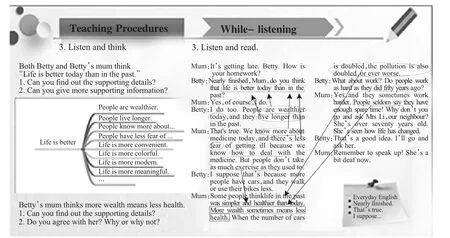
圖3
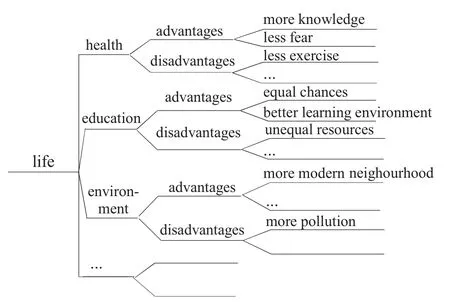
圖4
3.遷移創新類活動(想象與創造)
面對較多的污染、較少的鍛煉、不平等的教育資源等問題,鼓勵學生討論“我們現在能做什么,我們未來能做什么,政府能做什么”。
【設計說明】The students are aware of finding ways to solve problems and will form creative thought in future learning.
4.遷移創新類活動(想象與創造)
教師讓學生在討論如何解決面臨的問題之后,應用語言知識和語言技能,想象并描寫現在的生活和未來的生活。活動的開展從應用實踐類深入到遷移創新類。
【設計說明】By this way,the topic can be expanded and students can transfer and apply it to future situations.
首先激發學生思考,然后評價、辯論、討論,最后寫作,一系列活動是聯系緊密、層層鋪墊的,上一個活動為下一個活動創設合理、有效的支撐,一步步突破了教學難點。
5.遷移創新類活動(批判與評價)
作業布置延續了課上的活動,學生需要完成以下兩個任務:
(1)Polish the writing;
(2)Search for the information about England in the 1890s,1990s,2020 and make a poster.
在制作海報的過程中,學生需要先獨自查找信息,然后合作完成。這樣,學生的思維再次經歷了認識、分析、評價、創造的過程,培養了跨文化交際能力。
(五)課后反思
本節課有以下亮點(見下頁圖5):
1.對學情和教學目標有精準的定位,實施一系列螺旋式上升活動確保教學目標的完成,即知道學生在哪,要到哪里去,怎么到達,是否到達。
2.所有活動都指向英語學科核心素養,具有綜合性、實踐性和相關性。
3.在六要素整合的英語學習活動觀的引領下,以語篇為依托,以引導學生學習語言知識和文化知識,運用語言技能和學習策略,深入挖掘主題意義。
4.運用thinking map 和mind map 將語言知識結構化、可視化。
5.活動從感知理解類到實踐運用類,再到遷移創新類,層層遞進,引導學生從認識問題到分析問題,再到解決問題,實現了高階思維的培養。
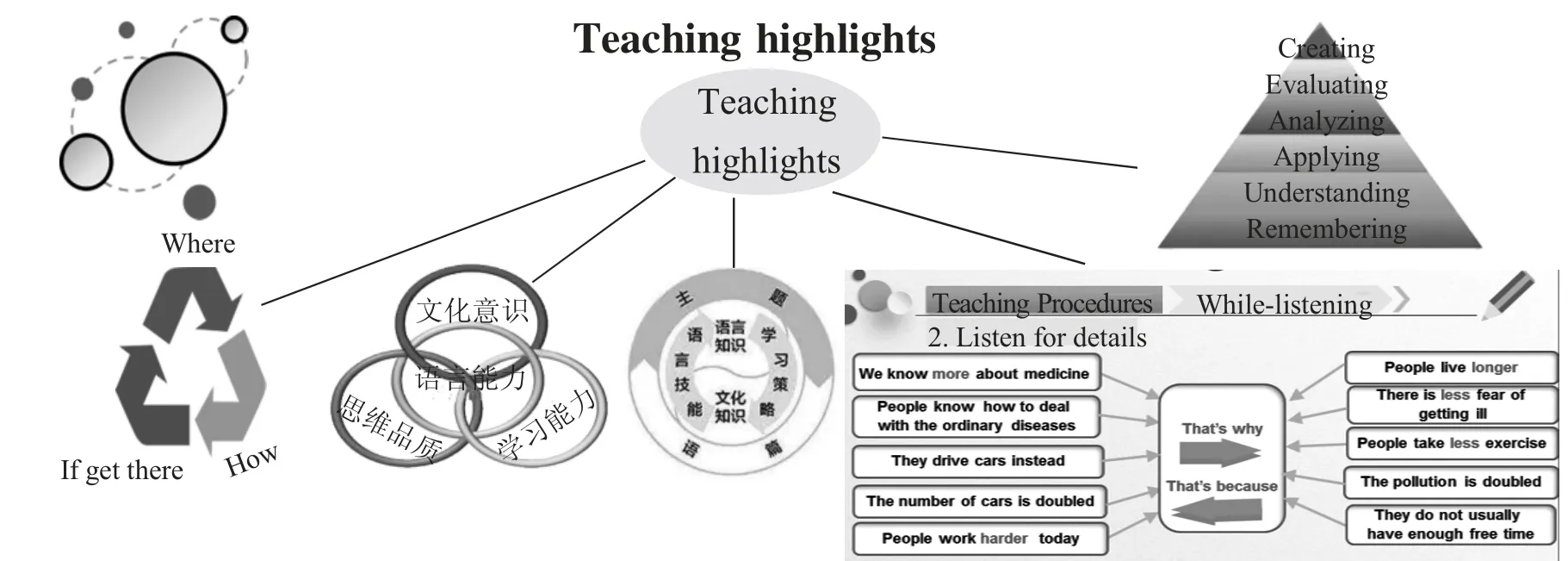
圖5
結語
高洪德(2018)指出:英語學習活動觀視角下的教學過程有以下特點:活動與單元目標相契合,活動過程整合了課程內容諸要素(主題語境、語篇類型、語言知識、文化知識、語言技能和學習策略),重視思維的發展。
綜上所述,在初中英語聽說教學中,教師應實踐六要素整合的英語學習活動觀,促進學生英語學科核心素養的形成,即要以語篇為依托,以學習語言知識為基礎,處理好學習理解類活動、應用實踐類活動、遷移創新類活動,引導學生深層理解文化知識,應用語言技能和學習策略,深入挖掘主題意義,體會文本的主題美、結構美、語言美、思想美。
猜你喜歡
甘肅教育(2020年2期)2020-09-11 08:01:42
甘肅教育(2020年2期)2020-09-11 08:00:38
文苑(2020年4期)2020-05-30 12:35:30
制造技術與機床(2019年10期)2019-10-26 02:48:08
電子制作(2018年18期)2018-11-14 01:48:06
小學生作文(中高年級適用)(2018年3期)2018-04-18 01:24:47
華北電力大學學報(社會科學版)(2016年4期)2016-12-01 03:59:30
小學教學參考(2015年20期)2016-01-15 08:44:38
少兒科學周刊·少年版(2015年4期)2015-07-07 21:11:17
散文百家(2014年11期)2014-08-21 07:16:08
