泰國(guó):疫情防控取得積極成效
2020-12-08 02:26:00黃利霞
中國(guó)-東盟博覽(政經(jīng)版) 2020年11期
黃利霞
泰國(guó)作為全球新冠肺炎疫情暴發(fā)以來(lái),最早報(bào)告新冠肺炎確診病例的國(guó)家之一,從2020年1月13日確診第1例至今,這一人口近7000萬(wàn)的國(guó)家累計(jì)確診新冠肺炎病例只有3759例,死亡59人,確診病例數(shù)在全球200多個(gè)國(guó)家和地區(qū)中位列140名開(kāi)外。根據(jù)全球184個(gè)國(guó)家疫情復(fù)蘇指數(shù)(Ranking of Countries by Recovery Index)調(diào)查報(bào)告顯示,泰國(guó)位列全球疫情復(fù)蘇最快國(guó)家第二名,并位列亞洲國(guó)家和地區(qū)榜首。世界衛(wèi)生組織將泰國(guó)列為成功抗疫的典范之一,成為其他國(guó)家學(xué)習(xí)的榜樣。
文化與公衛(wèi)體系成防疫法寶
早在2020年1月,一接到世界衛(wèi)生組織有關(guān)新冠病毒的疫情通報(bào),泰國(guó)就在主要國(guó)際機(jī)場(chǎng)口岸加強(qiáng)體溫監(jiān)測(cè),以提早發(fā)現(xiàn)疑似病患。1月8日,泰國(guó)衛(wèi)生部門(mén)監(jiān)測(cè)到了中國(guó)以外的首例疑似病例,1月13日,病例確診。對(duì)于到達(dá)機(jī)場(chǎng)的乘客,泰國(guó)醫(yī)療體系的工作人員最初要對(duì)其監(jiān)測(cè)體溫,必要時(shí)隔離,后來(lái)每一位抵泰乘客都要求隔離。
泰國(guó)成功遏制了新冠疫情的傳播,這還要?dú)w功于其國(guó)內(nèi)健全的醫(yī)療體系和積極的公共合作。泰國(guó)外交部表示,泰國(guó)抗疫有成,其鄉(xiāng)村醫(yī)療志愿者功不可沒(méi)。超過(guò)100萬(wàn)名鄉(xiāng)村醫(yī)療志愿者在抗疫后方做了大量工作,他們協(xié)助政府進(jìn)行登記、跟蹤疑似病例,為村民進(jìn)行病癥初斷并提供藥物,幫助村民就診,在村民與專業(yè)醫(yī)護(hù)人員之間架起一座橋梁,有效地將公共衛(wèi)生系統(tǒng)擴(kuò)展到全國(guó)各個(gè)偏遠(yuǎn)地區(qū)。
泰國(guó)是發(fā)展中國(guó)家,但醫(yī)療水平卻居于世界前列。泰國(guó)是率先攻克新冠病毒基因密碼、分離出毒株的少數(shù)國(guó)家之一。泰國(guó)自行生產(chǎn)的首個(gè)新冠疫苗預(yù)計(jì)將在明年年中面市,泰國(guó)也將成為東盟地區(qū)第一個(gè)可以生產(chǎn)新冠疫苗的國(guó)家。
保持社交距離、佩戴口罩被視為抗擊疫情的有效武器。而泰國(guó)人民問(wèn)候的禮儀與佩戴口罩的習(xí)慣成為了防疫方面良好的“先天條件”。泰國(guó)人在彼此問(wèn)候時(shí),既不握手、擁抱,也不親吻面頰,而是雙手合十,頭前傾,略作鞠躬狀,履行被稱為“Wai”的雙手合十禮,避免不必要的身體接觸。有研究稱,疫情期間,95%的泰國(guó)民眾在公共場(chǎng)合佩戴口罩,這一比例在東南亞國(guó)家中居于首位。
防疫和拯救經(jīng)濟(jì)的博弈
2020年10月21日,泰國(guó)新冠肺炎疫情管理中心宣布,再次延長(zhǎng)緊急狀態(tài)法至11月底,與此同時(shí),來(lái)自低風(fēng)險(xiǎn)地區(qū)的亞太經(jīng)合組織商務(wù)旅行卡持有人將被允許入境,這些地區(qū)包括中國(guó)、新加坡、馬來(lái)西亞等。這是自2020年3月以來(lái),泰國(guó)政府第7次宣布延長(zhǎng)緊急狀態(tài)法。
泰國(guó)從3月份起實(shí)施《緊急狀態(tài)法》,4月初又實(shí)行了“封城”“宵禁”等防疫措施。隨著疫情得到控制,泰國(guó)新冠肺炎疫情管理中心會(huì)議決定,6月15日起取消全國(guó)宵禁,同時(shí)實(shí)施第四階段解禁措施。7月1日起,泰國(guó)全面恢復(fù)國(guó)內(nèi)商業(yè)和娛樂(lè)活動(dòng)、學(xué)校重啟。在每一階段解禁前,泰國(guó)政府都會(huì)對(duì)當(dāng)下的疫情態(tài)勢(shì)進(jìn)行為期兩周的仔細(xì)觀察和評(píng)估,以確保新一輪的疫情不會(huì)暴發(fā)。
泰國(guó)分階段實(shí)行解封措施后,社會(huì)生活逐步恢復(fù)正常,但防控之弦仍緊。泰國(guó)政府仍鼓勵(lì)民眾戴口罩和保持社交距離。在曼谷街邊,人們?cè)诓宛^用餐時(shí),一桌兩人之間會(huì)豎起塑料防護(hù)屏。學(xué)校里,學(xué)生的課桌四周也會(huì)立起透明的保護(hù)屏障。到商場(chǎng)或飯店時(shí),顧客要掃碼登記,便于衛(wèi)生部門(mén)查找活動(dòng)軌跡。
在新冠肺炎疫情期間,泰國(guó)受影響最大的行業(yè)為旅游業(yè)、零售業(yè)、餐飲業(yè)、航空業(yè)、國(guó)際物流業(yè)等服務(wù)型行業(yè)。在目前疫情好轉(zhuǎn)的情況下,泰國(guó)的零售業(yè)、餐飲業(yè)、國(guó)際物流業(yè)也已經(jīng)基本開(kāi)放,但旅游業(yè)和航空業(yè)仍然處于評(píng)估開(kāi)放過(guò)程中。
旅游業(yè)作為泰國(guó)經(jīng)濟(jì)的重要支撐,為進(jìn)一步提振旅游業(yè),泰國(guó)政府出臺(tái)預(yù)算總額224億泰銖(1美元約合31泰銖)的計(jì)劃,通過(guò)政府補(bǔ)貼的方式鼓勵(lì)泰國(guó)民眾國(guó)內(nèi)游,取得明顯效果。目前,通過(guò)該計(jì)劃預(yù)訂的酒店數(shù)量已超過(guò)80萬(wàn)間。近日,該計(jì)劃迎來(lái)“升級(jí)版”,每位泰國(guó)國(guó)內(nèi)旅客四折住酒店的時(shí)長(zhǎng)從5晚增加到10晚,航班補(bǔ)貼從每人1000泰銖翻倍為2000泰銖。
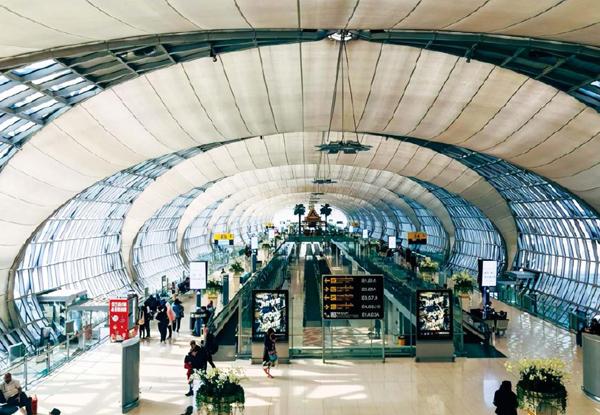
此外,泰國(guó)還有條件地開(kāi)放國(guó)門(mén)。10月20日,泰國(guó)曼谷素萬(wàn)那普機(jī)場(chǎng)迎來(lái)首批中國(guó)游客,這批游客獲得了泰國(guó)政府制定的“特殊旅游簽證”,這是自7個(gè)月前泰國(guó)禁止普通游客入境以來(lái),該國(guó)迎來(lái)的首批此類旅客入境,也是泰國(guó)為恢復(fù)受新冠疫情打擊的旅游業(yè)邁出的一小步。
盡管目前全球新冠疫情形勢(shì)依然嚴(yán)峻,泰國(guó)經(jīng)濟(jì)復(fù)蘇的任務(wù)十分急迫和艱巨,但泰國(guó)政府出臺(tái)的各項(xiàng)政策始終將防控放在第一位,扎實(shí)做好各項(xiàng)防控工作,努力降低疫情對(duì)經(jīng)濟(jì)的沖擊。泰國(guó)在防疫道路上取得的積極成效值得其他國(guó)家借鑒。
Asias emerging economies are at different stages in combatting the COVID-19 pandemic. For some countries, the light at the end of the tunnel is getting brighter as social distancing measures are being eased and economic activity is starting to ramp up again. Others are still grappling with outbreaks and lockdowns.
Whatever stage they are at, though, these markets must also continue to think beyond the crisis, and about what can be done to safeguard and improve their long-term economic prospects. Developing nations across Asia — Indonesia included — have of course not been immune to the social and economic disruption caused by the COVID-19.
Travel restrictions and distancing measures have hit trade and jobs around the globe. Budget deficits have widened and overall levels of debt will continue to increase across much of the region. Any recovery in tourism and business and consumer confidence is likely to be overshadowed by lingering concerns about potential new outbreaks, and by the tough global economic backdrop.
Despite the near term challenges, its important to remember the underlying trends that underpin many developing nations long-term growth potential.
For one thing, most emerging Asia enjoy favorable demographics, with under-20-year-olds accounting for more than one-third of the population of India, Bangladesh, and Southeast Asia, according to UN World Population Prospects 2019.
For another, the regions economies are increasingly capable of delivering innovation and higher-end manufacturing and services. The emergence of numerous home-grown E-commerce, E-payments, and other companies testifies to this.
The COVID-19 fall-out could, if anything, boost the quest for new ideas and technologies, as households, companies and entrepreneurs seek out new ways of buying, selling, banking, learning, and communicating with each other.
Its also important to remember that emerging Asian economies are, broadly speaking, now more resilient to external financial shocks than during the 1997-1998 Asian financial crisis or the global 2008 global financial crisis. Foreign exchange reserves have risen. External debt levels have come down. Current account balances have improved.
And as the 2020 crisis picked up steam, governments and central banks were quick to provide assistance with interest rate cuts and a slew of fiscal, liquidity and other measures to support households and businesses.
In May, President Joko Widodo announced that the government would begin to ease widespread social distancing measures and enter a more sustainable phase of social restrictions. As an intervention to stabilize the economy, fiscal stimulus measures were announced to support healthcare provision and economic recovery. Alongside this, the government pledged to offer more social welfare support for pandemic-impacted low-income communities.
Still, with COVID-related obstacles set to linger, policy makers would do well to supplement their immediate economic support measures with bold steps aimed at increasing their economies attractiveness as places to invest and do business in.
There are three broad areas of focus.
First, improving the local operating environment — making it easier to do business. That spans everything from reducing red tape and corruption, to dialing back restrictions on incoming investment, and labor market reforms, for example. Many countries have made laudable progress on these fronts — building on this will stand them in good stead.
Second, boosting competitiveness and productivity through investment. Specifically in transport and energy infrastructure, telecoms and internet connectivity, healthcare, education and smart, low-carbon ways to manage urbanization. All will be key to bolstering developing economies long-term growth prospects, and to dealing with technological advances such as robotics and automation, 3D printing and Artificial Intelligence (see Asian Development Outlook 2018). Building infrastructure well from the outset — and building back better after each upset or crisis — is crucial to each economys long-term growth and resilience.
Linked to this is the third area, of climate change preparedness. Southeast Asian and South Asian nations are particularly vulnerable to the effects of climate change, with low-lying megacities like Dhaka, Ho Chi Minh City, Jakarta, Bangkok, and Mumbai highly susceptible to storms and sea level rises.
Increasingly, a countrys or regions ability to withstand climate-linked threats — including the ability to raise and direct funding intelligently towards greening and climate-proofing the local economy — will be a factor in where companies and investors direct their business.
The COVID-19 pandemic has taken a human and economic toll that was unimaginable just months ago. Its impact will linger for months, if not years. But like every crisis, it also represents an opportunity for policy makers and business communities to rethink and accelerate their reform agendas. Those that grasp the opportunity could not just move their economies to the proverbial light at the end of the tunnel, but bolster their solid fundamentals for the world well beyond it.
· Source: The Jakarta Post
猜你喜歡
環(huán)球時(shí)報(bào)(2022-12-14)2022-12-14 16:46:27
音樂(lè)天地(音樂(lè)創(chuàng)作版)(2022年1期)2022-04-26 13:51:10
人大建設(shè)(2020年5期)2020-09-25 08:56:22
快樂(lè)作文(1.2年級(jí))(2020年8期)2020-09-10 07:22:44
北極光(2020年1期)2020-07-24 09:04:04
學(xué)生天地(2020年22期)2020-06-09 03:07:52
文苑(2020年4期)2020-05-30 12:35:48
小天使·一年級(jí)語(yǔ)數(shù)英綜合(2018年6期)2018-06-22 10:25:54
華人時(shí)刊(2017年23期)2017-04-18 11:56:38