
The History of Tea and Tea Landscape in Korea
2020-10-28 07:19:26HANSukyoung
自然與文化遺產研究 2020年5期
HAN Sukyoung
(Sejong University,College of Hospitality Tourism Management,Seoul 05006,Korea)
1 The History of Tea in Korea
The beginning of Korean tea is believed to be the story of Heo Hwang-ok,the princess of India’s Ayutta,who married King Suro of Gaya,brought tea seeds and planted them in Gimhae in AD 48.The story,however,does not clarify the existence of Ayutta and does not specify its location.Therefore,some people do not see this as the beginning of Korean tea.
Although it is expected that tea culture has already flourished during the Baekje Kingdom,as evidenced by the discovery of a foliage in the tombs of Goguryeo,the Baekje Kingdom’s acceptance of Buddhism from the 4th century,and China’s friendly relations and trade with the Southern Dynasties.Even though there are no clear records as historical data has not been preserved;however,relics that appear to be tea tools were found in royal tombs,and there are rumors that they planted tea trees when they built various temples.
According to the records of the Samguk Sagi,it was recorded that King Seondeok drank tea during the reign of King Seondeok and Kim Dae-jung,who was a messenger of the Tang Dynasty,brought tea seeds and planted them in Jiri Mountain in accordance with the royal order in 828.For this reason,some view this time as the beginning of tea cultivation,but this is also controversial,as many literatures have already told stories of tea planting.
It is the heyday of Korean tea during the Goryeo Dynasty,when Buddhism flourished.In the early days of the Goryeo Dynasty,tea culture was developed around nobility,but scholars became the center of tea culture.The tea of the Goryeo Dynasty was regarded as a rare gift to the king and his people.Tea and tea tools used in royal and Buddhist events and the supply and distribution of tea were administered by the office called Tea Administration.In the early Joseon Dynasty,the tea culture of Goryeo was inherited by scholars.However,with the policy of worshipping Confucianism and suppressing Buddhism,the tea culture that flourished with Buddhism has also been on the decline,creating a period of inactivity in tea culture.
The reason for the decline in tea culture at the time was not merely a matter of the policy of worshipping Confucianism and suppressing Buddhism.In the 17th and 18th centuries,the earth’s temperature dropped to a low level of ice.At that time,the sea in front of China’s Zhejiang and Kangso provinces froze,and the lakes and rivers in Gangnam froze.During the Joseon Dynasty,the extreme weather of frigid winters and hot summer has caused several atmospheric changes and killed more than a million people which were one-fifth of the Joseon population.In this situation,it is thought that it will be very difficult to grow and drink tea,not to mention maintaining the culture.In addition,Japan’s two invasions and other Korean Wars were also blamed for the decline of the tea culture.
Later,in the late Joseon Dynasty,King Gojong established Nongsang in November 1882,and in 1883 the following year,Nongsang investigated and managed the cultivation of tea trees.In 1885,6 000 tea tree seedlings were imported from the Qing Dynasty.Such a revival of tea culture was seen again,but with Japan’s forced occupation,Korea’s traditional tea culture were once again discouraged.Japanese production facilities were managed by the Japanese occupation,and tea farms and Jeongeup in Gwangju Mudeung Socheon’s Boseong-eup,Boseong-gun,Jeollanam-do,and so on were also occupied by the Japanese.Korean traditional tea trees were removed from many tea gardens then managed by the Japanese,and Japanese yabukita species were cultivated instead.Also,as part of Japan’s policy to eradicate traditional culture,Japan’s tea ceremony,which is not a traditional Korean tea ceremony,was promoted in Korea.
After liberation from Japan,Korea went through the Korean War again,and as the war came to an end,Western culture rushed in,causing many people to drink coffee,juice,coke and other beverages,the habit of drinking Korean tea was kept only by a handful of people.
Recently,as the number of people enjoying tea increases due to surging interest in health,the need for healing and communication,Korea green tea is also making efforts to increase its commerciality in line with the trend of the market.Korean teas are producing various kinds of tea such as black tea and yellow tea but they still need to be developed more.
With the increasing number of people drinking tea,the restoration and inheritance of Korean traditional tea culture is also advancing steadily.People are trying to make tea a culture rather than just a drink.
2 Korea’s Typical Tea Landscape
Korea has more tea landscapes than are commonly known.Many areas of the Korean Peninsula have traditionally been cultivated for their tea.There are many areas where tea trees can be easily found at mountain behind the house or at the neighborhood entrance,even if they were not made in a tea garden due to lack of management.These places are not for commercial purposes,but they are making tea and enjoying it personally using nearby tea trees.
Although there are small areas such as Gangjin,Namhae,Gimhae and Haenam that produce and sell teas,Korea’s typical tea landscape are Bosung,Hadong and Jeju Island.
2.1 Bosung(Located in Bosung County,Jeollanamdo)
According to records from Dongguk Yeoji Seungram and Sejong Silokji,Bosung has been making green tea since ancient times because of the natural growth of tea trees.Songgok-ri,Nyangnyang-myeon,supports this old record,as the village’s name is also called ‘the field of tea(茶田)’.Tea trees are still growing throughout the county,including Daewonsa Temple in Mundeok-myeon and Jinggwang Temple in Beolgyo.The present Bosung tea garden(Figure 1)was created in 1939,when it was found to be a suitable site for growing the tea plant and has optimum soil and precipitation conditions for quality green tea production.30 hectares of tea field was created at the foothill of active acid(formerly Hakseongsan Mountain),which coincides with the oceanic and continental climate.There used to be 590 hectares,currently it consists of 425 hectares of terraced green tea field in harmony with the natural landscape,and is about 40 percent of the nation’s green tea production.
Boseong County is a region of mountains,oceans and lakes,and is located at a point where oceanic and continental climates meet,greatly affecting the formation of amino acids in teas and accounting for about 37 percent of the nation’s tea cultivation area.
The average annual temperature is 13.4 ℃and the average annual rainfall is 1 400 mm,and the soil is a highly suitable area for teagrowing conditions,with the presence of a macromolecule component.The number of foggy trees provides a lot of moisture during the tea tree growth period,while the natural tea in natural conditions taste better with natural light effect.
Boseong is a part of the high quality tea cultivation because of its natural environment,such as climate,soil,topography,lake,and sea,and because it is seeded and cultivated on a hillside,it is difficult to produce and expensive to manage,but consumers can drink quality tea with ease.
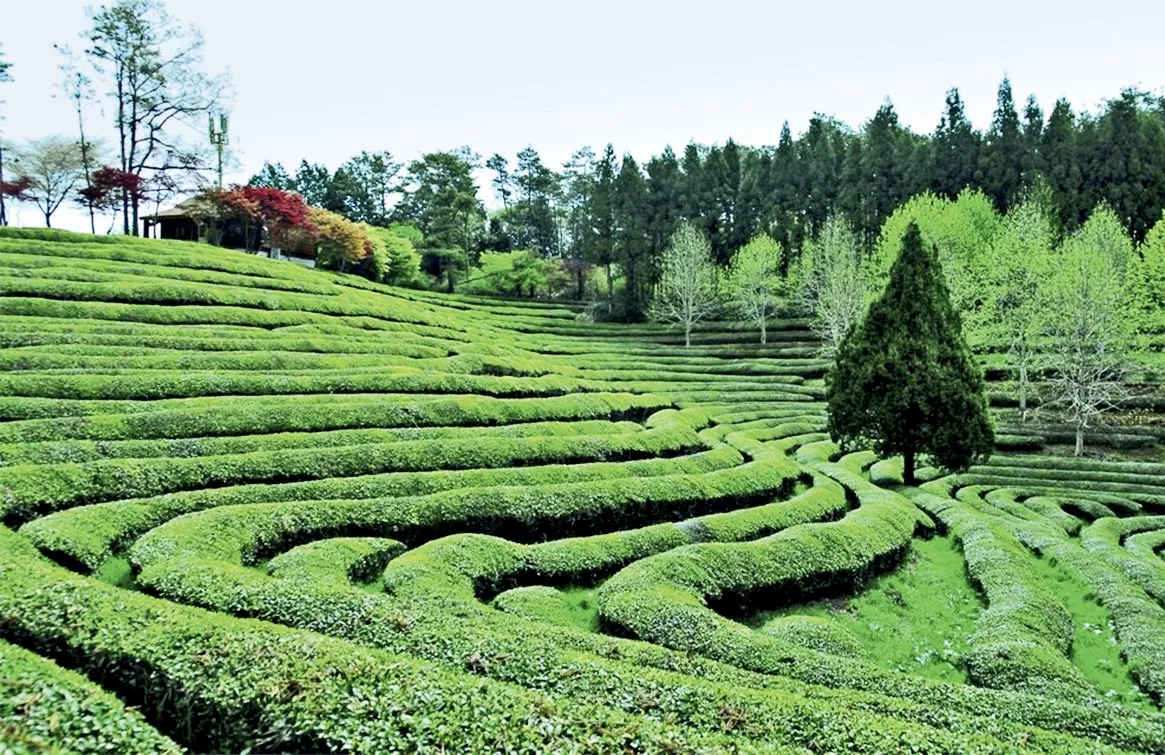
Figure 1 Bosung tea garden(From:www.traveltrade.cn/834/newsdetail.html)
2.2 Hadong(Located in Hadong County,Gyeongsangnamdo)
Hadong is known for its millennia-long cultivation.In particular,the wild tea tree and the small scale production of traditional hand-crafted tea distinct from other regions.
Hadong County’s main tea cultivation area is connected to the Seomjingang River and its tributary Hwagaecheon Stream,which are dense,humid,and has multiple sources of tea in mountainous areas in the southern direction with a gradient of 220m and 10 °~40°,providing an optimal environment for tea growing due to the wide diurnal temperature range.The soil is mildly acidic with enough moisture,and is a gravelly sand soil that is good for tea tree growth and cultivation.Hadong Green Tea produces high quality green tea using its long-standing roasting technology,which differentiate from other local green tea,which mainly produces low quality green tea(Figure 2).
Hadong is difficult to commercialize because many of its family members produce unique characters,but the amount produced by one tea garden is small and there are no clear standards for teas produced in the region.However,many people recognize and enjoy the value of Hadong’s green tea as it is called handmade green tea or traditional green tea.

Figure 2 Hadong tea cultivation area(From:www.hadong.go.kr/01218/03205.web?amode=view&idx=45&)
2.3 Jeju Island
The reason why Jeju started producing tea in earnest was when O’sulloc,a private company,created a tea plant on Jeju Island and produced teas(Figure 3).
The Jeju area is the only volcanic ash soil in Korea with very high levels of organic matter content in black,which is very good for the production of high-quality tea leaves and the growth of tea trees.Also,due to Jeju’s subtropical climate,tea trees grow faster,which results in one to two weeks earlier than other regions,and the harvest of Myeongjeoncha(before April 5th)is an important feature only available in Jeju.Jeju green tea is grown using volcanic rock water,so it is safe to drink because it has no pollutants and is rich in minerals and nutrients.
Jeju green tea is produced using hands to create deep flavors,and it has excellent taste,a roma and color as it is served with Gujung Gupo(9 times roasting and 9 times rubbing),a multi-tasking method of traditional medicine.
In particular,in Jeju Is land,as the production of tangerines plummeted due to excessive production and casued damage to farming households,the government also encouraged the movement to transform tangerine fields into tea fields since 2001.In the early stages of implementation,the number of tea trees being planted in accordance with policy has increased since 2005.As the island is well-known as a tourist attraction,tourists are also looking for large and small tea houses,as well as tea production.

Figure 3 O’sulloc Museum(From:baike.baidu.com)
