
Tea Landscapes in Japan
2020-10-28 08:22:50ONOWataru
自然與文化遺產(chǎn)研究 2020年5期
ONO Wataru
(ICOMOS International Scientific Committee on Cultural Landscapes(ICOMOS-IFLA),ICOMOS Japan,Tokyo 010-0003,Japan)
1 Geographical Distribution of Tea Fields in Japan
Japan has a total of 40 600 hm2of tea fields at present(as of 2019),according to the statistics of the Japanese Government’s Ministry of Agriculture,Forestry and Fisheries(MAFF)(Figure 1).Out of the 47 prefectures of Japan,there are 11 major tea producing prefectures listed as follow in order of the size of their tea fields: Shizuoka(靜岡),Kagoshima(鹿兒島),Mie(三重),Kyoto(京都),Fukuoka(福岡),Miyazaki(宮崎),Kumamoto(熊本),Saitama(玉),Saga(佐賀),Nagasaki(長崎),and Aichi(愛知)Prefectures.
Generally speaking,Japanese tea fields are located on hills,mountain slopes,or flatlands between 30 mand 300 min altitude,in the relatively warmer part of Japan south of 35 degrees north(still far north as compared to the major tea production area in China).
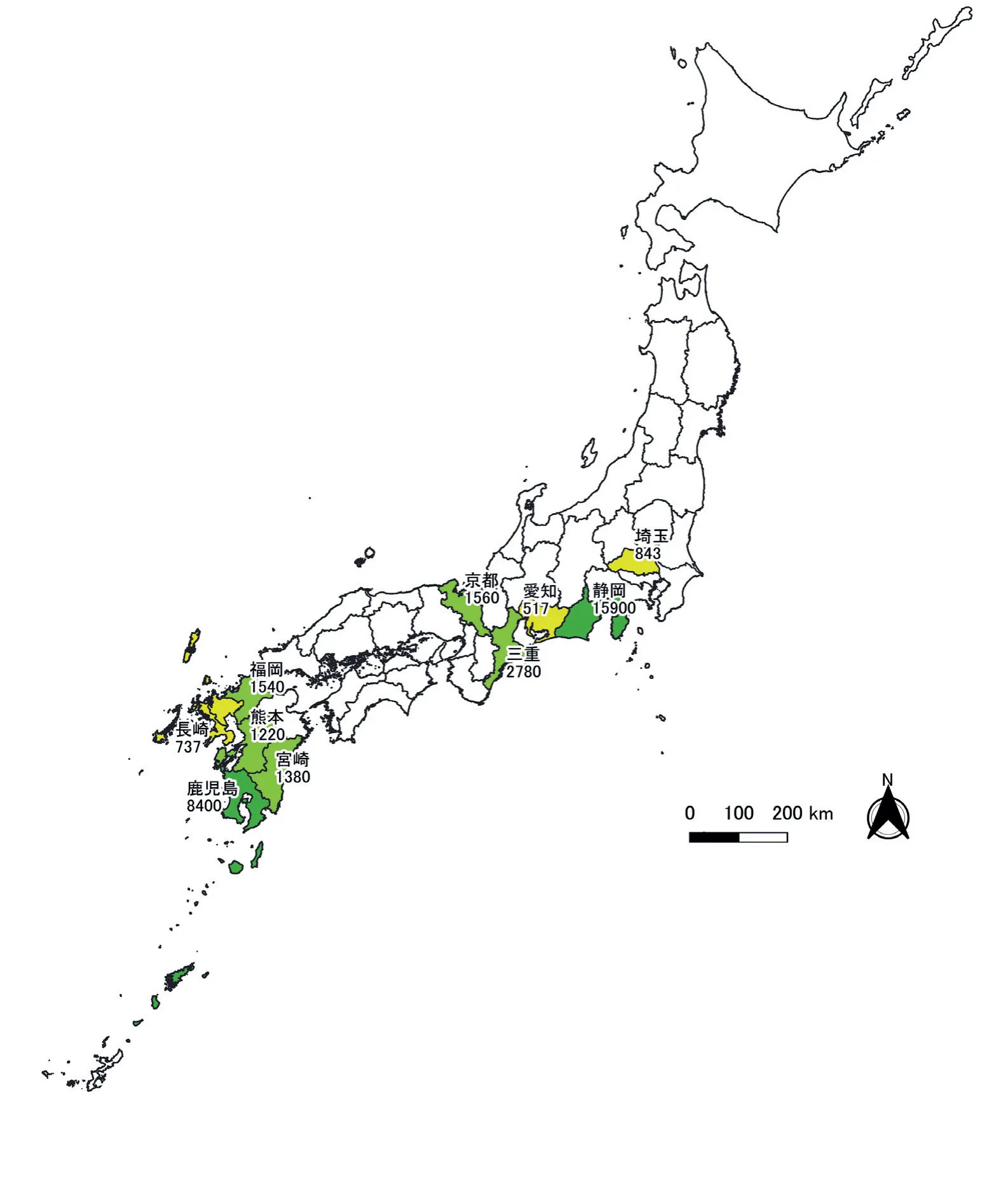
Figure 1 Distribution of major tea fields in Japan(From:map produced based on the data published by MAFF)
William H.Ukers gave a good description of the geographical characteristics of Japaneseside of Japan, and the heart of the tea districts is Makinohara in Shizuoka Prefecture①Traditional Tea-grass Integrated System in Shizuoka is a Globally Important Agricultural Heritage System(GIAHS)since 2013,one of the four tea sites recognized by FAO as GlAHS with Pu’er and Fuzhou in China and Hadong in Korea.. Most of the tea of Shizuoka is grown on areas exposed to the full sweep of the elements,where other crops would fail or,at least,have a struggling existence.The Nara and Kyoto tea areas,including the famous Uji②Uji(宇治)is a major tea-producing district in southern Kyoto(京都)Prefecture.gardens,are located on an average of thirty miles inland,and therefore are more sheltered from storms than the Shizuoka District.Also,because they are away from the ocean,they are warmer in summer and colder in winter.
“The plantations are usually located on hills along rivers,streams,or lakes,where a favorable temperature combines with dense fogs and heavy dews produce rapid flushing.This is the condition in such famous tea producing districts as Uji,Kawane③Kawane(川根)is a tea-producing district located in Shizuoka(靜岡)Prefecture.,and Sayama④Sayama(狹山)is a major tea-producing district located in Saitama(玉)Prefecture..
“Tea in Japan is not planted out on the best land,but preferably where rice and other crops cannot be grown.Except in the vicinity of Uji,tea is usually grown on steep slopes and bare wind-swept table-lands.Rows of tea bushes are grown on the banks dividing rice fields;small patches are set out in orchards,amongst mulberry bushes,and,in fact in any odd nook where there is room.In the neighborhood of Uji alone,a considerable area of fairly low-lying ground is given over to tea cultivation.”(Figure 2)
2 Tea fields as one of the Common Land Uses in the Topographic Maps of Japan
Tea fields(茶田)are one of the common land uses seen in Japan and are indicated on official topographic maps with the three-dot mark,which was designed in the shape of a tea seed cut in half(Figure 3~ Figure 5).
The fact that tea fields are one of the common land uses on official topographic maps of Japan along with rice paddies,farmlands,orchards,and bamboo forests is probably not surprising to people in Japan and China,but it is considered to reflect cultural and social characteristics of the region,when compared to vineyards in the maps of France and other wine-producing countries and hop fields in the maps of Germany and other beer-producing countries.
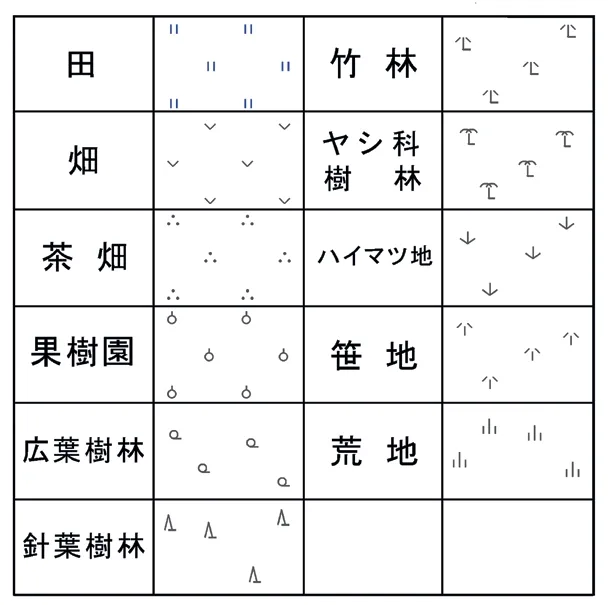
Figure 4 Cartographic marks of land uses and forest types(From:the web site of the geospatial information authority of Japan)
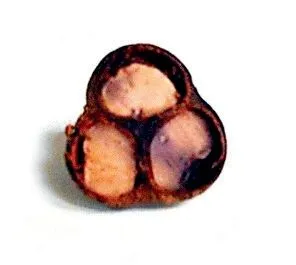
Figure 5 A tea seed cut in half(From:the web site of the geospatial information authority of Japan)
3 History of Tea Production and Tea Landscape in Japan
Needless to say,tea landscape is as old as tea production.Japan is known as the second oldest country in the history of tea production in the world after China,dating back to the 9th century.Tea was first introduced to Japan by Buddhist monks for medicinal or religious uses.Japanese Buddhist monks who studied in China,such as Saicho(最澄,766 or 767—822)and Kukai(空海,744—835)brought back tea seeds from Tang Dynasty China and planted them in Otsu,Shiga Prefecture and in Nara,Nara Prefecture,respectively in the early 9th century.But neither teadrinking culture nor tea production take root at that time.It was not until another Buddhist monk Yosai,also known as Eisai(榮西,1141—1215),who brought back tea seeds from Song Dynasty China that tea-drinking culture and tea production started to take root in Japan.Yosai is also famous for writing a Japanese classic about tea in Japan,(writing about the efficacy of tea drinking,吃茶養(yǎng)生記)in 1211(Figure 6).
He gave some tea seeds to Japanese Buddhist monk Myoe(明惠,1173—1232),who planted them at the Kozanji Temple(高山寺)in the mountain area to the north of central Kyoto(Figure 7).Myoe is said to have taught people in Uji to the south of central Kyoto,and also in other places,how to produce tea to farmers in Uji.Then,Japanese tea landscape started to spread beyond limited areas within Buddhist temple complexes.

Figure 6 Japanese tea classic Kissa Yojo Ki written in 1211 by Japanese Buddhist Monk Yosai(From:made in display at the Kyoto prefectural research institute on tea industry)
In the 15 th century,Uji came to be known for the highest quality tea comparable to those produced at the area around Kozanji Temple(Figure 8).

Figure 7 Tea bushes in Kozanji temple(高山寺)in Kyoto City,Kyoto Prefecture(From:provided by the author)
In the latter half of the 16th century,the method of covering tea bushes with rice-straw mats,known today as Oishita cultivation method,was invented in Uji,which produced the type of tea leave for matcha(powdered green tea)(末茶)unique to Japan.Matcha had originally been drunk in China but it disappeared in China and underwent unique developments in Japan.Today,Japanese tea ceremony(茶道),which uses powdered green tea,is famous worldwide as a symbol of Japanese culture.The master of tea ceremony,Sen no Rikyu(千利休,1522—1591),prized Ujicha as the best for his Chanoyu tea ceremony.Scientifically,the shading method reduces the bitterness of tea leaves by preventing sunlight from turning theanine to tannin;this makes a critical difference to the taste of powdered green tea,which is actually eaten rather than drunk,in comparison with ordinary tea,for which people only drink the essence of tea leaves that has been infused in hot water.
This added something unique to tea landscapes in Japan,particularly in Uji,and it still is a distinctive feature that makes Japanese tea landscapes clearly different from tea landscapes elsewhere in the world.In 1577,Portuguese missionary Joao Rodorigues described this landscape,a s follows:“In the town of Uji,where the best tea is produced,all the plantations and fields in which this cha is grown are covered with awnings or mats made of rice straw or thatch.They are thus protected from damage by frost from February onwards until the end of March,when the new leaf begins to bud.”(Figure 9)

Figure 9 Shaded tea bushes in Uji,Kyoto,Japan(From:Pamphlet of Kyoto Prefecture)
Tea landscapes captured the eyes of Japanese artists,who created works of art such as folding screens or picture scrolls depicting people harvesting tea leaves,processing tea leaves,etc.Some of them were collected by Western people and stored in museums,giving testimony to the old tea landscapes of Japan.There is one of the folding screens depicting Japanese tea landscapes between 1840 and 1850,made by Itaya Keishu Hironobu(1820—1859).It is now in the Leiden National Museum of Ethnology(Figure 10).

Figure 10 Tea leaves plucking in Uji,Kyoto(From:leiden national museum of ethnology)
In the 19th century,especially after the feudal Edo shogunate came to an end and the Meiji government promoted modernization,tea production spread to,or significantly expanded in,Shizuoka,Kagoshima,Mie,Saitama,and Fukuoka Prefectures,as the demand for tea as an export commodity increased from the USA and Europe.
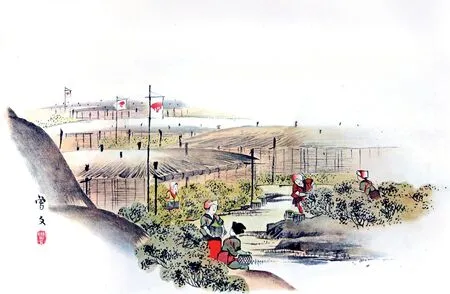
Figure 11 Shaded tea bushes in Uji(From:Sobun(文),attached to the reports on the production of tea in Japan from a British Consul in 1873)
4 Important Cultural Landscapes
The Agency for Cultural Affairs of the Government of Japan,officially recognizes“l(fā)andscape areas that have been formed by local people’s life(生 活)or livelihoods(生 業(yè))and local climate and natural conditions(風(fēng) 土),which are indispensable for understanding life(生 活)and livelihoods(生 業(yè))of Japanese people”(English translation by the author)(Article 2 of the Law for the Protection of Cultural Properties)and selects them as Important Cultural Landscapes(重要文化的景觀).
At present,atotal of 65 Important Cultural Landscapes have been selected by the national government of Japan.Many landscapes containing rice terraces are included,but there are few associated with tea fields.Only Cultural Landscapes of Uji(宇 治),located in Uji City,Kyoto Prefecture,has been selected so far.It consists of a townscape and some tea landscapes reflecting the history of the area where tea production started in the Middle Ages and established the reputation as the best tea producing area in Japan in the 16th century.The area is planned to be expanded to cover a wider area of tea fields.
