小學英語寫作指導策略研究
2020-04-06 03:37:43施靜靜
閱讀(教學研究) 2020年12期
施靜靜
【摘要】在《義務教育英語課程標準(2011年版)》的指導下,筆者結合自身的教學經驗,以培養學生興趣為前提,探討小學英語寫作教學的方法與策略,建構快樂、多元的寫作課堂,激發學生思維,提高學生綜合語言運用能力。
【關鍵詞】小學英語寫作 策略 興趣 思維
英語寫作是由語言輸入到語言知識整理再到語言輸出,最后進行語言反饋、完善的過程。所以教師要注重對學生語言知識量的輸入,加強對學生語言知識質的輸入,為學生提供大量有意義的、具有可理解性的英語輸入材料,強調對學生寫作策略培養的輸入;要引導學生積極地進行英語寫作的輸出;要及時給予學生反饋,檢驗學生的學習效果,完善輸出質量,達到提高學生英語寫作水平的效果。好的語篇,不等于正確無誤的語言,而是好的思維展現。語篇寫作重在達意,而不是語法。在指導時,我們要關注四個特點:第一,統一。語篇中的所有細節都說明同一個問題,沒有與主題不相關的細節內容。第二,連貫。語篇和諧,符合邏輯,前后關聯照應。第三,豐富。有足夠的細節支撐主題。第四,簡潔。表達簡練,沒有無關的多余信息,用盡可能少的語言表達盡可能多的內容。下面就從三個方面具體闡述如何進行小學英語寫作策略的指導。
一、依托教材,挖掘寫作元素
以教材為依托,幫助學生不斷積累新知,內化語言;發揮不同版塊對學生語言和思維發展的作用。主要寫作形式:仿寫、擴寫、續寫等。教師要做到以下三點:
A.借助故事版塊給學生大量語言輸入(用好教材中的范文);
B.借助語法版塊幫助學生積累詞匯、規范語言表達;
C.挖掘教材中可得的寫作元素。
例如:譯林版小學《英語》五年級下冊Unit 5Helping our parents(Story time),教師根據語篇的第一段,逐步引導學生從第一稿、第二稿到第三稿進行不斷地完善、修改,學生通過對細節、情感、猜測等的添加,對標題的修改,使得文章更具體、更形象、更生動。下文中畫線部分內容就是很好的體現。
A Busy Morning
It is Saturday morning. My father is?cleaning the blue car in the garden. I am helping?him. The car is shiny. My mother is cooking?breakfast in the kitchen. She is cooking eggs.?They look nice. Helen is in the living room. She?is sweeping the floor. We are busy. Where is?Tim? What is he doing now? Tim and Ben are?sleeping in the bedroom. Tim is sleeping on the?bed. He is too little. He needs more sleep. Ben?the dog is sleeping on the floor.
教師充分依托故事版塊,淋漓盡致地向學生展示了一篇優秀范文,接著要求學生根據書中Checkout time中的圖片提示,仿照范文,以It is Saturday Evening為題,續寫“晚上篇”。學生的創意精彩紛呈。
二、整合教材,訓練寫作技能
整合教材,融匯新舊知識,結合學生生活實際開展寫作教學,注重對學生寫作微技能的訓練。主要寫作形式:任務式寫作。
例如:譯林版小學《英語》六下Unit 7 Summer?holiday plans單元寫作教學,要求學生能用一般將來時談論自己的暑假出游計劃,并運用本課所教的寫作策略,以暑假出游計劃為主題進行寫作,培養學生根據主題建構思維導圖,根據思維導圖組織寫作的能力,提高學生根據寫作策略修改、完善作文的能力。在上課一開始,教師直截了當說出自己第一次來到鎮湖這個地方,這個地方很美,想游覽一下,讓孩子們推薦一些有趣的地方給他,學生們的思維一下子被帶動起來:
S1: (You can go to) Taihu Lake.Its beautiful.
S2: (You can go to)Taihu Wetland Park.You?can fly a kite there.
S3: (You can go to) Chinese Embroidery Art?Museum.
接著教師在寫作指導時通過四大策略循序漸進的訓練,點燃學生的思維火花:
策略一:思維導圖,確定內容
【設計思路:問題導向,引出思維導圖,演變成短文,提出策略一。】
T: Thank you for your advice. Theyre all?wonderful places. I think I will go to Zhenhu in?this summer holiday. If I want to make a travel?plan, what questions should I think?
S2: How will you go there?
S3: How long will you stay there?
S4: What will you do there?
S5: Who will you go with?
T: Look.This is my writing according to my?mind map.
Can you complete it? So heres a tip for you.(思維導圖,確定內容。)
策略二:長短結合,避免重復
【設計思路:讓學生發現問題,主動思考,提出修改,引出策略二。】
T: Look at my writing. These sentences all?start with“I will go”.Theyre the same. Can you?put some of them together?
說完,教師呈現以下句子:
This summer holiday,
I will go to Zhenhu.
I will go there by car.
I will go there with my family.
I will go there in July.
I will stay there for two days.
I will visit Taihu Wetland Park.
I will travel around Taihu.
I will eat fish and crabs.
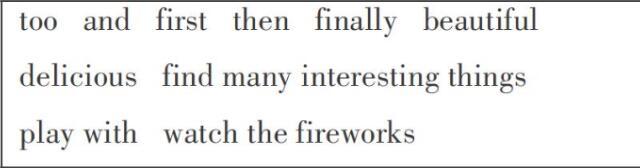
教師引導學生將前面四句合并成:This?summer holiday, I will go to Zhenhu with my?family by car. 把第五、六句合并成:I will go?there in July and stay there for two days.最后三句,教師提供and, but, also, too, because, so,first, then, finally等詞讓學生將這三句合并,進行不同的表達,學生們一下子腦洞大開。
S1: I will visit Taihu Wetland Park and?travel around Taihu. I will eat fish and crabs, too.
S2: First, I will visit Taihu Wetland Park.?Then,I will travel around Taihu. Finally, I will?eat fish and crabs.
S3: I will visit Taihu Wetland Park. I will?also travel around Taihu, because I will eat fish?and crabs.
S4: ...
這樣一來,不僅句式顯得非常靈活,而且也避免了重復。
策略三:發揮想象,豐富細節
【設計思路:逐步引導學生發散思維,拓展內容,提出策略三。】
T: Now,its your time to practice.I know you?made a mind map about your travel plan before.Please talk about your travel plan according to?Tip 2.
根據策略二,讓學生談談自己的旅行計劃。
T: But look carefully,XX will stay in ...for ...?Will he/she go to ... all the days?
T: So I think he/she will do many things in...Lets make a new plan for him/her.
Look, this is the passage. But some words?are missing. Lets help him/her complete it,OK?
教師給出一些提示詞,讓學生發揮想象,豐富細節。
I will do many things in Shanghai. I will go?to the Bund. Its at night. I will visit Shanghai?Museum. I will go to Disneyland. I will meet?Mickey Mouse. I will eat a lot of delicious food.
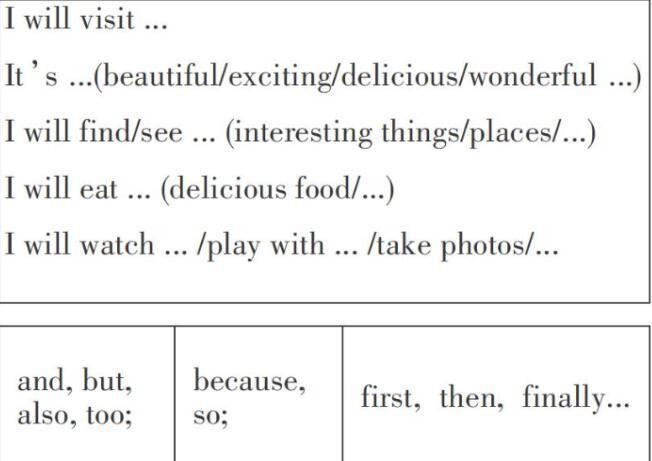
T: Now its your time to practice. Please?say more about your travel plan according to?Tip 3. These words and sentences may help you.
S: This summer holiday, I will go to ... I will?do many things there. I will ...
策略四:結構清晰,篇章完整
【設計思路:整體呈現短文,理清結構,提出策略四。】
T: Look, this is the title“My Travel Plan”.This is the beginning. Its about“where,when,?how, how long, who”.
Its the body. Its about“what”. At last,we?need an ending. I will do many things in?Shanghai.Will I have a good time? So whats the?ending?
S1: I will have a good time in Shanghai.
T: The ending is used to express emotions.We can also say“, I love the city/country.”“I cant?wait to visit there”
這樣文章就顯得結構清晰,篇章完整。學生也就可以根據教師提出的四大策略,開始書寫自己的旅行計劃,并與同桌分享,相互修改。
三、跳出教材,創新寫作視角
跳出教材,豐富寫作語料,使寫作內容更豐滿,句式表達更豐富,寫作視角更多元。主要寫作形式:主題式創寫。
例如:譯林版小學《英語》四年級(下冊)Unit 5 Seasons。學生在學完語篇小詩之后,教師利用看圖說話的形式同學生一起談談秋天,得出思維導圖:談論季節可以從天氣、感覺、活動、衣服、景物、食物與飲料等方面下手。習作也就能輕而易舉地完成:
In summer, it is hot.
I see lovely frogs. I see beautiful butterflies.I eat sweet watermelons. I drink ice lemon tea.
In summer, I wear lovely shirts, cool shorts,colourful dresses. How nice!
Its time to go to the sea. I can go swimming?in the sea. Its fun!
Summer is wonderful. I love summer.
教師還將自己的習作展示給學生看,讓學生思考,教師寫的文章與他們寫的有什么不同。
Winter
What colour is winter?
Winter is white. The snow is here and there.
Winter is green. We have Christmas.
Winter is red. We have Spring Festival.
Winter is colourful!
學生的思維浪花被激起,季節還可以抓住顏色來寫,不同的視角,讓學生腦洞大開,產生了強烈的創作激情,都想一顯身手。
小學英語寫作訓練是個長期而復雜的過程,要求教師有計劃、有目的、有反饋,由易到難,循序漸進地進行寫作教學指導。教師要充分結合教材內容和學生年齡特點,設計寫作任務,加強過程指導,注重策略研究,點燃學生寫作的思維火花,努力使學生聽、說、讀、寫的綜合語用能力得到全面的發展與提高。
(作者單位:江蘇省昆山市開發區晨曦小學)
猜你喜歡
小哥白尼(野生動物)(2022年6期)2022-08-17 08:05:28
小哥白尼(野生動物)(2022年4期)2022-07-16 03:37:32
小哥白尼(野生動物)(2022年2期)2022-06-01 06:21:20
小哥白尼(野生動物)(2022年1期)2022-04-26 14:01:18
中學生數理化(高中版.高考理化)(2020年2期)2020-04-21 05:32:50
小學生作文(低年級適用)(2019年9期)2019-10-08 08:37:10
數學大世界(2018年1期)2018-04-12 05:39:14
成才之路(2016年26期)2016-10-08 11:35:21
成才之路(2016年25期)2016-10-08 10:48:04
小學教學參考(語文)(2016年9期)2016-09-30 09:10:55