
具有聚集誘導(dǎo)發(fā)光特性的新型鉑(ll)金屬配合物及其光激發(fā)的自敏化氧化反應(yīng)
2019-11-04 08:42:20王士昭李維軍俞越劉進(jìn)張誠(chéng)
物理化學(xué)學(xué)報(bào) 2019年11期
王士昭,李維軍,俞越,劉進(jìn),張誠(chéng)
浙江工業(yè)大學(xué)化學(xué)工程學(xué)院,綠色化學(xué)合成技術(shù)國(guó)家重點(diǎn)實(shí)驗(yàn)室培育基地,科技部能源材料及應(yīng)用國(guó)際科技合作基地,杭州 310014
1 lntroduction
In recent years, transition-metal complexes with populated excited states upon excitation possess a rich range of photochemical and photophysical properties1–12, which have attracted much attention regarding their capability to exhibit intense phosphorescence in applications such as organic light emitting diodes (OLEDs)2–4, photocatalysis5–7, sensors8–10and a new application in photodynamic therapy (PDT)11,12. Among them, platinum(II) complexes represent an important class of compounds, owing to the heavy atom effect of platinum, the efficient generation of the intersystem crossing (ISC) efficiency makes the platinum(II) complexes a better phosphorescence emission performance.
Singlet oxygen (1O2), one species of the reactive oxygen species (ROS)13, is the excited state of O2with high energy,which turn to be the new star in photodynamic therapy (PDT) in cancer treatment14and bacterial phagocytosis15. Singlet oxygen is usually generated through the energy transfer from the triplet excited state molecules photosensitizer (PS) to the ground state of triplet oxygen (3O2).
Hence, the efficient generation of1O2is habitually related to the ISC efficiency of the sensitizer and concentration quenching of the excited state16–20. Nowadays, interposition of heavy atoms into molecular structures is one of the most widely used approaches to improve the ISC efficiency due to the enhanced spin–orbit coupling in the excited state, which can make more energy transfer from the T1state of the photosensitizer to the ground-state oxygen to generate the1O219. As such, to solve the concentration quenching of the excited state is another way to affect the efficiency of1O2generation. Since Tang team found the aggregation-induced emission (AIE), AIE materials have been widely applied in the preparation of efficient light-emitting devices and chemical biological sensors, due to their enhanced fluorescence and efficient photosensitizing characteristics21–23.Thus AIE might be an effective strategy to solve the concentration quenching of the excited state and enhance the efficiency of1O2 generation. It is obvious that the transitionmetal complexes with AIE property might simultaneously possess a high ISC efficiency and the non-concentration quenching, which is favourable to the generation of1O2.
Herein, a new imidazole-based N^C^N Pt(II) metal complex PtP2IM was synthesized, expected to obtain a material with an AIE performance. It was founded to undergo a photo-oxidation reaction with the generation of a new asymmetry, red-emitted,imidazole/benzoylimino-based N^C^N Pt(II) metal complex under the visible light. More studies of the photo-oxidation reaction demonstrated that the photo-oxidation reaction observed in the case of PtP2IM belonged to the oxidation of singlet oxygen, which was generated from the photo sensitization of PtP2IM itself. When oxygen (3O2) was removed,an obvious AIE and an excellent photostability were observed for PtP2IM. The AIE property of PtP2IM was attributed to the RIR (restricted intramolecular rotation) effect of the peripheral flexible phenyl group linked to imidazole ring in solid state. In aggregation state, PtP2IM still demonstrated the photo-oxidation reaction by singlet oxygen.
2 Experimental and computational section
All of the reagents and solvents used for the syntheses purchased from Energy were used without further purification with a purity of above 98%. All of the reactions were performed under a dry-nitrogen atmosphere.1H (500 MHz) NMR spectra of the synthesized compounds were recorded on Bruker AVANCE III instrument (Bruker, Switzerland). Mass spectra(MALDI-TOF-MS) analysis was recorded using an AXIMACFRTM plus instrument (Kratos Analytical, England). The single crystal structure was carried out with an Agilent Geminie instrument. Photophysical properties were investigated by a Shimadzu UV-1800 spectrophotometer (Shimadzu, Japan) and a Perkin-Elmer LS-55 luminescence spectrophotometer(America). The fluorescence quantum yield was determined by a calibrated integrating sphere. The photo irradiation was carried in a ZF-20D ultraviolet analyzer (YUHUA, China) with a UV light (365 nm, 25 mW). All measurements were carried out at room temperature under ambient conditions. Density functional theory (DFT) was calculated using Gauss 0924.
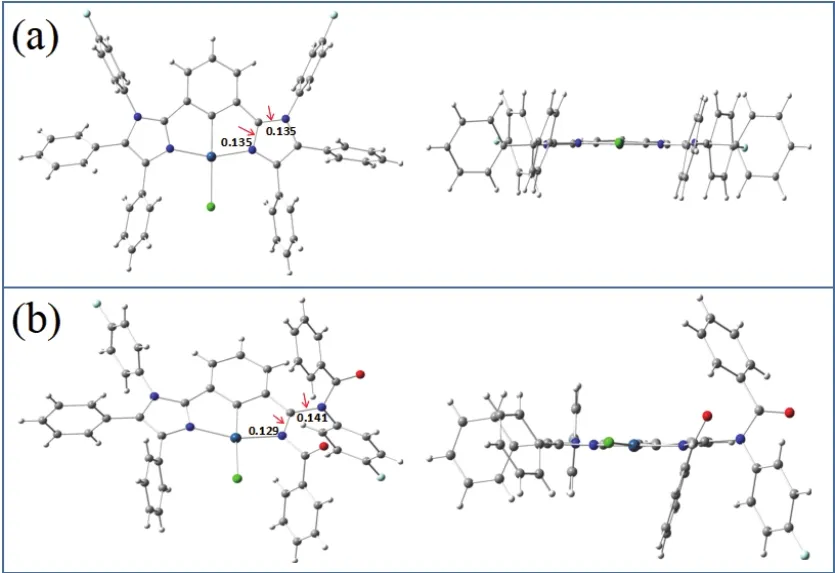
Fig. 1 The newly-obtained single-crystal structure of (a) PtP2IM(CCDC 1891478) and (b) PtPIMO (CCDC 1891487).
3 Results and discussion
3.1 Synthesis
See the synthesis part in the Supporting Information for experimental details, as shown in Fig. S1 (Supporting Information).
3.2 Crystal structure
Through the solution growth method, single crystals of PtP2IM suitable for XRD analysis were obtained and their crystal structure was shown in Fig. 1a. An interesting thing was that some red crystalline solids were also observed as suspensions in the solution. After a careful analysis, we found that the suspended red crystalline solids was not attributed to a second crystal with strong Pt-Pt interaction but a new complex molecule different from PtP2IM, which indicated that PtP2IM underwent a chemical reaction to generate a new red compound in the given conditions. After accumulating large amounts of red solid, the single crystals suitable for XRD analysis were also obtained and the new crystal structure was shown in Fig. 1b.
In Fig. 1a, the crystal structure of PtP2IM clearly showed the typical N^C^N Pt(II) metal complex structure and the imidazole structure as a five-member ring in the ligand part. While in Fig.1b, the new crystal structure showed a new molecule PtPIMO with a benzoylimino-benzamide structure verified by measured C―N and C=N bond lengths of 0.141 and 0.129 nm,respectively. From the contrast of crystal structures in Figs. 1a and 1b, it could be concluded that an oxidation reaction from PtP2IM to PtPIMO occurred, in which one of the two imidazole rings in PtP2IM was opened to generate a benzoyliminobenzamide structure. NMR spectra further confirmed the molecular structure of PtPIMO as shown in Fig. S2 (Supporting Information).
3.3 Photo-oxidation reaction
In order to further investigate this oxidation reaction from PtP2IM to PtPIMO, the in-situ UV-Vis absorption spectra were measured as shown in Fig. 2. PtP2IM displayed a strong absorption band between 365 and 420 nm with an absorption maximum peak at ~400 nm, which was much redshifted in comparison to that of pure ligand P2IM and might be attributed to the low-energy MLCT transition in PtP2IM. When the UV irradiation (365 nm, 25 mW) was applied on the PtP2IM solution, the MLCT absorption band around 400 nm began to descend in intensity and at the same time a new peak appeared around 450 nm, which just corresponded to that of PtPIMO with an absorption maximum peak at ~450 nm. As the UV irradiation time was prolonged, the peaks at 400 and 450 nm corresponding to PtP2IM and PtPIMO respectively kept to further descend and increase gradually. Thus it could be seen that PtP2IM underwent a chemical reaction to generate the PtPIMO under the UV irradiation condition.
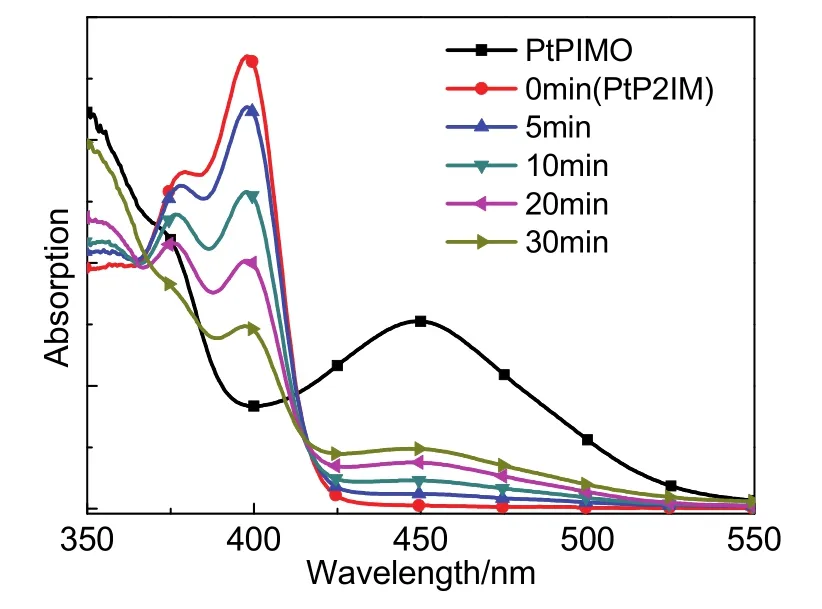
Fig. 2 The in-situ UV-Vis absorption spectra of PtP2IM under the UV irradiation.
In order to further study this chemical reaction from PtP2IM to PtPIMO, we then took more steps to explore the condition that could initiate the reaction, as show in Fig. 3. Firstly, under dark condition without UV irradiation (Fig. 3a), PtP2IM dissolved in dichloromethane could keep stable in UV-Vis spectra after three days, with no new peaks corresponding to PtPIMO appeared. It indicated that the reaction from PtP2IM to PtPIMO belonged to a photo chemical reaction that occurred at the excited state and would not happen under the condition lack of light. Secondly,through a strict oxygen removal operation to achieve a N2atmosphere, the PtP2IM solution still kept stable after 30 min irradiation (Fig. 3b). It indicated that oxygen in air was another necessary condition for the observed photo-chemical reaction from PtP2IM to PtPIMO.
Herein, a photochemical reaction could be finally concluded as shown in Fig. 4, in which the C=C double bond in either one of the two imidazole ring of the PtP2IM complex was attacked by oxygen to generate the benzoylimino and benzamide group and produce a new complex PtPIMO under the photo irradiation condition. Interesting was that the further oxidation reaction of the other imidazole ring in PtPIMO was tentatively not observed obviously in current experiments.
As for the photo oxidation of imidazole, singlet oxygen was commonly regarded as the oxidation agent25,26. In order to further confirm the mechanism of this observed photo oxidation reaction in PtP2IM. The 2,2,6,6-tetramethyl piperidine (TEMP)was selected as the capture agent to character the signal of singlet oxygen by electron paramagnetic resonance (EPR). As shown in Fig. 5, the signals of nitroxide radicals TEMP-1O2adduct(TEMPO) corresponding to that of singlet oxygen was observed,indicated that the singlet oxygen was generated in PtP2IM solution. When large amounts of triethylenediamine (TEDA)27were added into PtP2IM solution as shown in Fig. S3(Supporting Information), the previously observed UV-Vis spectra change corresponding to the occurrence of photo oxidation reaction was not detected, which indicated the stop of photo oxidation reaction due to the quickly capture and quench of singlet oxygen in the presence of large amounts of TEDA. It also further demonstrated a fact that singlet oxygen played a key role in the observed photo oxidation reaction of PtP2IM. Thus it could be concluded that PtP2IM could produce1O2under light irradiation and further undergo the self-sensitized photo oxidation reaction to generate the PtPIMO complex via singlet oxygen.
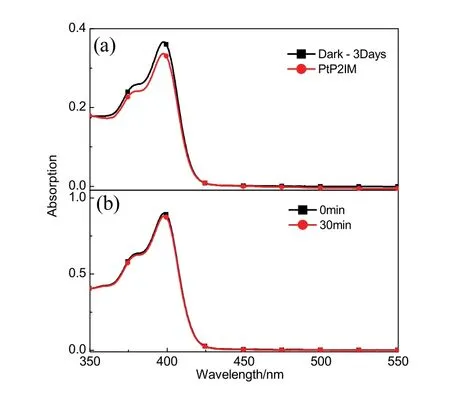
Fig. 3 The UV-Vis absorption spectra of PtP2IM under (a) dark condition in air for three days, (b) anaerobic environment with the reagent fully deoxygenated.
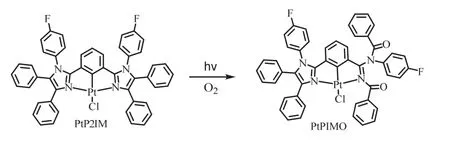
Fig. 4 The photo-oxidation reaction equation from PtP2IM to PtPIMO.
3.4 DFT calculations
The electronic orbital of the metal complex PtP2IM was studied with the time-dependent density functional theory (TDDFT) methods as shown in Fig. 6. The frontier molecular orbitals was distributed on the Pt(II) center and the ligands. The electron cloud of LUMO is mainly located on the main ligand P2IM, while the electron cloud of HOMO and HOMO-1 was mainly distributed on the Pt(II) and chlorine atoms. Thus the S0–S1, S0–S2transition of complex consisted by HOMO→LUMO and HOMO-1→LUMO transition could be recognized as a MLCT transition, which could ensure that more energy could transfer from the T1state of the photosensitizer to the groundstate oxygen to generate the1O2with a high ISC efficiency due to the spin-orbit coupling of heavy atoms Pt.
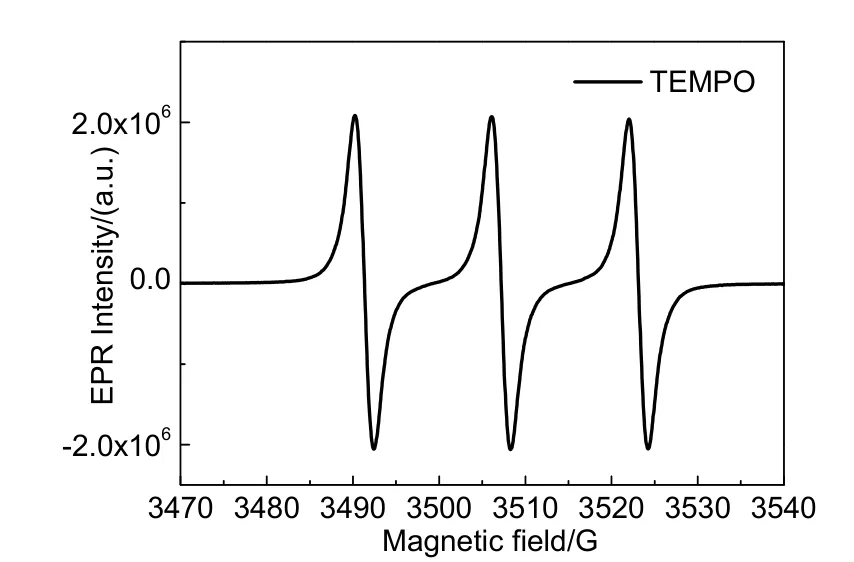
Fig. 5 EPR spectrum of the TEMP-1O2 radical during irradiation of Pt(P2IM) suspended in CH2Cl2 and TEMP.

Fig. 6 Frontier molecular orbitals for complex PtP2IM calculated by TD-DFT at the B3LYP/6-31G(d,p)+/LanL2DZ level using the geometry of the S0 state.
3.5 Photoluminescence properties
It was obvious that PtP2IM could display a stable phosphorescent emission without the occurrence of photooxidation reaction if oxygen was removed. With the lack of oxygen, PtP2IM showed a green emission with λmaxat 500 nm in solution state as shown in Fig. 7. In solid state, PtP2IM also displayed a green emission with λmaxat 495 nm, which was a little blueshift in comparison to that in solution. Compared to PtP2IM, the photo-oxidation product PtPIMO had an orange-red emission with λmaxat about 560 nm in solution state, which could keep stable in the same condition. The redshifted PL spectra of PtPIMO could be attributed to a new lower-energy MLCT transition between the metal to the newly formed benzoyliminobenzamide part in ligand structure, which could be found in the UV-Vis spectra of PtPIMO at around 425 nm. In solid state,PtPIMO displayed a red emission with λmaxat about 610 nm. By using an integrating sphere photometer, the luminescent quantum efficiency of PtP2IM in solution and film were measured to be ~3% and ~20%, respectively. The higher quantum luminescence efficiency of PtP2IM in film than solution indicated the possible characteristics of aggregationinduced emission (AIE) effect28,29. We also measured the luminescent quantum efficiency of PtPIMO in solution and film to be only ~3(±2)% respectively. The relatively low luminescence quantum efficiencies of PtP2IM and PtPIMO might be ascribed to the large non-radiative transition rate derived from the vibration of multiple peripheral benzene rings linked to the imidazole rings.
In order to further investigate the AIE properties of PtP2IM,their PL spectra in water/N,N-dimethylformamide (DMF)solvents with different water proportions (V/V) were measured.With the addition of more proportions of water (V/V) into the DMF solution of PtP2IM, an obvious AIE phenomenon of PtP2IM was observed with the PL intensity increasing and reaching the maximum at the water proportion of 90%, as shown in Fig. 8a. No obvious shifts were observed in PL spectra for PtP2IM in water/DMF solvents from lower water proportions to higher ones. From the packing structure in crystal as shown in Fig. S4 (Supporting Information), we could see that there were none strong intermolecular interactions like π–π or Pt–Pt interaction, and many intermolecular CH―π bonds between the two adjacent PtP2IM molecules were observed, which could effectively limit the rotation of the peripheral phenyl group linked to the imidazole ring. Thus, the RIR (restricted intramolecular rotation) effect was thought to be the main reason for the observed AIE property in PtP2IM, in which the vibration of multiple peripheral benzene rings linked to the imidazole structure were effectively suppressed in the solid state which decreased the non-radiative transition rate and induced the high luminescent quantum efficiency.
Under the same experimental condition, with the addition of water into the DMF solution of PtPIMO, no obvious AIE phenomenon was observed in Fig. 8b. As the water content increased and reached the water proportion of 80%, the original PL intensity at 560 nm kept going down until disappearance, and resulted in the shoulder peak at ~600 nm at last which was consistent with the PL spectra of PtPIMO in solid state.Obviously, the photo-oxidation product PtPIMO showed none AIE properties.
Considering the AIE effect in PtP2IM still might contribute to the yield of1O2, a controlled experiment of self-sensitization was carried as shown in Fig. S5 (Supporting Information). After 5 min irradiation in DCM, there was a decrease in the absorption of PtP2IM, which means the generation of1O2. However,contrasted with the sameconcentration of PtP2IM in DMF/H2O volume ratio = 1 : 9, the reduction of the absorbance was remarkable under the same light irradiation. Obviously PtP2IM demonstrated a non-concentration quenching in solid state based on the AIE effect.
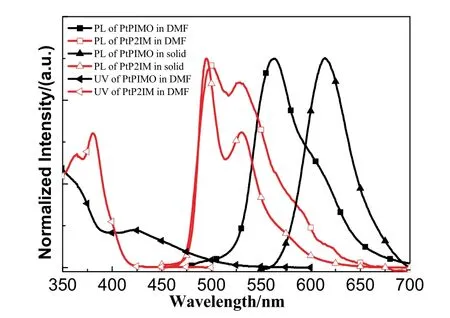
Fig. 7 The UV-Vis and PL spectra of PtP2IM and PtPIMO in DMF and solid state.
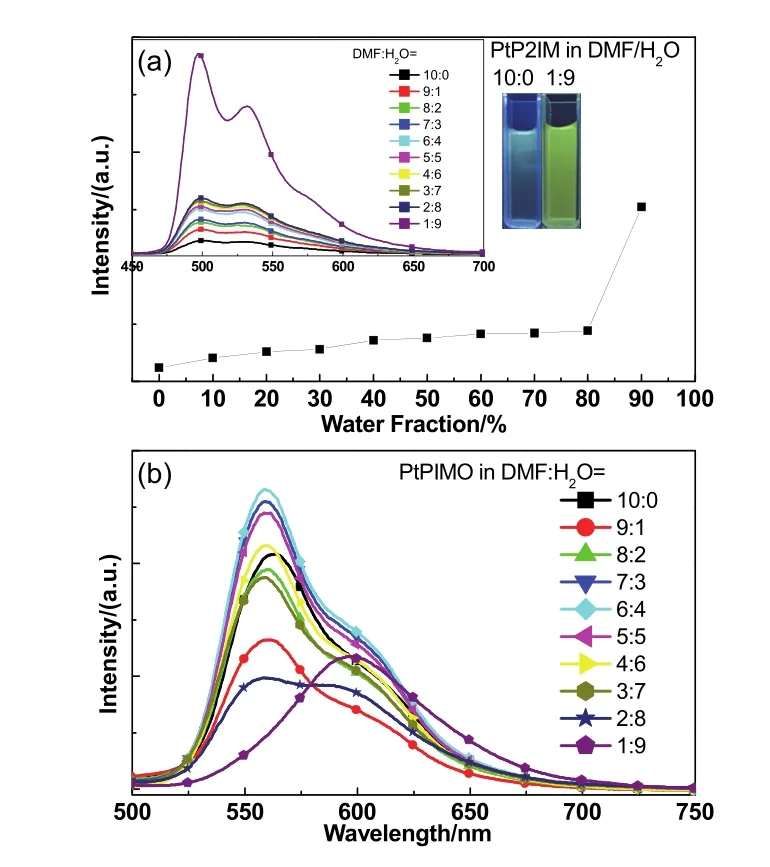
Fig. 8 Plots of maximum PL peak intensity of PtP2IM (a) and PtPIMO (b) versus water fraction in the DMF/water mixtures(solution concentration: 7 × 10⁻⁶ mol·L-1, excitation wavelength:365 nm to PtP2IM and 400 nm to PtPIMO).
4 Conclusions
In summary, we have finally got a new Pt(II) metal complex PtP2IM with AIE property which can undergo a photo-oxidation reaction at photo-excitation state. PtP2IM undergoes a photooxidation reaction to generate a new metal complex PtPIMO with a benzoylimino-benzamide structure. Light irradiation and oxygen (air) are confirmed to be the two necessary conditions for the observed photo-chemical reaction from PtP2IM to PtPIMO. The photo-oxidation reaction observed in the case of PtP2IM belonged to the oxidation by singlet oxygen, which was also confirmed to be generated from the photo sensitization of PtP2IM itself. And a non-concentration quenching could be observed for PtP2IM in the solid state, due to the RIR effect which is favorable to the generation of1O2. It provides us with a promising way to design an efficient photosensitizer by using an AIE metal complex.
Supporting lnformation:available free of charge via the internet at http://www.whxb.pku.edu.cn.

- 物理化學(xué)學(xué)報(bào)的其它文章
- 十年磨一劍:專訪非富勒烯受體的先驅(qū)者占肖衛(wèi)教授
- 勘誤:二甲基亞砜中Er-Ni-Co合金膜的電化學(xué)制備。2002, 18 (8), 764. doi: 10.3866/PKU.WHXB20020819
- 氮摻雜石墨烯的p型場(chǎng)效應(yīng)及其精細(xì)調(diào)控
- 由蠶砂制備的碳量子點(diǎn)在不同激發(fā)、pH、金屬離子、溫度及極性環(huán)境下的熒光性質(zhì)研究
- 有機(jī)半導(dǎo)體圖案化成膜中的馬蘭戈尼與咖啡環(huán)效應(yīng)協(xié)同作用
- 不同B,Al分布對(duì)ZSM-5分子篩的甲醇制丙烯反應(yīng)性能的影響