◇ 文 |本刊記者 胡 婷 圖| 游 宇

01 成為辣椒醬商人前,張盧卡的身份是意大利駐重慶總領館商務處處長
6 月14 日晚,兩江新區奧利嘉餐廳,一名意大利廚師靠著一罐重慶風味的辣醬,完成了一次對傳統意大利菜的改造。
他的成果,擺在自助餐桌上:意式牛丸配川味豆瓣醬、烤蝦串淋上渝味麻辣醬、風味炸雞塊蘸宮保辣醬……
這些混搭菜品,讓在場中外食客們贊不絕口。而這場混搭盛宴中,真正的主角無疑是張盧卡研制的中式辣醬。
On the evening of June 14, an Italian chef completed a transformation of traditional Italian dishes by using a can of Chongqing-flavored thick chilli sauce at OriganoRoma in Liangjiang New Area.
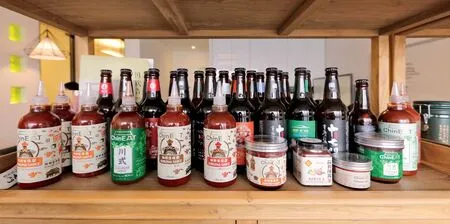
02 ChinEAT 的各種產品
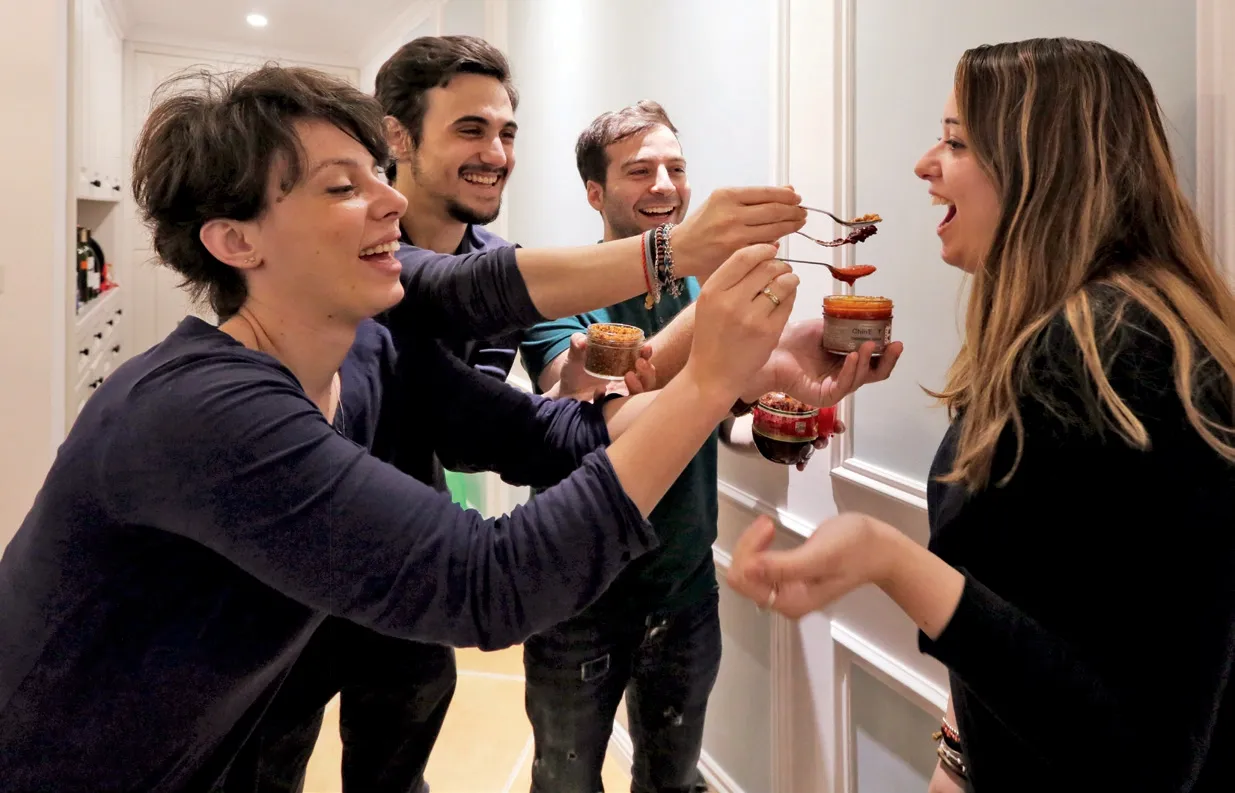
03 張盧卡及其團隊
The dishes created by him were on the buffet table: Italian beef balls with Sichuan thick broad-bean sauce, grilled shrimp skewer drizzled with Chongqing spicy sauce, and fried chicken nuggets dipped in spicy diced thick chilli sauce …
These dishes mixed Chinese and Italian flavors were highly praised by the Chinese and foreign diners present. And the real protagonist in the mix-and-match feast was undoubtedly Chinese thick chilli sauce developed by Zhang Luka.
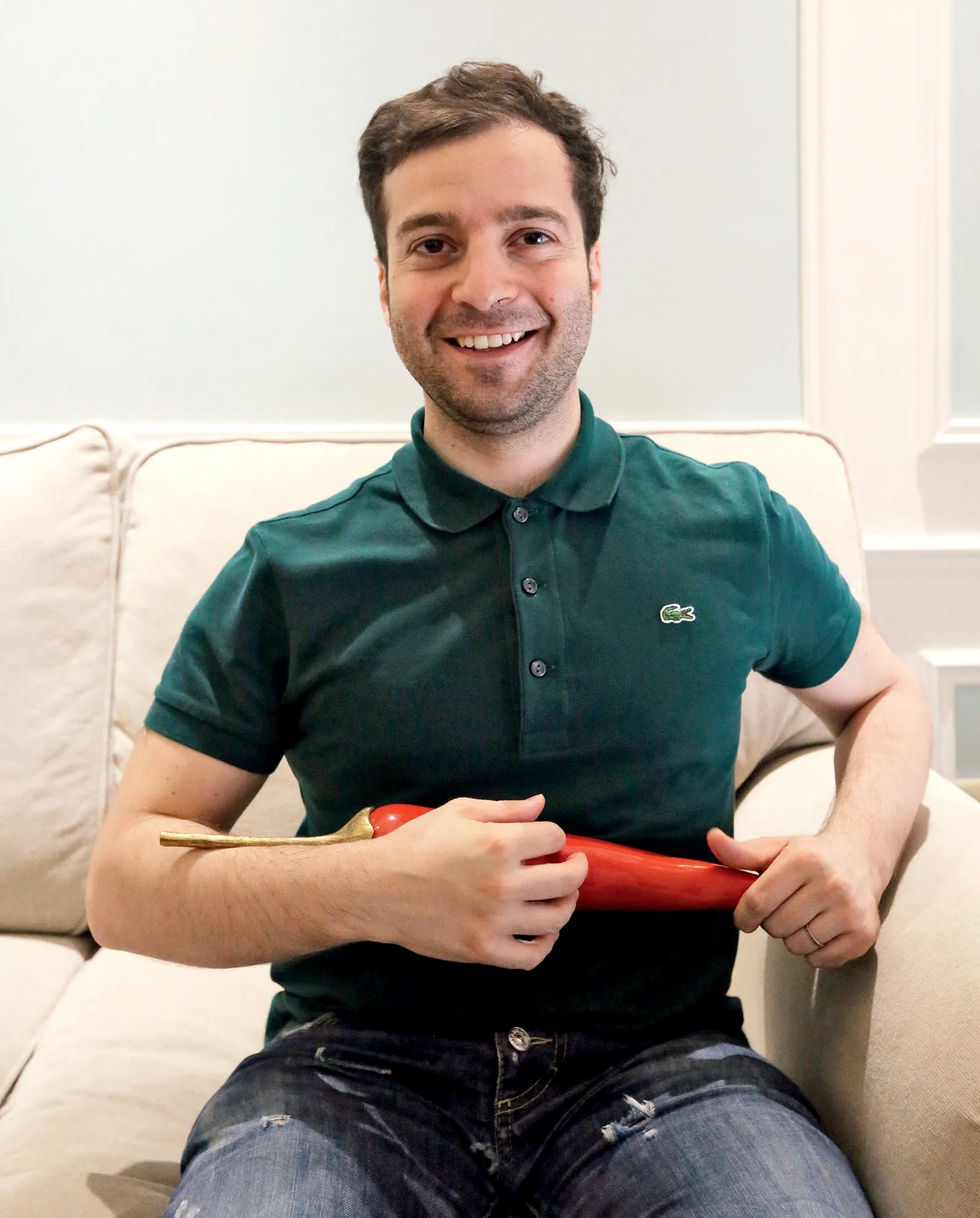
31 歲的張盧卡來自意大利南部的巴里,今年是他來重慶的第五個年頭。
在成為做辣醬的商人之前,他的身份是意大利駐重慶總領館商務處處長,主要工作是為重慶人到意大利旅游投資牽線搭橋。
而張盧卡“棄官”,竟是因為“好吃”。
2014 年,張盧卡來到意大利駐重慶總領館,正如很多外國人一樣,他愛上了這里的美食。不過,他發現,這么好吃的中國醬料在國外超市卻少之又少?!氨热纾趪怆m然有老干媽,但一般都是在華人圈子里流行,外國人買的少?!?/p>
這是為什么呢?他做了一番調研,發現大多數中國調味醬都是用來烹飪的,外加中國餐飲明火烹飪的形式,使得中國的調味醬有更多的油、更重的鹽、味精以及其他調料,這顯然不太適合外國人直接用調味醬佐餐的習慣。而且對外國人來說中國的調味用起來過于復雜,“我曾經也買過水煮魚的調料,卻不知道該怎么使用,最后只得放棄?!?/p>
怎么讓更多外國人品嘗到東方美味呢?張盧卡萌發了一個大膽的想法:他要做出既有中國味,又適合外國人飲食習慣的調味醬。
去年1 月,張盧卡辭去了總領館的工作,在重慶創立了自己的中國調味醬品牌——ChinEAT:LOGO 形狀酷似中文“家”字,而紅黃兩種主色,在張盧卡眼里就寓意著中國的喜慶、吉祥。
Zhang Luca, 31 years old, from Bari in Southern Italy, is in his fifth year in Chongqing.
He served as the Section Chief of the Commercial Counselor's Office of the Consulate General of Italy in Chongqing before becoming a merchant of making thick chilli sauce, where he acted as a go-between for people from Chongqing to invest in Italy.
The reason for Zhang Luca "Giving up Government Post" owes to his "Passion for Dishes".
In 2014, Zhang Luca came to the Consulate General of Italy in Chongqing, where, like many foreigners, he fell in love with the cuisine in Chongqing. He found that such delicious Chinese sauce was scarce in foreign supermarkets. "For example, although there are Laoganma in my country, they are generally popular among the overseas Chinese community. Few foreigners buy Laoganma."

04 將制作過程拍攝成視頻后,上傳至互聯網
But why is this? He did a research and found that most Chinese sauces are cooked by using open fire, which makes Chinese sauces contain more oil, salt, monosodium glutamate and other seasonings, and it is obviously not suitable for foreigners to eat directly with sauces. For foreigners, Chinese seasoning is too complicated to use. "I used to buy seasoning for boiled fish, but I didn't know how to use it, so I had to give up."
How could we let more foreigners taste Chinese delicious food? Zhang Luca came up with an adventurous idea: he intended to make a kind of sauce with Chinese flavor that suits the eating habits of foreigners.
Hence, in the January of last year, Zhang Luca resigned from the Consulate General and founded his own Chinese sauce brand, ChinEAT: The shape of the LOGO resembles the Chinese character " 家(Family)", and the two main colors of red and yellow symbolize festivity and auspiciousness in China in Zhang Luca's eyes.
從吃貨到行家的轉變并不容易,張盧卡把他的家都變成了調味實驗室。
走進他的家,客廳左邊一米見方的矮方桌上,擺了丁香粉、肉桂粉等滿滿當當70 多種香辛料,旁邊高一點的長桌上,則是各式破壁機、粉碎機、計量秤等。桌子下幾大紙箱瓶瓶罐罐,都是從全世界搜羅來的各種調味醬。張盧卡說,從去年到現在,他幾乎嘗遍了世界各地的辣醬,大約有一千多瓶。
在張盧卡看來,要符合外國人的餐飲習慣,同時保留本土特色,這是辣醬開發的難點,也是重點。為此,他和研發團隊花了一年多時間做市場調研,還去了芝加哥全球最大的國際餐飲及酒店用品展覽會、意大利的國際辣椒節、新墨西哥國際食品展覽等展會,邀請外國食客們現場試吃,收集食客們的問卷調查和意見。
通過不斷的嘗試、對比、調試、改良,張盧卡的辣醬慢慢有了自己的味道。
“手被辣紅,眼睛被辣得掉淚,都是家常便飯?!睆睦苯啡サ佟⑶卸伍_始,到腌制調味,一瓶醬的制作周期大概在一個月左右,其中每一道工序張盧卡都了如指掌。
雖然“淚點”滿滿,但這些淚顯然沒有白流,比如“用一斤的小米椒制作辣醬,放入的鹽應為6 克,糖應為10 克”。這些精準的搭配比例都是他自己親身實驗,用一次次淚流滿面得來的。
It was not easy to transform from a foodie to an expert, and Zhang Luka turned his home into a seasoning lab.
When you enter his home, you can see cloves powder, cinnamon powder and other 70 kinds of spices on the left side of a meter square table in the sitting room, next to it is a little higher long table, and all kinds of broken wall machine, crusher, scale and so on are arranged on it. There are cartons, bottles and cans of seasoning sauce under the table from all over the world. Zhang Luka said that he has tasted almost every thick chilli sauce in the world since last year, with about a thousand bottles.
In his view, the difficulties and focuses to make sauce are to conform to the food habits of foreigners and preserve local characteristics. For this reason, he and his research and development team spent more than a year to make a market research, and they also went to the world's largest International Food, Beverage and Hotel Supplies Exhibition in Chicago, the International Chili Festival in Italy, and the New Mexico International Food Exhibition, inviting foreign diners to eat on-site, so as to collect diners' questionnaires and opinions.
Through constant attempts, comparison, mixing of seasonings, and improvement, the thick chilli sauce of Zhang Luca gradually took on its own flavor.
"It's not uncommon for his hands to turn red and his eyes to tear". It takes about a month to make a bottle of sauce from peeling and slicing chili peppers to salting and seasoning, and Zhang Luca knows every step well.
Although it is full of hardships, but these hardships are clearly not in vain, for example, he knows that "6 grams of salt and 10 grams of sugar are needed to make the thick chilli sauce with 1 kilogram of millet pepper." These precise matching ratios come from his own experiments, with a burst of tears.
經過一次次調研、改良,今年5 月1 日,ChinEAT 的辣醬正式在廣交會上發布,一共推出四個系列:印有熊貓與竹子圖案的川味豆瓣辣醬,印有兵馬俑圖案的陜味番茄辣醬,印有穿龍袍的皇帝和北京天壇圖案的宮保辣醬,印有重慶山水、吊腳樓、過江索道與九宮格火鍋圖案的渝味麻辣醬。
那么,張盧卡大費周章搗鼓出來的辣醬,究竟與國內傳統的辣醬有何區別?

05 張盧卡展示刀工

06 辣醬的制作工序之一

07 試制辣醬

08 ChinaEAT 辣醬制作工作室
“我嘗一口就曉得它是我們川渝豆瓣醬的味道?!标愯な且粋€土生土長的重慶人,在她第一次她嘗過ChinEAT 川味豆瓣辣醬后這樣說,“但是仔細回味后又會發現不同,相比通常的四川豆瓣醬,它的味道更溫和一些,沒有那么咸、辣,口感也更細膩,沒有整顆的豆瓣?!?/p>
口感似是而非,吃法更是大相徑庭。
傳統的川渝豆瓣醬一般用來二次烹飪,比如炒菜,但是張盧卡的版本很簡單,就像吃薯條蘸番茄醬一樣,只要直接澆在食物上就行。
“我可以把中國的味道放在自己喜歡的東西上?!苯衲晗奶欤獯罄媚镘锢騺喌谝淮蝸淼街貞c,便對 ChinEAT 的辣醬愛不釋“口”。在四款辣醬中,她最喜歡的就是宮保辣醬:可以用宮保辣醬抹面包,拌意大利面,或者蘸炸雞翅……這樣的混搭真是既熟悉又新奇。
就這樣,張盧卡用一罐罐辣醬,讓越來越多的外國朋友愛上中國味道,也向全世界講述著他的重慶故事。
After a lot of researches and improvements, on May 1 this year, ChinEAT's thick chilli sauce officially launched four series at the Canton Fair: Sichuan-flavored Thick Broad-bean Sauce with Panda and Bamboo Patterns, Shaanxiflavored Tomato Sauce with Terra-Cotta Warriors Pattern, Spicy Diced Chili Sauce with the Emperor in the Dragon Robe and Beijing Temple of Heaven Patterns, and Chongqing-flavored Chili Sauce with Chongqing Landscape, Diaojiaolou, Cablo and Hotpot with Nine Separations Patterns.

09 ChinaEAT 的中國風包裝
So what's the difference between the thick chilli sauce made by Zhang Luka and the traditional thick chilli sauce in China?
"I knew it was Sichuan-Chongqing thick broad-bean sauce after a bite of it." said Chen Yu, a native of Chongqing, after her first taste of Chin EAT Sichuan-flavored thick broad-bean sauce, "But it tastes milder, less salty and spicy than the usual Sichuan-flavored thick broad-bean sauce, it has a finer palate and has no whole bean paste."
The taste and the way you eat it are quite different.
The traditional Sichuan-Chongqing thick broad-bean sauce is usually used for secondary cooking, like cooking, but the sauce made by Zhang Luka is simple, you just need to poured the sauce directly on the food like eating potato chips dipped in ketchup.
"I can integrate the taste of China in something I like." This summer, when Julia, an Italian girl, first visited Chongqing, she fell in love with ChinEAT's thick chilli sauce. Her favorite of the four sauces is spicy diced chili sauce: you can spread spicy diced chili sauce on bread, mix it into pasta, or dip it in chicken wings … it's a familiar and novel mix.
In this way, Zhang Luka used various cans of thick chilli sauce to make more and more foreign friends fall in love with the Chinese flavor, and also told the world his story in Chongqing.