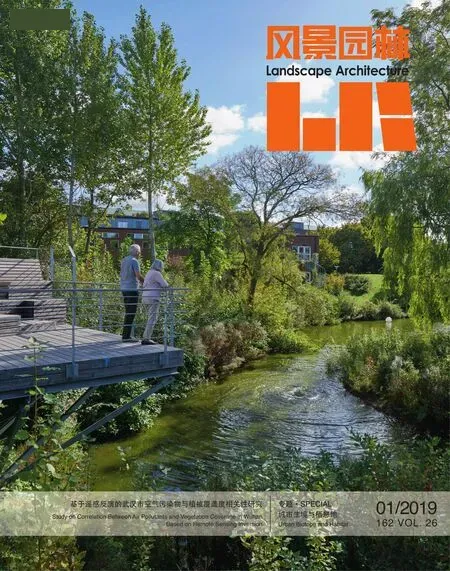
《風(fēng)景園林》投稿指南
2019-03-26 02:45:12
風(fēng)景園林 2019年1期
關(guān)鍵詞:英文
《風(fēng)景園林》是中華人民共和國教育部主管,北京林業(yè)大學(xué)主辦的國際性風(fēng)景園林規(guī)劃與設(shè)計(jì)、城市設(shè)計(jì)以及公共藝術(shù)學(xué)刊,主要刊登國內(nèi)外的近現(xiàn)代風(fēng)景園林歷史、風(fēng)景園林規(guī)劃設(shè)計(jì)理論、風(fēng)景園林環(huán)境科學(xué)與技術(shù)的學(xué)術(shù)論文,以及風(fēng)景園林總體設(shè)計(jì)和城市設(shè)計(jì)方案、風(fēng)景園林設(shè)計(jì)和公共藝術(shù)建成作品等。本刊刊載文章被《中國科技期刊數(shù)據(jù)庫(全文版)》《中國學(xué)術(shù)期刊(光盤版)》《中國核心期刊(遴選)數(shù)據(jù)庫》收錄。
作者投稿不得侵犯他人著作權(quán),不得有學(xué)術(shù)不端行為,如一稿多投、重復(fù)發(fā)表、自我抄襲等。文責(zé)自負(fù),文中所引用文獻(xiàn)、圖片要注明出處,對于侵犯他人版權(quán)或其他權(quán)利的文稿、圖片,本刊概不承擔(dān)連帶責(zé)任。
本刊投稿一律通過網(wǎng)站投稿系統(tǒng)進(jìn)行(www.lalavision.com),不接受郵箱和紙質(zhì)郵寄投稿。
1 投稿與稿件處理
1.1 投稿前,請認(rèn)真閱讀本《投稿指南》和本刊近期文章,并逐項(xiàng)修改、補(bǔ)充有關(guān)內(nèi)容。
1.2 稿件自收到之日3個(gè)月內(nèi)通知作者修改或錄用情況。超過3個(gè)月,未接到本編輯部通知者,請自行處理。請勿一稿多投,來稿除反轉(zhuǎn)片外一律不退稿,請作者自留底稿。
1.3 來稿免審稿費(fèi)和版面費(fèi)。稿件發(fā)表后,本刊即向每位作者奉送當(dāng)期刊物一本。
2 寫作格式
2.1 字?jǐn)?shù)
以4 000~6 000字為宜(含圖及表),語言簡練,論點(diǎn)明確,數(shù)據(jù)可靠。
2.2 題名
應(yīng)簡明、具體、確切,概括文章的要旨,符合編制題錄、索引和檢索的有關(guān)原則并有助選擇關(guān)鍵詞。中文題名一般不超過20個(gè)漢字,并提供相應(yīng)的英文題目。
2.3 摘要
來稿請一律附上能包含與論文同等主要信息量的中英文摘要,包括論文(研究)的背景與目的、研究過程中采用的方法、研究的結(jié)果或得出的結(jié)論和創(chuàng)新點(diǎn)。中文摘要一般200字左右;英文摘要必須與中文摘要相對應(yīng),符合“擁有與論文同等量的主要信息”的原則,句型力求簡單,標(biāo)點(diǎn)符號使用正確。
2.4 關(guān)鍵詞
所有學(xué)術(shù)論文和評論均應(yīng)提供3~8個(gè)中文關(guān)鍵詞,并提供相應(yīng)的英文關(guān)鍵詞。中文關(guān)鍵詞前應(yīng)冠以“關(guān)鍵詞:”,英文關(guān)鍵詞前冠以“Keywords:”作為標(biāo)識。關(guān)鍵詞要選擇那些最具有檢索意義的術(shù)語,通過這些術(shù)語反映論文和評論所涉及的內(nèi)容或領(lǐng)域,便于讀者檢索到該論文。每個(gè)關(guān)鍵詞用分號“;”隔開。
2.5 標(biāo)題
正文各級標(biāo)題一律采用阿拉伯?dāng)?shù)字連續(xù)編號,同級標(biāo)題不同層次的數(shù)字之間用下圓點(diǎn)相隔,最末的數(shù)字后不加標(biāo)點(diǎn),如“1”“1.1”“1.1.1”“1.1.1.1”;標(biāo)題層次以4級為限,一律左頂格書寫題號,后空一格書寫標(biāo)題。
3 圖表要求
3.1 插圖一般不超過20幅,應(yīng)提供清晰的優(yōu)質(zhì)圖照。插圖請將編號插入正文的相應(yīng)位置,并將圖片與圖題排在文中。同時(shí)單獨(dú)提供圖片,注明與文章相對應(yīng)的編號。圖題需譯出英文。
3.2 數(shù)碼相機(jī)拍攝的照片,要求像素不少于400萬(2272×1704像素),推薦500萬像素(2592×1944像素)以上,可以是JPG格式。如果是數(shù)碼單反相機(jī)拍攝,要求600萬像素以上,TIF格式。
3.3 電腦繪制的效果圖、彩圖請?zhí)峁┓直媛蚀笥?50dpi的電子文件,圖件尺寸不小于12cm×8cm,并給出成圖一份。
3.4 所繪地圖必須使用我國新近出版的地圖繪制。
3.5 表格盡量使用三線表,標(biāo)號及標(biāo)題置于表上居中位置,編號插入相應(yīng)文字處。表題需譯出英文。
4 參考文獻(xiàn)與注釋
4.1 參考文獻(xiàn)是作者寫作論著時(shí)所參考的文獻(xiàn)書目,按文稿出現(xiàn)的先后次序用阿拉伯?dāng)?shù)字順序標(biāo)號集中列表于文末;注釋是對論著正文中某一特定內(nèi)容的進(jìn)一步解釋或補(bǔ)充說明及對圖表來源的說明,一般排印在文章末。參考文獻(xiàn)序號用方括號標(biāo)注,而注釋用數(shù)字加圓圈標(biāo)注(如①、②……)。參考文獻(xiàn)只列直接引用的公開發(fā)表的文獻(xiàn),從非公開出版物引用的文獻(xiàn)只能作為注釋注于文章后面。正文內(nèi)引用參考文獻(xiàn)的標(biāo)注按引用文獻(xiàn)出現(xiàn)的先后順序連續(xù)編碼,并將序號置于方括號中標(biāo)在相應(yīng)的文字右上角。
4.2 圖中引用參考文獻(xiàn),按在全文中出現(xiàn)的順序編號,標(biāo)注寫在圖的說明或注釋中。圖內(nèi)不應(yīng)出現(xiàn)引文標(biāo)注。
4.3 表中引用參考文獻(xiàn),按在全文中出現(xiàn)的順序編號,在表注中依次標(biāo)注;若必須在表中標(biāo)注,可另列一欄,將引文序碼置于方括號中,以避免與表中其他數(shù)字混淆。
4.4 參考文獻(xiàn)具體著錄格式參見《信息與文獻(xiàn) 參考文獻(xiàn)著錄規(guī)則(GB/T7714-2015)》
4.5 在中文后另起一行,不另外編號。中文參考文獻(xiàn)中統(tǒng)一使用全角符號,英文參考文獻(xiàn)中統(tǒng)一使用半角符號。
5 作者簡介
5.1 作者姓名的漢語拼音采用姓前名后,中間為空格,姓氏的全部字母均大寫,復(fù)姓應(yīng)連寫;名字的首字母大寫,姓氏與名均不縮寫。通信作者名字后請用*標(biāo)記。若文章作者中有外籍人士,請?jiān)谧髡呙智皩懨髯髡叩膰⒎旁诶ㄌ栔小?/p>
如:ZHANG Ying(張穎),WANG Xilian(王錫聯(lián)),ZHUGE Hua(諸葛華)外國作者的姓名寫法遵從國際慣例。
5.2 作者簡介包括以下內(nèi)容:姓名/出生年/性別/民族(漢族可省略)/籍貫/ 最高學(xué)位/工作單位及職稱研究方向(任選)(通訊城市 郵政編碼),并同時(shí)提供同樣信息的英文。通信作者中文簡介后面請?zhí)砑油ㄐ抛髡哙]箱(Corresponding author Email)。
5.3 同一篇文章的其他主要作者簡介可以在同一“作者簡介:”的標(biāo)識后另起一行相繼列出。一篇文章作者不超過4個(gè)。
6 作品的稿件要求
要求提供作品介紹性文字、平面圖、項(xiàng)目建成照片若干,若有必要可提供反映設(shè)計(jì)思想的概念圖、分析圖或施工節(jié)點(diǎn)圖、事務(wù)所名稱及項(xiàng)目信息。
6.1 題目應(yīng)簡潔明了,一般不超過20個(gè)漢字,并且應(yīng)提供相應(yīng)的英文翻譯。
6.2 文章的作者可以是本項(xiàng)目設(shè)計(jì)公司,也可以是主持設(shè)計(jì)師。文章作者需要提供相應(yīng)的英文翻譯。
6.3 項(xiàng)目信息必須包括:項(xiàng)目地點(diǎn)、項(xiàng)目規(guī)模、項(xiàng)目設(shè)計(jì)時(shí)間和完成時(shí)間、客戶名稱、設(shè)計(jì)公司名稱和圖片來源,設(shè)計(jì)公司可根據(jù)項(xiàng)目具體情況提供項(xiàng)目顧問、主持設(shè)計(jì)師、參與項(xiàng)目的設(shè)計(jì)師、相關(guān)配套專業(yè)的設(shè)計(jì)師或設(shè)計(jì)公司名稱、施工單位名稱。
Notes for Contributors
Landscape Architecture, supervised by the Ministry of Education of the People’s Republic of China, and hosted by Beijing Forestry University, is an international journal that publishes papers home and abroad covering modern landscape architecture design and planning, theoretical issues on landscape architecture planning and design, academic papers on environmental science and technology in landscape architecture, as well as the overall design in landscape architecture and empirical urban design program, landscape design and public art works, etc. Our articles are included in the Chinese Science and Technology Journal Database (CSTJ-full text), Chinese Academic Journal(CAJ-CD), and the Chinese Core Journal (Selection).
Copyright infringement, plagiarism or other academic misconducts in publication are prohibited. Authors are requested not to make multiple submissions of the same article to different journals at the same time and should be responsible for any malpractice. Articles must provide precise and sufficient acknowledgements for cites, figures or pictures. Authors should take responsibility for obtaining permission from copyright holders for reproducing any illustrations, tables, figures or lengthy quotations previously published elsewhere. Landscape Architecture is not to assume the joint liability for any plagiarized manuscripts and photographs or articles included copyrighted material without permission or with insufficient acknowledgement.
All paper should be submitted through the online submission system (www.lalavision.com), and email or paper delivery will not be accepted.
1 General Information Concerning Submissions
1.1 Please read this guide and our recent articles carefully and revise the relevant content.
1.2 Submissions are normally reviewed within 3 months of submission,during which an editorial decision of “revised” or “accepted” is generally reached to the author. Authors who are not informed of a decision can decide otherwise the manuscripts beyond 3 months from the date of receipt. Authors are requested not to make multiple submissions of the same article to different journals at the same time. Please note that copies of rejected articles will not be retained. Please keep the original manuscript.
1.3 The draft fee and layout fee are free of charge. When the manuscript is published, a copy of the current issue will be sent to each author.
2 Format Guidelines
2.1 Number of words
Article submissions should normally be between 4,000 and 6,000 words in length, inclusive of references and tables with concise language, clear arguments and reliable data.
2.2 Title
Title of the article should be concise, sepcific and exact, summarizing the gist of the article, which conforms to the relevant principles of compiling,indexing and searching, and helps to select keywords. Chinese title should be no more than 20 characters, and the corrseponding English translation should be provided.
2.3 Abstract
Each article must be accompanied by an abstract in both Chinese and English summarizing such main points as the background and purpose of the paper (research), the methods used in the study, the results or the conclusions of the study and innovative points. The Chinese abstract is generally about 200 words and the English abstract must correspond to Chinese abstracts in line with the principle of “having the same amount of information as the paper”.
2.4 Keywords
All academic papers and commentaries should provide 3 to 8 Chinese keywords and corresponding English. The keywords should be the most searchable terms, which can be used to reflect the content or domain of the paper and the comments, so that the reader can retrieve the paper. Use a semicolon for each keyword as separation.
2.5 Headings
In dividing articles under headings, please use the following format: The headings of each level shall be numbered consecutively using Arabic numerals.
The numbers of different levels of the same heading should be separated by dots, and the last digits should not be punctuated, such as “1”, “1.1”, “1.1.1”.Please avoid using more than three levels of subheadings.
3 Illustrations and tables
3.1 Illustrations usually no more than 20 should be submitted in a clear highquality artwork suitable for reproduction. Illustrations and their headings should be put in the text and tables, identified by an Arabic numeral and indicated clearly in parentheses in the text where they are to appear. Note that illustrations should also supplied in a separate file labelled clearly as same as the text. Also,the English version for the heading is required.
3.2 Photo taken by a digital camera requires no less than 4 megapixels (2272 x 1704 pixels) and recommend 5 megapixels (2592 x 1944 pixels)in the JPG format.If it’s a digital SLR camera, more than 6 megapixels and TIF format is required.
3.3 For computer rendering or color drawings please provide the electronic files with resolution above 350dpi. The size of the drawings should be not less than 12cm x 8cm. Drawing file should also be attached.
3.4 Maps must be drawn with the newly published map of China.
3.5 Three-line table is preferred above which the number and heading are labeled in the middle. The number should be indicated clearly in parentheses in the text where they are to appear. Also, the English version for the heading is required.
4 References and Notes
4.1 References are the published bibliography used by the author of the submitted article. They should be listed in full in an Arabic numeral based on the order of the text it appears at the end of the article. Notes, a further explanation or supplement to the specific content of the text, or non-public publications cited, are also placed in an Arabic numeral at the end of the text. The numbers of reference are marked with square brackets ([1]), and notes are marked with numbers in circles (e.g ① , ② ...).
4.2 The references for the illustrations should be listed as notes after the text in order or closely after the illustration. There should be no notes in the illustration.
4.3 The references for tables should be listed as table notes in order. If you have to mark it in the table, you can put the citation mark in brackets to avoid confusion with other numbers in the table.
4.4 The principal responsible author refers to the author, the editor of the essay proceedings, the applicant for the degree, the applicant for the patent,the author of the report, the author of the journal article. The two authors are separated by “, ” and notice that “…” is not allowed in this column. Principal responsible author is listed only with the name, not followed by “writing”,“editing”, “editor-in-chief” or “co-editor”.
4.5 The specific description of formats for references can be referred to“References in the literature (GB/T7714-2005)”
5 Authors
5.1 The author’s Chinese name in Pinyin should use the form of surname before given name with a space in between, all letters of the surname should be capitalized; the first letter of the given name should be capitalized, surnames and names are not abbreviations. Please mark with * after corresponding author’s name. If the author of the article is a foreigner, please state the author’s nationality in front of the author’s name and place it in brackets.
Such as: ZHANG Ying, WANG Xilian, ZHUGE Hua, foreign author’s name should follow the internationalconventions.
5.2 The brief introduction of the author should include the following: Name /Year of Birth / Sex / (Ethnicity - Han may be omitted) / Birthplace / Highest Degree / Workplace, Title and Research Area (Optional) (Communications City,ZIP Code) and the corresponding English translation. After the corresponding author’s Chinese introduction, please add his/her mailbox.
5.3 Other key authors of the same article can be listed one line after the other. No more than 4 authors altogether.
6 Requirements for work submissions
Required to provide introductory text, master plan, project completed photos,if necessary, provide conceptual and analyzing images reflecting the design idea or construction drawings, office name and other related project information.
6.1 Title should be concise, generally no more than 20 Chinese characters,and should provide the appropriate English translation.
6.2 The author of the article can be the project design company, it can be the host designer, the article author needs to provide the corresponding English translation.
6.3 Project information must include: project location, project area, project design time and completion time, client, design company and image source, the design company may provide the project consultant, the host designer, other designers involved in the project, designers or design companies for the related supporting facilities or the construction company according to the specific circumstances of the project.
猜你喜歡
國際展望(2017年2期)2017-03-21 18:34:18
鄱陽湖學(xué)刊(2016年6期)2017-01-16 13:05:41
中國遠(yuǎn)程教育(2016年6期)2016-12-07 10:07:02
財(cái)經(jīng)(2016年19期)2016-08-11 08:17:03
中國遠(yuǎn)程教育(2016年5期)2016-06-29 10:13:42
中國遠(yuǎn)程教育(2016年2期)2016-03-21 10:31:21
中國遠(yuǎn)程教育(2016年1期)2016-02-26 10:37:15
國際展望(2015年5期)2015-09-15 05:41:45
國際展望(2015年4期)2015-07-13 05:30:56
能源(2014年9期)2014-09-15 13:18:12