VOCABULARY DEVELOPMENTiN THE 20TH CENTURY
2018-02-06 03:01:18ByMelvynBragg
瘋狂英語·新悅讀 2018年2期
⊙ By Melvyn Bragg
聽力難度

英式發音 適合精聽
語速:160詞/分鐘
英語與其他語言一樣,并不是一成不變的,而最能反映其變化的就是詞匯。在歷史長河里,英語詞匯隨著政治、經濟、科技、文化等各方面的發展而發展。有的詞匯含義有所擴充,有的含義有了全新的變化,新詞匯源源不斷地加入英語的行列。詞匯變化最明顯、最引人注目的時期,莫過于社會飛速發展的20世紀了,請看——
Early 20th Century 20世紀初期
There were now two Englishes, or one language that we might call English-American or American-English, and the story of the last century is how these two Englishes have grown together, sometimes in harmony[和諧],sometimes in competition.
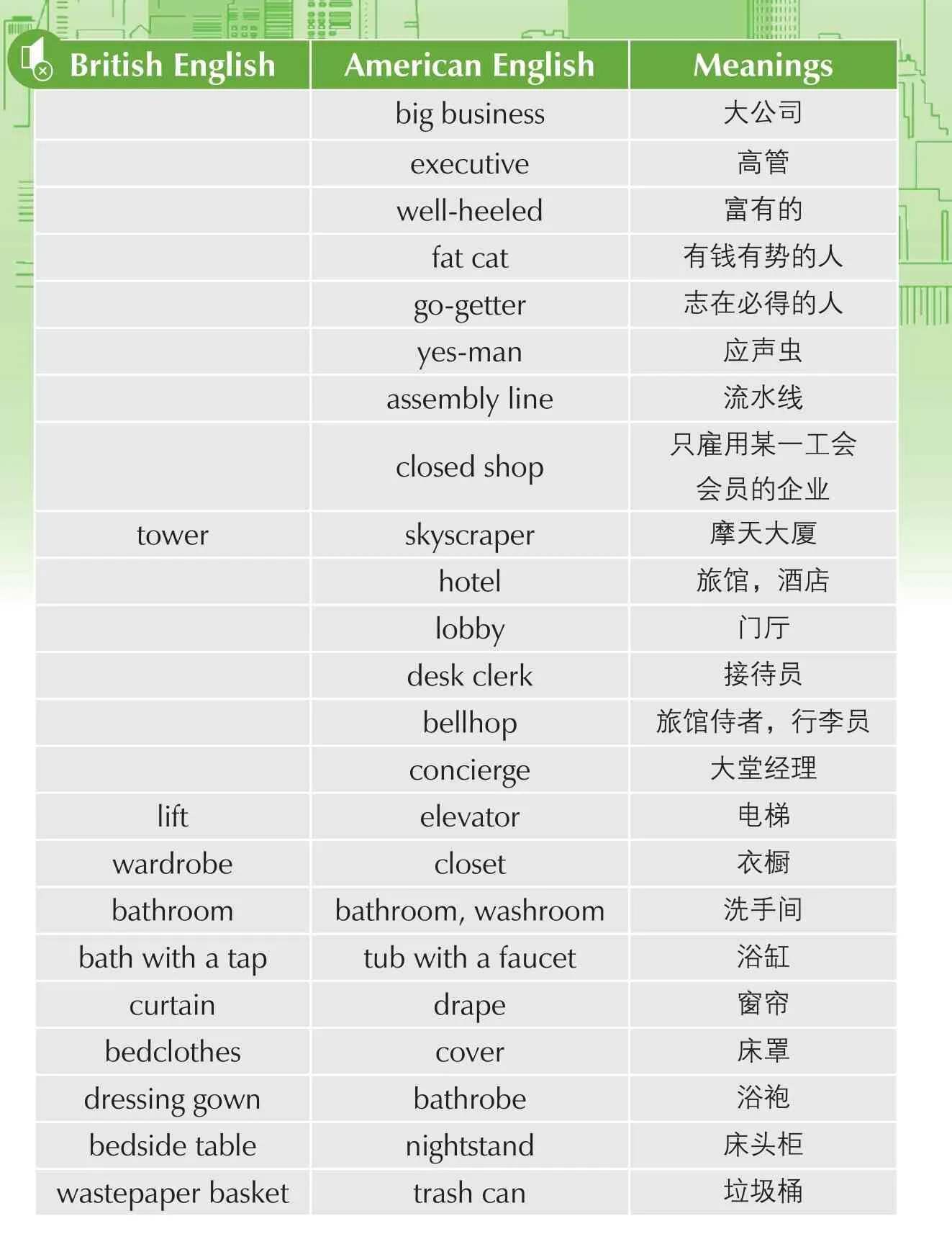
America was flexing[顯示力量]its economic muscles at that time, and the words and phrases reflect that. Big business, executive,well-heeled, fat cat, go-getter, and yesman, as well as assembly line and closed shop—they’re all American English.
Europe had its towers, but it took America to build and to name that quintessential[典型的]image of the country,the skyscraper. The first skyscraper ever was built here in Chicago in 1885. It’s been knocked down, but this one was built soon afterwards. It’s now the oldest one still standing in Chicago. Now it’s a hotel.
Hotel, in the modern sense, is an American word. In French, it just meant a large, private house. And it was in America that they first called this reception area a lobby, with its desk clerk dressed in black,of course, at the front desk, its bellhop and its concierge, another European word given its modern meaning in America. To get to your penthouse[頂層套房], if you should be so lucky, you would, of course, need an elevator. English already had the rather less technical word lift.
You can see it everywhere, and a hotel gives us quite a few examples. In England, we would have a wardrobe. This is a closet. In England, we would have a bathroom. Well,that’s the same. But it could also be called a washroom. The tub with a faucet, not a bath with a tap. And when we go into the bedroom—well, at least that’s the same word—we find that the window has drapes, not curtains. The bed has covers, not bedclothes.Instead of a dressing gown,here’s a bathrobe. Beside the bed, there’s a nightstand,not a bedside table, and somewhere there’s a trash can, not a wastepaper basket.
American Industrial Expansion美國工業擴張時期
While Europe had been burning, the USA had experienced massive industrial expansion. The factories of the northern states needed new workers and the poor of the South, many thedescendants[后裔]of former slaves, saw the opportunity they offered and moved in. Themigrants[移居者],overwhelmingly[壓倒性地]black, came to the cities of the north, cities like Chicago,pounding[機器轟鳴]with growth then and pounding with growth now.And they changed America. They also changed the English language. In the 19th century, almost all Afro-Americans had lived in the South. By the end of the century, 95% were up in the North.
And they injected a new energy into the language. They brought African speech,African rhythm, new vocabulary.
What brought black and white together and put black speech into mainstream American was music. First jazz, then blues.New words and expressions started toaccompany[伴隨]the soundtrack[音樂]of what America is perhaps best known for—popular culture.
Today, the language would be unimaginable without itscolonization[大批移植]by words and expressions of black and African origin.
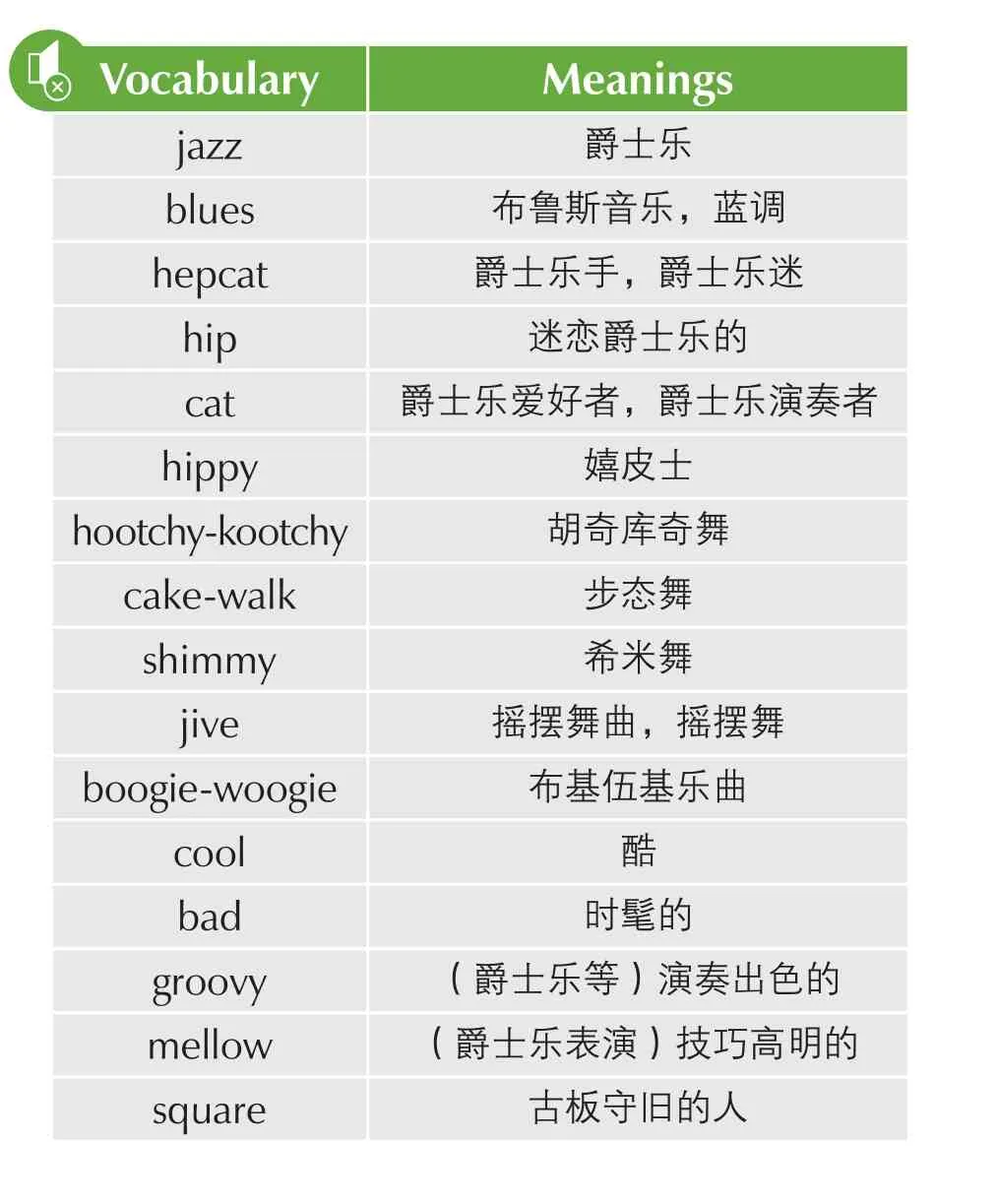
The very words jazz and blues arrived from Afro-American speech at the beginning of the century. The African word hipikat, meaning“attuned[與……協調]to the environment” or “with his eyes open,” gave us hepcat, and, later,hip and cat. Later still, of course, its meaning grew to include the idea of hippy.
White Americanembraced[接受]black American speech when people started to dance the hootchy-kootchy and then the cake-walk,the shimmy, jive, and boogie-woogie.
Black American expressions are now so mainstream that it’s forgotten almost all Americans and very many British, including almost all youth, now speak some sort of“black.” Young people want to be cool or bad, which was first recorded as meaning“good” in America in 1928. Others might want to be groovy or mellow, which came from “melody” in jazz circles in the early’40s. Square is out, but it may come back.
WWII 第二次世界大戰
The hostile Nazi invasion[入侵]never came, but in 1942, a friendly American one did. Nothing couldreverse[逆轉]the effects of suchsustained[持續的]exposure[接觸]to American English.
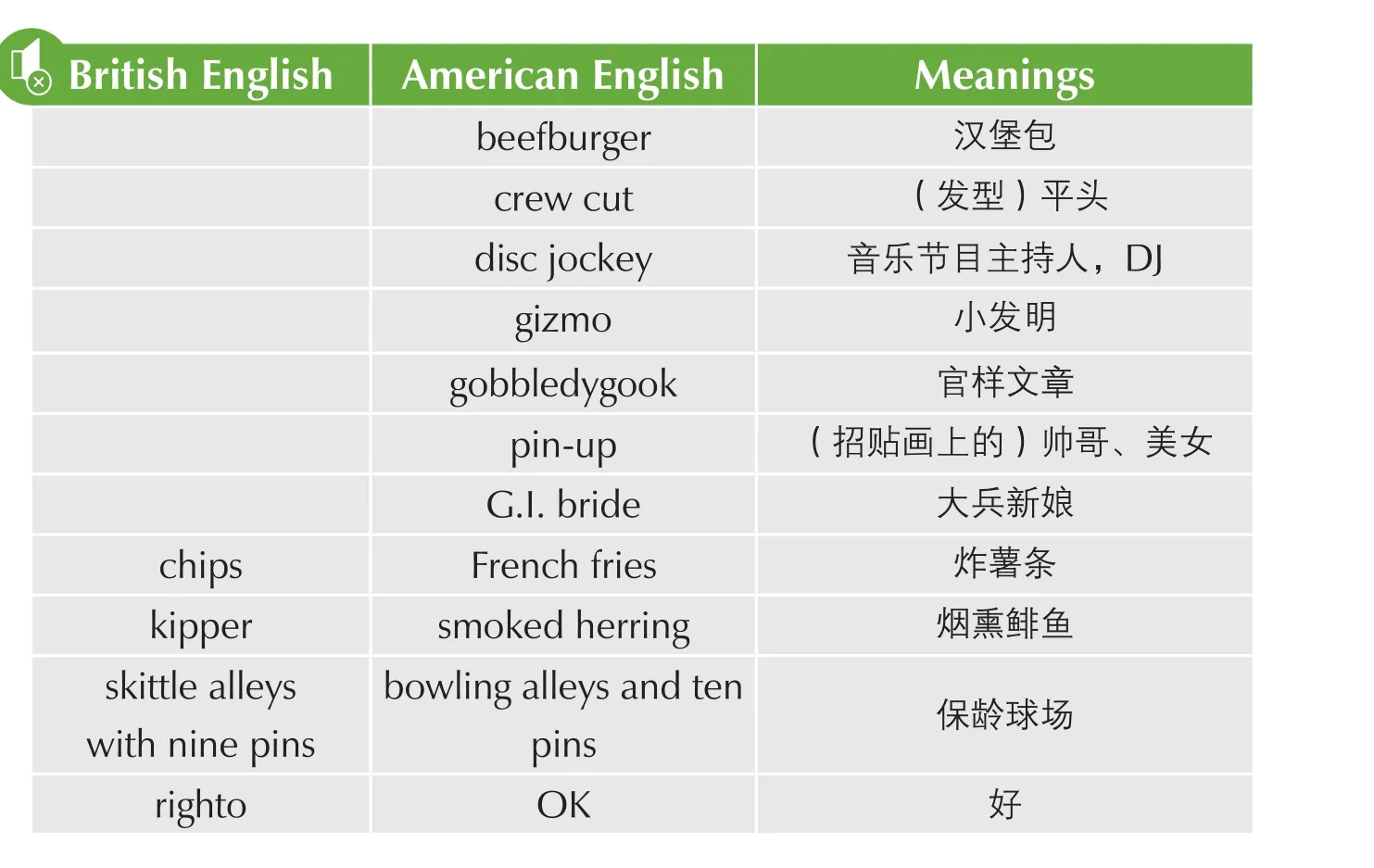
TheG.I.s[美國兵]introduced words like beefburger, crew cut, and disc jockey, gizmo,gobbledygook, pin-up, and G.I. bride.
But the traffic was not all one way. The Americans published this book, A Short Guide to Great Britain, the War and Navy Department, Washington, D.C., for all their troops in this country. It’s very friendly, and, I think, acute about the British.
“The British are reserved[矜持的],” it says,“but not unfriendly.” Then it describes it.“Don’t show off,” it says, “The British dislike showing off. Don’t say you’ve got too much money. You’ve got much more than the British, and don’t show off about this.”
They learned how to eat. They learned that French fries were chips and a smoked herring was a kipper. They learned that bowling alleys and ten pins were skittle alleys with nine pins, and that instead of OK, they should say righto.
By 1944, on the eve of D-Day, 1.5 million United States soldiers werebilleted[駐扎]around Britain. The Americans eventually returned home. But the language they brought with them has stayed ever since, and English wasmassively[強有力地]enriched.
Computer Age 計算機時代
Perhaps the mostdesirable[讓人滿意的]consumer product at the end of the 20th century was first developed in England, in Manchester. It made the English language adapt and expand to a whole new vocabulary.
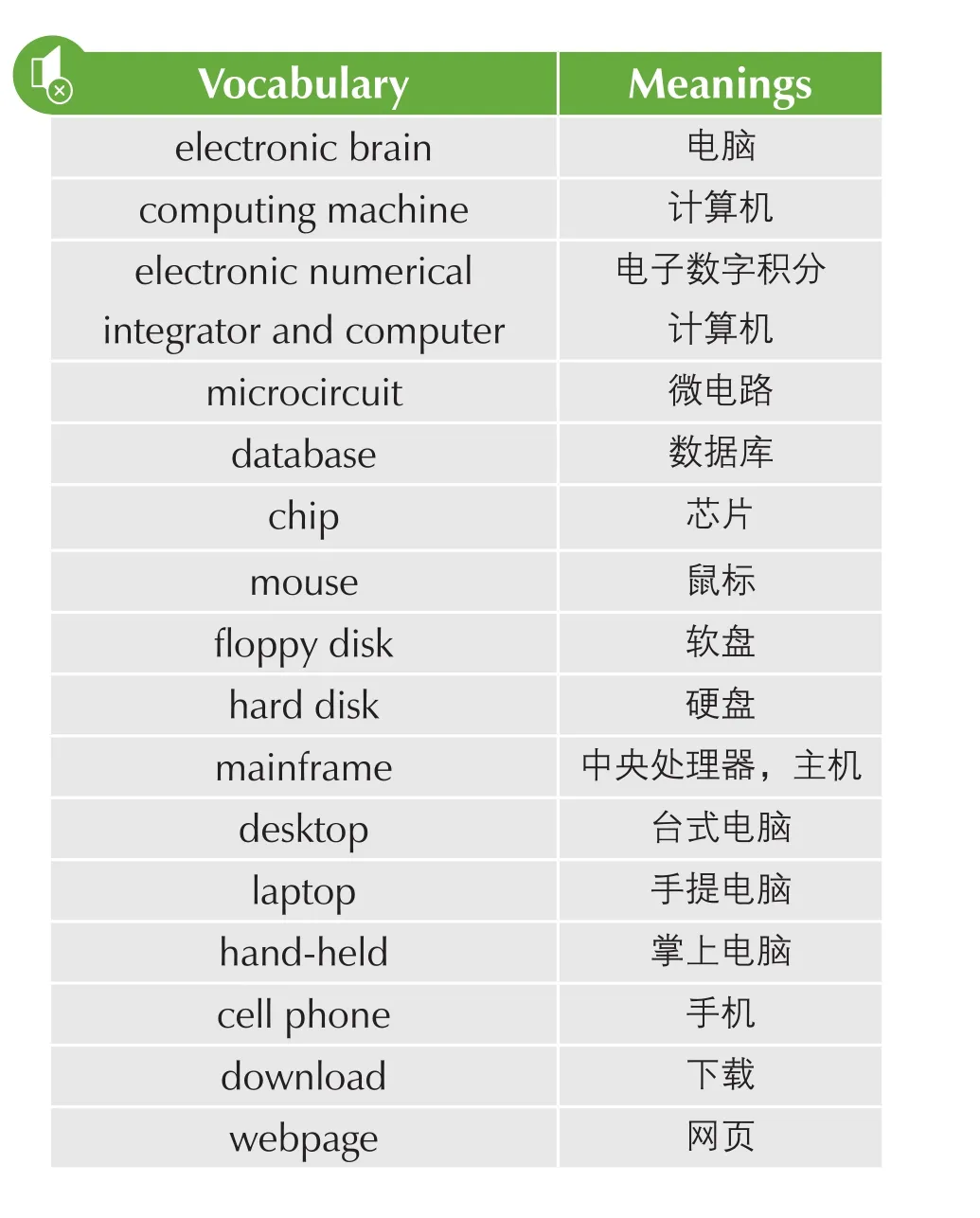
In 1948, this was the state of the art of what theboffins[科學家]were calling the electronic brain, the computing machine,or the electronic numerical integrator and computer. The Baby, as this rather large piece of hardware waschristened[取名], was the first to store a digital programme in its 2048-bit memory. In the years since Baby received its first input of data, the computer and its vocabulary have embraced the microcircuit, the database, the chip and the mouse, the floppy disk and the hard disk.We’ve progressed from the mainframe to the desktop, the laptop to the hand-held,and now even a cell phone can download information from the Internet.
And with an estimated 85% of the world’s webpages being written in English,this newest technology has become one of the greatconduits[渠道]taking the English Language around the world.
猜你喜歡
英語世界(2022年9期)2022-10-18 01:11:46
中華胰腺病雜志(2021年1期)2021-02-26 11:28:36
山東醫藥(2020年34期)2020-12-09 01:22:24
中華胰腺病雜志(2019年4期)2019-08-29 08:52:20
學生天地(2016年16期)2016-05-17 05:45:55
信息記錄材料(2016年4期)2016-03-11 15:22:49
中國工程咨詢(2015年6期)2015-02-16 05:33:56
散文百家(2014年11期)2014-08-21 07:16:56
中華胰腺病雜志(2012年3期)2012-11-07 05:18:45
中國火炬(2011年10期)2011-07-24 14:27:45