
Miang茶(一種泰國發酵型茶)及其飲食
2017-12-11 10:08:17BOUPHUNTunyaluk胥偉姜依何朱旗
茶葉科學 2017年6期
BOUPHUN Tunyaluk,胥偉,姜依何,朱旗
湖南農業大學園藝園林學院茶學系,湖南 長沙 410128
Miang茶(一種泰國發酵型茶)及其飲食
BOUPHUN Tunyaluk,胥偉,姜依何,朱旗*
湖南農業大學園藝園林學院茶學系,湖南 長沙 410128
Miang茶是泰國北部地區居民一類傳統日常食用的腌茶,是一種將茶樹鮮葉通過腌制發酵的方法制得的食品。文章回顧了該茶的歷史,論述了該茶的采摘與加工工藝,簡述了亞洲相關國家如中國、日本、老撾、緬甸等地的腌茶,論述了 Miang茶在泰國北部悠久的歷史和重要的經濟價值。探討了這種天然的發酵類茶的化學成分和微生物種類及相關菌群對人體健康的益處。最后論述了該茶所面臨的挑戰,以期為 Miang茶的進一步深入研究提供指導。
Miang茶;發酵茶;加工;微生物學;保健
1 The history of Miang
Miang is a kind of fermented tea. It is made from wild tea leaves (Camellia sinensisvar.assamica) by traditional fermentation with associated microorganisms by the natural method. The native Thai people in northern of Thailand called the quot;Miangquot; for quot;pickled tea or fermented tea leafquot; and also called wild tea plant as quot;Miang treequot;. Those plants are grown in the forest that are scattered in the high mountainous areas under cool and moist weather[1-3].
Miang producers in northern Thailand are most of Thai Yuan (Khon-myang) and the Austro-Asiatic, including: Thai khamu, Thai Lii(Lue) immigrated from Sip Song Panna (or in Chinese Xishuangbanna)[3-4]. The Chinese words for tea, tu, cha, and ming are ancient words for calling tea. Ming (茗) is one of ancient words for calling tea that is still in common use and may have been borrowed from the Austo-Asiatic languages of people who inhabited in southwest China[5-6]. Therefore,Miang is the indigenous language that native Thai people used to call Thai fermented tea leaf and wild tea plant may have been derived from an archaic Austro-Asiatic root Ming.
Miang plantations are thought to be introduced from the southern part of China,because there are still miang plantations there nowadays[4]. Moreover, Weatherstone (1992)[7]also accounted that the communities in these region including Shan State in Myanmar had knowledge to use loose tea as herbal and consumed in the same time as Chinese for over two centuries.
Miang was originally produced by the forest settlers in small scale for daily consumption purposes. It has become a popular food for northern Thai people and has consequently been widely consumed in particular areas, including Chiang-Mai,Chiang-Rai, Nan, Phrae, Lampang, Lamphun,Phayao and Mae Hong son provinces. The increasing consumption of Miang also has encouraged producers to establish Miang enterprises for the purposes of distributing the product to nearby provinces such as Lamphun and Mae Hong Son where tea plantations and Miang production are unavailable. Nowadays,the chewing of Miang has become less popular among young generation[2,8]. Miang product can be found in people's indigenous homes and local markets in some provinces in northern part of Thailand. Miang consumer is only found in the northern of Thailand, particularly the elderly or the farmers and hill tribe folk often chew this stuff for energy while working on the mountainous hillsides.
Miang quality is classified by local people or Miang producer with their organoleptic evaluation, that it is mainly divided into two kinds by the fermentation time and the taste of products as either astringent Miang or sour Miang[9]and sometimes is divided by the raw material or the appearance of product as either young Miang or mature Miang. Presently, there has not been any exact criteria for the determination and classification of the characteristics and quality of Miang products therefore to investigate the chemical constitution and microorganisms in Miang processing and product is necessary for establish Miang product standard.
2 Miang production
2.1 Miang plucking
For Miang production in Thailand, tea leaves are usually plucked four times a year from April to November. The first flush in April to May (Miang-Hua Pee) is the largest, high yield (50%) and high price of the annual production. The second flush in June to July(Miang-Klang) is high yield (30%), high quality of tea leaves. The third flush in August to September (Miang-Soy) is low yield (10%) and the last flush in October to November(Miang-Mei) is low yield (10%) but its high quality for Miang in winter day is caused by high moisture content of annual production[3,8,10].
Picking tea leaves is labor intensive with special skills and consumes most of time during the production of Miang. The optimal time for picking tea leaves is about 6-8 am and return mid to late afternoon around 4-5 pm. During the hot season, pickers leave early in the morning to avoid the heat. Labor is supplied by the family and/or hired. The more skilled pickers use a finger knife (Fig. 1-A). As the wild tea leaves were plucked (half leaf) from the branches,starting at first leaf through sixth leaf by their degree of maturity (Fig. 1-B), they are packed into a bundle in one hand, which when full, are tied with a thin piece of bamboo (tok). These fist sized bundles, called kams, contain about 350-500 grams of tea leaves (Fig. 1-C).
2.2 Manufacturing process of Miang
The traditional manufacturing process of Miang tea is illustrated in Fig. 2. After plucking,fresh tea leaves are delivered to the workshop in the household. The tea leaves are lightly packed in the wooden container (called tang) then subjected to inactivation process of enzymes,which they are fixed by streaming with water vapor from boiling water by earthen oven at 100℃ for 40 min or 1 h depending on the quantity of tea leaves. This enzyme action step is halted and completely deactivated. Oxidation of polyphenol undergoes changes and tends to affect the quality of the final Miang tea product which is similar to the manufacturing process of Chinese dark tea[11]. Steamed tea leaves are spread out on the mat and cooled to room temperature (25℃) and separated to young leaves and mature leaves by skill of Miang producer then they were wrapped tightly in individual bundles, packed in plastic bags, kept in bamboo basket containers, pressed tightly and weighted down, covered with banana leaves and plastic sheets and fermented at room temperature by natural way for 3-4 d or a month or a year depending on the producer’s organoleptic evaluation or requirement of the middleman receiving.
3 Miang and others pickled tea processing
Pickled tea-type products are also found in several countries in Asia (Table 1). There are different names in each country, include:Suancha, Yancha and Liangpan-tea in China,Awa-ban cha and Goishi-cha in Japan, Laphet in Myanmar and Miang in Thailand and Laos[12-13].Interestingly, all of them have the same fixing stage by steaming until the deactivation of enzymes is completed. Although, their processing are similarly or closely to Miang tea,there is difference in some of the stage of manufacturing processes, such as selecting the quality of raw material, processing technique,fermentation time and the equipment used for fermentation that is depended on their environment. The manufacturing process affects the taste and aroma in the final pickled tea product. Moreover, consumers have their unique recipe for consuming pickled teas.
4 Miang cuisine
Miang is often produced on a small-scale in the household of villages in the mountainous areas of northern Thailand, it can be consumed as snack or after meal. Generally, Miang is consumed by chewing with salt and can be swallowed after chewing as well as Miang cuisine prepared Miang with coconut chips or fried coconut in syrup and pickled-ginger slices to balance the bitterness, or prepared with sugar,fried peanuts, fried fat of pork skin and fried garlic (Fig. 3). Miang is not only made for consuming but also is used in various ceremonies in northern Thailand, in particular,when visitors come or when the family is seated together in the evening, the Miang is passed around from one to another. A jar of coarse salt goes with it, and the consumer takes a small bundle of leaves, rolls them up into a wad such as chewing tobacco, with a rock salt in the center and pops it into his/her mouth. Miang is also consumed during the day to keep hunger pains away and in the past some Buddhist monks believed Miang was useful to help to reduce the sex drive[8]. However, in the present day, Miang consumer is only found in the northern Thailand, particularly the elderly or the farmers and hill tribe folk often chew this stuff for energy while working on the mountainous hillsides, but the young people or new generation are less inclined to adopt this habit today[8].

Fig. 1 Diagrammatic sketch of picking fresh leaves圖1 鮮葉采摘示意圖

Fig. 2 The flow diagram of the traditional manufacture process of Miang tea圖2 Miang茶傳統生產流程圖
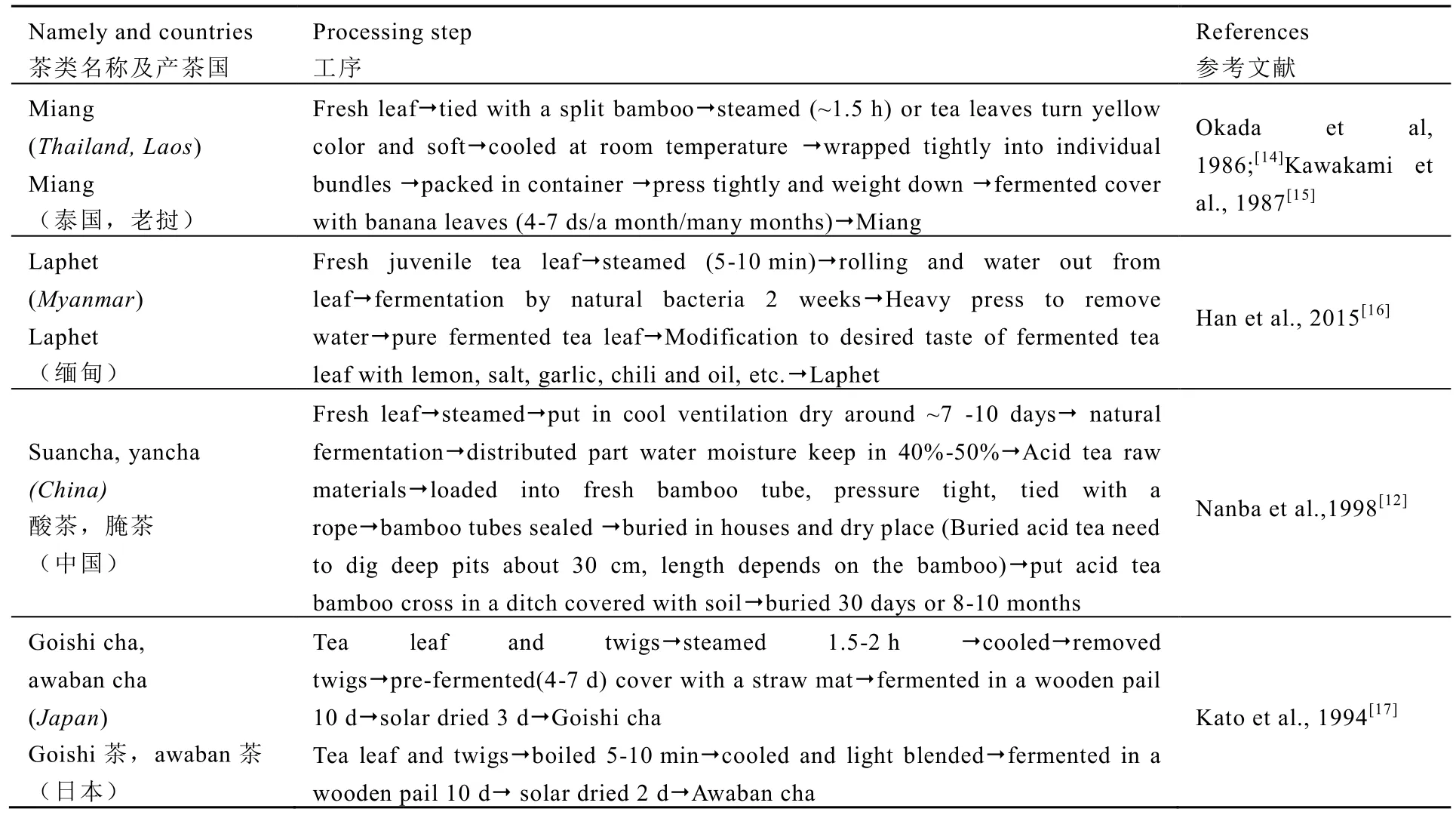
Table 1 The manufacturing of Miang compared with other pickled teas表1 Miang茶與其他腌茶的生產工藝對比
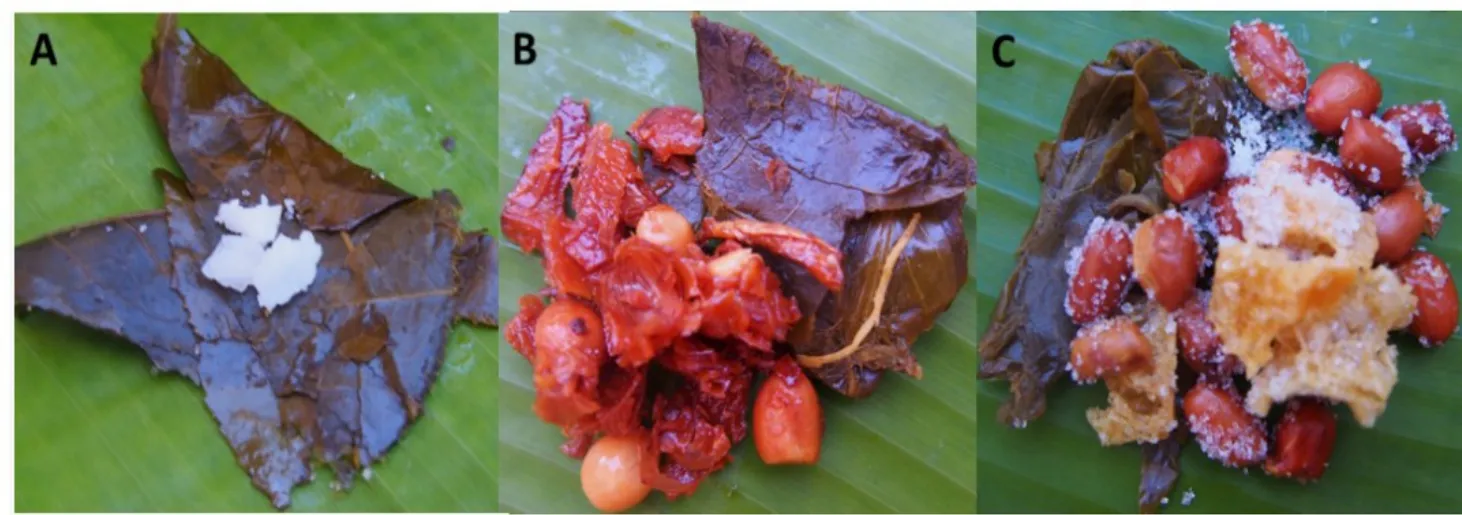
Fig. 3 Three kinds of Miang cuisine圖3 3種不同的Miang茶飲食形式
5 Microbial and chemical of Miang
Miang is a symbiotic growth of Lactic acid bacteria[18-20](Lactobacillusplantarum,Lactobacillusfermentum,Lactobacilluspantheris,Lactobacilluspentosus,Lactobacillussuebicus,Lactobacillusthailandensissp.nov.,Lactobacillus camelliaesp.nov., andPediococcus siamensis), yeast strain (Candida ethanolica)[2]and mold strain (Aspergillus niger)[unpublished]. However, the growth patterns of these microorganisms during the fermentation process of Miang tea have not been studied. The exact microbiological composition also depends on the source of mixed-microbial by natural of Miang tea fermentation.
Miang contains several chemical constituents that are total polyphenols, all catechins[9,21-22]including six main catechins in both of young and mature Miang are:(+)-catechin (C), (-)-epicatechin (EC),(-)-epicatechin-3-gallate (ECG), (-)-epigallocatechin(EGC), (-)-epigallocatechin-3-gallate (EGCG),among which EGCG is the highest active component[21]. Caffeine contents varied from 0.13% to 6.24%[9,21-22]. The predominant free amino acid in young and mature Miang was theanine that responsible for umami taste in Miang. The following organic acids considered to be key components of Miang fermentation are acetic acid, citric acid, fumaric acid and lactic acid[21].
6 Health benefits of Miang
Thai local people in northern Thailand believe that Miang used after a meal aids digestion. Particularly eating Miang with salt, it helps to allay the hotness of the northern Thai cuisine by feeling less need to drink lot of water after eating, exactly it may be relative little water consumed by the Thai either during or after a meal. In former state that they normally have hot dishes to require some of vegetable-such as raw cucumber or steamed squash -or some salty food, such as the salt in the Miang or a bit of salted and dried fish.Miang and tea are good for the stomach and intestine that the Thai northerners who chew Miang are free from stomach disorders[4].Moreover, the farmers and hill tribe folk often chew this stuff for energy while working on the mountainous hillsides. The caffeine content in Miang is approximately 1.3-62.4 mg·g-1depending on raw material, miang processing,fermentation time and type of miang (sour or astringent miang)[9,21-22]. However Miang consumption recommended a regular portion for daily intake is not more than 66 g[9]which was regarded as safe according to the recommended amounts of caffeine (200 mg) that can be consumed without being harmful to health for the reason that caffeine can increase heart rhythm, have diuretic effects, and cause malabsorption of iron from the diet[16,23]. This implies that Miang can be the energy-boosting and rich of antioxidants.
7 Major challenges and future prospects
Miang is an edible pickled tea or fermented tea leaves that are made from wild tea leaves with associated microorganism by natural way.It was an important cash crop for local economy in northern Thailand, as well as, functional food for hill tribe in past days. Nowadays, tea and tea products establish the economy and value income for many countries, especially in developing countries. Finding more knowledge regarding to the biochemical constituents and the effect on human health in Miang is important for its development. Miang contains several compounds that are also in green tea.Evidence from preclinical and clinical studies has suggested consumption of green tea for indigestion[25], antiobesity[26], antibacterial and antimicrobial[27], antioxidative and free radical scavenging[28]. But, there has been no evidence published to date on the biological activities of Miang tea in human trial. Therefore, to study on pure chemical compounds such as catechins,epigallocatechin gallate (EGCE) from consumption of Miang tea and their effects on human health should be considered bothin vitroandin vivoanimal studies of underlying mechanisms of Miang tea and their biological actions. Moreover, the microbial diversity and fermentation condition are still not conclusive,and the dynamic changes of major chemical formation including non-volatile and volatile compounds are still remaining unknown. In order to develop of Miang’s quality and modern manufacturing process of Miang, it is suggested to conduct further-in-depth studies.
[1]Anon. Thai traditional fermented food [R]. Thailand:National Research Council of Thailand, 1981.
[2]Kanpiengjai A, Naradorn C, Siriporn C, et al. Distribution of tannin-tolerant yeasts isolated from Miang, a traditional fermented tea leaf (Camellia sinensisvar.assamica) in northern Thailand [J]. International Journal of Food Microbiology, 2016, 238: 121-131.
[3]Preechapanya P. Indigenous ecological knowledge about the sustainability of tea gardens in the hill evergreen forest of northern Thailand [D]. Wales: School of Agricultural and Forest Sciences, University of Wales, Bangor, UK, 1996.
[4]LeBar F M. Miang: Fermented tea in north Thailand [J].Behavior Science Notes, 1967, 2: 105-121.
[5]Mair V H, Hoh E. The true history of tea [M]. 3rded. Thames Hudson, 2009: 264-267.
[6]Moerman M. Ethnic identification in a complex civilization:who are the lue [J]. American Anthropologist, 1965, 67(5):1215-1230.
[7]Weatherstone J. Historical introduction [M]//Willson KC,Clifford MN. Tea cultivation to consumption. London:Chapman and Hall, 1992: 1-23.
[8]Sawin S W. Agro-forestry, energy and sustainability in the tea industry of upper north Thailand [D]. Victoria City:Department of Geography, University of Victoria, Canada.1989.
[9]Phromrukachat S, Tiengburanatum N, Meechui J.Assessment of active ingredients in pickled tea [J]. Asian Journal of Food and Agro-Industry, 2010, 3(3): 312-318.
[10]Sampanvejsobha S, Sumonpun P, Laohakunitand N.Development of safe processing of Miang [R]. Thailand:Thailand Research Fund, 2012. (in Thai).
[11]Luo S J. Processing of tea: food reviews international [J].Food Reviews International, 1995, 11(3): 409-434.
[12]Nanba A, Miyagawa K, Omori M, et al. Non-salted pickled tea (sour tea) in south-east Yunnan in China [J]. Japan Society of Home Economics, 1998, 49(8): 907-915.
[13]Nanba A, Nyein MM, Win SY, et al. Post-heated and fermented edible teas and their dried forms used for drinking in Myanmar [J]. Japan Society of Home Economics, 1999,50(6): 639-646.
[14]Okada S, Daengsubha W, Uchimura T, et al. Flora of lactic acid bacteria in miang produced in northern Thailand [J].Journal of General and Applied Microbiology, 1986, 32(1):57-65.
[15]Kawakami M, Chairote G, Kobayashi A. Flavor constituents of pickled tea, Miang, in Thailand [J]. Agricultural and Biological Chemistry, 1987, 51(6): 1683-1687.
[16]Han T, Aya KN. The legend of laphet: A Myanmar fermented tea leaf [J]. Journal of Ethnic Foods, 2015, 2: 173-178.http://dx.doi.org/10.1016/j.jef.2015.11.003.
[17]Kato M, Tamura A, Omori M, et al. Changes of flavor during manufacturing process of Japanese fermented tea(Goishi-cha) and its characteristic [J]. Japan Society of Home Economics, 1994, 45(6): 527-532.
[18]Klayraung S, Okonogi S. Antibacterial and antioxidant activities of acid and bile resistant strains of Lactobacillus fermentum isolated from Miang [J]. Brazilian Journal of Microbiology, 2009, 40: 757-766.
[19]Tanasupawat S, Komagata K. Lactic acid bacteria in fermented foods in Thailand [J]. World Journal of Microbiology and Biotechnology, 1995, 11(3): 253-256.
[20]Tanasupawat S, Pakdeeto A, Thawai C, et al. Identification of lactic acid bacteria from fermented tea leaves (miang) in Thailand and proposals ofLactobacillus thailandensissp.nov,Lactobacillus camelliaesp. nov, andPediococcus siamensissp. Nov [J]. Journal of General and Applied Microbiology, 2007, 53(1): 7-15.
[21]Bouphun T, Wei X, Wu D, et al. Dynamic changes in chemical constituents during processing of Miang (Thai fermented tea leaf) in various degree of tea leaf maturity [J].International Journal of Food Engineering, 2017 [to be published]
[22]Sampanvejsobha S, Sumonpun P, Laohakunitand N. Contents of caffeine and catechins in Miang produced from major sources in Thailand [J]. Agricultural Science Journal, 2013,44(2): 597-600. (in Thai).
[23]Dulloo AG, Seydoux J, Girardier L, et al. Green tea and thermogenesis: interactions between catechin-polyphenols,caffeine and sympathetic activity [J]. International Journal of Obesity, 2000, 56: 252-258.
[24]Van Roy E. Economic system of Northern Thailand:structure and change [J]. American Anthropologist, 1972, 74:881-882.
[25]Miao M, Jiang B, Jiang H, et al. Interaction mechanism between green tea extract and human α-amylase for reducing starch digestion [J]. Food Chemistry, 2015, 186: 20-25.
[26]Chwan L S, Jia H, Shu W, et al. Green tea supplementation benefits body composition and improves bone properties in obese female rats fed with high-fat diet and caloric restricted diet [J]. Nutrition Research, 2015, 35: 1095-1105.
[27]Yead M N, Ahmed F S, Anwarul A A, et al. Comparative assessment of total polyphenols, antioxidant and antimicrobial activity of different tea varieties of Bangladesh [J]. Asian Pacific Journal of Tropical Biomedicine, 2017, 7(4): 352-357.
[28]Anna G M, Joanna K C, Dominik K, et al. Antioxidative potential, nutritional value and sensory profiles of confectionery fortified with green and yellow tea leaves(Camellia sinensis) [J]. Food Chemistry, 2016, 211:448-454.
Miang (Thai Fermented Tea) and Its Cuisine
BOUPHUN Tunyaluk, XU Wei, JIANG Yihe, ZHU Qi*
Department of Tea Science, College of Horticulture and Landscape, Hunan Agriculture University, Changsha, Hunan,410128, China
Miang is an edible pickled tea or traditional tea leaf fermented product in household by local people in northern Thailand, which is made from the fresh tea leaves. This article went through the history of Miang, discussed its standard and method of plucking, stated the similar teas made in other Asian countries, such as China, Japan, Laos and Myanmar. Miang has long history and is very important for the northern Thai local economy. It also discussed its chemical constituents and the microorganisms responsible for the natural fermentation process as well as its benefits derived by humans. Challenges faced in the conducting its manufacturing industry and promoting it for better development in the future were also introduced.
Miang tea, fermented tea, processing, microorganism, health benefits
TS272.5+9
A
1000-369X(2017)06-645-08
2017-06-02
2017-06-19
supported by grants from the National Science Foundation of China(31571802)
Tunyaluk Bouphun, female, Thai, Ph.D, Tea processing. *Corresponding author: Zhu Qi, 1965994459@qq.com
