混合能量存儲技術在光電微能源中的應用研究*
2016-10-26 07:45:32何永泰肖麗仙劉晉豪
傳感技術學報 2016年5期
何永泰,肖麗仙,李 雷,劉晉豪
(楚雄師范學院物理與電子科學學院,云南楚雄675000)
混合能量存儲技術在光電微能源中的應用研究*
何永泰*,肖麗仙,李雷,劉晉豪
(楚雄師范學院物理與電子科學學院,云南楚雄675000)
為簡化集成無線傳感器節點光電微能源系統的設計和提高能量轉換、存儲效率,提出混合能量存儲技術在光電微能源系統設計中的應用。混合能量存儲器由電容器和鋰離子電池組成。其能量存儲原理負載特性被分析。另外,開展實驗研究,結果表明,與直接能量存儲方式相比,利用混合能量存儲技術能量存儲量提高27%。并且,微能源的負載特性也得到改善,實驗結果與理論結果一致。
太陽能量收集,微能源,混合能量存儲,無線傳感器節點,存儲效率
EEACC:7230doi:10.3969/j.issn.1004-1699.2016.05.027
With the development of the computer communi?cation technology and sensor technology,the wireless sensor network has gained a wide application prospect in fields such as detection of toxic or hazardous sub?stances,drone patrolling,spacecraft equipment fault prediction,commodities tracking and supply chain management,soil moisture control and environmental pollution monitoring[1-5].Early in September 1999,Business Week predicted that the wireless sensor net? work technology would be one of the most important technologies in the 21st century[6].However,in the wireless sensor networks,nodes are usually distributed in a large quantity at remote and dangerous place,which creates difficulties for the maintenance of the nodes in the next stage.Therefore,the traditional dry battery-based power supply is not suitable for the wire?less sensor networks anymore.In fact,a new power sup?ply based on solar energy harvesting has been pro?posed recently which is more suitable for wireless sen?sor networks[7-8].Considering the higher conversion ef?ficiency of PV cells and the wide distribution of solar energy,the photoelectric micro-power supply has been widely researched and adopted for the wireless sensor nodes[9-10].However,the traditional solar photovoltaic technology is unsuitable for photoelectric micro-power supply due to its complex energy management system,and high power consumption[11-12].According to the ba?sic structure characteristics of the photoelectric micropower supply and the pulse load characteristics of the wireless sensor nodes,this paper analyzed the applica?tion characteristics of hybrid energy storage system(consists of a lithium ion battery and a super capaci?tor)in photoelectric micro-power supply system such as storage efficiency of PV cell output power,and the load characteristics of micro-power supply.The re?search results showed that the storage efficiency of PV cell output power and load characteristics of the micropower supply can be improved effectively by using the hybrid energy storage technology.
1 Energy Storing Process of the Hy?brid Energy Storage System
In the design of the photoelectric micro-power supply using the hybrid energy storage system,the su?per capacitor serves as the energy buffer due to its large numbers of charge and discharge cycles,while the lithium ion cell serves as the energy storage due to its high energy density.In addition,the energy storing controller is designed to control the charge and dis?charge process of the super capacitor based on the max?imum output power point of PV cells.The structure of the hybrid energy storage system of photoelectric mi?cro-power supply is shown in Fig.1.
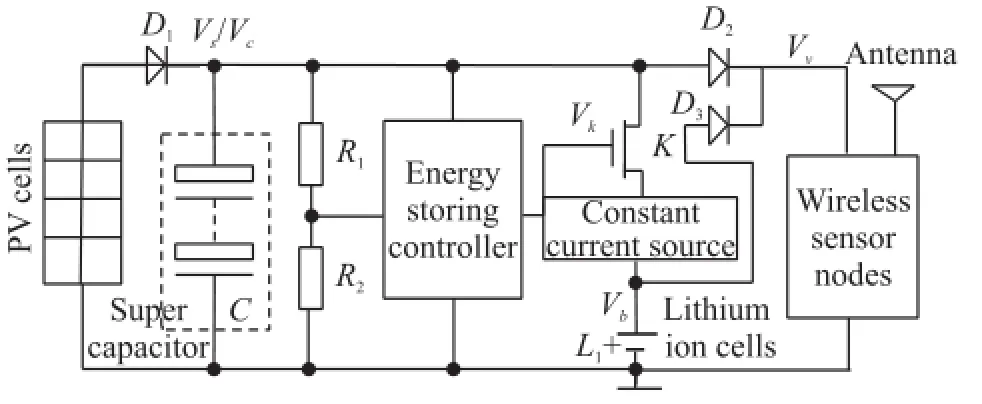
Fig.1 Structure of hybrid energy storage system
In Fig.1,the super capacitor,as an energy buffer,is parallelly connected with the output terminal of pho?tovoltaic cells.Possessed with high charge and dis?charge performance,the super capacitor can bear the frequent charge and discharge process caused by the output instability of PV cells.The output voltage of PV cells can be controlled by adjusting the charge and dis?charge process of the super capacitor.Thus,the output voltage of PV cells can be controlled to be close to the maximum power point of PV cells so as to improve the conversion efficiency.In addition,the lithium ion bat?tery is charged by the pulse type.The energy storing process in the hybrid energy storage system is shown in Fig.2.
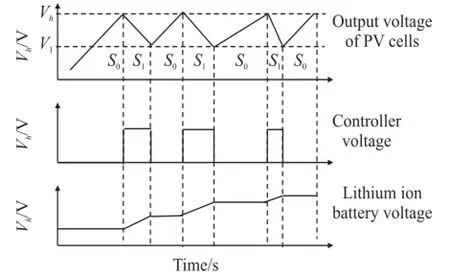
Fig.2 The energy storing process in the hybrid energy storage system
In Fig.2,Vsis the PV output voltage,Vkis the con?trol voltage for the charge and discharge process of the super capacitor,Vbis the voltage of the lithium ion bat?tery.When Vkis at low electric level,the super capaci?tor is charged with a gradually increasing voltage. When Vkis at high electric level,the super capacitor is discharged,while the lithium ion battery is charged in a pulse.Thus,the output voltage of PV cells is con?trolled to be near its maximum power point by control?ling charge and discharge process of the super capaci?tor.According to energy storage characteristics of the hybrid energy storage system,the energy storing pro?cess can be divided into two working states:the tempo?rary energy storage state S0and energy storage state S1. Under different working states,the equivalent circuit models of hybrid energy storage systems are shown as Fig.3(a)and(b),respectively.
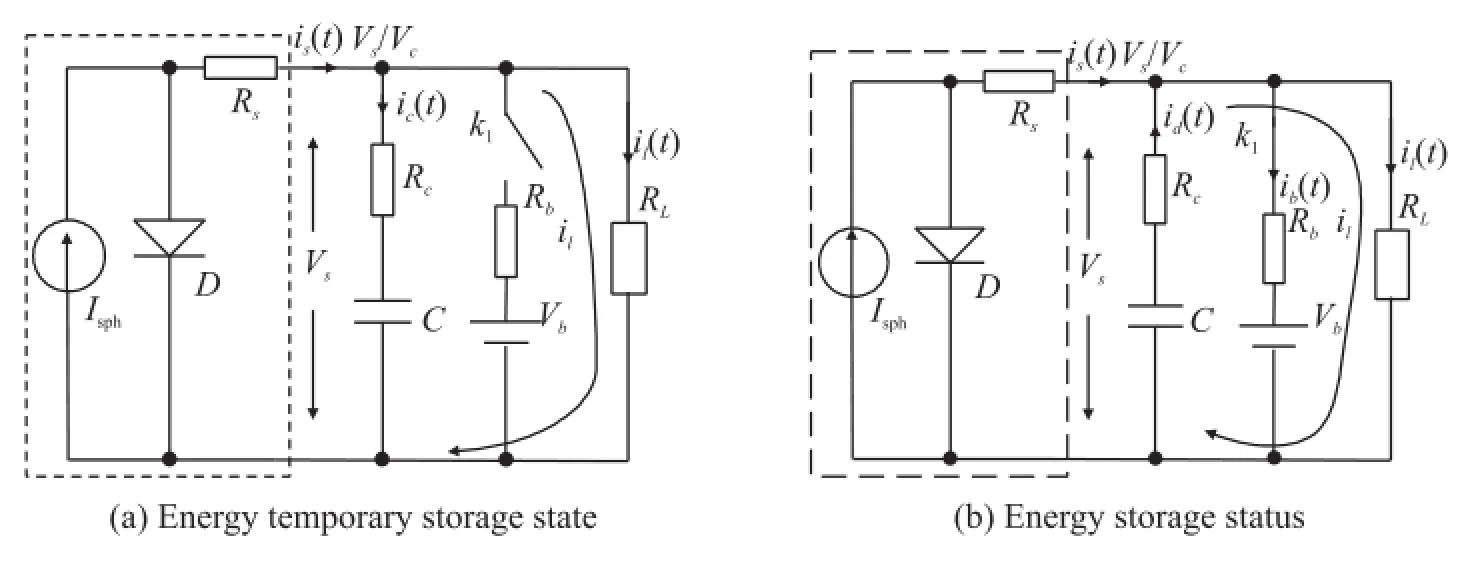
Fig.3 Equivalent circuit models of hybrid energy storage systems
In Fig.3,the PV cells are equivalent to a current source(Isph),a diode(D)and a resistor(Rs).is(t)is the output current of PV cells,Vs(Vc)is the output voltage of PV cells and super capacitor,Rcis a equivalent in?ner resistor of the super capacitor,ic(t)is the charging current of the super capacitor,Rbis the equivalent in?ner resistance of lithium ion polymer battery,RLis the equivalent resistance of wireless sensor node,il(t)is load current.
2 Load Characteristics of Hybrid Energy Storage System
2.1Power supply model of hybrid energy storage system.
The hybrid energy storage is not only an energy storage device,but also a power source for the wireless sensor nodes.There are three different types of power supply models of the photoelectric micro-power supply that is integrated with hybrid energy storage system:PV cells power supply model,hybrid power supply model based on PV cells and super capacitor,parallel power supply model based on super capacitor and lithi?um ion polymer battery.
2.2PV cells power supply model.
Under the light condition and the temporary ener?gy storage state S0,the micro-power supply works in the PV cells power supply model,where the PV cells supplies power to the sensor nodes and charges the en?ergy buffer.The equivalent circuit of the PV cells pow?er supply model is shown in Fig.3(a).The load current can be expressed as

2.3Hybrid power supply model.
Under the light condition and the energy store state S1,the micro-power supply works in the hybrid power supply model based on PV cells and super ca?pacitor.In this mode,the super capacitor and PV cells supply power to the sensor node and charge the energy storage.The equivalent circuit of hybrid power supply based on PV cells and the super capacitor is shown in Fig.3(b).The load current could be expressed as

2.4Parallel power supply model.
At night or rainy days,the photoelectric micro-power supply works in the parallel power supply model based on super capacitor and lithium ion polymer bat?tery.The parallel power supply model is main power supply model of hybrid energy storage system.In this mode,the lithium ion polymer battery and super capac?itor supply power to the sensor nodes.According to the wireless sensor nodes run in the burst-mode(a mode that could be equivalent to the periodic pulse load),the current of the wireless sensor nodes could be ex?pressed as[13]

Wherein,Ilis current amplitude,Ф(t)is unit step function,D is the duty cycle of wireless sensor nodes under activated state,T is the period for the state change of wireless sensor nodes.The current of the wireless sensor nodes could be expressed by using La?place transform as

Wherein,s is the complex frequency.
The equivalent circuit of the parallel power sup?ply model based on super capacitor and lithium ion polymer battery is shown in Fig.4(a)and its Thevenin equivalent circuit in frequency domain is shown in Fig.4(b)[14].
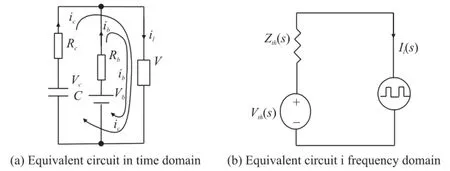
Fig.4 The equivalent circuit of the parallel power supply model based on super capacitor and lithium ion polymer battery
In Fig.4(b),Vth(s)is Thevenin equivalent voltage source in frequency domain;Zth(s)is Thevenin equiva?lent impedance in frequency domain.Vth(s)and Zth(s)can be expressed as
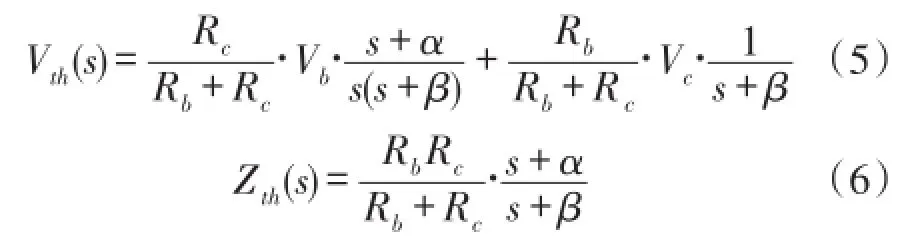
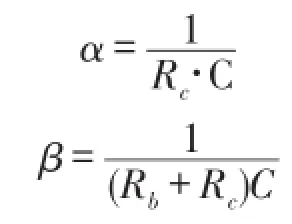
Wherein,s is the complex frequency,Vbis the ini? tial voltage of the lithium ion polymer battery,Vcis the initial voltage of the super capacitor,and
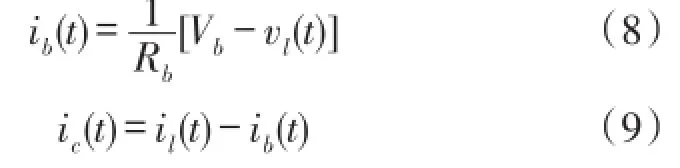
According to the linear relationship of Vth(s),Vi(s)and Vl(s)in frequency domain,the output voltage of the load in time domain can be expressed by using the inverse Laplace transform as

Thus,the branch currents of the lithium ion poly?mer battery and the super capacitor can be expressed as(10)and(11),respectively.
3 Characteristics of Peak Power of Hybrid Energy Storage System
In the parallel power supply mode of the hybrid energy storage system,Ibpis the peak output current of the polymer lithium ion battery in activated state of the wireless sensor node.On the basis of the expression(7)and(8),Ibpcan be expressed as

Wherein,?cis the impact factor that reflects the influence of the super capacitor upon energy storage peak current,and is determined by issues such as the super capacitor capacity C,the duty ratio D of pulse load current of sensor nodes,and the change cycle of sensor node states T.
Suppose Ibris the rated current of polymer lithium ion battery,so the rated current of hybrid energy stor? age Ihrcan be represented as
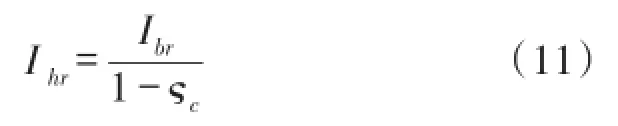
Thus,the peak power Ppeakof hybrid energy stor?age system can be represented as

Wherein,Pris the output rated power of the poly?mer lithium ion battery.According to the expression(12),the relationship between the peak output power Ppeakof the hybrid energy storage system and the capaci?ty of super capacitor C is shown in Fig.5.
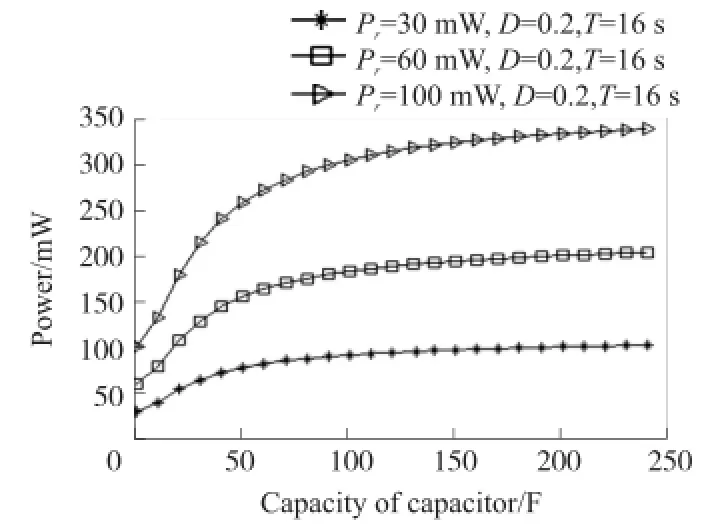
Fig.5 The relationship of Ppeak,Prand C
In Fig.5,we can see that under the condition of different rated powers of lithium ion battery,the peak output power of the hybrid energy storage system is di?rectly affected by the super capacitor.To be specific,the peak output power of hybrid energy storage system gradually increases with the increase of capacity of the super capacitor.
4 The Experiment on the Hybrid Energy Storage System
To prove the advantages of the hybrid energy stor?age system,two experiment schemes are designed:the direct energy storage system and the hybrid energy stor?age system.In order to achieve a convenient calcula?tion,a 70F super capacitor is used as the energy stor?age in the experiment,and the photovoltaic cells are ex?actly the same in the two experiment schemes.During the experiment test,the solar irradiance is shown in Fig.6.In direct energy storage scheme,the voltage change of 70F super capacitor is shown in Fig.7.
In the hybrid energy storage scheme,the voltages of energy buffer(two 30F super capacitors connected in series)and energy storage(70F super capacitor)are shown in Fig.8(a)and(b),respectively.
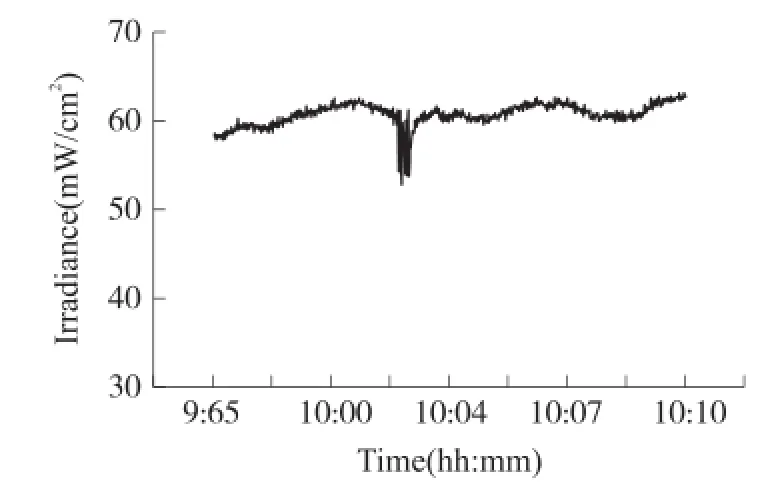
Fig.6 Solar irradiance

Fig.7 Voltage change of 70F capacitor
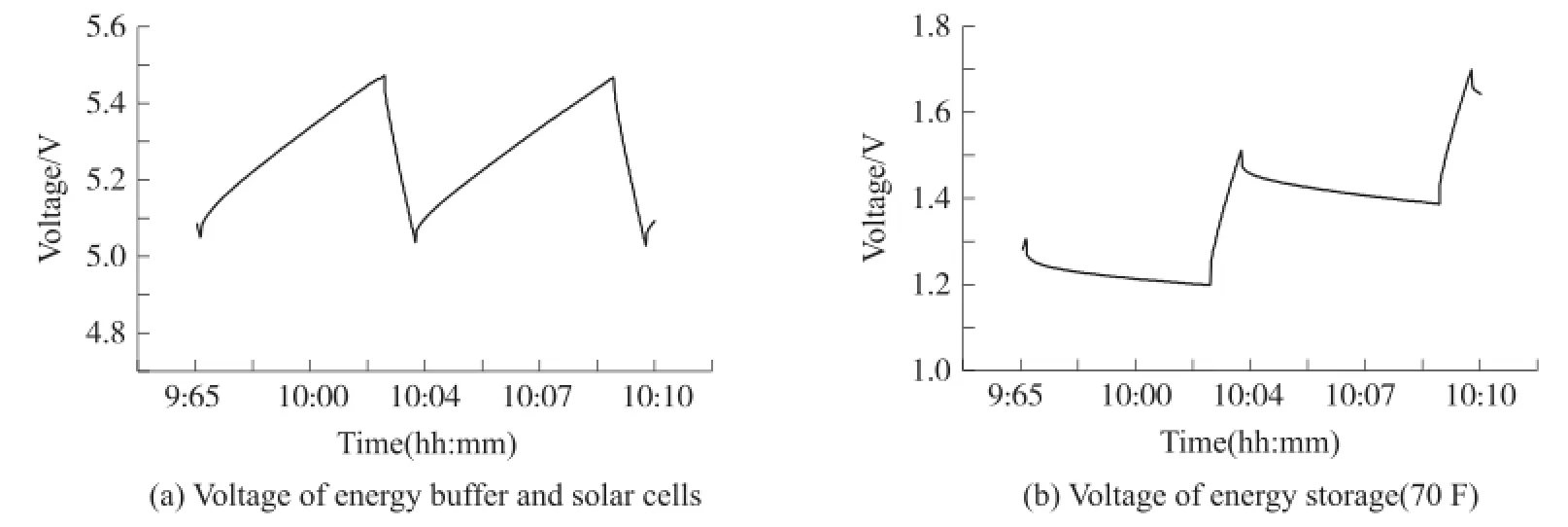
Fig.8 Voltage of hybrid energy storage system
In the direct energy storage system,the stored en?ergy Ws1can be expressed as follows

In hybrid energy storage,the stored energy Ws2can be expressed as follows

According to the analysis above,the stored energy in the hybrid energy storage is 27%larger in quantity than energy stored in the direct energy storage.More?over,in the hybrid energy storage system,the voltage of the energy storage system gains a ladder-type in?crease as shown in Fig.11(b),which indicates that the energy storage is charged in a pulse type way.
In addition,we tested the load characteristics of hybrid energy storage system,which consists of a 70F super capacitor and a 1400 mAh polymer lithium ion battery.The wireless sensor node is Gizen4,which is a temperature sensor node.In experiment,the working current of Gizen4 and the output currents of super ca?pacitor and energy storage are shown in Fig.9.
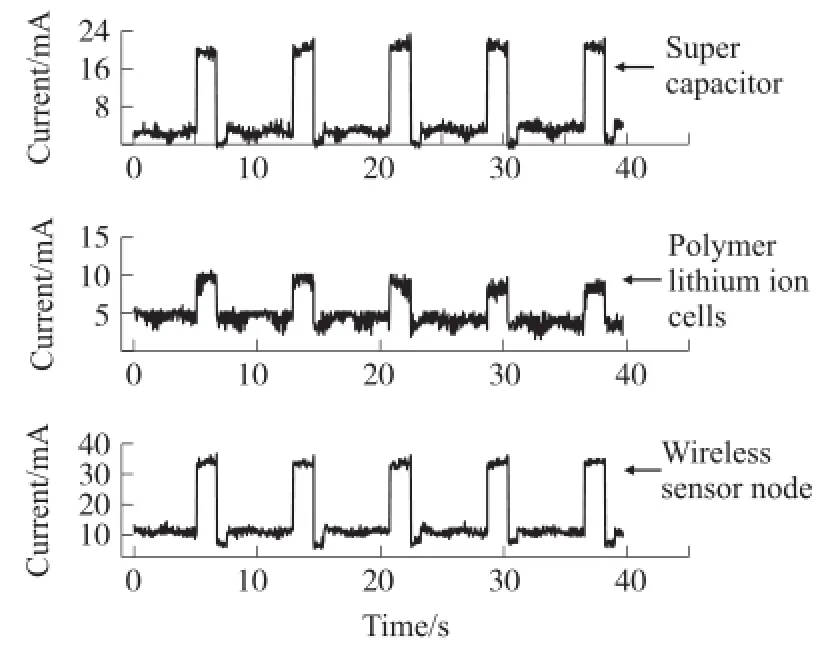
Fig.9 Supply current of hybrid energy storage system
In Fig.9,we can find that the super capacitor un?dertake more peak current of sensor than the polymer lithium ion battery does.Thus,the load capacity of hy?brid energy storage system is more effective compared with the energy storage system based solely on the poly?mer lithium ion battery.The experimental results are consistent with the conclusion of theory analysis.
5 Conclusion
For the photoelectric micro-power supply integrat?ed with wireless sensor nodes,the hybrid energy stor?age system within is able to improve the performance of photovoltaic micro-power supply.Firstly,the energy conversion and storage control system of PV cells is simplified by using the hybrid energy storage system. Experimental results show stored energy in the hybrid energy storage is 27%larger in quantity than the ener?gy stored in the direct energy storage.Secondly,the lithium ion battery is charged in a pulse type way,which meets its requirement for reasonable energy stor?age.In addition,the capacitor bears frequent charging/ discharging processes due to the unstable output of the solar cells,thus the working life of the lithium ion bat?tery can be prolonged.Finally,hybrid energy storage has strong impulse load capacity.The theory and exper?imental results show that the peak power is increased and the internal loss is reduced after using hybrid ener?gy storage system.
[1]Alippi C,Galperti C.an Adaptive System for Optimal Solar Ener?gy Harvesting in Wireless Sensor Network Nodes[J].Circuits and Systems IEEE Transactions on.2008,55(6):1742-1750.
[2]Ilkka Korhonen,Raija Lankinen.Energy Harvester for a Wireless Sensor in a Boiler Environment Measurement[J].,2014,58:241-248.
[3]Chen Z,Luo P,Yue W J,et al.An Energy-Aware Topology Con?trol Algorithm for Wireless Sensor Networks[J].Chinese Journal of Sensors and Actuators.2013,(3):382-387.
[4]She Y,Wen Z Y,Zhao X Q,et al.The MEMS Vibration Energy Harvester with Piezoelectric Array[J].Chinese Journal of Sensors and Actuators.2014,(8):1033-1037.
[5]Zhang D,Zhamg S.Improved Electromagnetic Energy Harvesting from Low-Frequency Vibrations by Closed Magnetic Circuit[J]. Chinese Journal of Sensors and Actuators.2015,(7):1092-1096.
[6]Wang J.Power Efficient Stochastic Wireless Networks[D].Unit?ed States:University of North Carolina libraries,2005.
[7]Norman B C.Power Options for Wireless Sensor Networks[J]. Aerospace and Electronic Systems Magazine,IEEE.2007,22(4):14-17.
[8]ChenJ M,Liang Y,Cheng D H.The Micro-Energy Collecting Technology Based on Solar Energy[J].Journal of North China In?stitute of Water Conservancy and Hydroelectric Power.2012,(2):79-81.
[9]Kuchle J J,Love N D.Self-Powered Wireless Thermoelectric Sen?sors,Measurement.2014,47:26-32.
[10]Huang T C,Le Y G,Chang Y C.An Energy Harvester Using Self-Powered Feed Forward Converter Charging Approach,Ener?gy.2013,55(15):769-777.
[11]Li Y Q,Yu H Y,Su B.Hybrid Micropower Source for Wireless Sensor Network[J].Sensors Journal,IEEE.2008,8(6):678-681.
[12]Koutroulis E,Kalaitzakis K,Voulgaris N C.Development of a Mi?crocontroller-Based,Photovoltaic Maximum Power Point Tracking Control System[J].Power Electronics,IEEE Transactions on. 2001,16(1):46-54.
[13]Chen W,Shen H,Shu B F,et al.Evaluation of Performance of MPPT Devices in PV Systems with Storage Batteries[J].Renew?able Energy.2007,32(9):1611-1622.
[14]Smith T A,Mars J P,Turner G A.Using Supercapacitors to Im?prove Battery Performance.IEEE Power Electronics Specialists Conference[C].2002,1:124-128.

HE Yongtai(1970-),male,was Born in Yunnan Province,he Received the B.S From YunNan Normal University,China,in 1995,M.S Degree From Kunming Insti?tute of Technology and Ph.D Degree in Beijing Institute of Technology in 2005 and 2010,Respectively.He is Currently a Professor at Chuxiong Normal University. He Has Been Engaged Optoelectronic Technology,Micro-Power Supply Technology and MEMS Technology.

XIAO Lixian(1971-),female,was Born in Yunnan Province,she Received the B.S From Yunnan Normal University,China,in 1995,M.S Degree From Yunnan Nor?mal University,in 2005,Respectively. She is Currently a Associate Professor at Chuxiong Normal University.He Has Been Engaged Optoelectronic Technolo?gy,Micro-Power Supply Technology and MEMS Technology.

LI Lei(1983-),male,was born in Shanx?in Province,he received the B.S From Chuxiong Normal University,China,in 2007,M.S Degree From Yunnan Normal University,China,in 2010.He is Current?ly a Lecturer at Chuxiong Normal Universi?ty.He Has Been Engaged Optoelectronic Technology and Solar Energy Application.

LIU Jinhao(1985-),male,he was born in YunNan Province,China.He Received the B.S From Changchun University,Chi?na,in 2007,M.S Degree From Shanxi University of Science&Technology,Chi?na,in 2010.He is Currently a Lecturer Lecturer at Chuxiong Normal University. He Has Been Engaged Optoelectronic Technology and Solar Energy Application.
Research on Application of Hybrid Energy Storage Technology in Photoelectric Micro-Power Supply*
HE Yongtai*,XIAO Lixian,LI Lei,LIU Jinhao
(Department of Physics and Electron Science,Chuxiong Normal University,Chuxiong Yunnan 675000,China)
In the design of the photoelectric micro-power supply integrated with wireless sensor nodes,the hybrid energy storage technology was adopted to simplify the system design and to improve the performance of the energy conversion and storage for photoelectric micro-power supply which consists of the lithium ion battery and the super capacitor.This paper introduced the principle of solar energy conversion and storage in the hybrid energy storage technology,and analyzed the load characteristics of hybrid energy storage technology.In addition,the characteris?tics of the hybrid energy storage were studied by experiment,which showed that the storage energy of photovoltaic cell output power was increased by roughly 27%by using hybrid energy storage method instead of useing the direct energy storage method,and the load characteristics of the photovoltaic micro-power supply was also improved.The experimental results were consistent with the theory analysis conclusion.
harvesting solar energy;micro-power supply;hybrid energy storage;wireless sensor node;storage effi?ciency
TM919
A
1004-1699(2016)05-0780-07
項目來源:National Natural Science Foundation of China(61271159);Education Department Major Project Foundation of Yunnan Province(zb2014014)
2015-12-16修改日期:2015-12-21