
人教版高中英語選修八第五單元閱讀課教學設計
2014-04-26 22:06:23馮麗
校園英語·中旬 2014年1期
馮麗
一、整體設計思路、指導依據說明
《高中英語課程標準》里的三維教學觀,具體到英語學科就是要綜合發展學生語言知識、語言技能、情感態度、學習策略和文化意識五個方面的素養。而培養學生綜合運用語言的能力,實施素質教育的關鍵環節就是在教學中多進行探究學習、任務型學習、合作學習。
《課程標準》指出:“語言是人類最重要的思維和交流工具”,英語語言教學要“特別注意提高學生用英語進行思維表達的能力”。批判性是思維的重要品質之一,本課指導學生在閱讀理解的基礎上,對考古學家的工作語言進行理解,培養學生批判性思維的能力,形成自己的見解,并在此基礎上進行完整的語言表達。
設計思路:
首先,整合文章,以考古學家為主線,通過對考古學家的工作情況的認識,對考古學家就周口店情況的講解以及講解過程中語言特點的分析,讓學生站在考古學家的角度來全面、綜合運用文章所學知識。
其次,以課文為依據綜合訓練學生的各項語言技能,培養學生學習策略,提高學生文化意識并形成正確的價值觀。
再次,在閱讀文本過程中進行問題探究性指導,任務型學習并組織學生進行合作學習。
最后,培養學生批判性思維,在了解全文的基礎上,使學生站在考古學家的角度對文章進行主題拓展,即以課文為本,同時又融入學生的個人認識,完成有關周口店的半創作型報告。
二、教學背景分析
教學內容分析:
本單元中心是考古學,語言知識和語言技能都是圍繞這一主題設計的。里面涉及到了早期人類的生活狀況及細節性的描寫,而閱讀部分集中在通過考古學家對周口店文化遺址中物品的介紹,使學生了解北京人的早期生活,從而幫助學生增長考古學知識。同時通過對文本的理解使學生在此基礎上進行推測,形成對早期人類生活的形象理解。通過閱讀使學生理解和使用本單元基礎詞匯及句式結構,并通過對文中語言的分析,使學生形成自己的見解,從而更好的運用本單元所學知識,并形成良好的價值觀,為他們理解古代文明打下良好的基礎。
學生情況分析:
學生對考古的知識了解不是太多,而且里面涉及到一些專業術語,所以本單元對于學生來說有一定的難度。但是考古相關的一些東西又使學生們感到好奇,所以在備課過程中教師盡量圍繞學生的認知水平展開教學,充分調動學生的好奇心和積極性,激發他們的學習興趣。同時,通過閱讀課文讓學生理解考古學家的工作,并站在考古學家的位置上思考問題。
三、教學目標分析
1. Knowledge aims:
Learn and master the new words and expressions about archaeology in this period.
學生理解并認識和考古學及考古學家相關的詞匯,為課文閱讀及最后輸出打下基礎;
2. Ability aims:
(1) Use reading strategies (prediction by pictures and titles) to read.
(2) Apply skimming, scanning skills to improve reading ability.
(3) Make a presentation to improve students speaking ability.
學生學會用閱讀策略,如通過上下文推理判斷、根據圖片提示猜測主題,理解文章大意。
在閱讀中熟練使用各種閱讀技巧,如略讀、找讀,提高閱讀能力。
根據文本內容進行拓展訓練,提高說的能力。
3. Emotional aims:
(1) Learn about general idea of archaeologists work and learn some knowledge of the Zhoukoudian Caves.
(2) Develop students moral quality to protect the world cultural heritages.
了解考古學家工作的相關情況,并在考古學家的幫助下熟悉周口店這一文化遺址所折射出的早期人類的生活狀況。同時提高學生的道德情感,了解考古學家工作及其發現的重要性并號召人們保護周口店。
四、教學重點、難點分析
教學重點:
1.以考古學家為主線,讓學生了解考古學家所發現的周口店的一些具體物品,從而理解早期人類的生活狀況;
2.體會考古學家所用語言,分析、理解并使用考古學家的思維進行思考,形成自己的見解。
教學難點:
培養學生批判性思維,讓學生掌握分析問題及解釋問題的方法,并熟練運用。
五、教學過程設計
步驟1:Warming up (1 min)
Get the students to enjoy some beautiful pictures to the music.
設計意圖:以考古發現的文物的精美圖片為引,激發學生對考古學的熱情。
步驟2:Lead-in (3 mins)
(1) Get the students to know the definition of archeology and the archaeologists work.
Archaeology is a science that studies physical remains found in the ground and people often use scientific analysis to uncover the ancient civilizations.
What do archaeologists usually do? (find some clues from the sentence above)
excavate; collect; analyze
設計意圖:讓學生發表自己的見解,引起學生對問題的探究,培養了學生觀察問題的能力,同時讓學生理解并掌握必要的考古詞匯。
(2) Give the students some clues for reference and get to the topic of the reading :
Zhoukoudian caves
located in Beijing
famous for the skull
……
設計意圖:讓學生大膽地開口去說英語,分享他們對周口店的了解。在進行口語表達的同時,培養了學生自主學習的能力,調動他們對即將要學習的知識的好奇心。
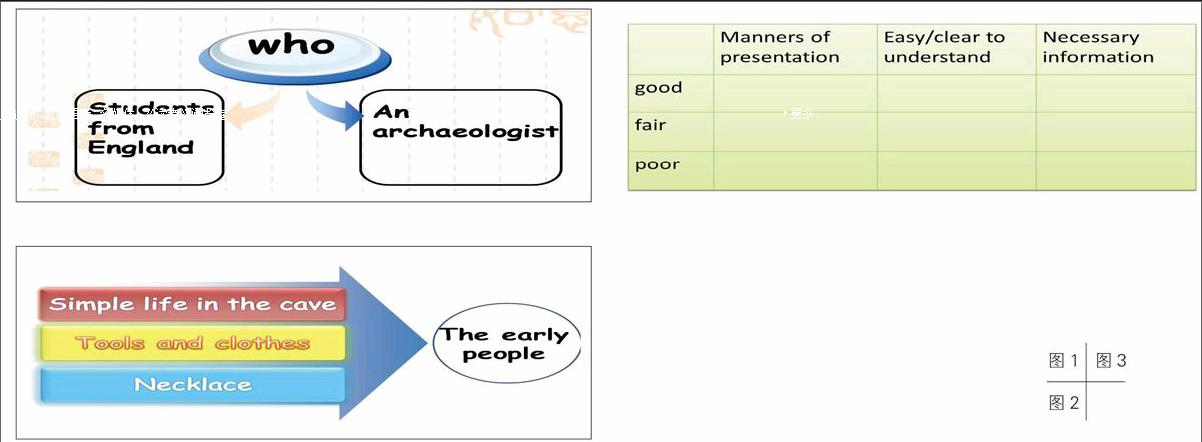
步驟3:First-time reading (reading for general idea) ( 3 mins)(見圖1)
(1) Go through the text quickly and find out who visited Zhoukoudian caves:
(2) What is the main idea of this reading?
A. The farming and hunting of the earliest people.
B. The introduction of a group of English students to the Zhoukoudian caves.
C. The trade between the earliest people.
D. A brief introduction to the life of the earliest people in the Zhoukoudian caves in China.
(3) What did the archaeologist show to the students?
a needle a necklace and…
Its here that we found evidence of some of the earliest people.
(What does here refer to?) The cave.
設計意圖:讓學生迅速瀏覽全文,了解這篇文章的題材特點。通過運用一定的閱讀技巧來回答以上問題,把握文章主要脈絡。同時鍛煉學生通過課文中圖片的內容迅速捕捉課文信息的能力,以及通過上下文進行推理判斷的能力。
步驟4:Second-time reading(reading for detailed information) (13 mins)
(1) Answer some questions concerning the first part.
① How could they live here?
②How did they keep warm?
③What wild animals were there all that time ago?
Conclusion : the archaeologist explained the simple life of Peking man to students.
(2) Get the main idea of the second part by answering the following questions and put some sentences in right order.
①What does the needle look like?
②How did they make clothes?
Arrange them in the right order:
a. removing the skin
b. rubbing salt onto the skin
c. removing the fat and meat from the skin
d. cutting up animals
e. cutting the skin and sewing the pieces together
答案:d a c b e
Conclusion: the archaeologist focused on the tools and clothes.
(3) Fill in the blanks and answering the question.
Whats the necklace made of ?
Some beads were made of animal ______ but some were made of ______ .
Why was the archaeologist sure that some beads were made of fish bones?
Conclusion : Archaeologist showed something related to the necklace to the students.
Final Conclusion: With the help of archaeologist, the students learned something about the simple life, the tools & clothes and necklace of the early people.(見圖2)
設計意圖:讓學生通過二次閱讀課文,完成上述練習,主要是幫助學生獲得并理解文章的細節信息。通過對細節問題的理解,使學生在考古學家的幫助下形成對早期人類生活的初步認識,并對考古學家如何得知早期人類生活狀況形成初步的認識。學生可以從文中找答案,并通過討論文本概括大意,充分調動學生的學習積極性,使之成為課堂的主角。
步驟5 :Third-time reading: critical thinking (7 mins)
Can you find some phrases or sentences that the archaeologist used to explain things to the students.
We think it is reasonable to assume…
We have been excavating…
We have been finding…
Our evidence suggests…
It seems…
As the botanical analyses have shown us…
設計意圖:第三次閱讀文本,讓學生體會考古學家語言,分析語篇中的一些重要句式結構。同時運用批判性思維,了解考古學家的工作及其科學性,也為下一部分的使用語言積累素材。在這一部分,學生進行分組閱讀,相互探討,體現出新課程“合作學習”理念。
步驟6 :Producing time (12 mins)
Make a presentation on “Cultural Heritage Day” in order to improve students speaking skills and have a better understanding of the whole text.(見圖3)
設計意圖: 通過組織學生分組對課文進行重組,以考古學家的口吻為六月份的第二個星期六的“中國遺產日”做有關周口店的口頭報告,使學生在對周口店了解的基礎上進行擴展性運用,即總體概況——詳細介紹——個人看法,目的在于加深對文章內容的理解,同時又鍛煉學生的綜合語言運用能力,也側重提高學生說的能力。在這一部分對學生所學知識進行整體評價。
步驟7 : Homework (1 min)
Peking Man site under great threat
The Peking Man site at Zhoukoudian is facing an unprecedented(前所未有的) threat from humans and natural disasters. Experts warned that it might be taken off the World Heritage Site list if no action was taken to protect it.
……
1. Find more information about its current situation.
2. Write a poster to call on people to protect it.
設計意圖:學生在學完本節閱讀后的擴展閱讀,通過考古學家的講解,學生已經了解到早期的人類生活及周口店的重要地位,但是目前周口店這一文化遺址受到了很多的外來威脅,讓學生在已有知識基礎上進行課外閱讀,同時號召人們要尊重考古學家的發現并保護文化遺址。
六、教學評價設計
評價內容:1、 學生在課上所表現出來的通過閱讀策略理解文章的具體情況; 2、學生能否站在考古學家的角度重新審視這篇文章,對材料進行重組,能否全面、清楚的介紹給大家;3、學生是否加強了自身的學習主體意識、小組活動的參與度以及交流的能力。
評價方法:課堂觀察評價,師生互評,生生互評,學生自我評價。◎
猜你喜歡
學習方法報·小學語文一年級期末專號(2024年12期)2024-12-15 00:00:00
學習方法報·小學語文一年級期末專號(2024年12期)2024-12-15 00:00:00
學習方法報·小學語文一年級期末專號(2024年6期)2024-12-03 00:00:00
小哥白尼(野生動物)(2022年6期)2022-08-17 08:05:28
小哥白尼(野生動物)(2022年4期)2022-07-16 03:37:32
小哥白尼(野生動物)(2022年2期)2022-06-01 06:21:20
小哥白尼(野生動物)(2022年1期)2022-04-26 14:01:18
學生天地(2020年17期)2020-08-25 09:28:54
文苑(2020年4期)2020-05-30 12:35:30
小學生作文(中高年級適用)(2018年3期)2018-04-18 01:24:47
