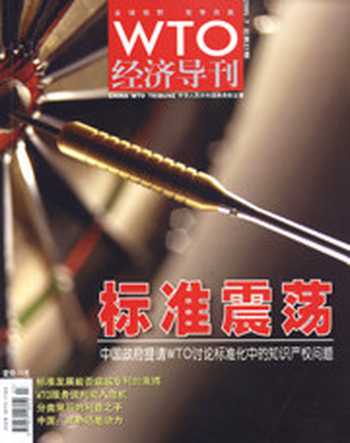
標準化中的知識產權問題
2005-04-29 08:52:51中華人民共和國提案
WTO經濟導刊 2005年7期
中華人民共和國提案

(下文提案于2005年5月23日收到,應中華人民共和國代表團要求散發)
背景
1、世界貿易組織《技術貿易壁壘協定》(TBT協定)在其序言中指出,“國際標準和合格評定體系通過提高生產效率和便利國際貿易的進行”促進GATT1994目標的實現。該協定第2.4條規定“如需制定技術法規,而有關國際標準已經存在或即將擬就,則各成員應使用這些國際標準或其中的相關部分作為其技術法規的基礎。
2、在《TBT協定》實施過程中,特別是在協定要求成員盡可能地采用國際標準的情況下,國際標準制定工作應保證國際標準的效率和質量,應充分考慮成員在采用國際標準中遇到的困難,以便利成員采用國際標準和《TBT協定》的實施。
3、國際標準化組織(ISO)、國際電工委員會(IEC)、國際電信聯盟(ITU)等國際標準化組織已注意到,提高國際標準的效率和質量,須解決標準與其中的受知識產權保護的技術之間的關系。為此,這些機構已制定了標準化中的知識產權政策。這些政策希望相關方能夠及時披露與擬議的標準相關的知識產權信息,并建議知識產權所有人做出接受RAND原則的聲明,即在與標準的潛在實施者進行許可談判時遵循合理、無歧視的原則。這些政策為我們提供了良好的技術基礎和可遵循的路線。
4、但是,由于標準化機構的職能限制及該問題本身的復雜性,有些問題并不能通過上述標準化中的知識產權政策得到有效解決。例如,標準化機構聲稱他們不對成為必要知識產權的技術的相關信息負責;應有更多的具體措施鼓勵相關方公開相關信息;如果相關方的利益不能得到有效協調,不僅可能影響標準化進程,還可能損害標準的質量;在國際標準制定工作因知識產權問題不能達成一致而不能順利進行時,應探討除取消或重新起草標準之外其他更為有效的解決方案;相關方對RAND原則的解釋不統一,不利于知識產權所有人和申請者之間達成一致,增加了采標效果的不確定性。
5、為保證標準的質量,國際標準制定工作應涵蓋體現當時發展水平的技術;標準中受知識產權保護的技術應被給予充分和合理的保護,以維護知識產權所有人的利益。標準化中的知識產權政策應實現標準化需要和知識產權保護之間的平衡。
建議
6、中國政府認為,國際標準制定和采用中的知識產權問題,已對各成員根據TBT協定要求采用國際標準、便利國際貿易造成阻礙。WTO應該考慮到該問題對多邊貿易的消極影響,并就與該問題相關的多邊貿易政策進行探討。
7、我們并不認為TBT委員會應對上述所有的問題負責。但因為《TBT協定》鼓勵成員采用國際標準,而上述問題對國際標準制定的效率和質量以及成員采用國際標準的效果有重要意義,因此,“標準化中的知識產權問題”與TBT協定密切相關。
8、所以,中國政府建議,TBT委員會應利用其三年審議的工作優勢就該問題進行討論,尋求解決這一問題的方法和政策,以便推動國際標準的制定和實施,從而促進《TBT協定》的實施。
9、“標準化中的知識產權問題”有重要的“發展”內涵。TBT委員會應當徹底討論該問題,這將有助于增強發展中成員參與國際標準化活動和國際貿易。其間,發展中成員面臨的困難及他們在技術援助和能力建設方面的需要等,在委員會就該問題的討論中應被給予充分的關注。
標準化中的知識產權問題(英文版)
INTELLECTUAL PROPERTY RIGHT (IPR) ISSUES IN STANDARDIZATION
Communication from the Peoples Republic of China
The following communication, dated 23 May 2005, is being circulated at the request of the Delegation of the People's Republic of China
I. BACKGROUND
1. WTO Agreement on Technical Barriers to Trade (TBT Agreement) points out in its Preamble that international standards and conformity assessment systems can make important an contribution to further the objectives of GATT 1994 by improving efficiency of production and facilitating the conduct of international trade. Meanwhile, Article 2.4 of TBT Agreement stipulates that "Where technical regulations are required and relevant international standards exist or their completion is imminent, Members shall use them, or the relevant parts of them, as a basis for their technical regulations…".
2. In the context of the TBT Agreement implementation, especially the provision of the Agreement that Members shall adopt international standards as much as possible, it is necessary to ensure, in the process of international standards preparation, the efficiency and quality of international standards and also to take into account the difficulties Members may encounter in the application of international standards so as to facilitate Members adoption of international standards and implementation of the TBT Agreement.
3. International standardization bodies such as the International Organization for Standardization (ISO), the International Electrotechnical Commission (IEC) and the International Telecommunication Union (ITU) have already noticed that, to enhance efficiency and quality of international standards, relations between standards and technologies covered by IPR ought to be treated properly. Therefore, these bodies have established policies concerning IPR in standardization which encourage concerned parties to disclose IPR information related to proposed standards in a timely manner. These organizations also recommended that IPR holders declare their acceptance of RAND principle, i.e., they would negotiate licensing terms with potential applicants in a reasonable and non-discriminatory manner. These have provided Members with a good technical base and a roadmap to follow for possible work of the WTO in this field.
4. However, limited by their functions and due to the complexity of the issue itself, there are still many issues which could not be solved efficiently with the above IPR policies in standardization. For example, standardization bodies declare that they shall not be responsible for concerned information about essential IPRs to be integrated into standards. There should be more concrete measures to encourage concerned parties to disclose related information. If the interests of concerned parties could not be effectively coordinated, not only the process of standardization will be impaired, but also the quality of standards will be negatively effected. More effective measures, aside from withdrawing or redrafting standards, should be explored once international standards preparation could not be carried forward due to divergence on IPR positions. Interpretations of related parties for RAND principles are inconsistent and therefore it is often difficult to achieve consensus among IPR holders and applicants, which increases uncertainty of international standard adoption.
5. International standard preparation should include technologies reflecting present technique development level in order to assure the quality of standards. Technologies protected by IPR in standards should be given sufficient and reasonable protection to safeguard IPR holders interests. IPR policies in standardization should help strike a balance between standardization needs and IPR protection.
II. PROPOSAL
6. China is of the view that, IPR issues in preparing and adopting international standards have become an obstacle for Members to adopt international standards and facilitate international trade. It is necessary for the WTO to consider negative impacts of this issue on multilateral trade and explore appropriate trade policies to resolve difficulties arising from this issue.
7. The TBT Committee is not supposed to be responsible for all of the above complex questions. However, the TBT Agreement encourages Members to adopt international standards, and those issues are significant not only for the efficiency and quality of international standards development, but also for Members standards adoption. The issue of IPR in standardization is of close relevance to the TBT Agreement.
8. Therefore, China proposes that TBT Committee should take advantage of the discussion nature of the Triennial Review and discuss this issue so as to develop proper approaches and policies to promote the development and implementation of international standards as well as more effective implementation of the TBT Agreement.
9. IPR issue in standardization has important development implications. The TBT Committee should fully discuss this issue. This will help enhance developing Members participation in the work of international standardization and in international trade. In this process, difficulties that developing Members may encounter and their needs for technical assistance and capacity building should be given sufficient consideration.
猜你喜歡
城市道橋與防洪(2022年4期)2022-07-01 06:04:12
口腔護理用品工業(2021年4期)2021-11-02 08:22:56
甘肅教育(2020年14期)2020-09-11 07:57:42
當代陜西(2019年8期)2019-05-09 02:22:48
動漫星空(興趣百科)(2019年3期)2019-03-07 07:23:10
中國公路(2017年9期)2017-07-25 13:26:38
專用汽車(2016年4期)2016-03-01 04:13:43
汽車維修與保養(2015年8期)2015-04-17 03:32:51
時代英語·高二(2015年1期)2015-03-16 00:08:11
中國衛生(2014年11期)2014-11-12 13:11:32