基于優化組合方法的光伏臺區電能質量預警方法研究
2024-12-31 00:00:00劉牛錢星旭單光瑞王惠娟胡登宇
科技創新與應用
2024年20期

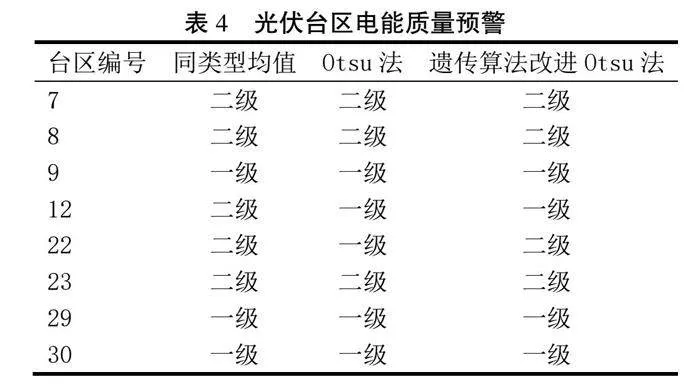


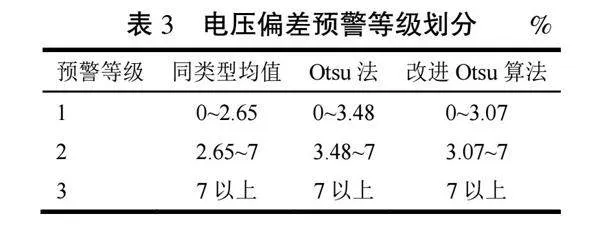
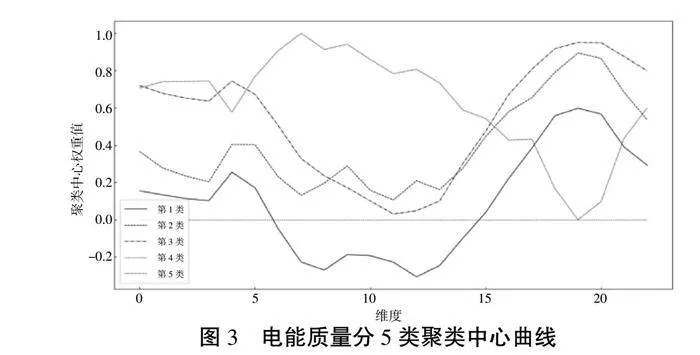
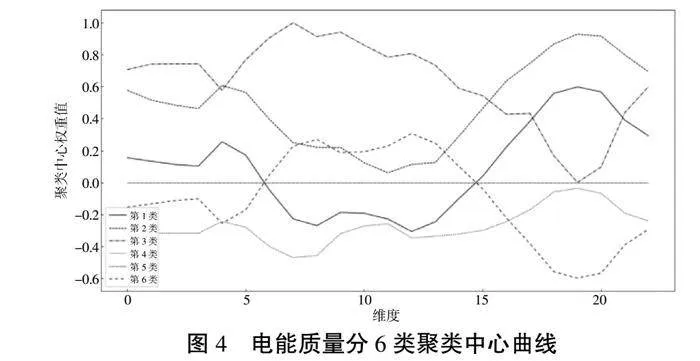


摘 "要:日益增多的分布式發電加劇了電能質量問題的產生,為確保電能質量,對電能質量進行合理預警具有重要意義。該文提出一種基于組合優化方法的光伏臺區電能質量預警模型。首先針對光伏臺區電能質量指標,利用SOM(Self-Organizing Map,自組織映射)神經網絡算法建立聚類模型,得到臺區分類結果及其對應的聚類中心。然后,利用基于遺傳算法改進后的Otsu法(最大類間方差法)確定各類別電能質量指標的預警閾值,構建出基于優化組合方法的電能質量預警體系。最后以江蘇省某片光伏臺區監測點電能質量數據進行仿真計算,結果表明所提方法具有良好的適應性,并能有效應用于電能質量預警。
關鍵詞:電能質量;SOM神經網絡;遺傳算法;Otsu法;仿真計算
中圖分類號:TM711 " " "文獻標志碼:A " " " " "文章編號:2095-2945(2024)20-0008-05
Abstract: The increasing number of distributed generation aggravates the problems of power quality. In order to ensure power quality, reasonable early warning of power quality is of great significance. In this paper, a photovoltaic power quality early warning model based oncombinatorial optimization method is proposed. Firstly, aiming at the power quality index of photovoltaic station, a clustering model is established by using SOM (Self-Organizing Map) neural network algorithm, and the classification results and corresponding clustering centers are obtained. Then, the Otsu method maximum inter-class variance method) improved based on genetic algorithm is used to determine the early warning threshold of all kinds of power quality indicators, and the power quality early warning system based on optimal combination method is constructed. Finally, the power quality data of a photovoltaic station in Jiangsu Province are simulated, and the results show that the proposed method has good adaptability and can be effectively applied to power quality early warning.
Keywords: power quality; SOM neural network; genetic algorithm; Otsu method; simulation calculation
隨著國家“雙碳”政策的提出與實施,新能源發電迎來新一輪大發展,風電光伏等分布式電源在電網中大量接入,必然會加劇其中的電能質量問題,甚至引發電力事故。因此,在各個光伏臺區搭建電能質量監測系統,實時地采集電能質量數據愈發必要[1-2]。國內目前對于電能質量的研究大多集中于擾動檢測方向[3-4]。直接對電能質量指標進行分析的不多。因此針對性地對電能質量穩態指標進行分析預測,搭建合理有效的電能質量預警體系具有重要的工程性意義。
在電能質量預警的研究方面,文獻[5]采用基于偏度和峰度的HOSAD算法以及電能質量分級預警流程,對采集數據中的超標值和異常值進行深度挖掘,并分析其嚴重性。……
登錄APP查看全文