速生-精養(yǎng):留仙洞規(guī)劃實踐回顧
2024-06-16 12:31:37黃衛(wèi)東
世界建筑導(dǎo)報
2024年2期
關(guān)鍵詞:就業(yè)
黃衛(wèi)東


摘要:在深圳產(chǎn)業(yè)經(jīng)濟轉(zhuǎn)型的關(guān)鍵時期,留仙洞應(yīng)運而生,先天帶有速生和高強度的基因。規(guī)劃階段響應(yīng)深圳產(chǎn)業(yè)經(jīng)濟轉(zhuǎn)型的底層邏輯,適應(yīng)戰(zhàn)略性新興產(chǎn)業(yè)、科技企業(yè)、人才、開發(fā)模式等需求和要求,空間與產(chǎn)業(yè)等多規(guī)合一總結(jié)規(guī)律,建立了創(chuàng)新型產(chǎn)業(yè)社區(qū)的速生空間框架,為市場的不確定性提供了多樣化容器,建立了一個兼具剛性約束與創(chuàng)意留白的控制性規(guī)劃(以下簡稱“控規(guī)”)四級管控體系,為后續(xù)的開發(fā)企業(yè)的市場化決策和建筑師的空間創(chuàng)意留足空間,開發(fā)模式上國企現(xiàn)行并廣泛宣傳,引導(dǎo)市場積極跟進,共同推動高質(zhì)量的單元開發(fā)。單元開發(fā)階段繼續(xù)采用空間、產(chǎn)業(yè)等多規(guī)合一工作方式,深入調(diào)研科技型中小企業(yè)和創(chuàng)新人才的具體需求,校核產(chǎn)業(yè)與空間的耦合關(guān)系,并采用投融資規(guī)劃、國際競賽、城市設(shè)計工作坊等手段,多元力量精耕細作,鼓勵多元建筑設(shè)計創(chuàng)意,實現(xiàn)了用戶需求自下而上的反饋與開發(fā)企業(yè)的快速響應(yīng),共同推動規(guī)劃的高質(zhì)量落地實施。
關(guān)鍵詞:產(chǎn)業(yè);就業(yè)(人);空間供給
Abstract: During the critical period of Shenzhen's industrial and economic transformation, Liuxiandong District was strategically developed with rapid growth and high-intensity characteristics. In the planning phase, the planning strategy is in harmony with the fundamental logic of Shenzhen's industrial and economic transition, tailored to accommodate the demands of strategic emerging industries, technological enterprises, talent acquisition, and innovative development paradigms. Summarizing the patterns of multi-planning integration, encompassing space and industry, has resulted in the establishment of a rapid development framework for an innovative industrial community, providing a platform for market uncertainties. Furthermore, a four-tier regulatory control system has been instituted, which harmonizes rigid regulatory constraints with creative flexibility, thereby affording ample space for market-oriented decisions by subsequent developers and for architectural creativity in spatial design. In terms of development models, state-owned enterprises take the lead in piloting. Through the pilot initiatives and subsequent promotion by state-owned enterprises, the market is actively encouraged to follow suit, collectively fostering the development of high-quality units. In the unit development phase, the approach continues with Multi-planning Integration, encompassing spatial and industrial planning, to conduct in-depth research into the specific needs of technology-oriented small and medium-sized enterprises and innovative talents. This process also involves verifying the coupling relationship between industry and space. Additionally, a range of strategies are employed, including investment and financing planning, international competitions, and urban design workshops. This multi-faceted effort encourages diverse architectural design innovation, facilitates bottom-up feedback from users, and ensures rapid response from development enterprises. Collectively, this approach aims to achieve the high-quality implementation of the planning strategy.
Keywords: Industry; Employment; Spatial supply
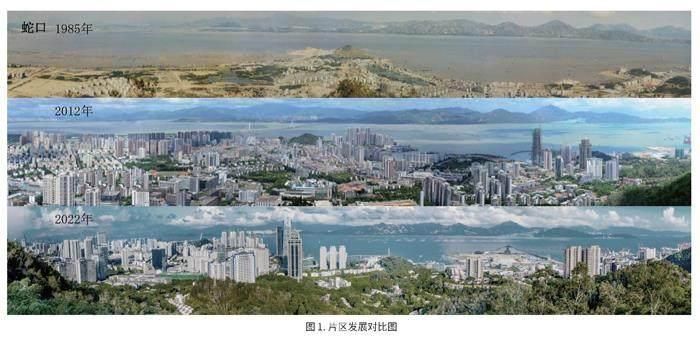
深圳是一座速生的城市,經(jīng)濟社會發(fā)展迅猛。從早期的OEM到山寨模仿,再到“深圳制造”分工協(xié)同產(chǎn)業(yè)鏈體系的構(gòu)建,形成良好的產(chǎn)業(yè)生態(tài)雨林,直至今日科學引領(lǐng)的創(chuàng)新時代,這座城市在快速劇變中發(fā)展成長,創(chuàng)造了世界城市建設(shè)發(fā)展的中國式現(xiàn)代化范例。2012年,在經(jīng)過長達30多年的快速發(fā)展后,深圳的城市發(fā)展面臨著再次轉(zhuǎn)型,產(chǎn)業(yè)快速迭代升級、土地資源日趨緊張。……
登錄APP查看全文
猜你喜歡
人間(2016年27期)2016-11-11 16:33:26
體育時空·上半月(2016年11期)2016-11-11 13:25:10
知音勵志·社科版(2016年9期)2016-11-09 06:35:54
知音勵志·社科版(2016年8期)2016-11-05 05:43:44
知音勵志·社科版(2016年8期)2016-11-05 02:42:25
科學與財富(2016年28期)2016-10-14 05:58:28
大學教育(2016年9期)2016-10-09 08:25:02
考試周刊(2016年76期)2016-10-09 08:13:25
大學教育(2016年9期)2016-10-09 07:57:56