The Art of Spatial Narration by Towers and Mountains: A New Interpretation of Traditional Chinese Gardening
2024-04-26 07:22:59
中國新書(英文版) 2024年1期
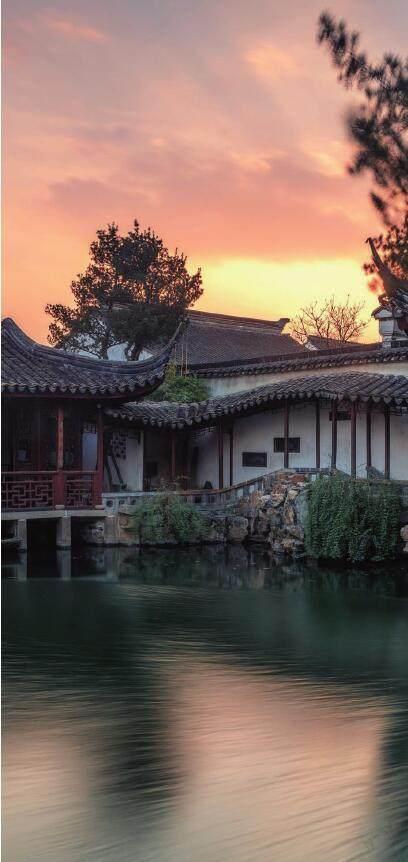
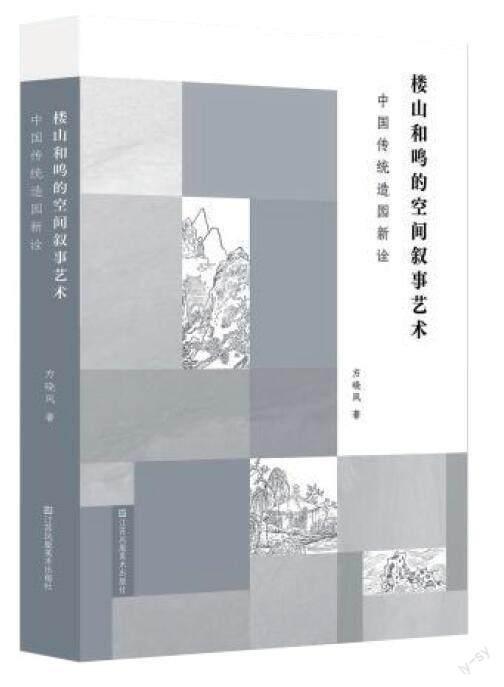
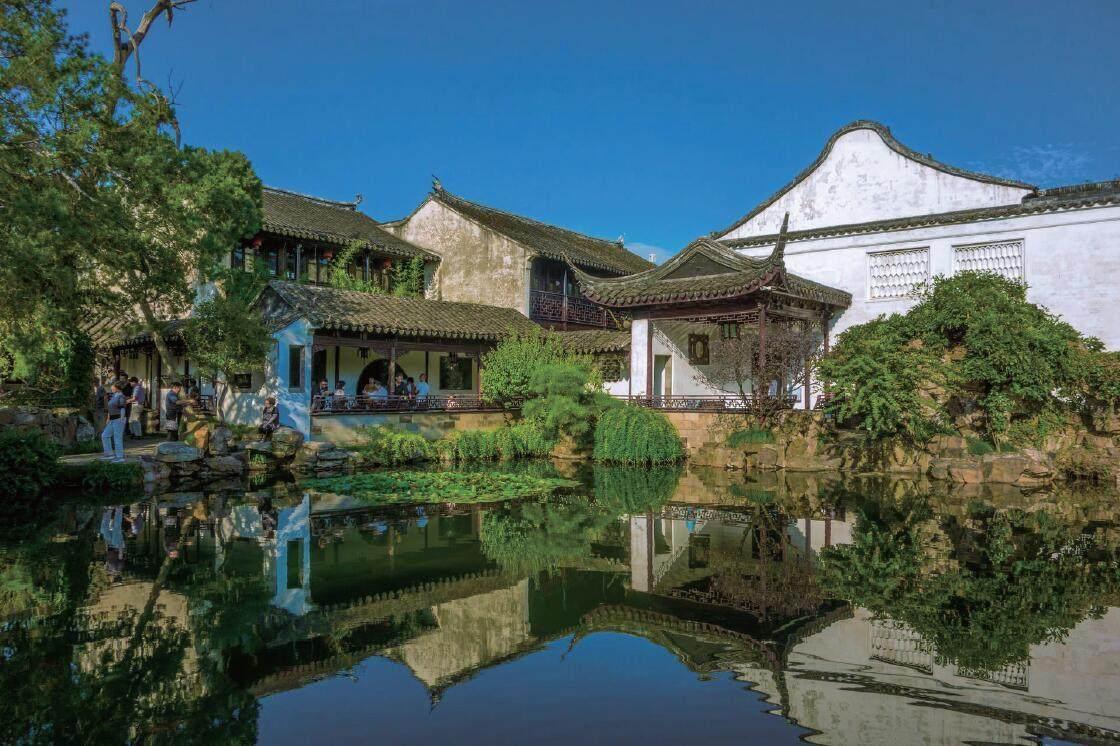
This book, grounded in the practical principles of design disciplines, takes existing garden relics as its subject, considering them as a holistic cultural phenomenon and interpreting them through a logic of reverse engineering. It seeks to uncover the correspondence between traditional garden spatial narratives and the aesthetic intentions pursued by ancient gardeners, thereby revealing universal principles in traditional garden design thinking.
Fang Xiaofeng
Fang Xiaofeng is the vice dean and a tenured professor at the Academy of Arts & Design, Tsinghua University, doctoral supervisor, and the chief editor of Decoration magazine. He also serves as deputy director of the Beijing International Design Week Organizing Committee Office and director of the Fifth Council of the China Journal Association.
The book starts by exploring the close relationship between Chinese classical gardens and literature, using narratology as an entry point to examine the similarities and differences between gardens and literary narratives. It summarizes the narrative features of Chinese classical gardens, focusing on artistic conception as the goal and mountain-water relationships as the core content, establishing a theoretical framework for spatial narratives in Chinese classical gardens based on these elements. The author uses landscape as the key to interpreting gardens, delving into the mysteries of classical gardens. Through reverse engineering of garden relics, the author analyzes their narrative concepts and techniques. Based on specific and nuanced narrative strategies, the author further substantiates and refines the theoretical model of spatial narrative in classical gardens, proposing insightful new perspectives on garden narratives such as “dualistic aesthetics” and “using buildings to replace mountains.” Finally, the book applies the theory of mountains and waters narratives to guide design practice, validating its effectiveness and feasibility through several practical design projects and demonstrating its value in contemporary design practice.
While previous studies often mention the concept of mountains and water and their importance in gardens, they seldom regard the spirit of mountains and water as the underlying logic of garden design. The author believes that in Chinese traditional culture, “mountains and water” is a concept based on a “dualistic” relationship, where mountains imply the presence of water, and without water, mountains are incomplete. Misunderstandings about this concept today stem from a narrow understanding of “mountains and water,” often limited to their superficial aspects. In fact, mountains and water are not just physical concepts but also expressions of spiritual and cultural dimensions. The landscape of Chinese gardens, like Chinese literature and painting, often exists between the concrete and the abstract, the resembling and the dissimilar. From natural landscapes to constructed mountains and ponds, to “using buildings to replace mountains,” from visually visible landscapes to behaviorally perceived ones, to intentionally constructed landscapes, “landscape” has long transcended the human scale. Concepts of time, space, and human experience are incorporated. Spatial patterns, landscape elements, decorative textures, etc., can all form landscape images through rhetorical devices such as dualism and intertextuality.
Rethinking the concept of mountains and waters helps us reassess the value of Late Qing Dynasty gardens from a new perspective. In the development of mountain-water relationships, traditional gardens have naturally progressed from flatland gardening to the natural evolution of “Replacing Mountains with Towers.” Looking back at Late Qing gardens, the “transformation of mountains” seems omnipresent. The image of the mountain transcends the visible layer, with mountain paths abstracted from physical forms and architectural relationships simulating mountains and water, allowing visitors to perceive the essence of “mountains” during their journey. This perspective challenges the linear historical view of evolution that has dominated critiques of Late Qing Dynasty gardens. This theory is particularly significant in interpreting Late Qing Lingnan gardens. Using the concept of “Replacing Mountains with Towers” to interpret Ke Garden and Yuyin Mountain House offers a clear understanding, revealing the continuity of the mountains and water concept in Chinese culture and elevating garden-making skills to a transformative level.
Based on a design studies perspective, this research, after comprehensively understanding and mastering ancient gardening art and techniques, forms universal design strategies and constructs a theoretical system for spatial narratives in Chinese traditional gardens. The ultimate goal is to integrate the rich spatial techniques of Chinese traditional gardens into contemporary contexts, inspiring current spatial design practices in China. The authors design practices are based on this framework, serving as multiple validations and experiments of classical garden design theories.
Chinese traditional gardens are diverse, with existing examples widely distributed. Due to limitations, this book could not analyze and interpret every type and region of domestic gardens, inevitably leading to biased and insufficient research. More tasks remain for future study. Chinese garden culture is profound and extensive, with the research task being arduous and long. We bear an inescapable responsibility in this endeavor.
The Art of Spatial Narration by Towers and Mountains: A New Interpretation of Traditional Chinese Gardening
Fang Xiaofeng
Jiangsu Phoenix Fine Arts Publishing House
September 2023
148.00 (CNY)