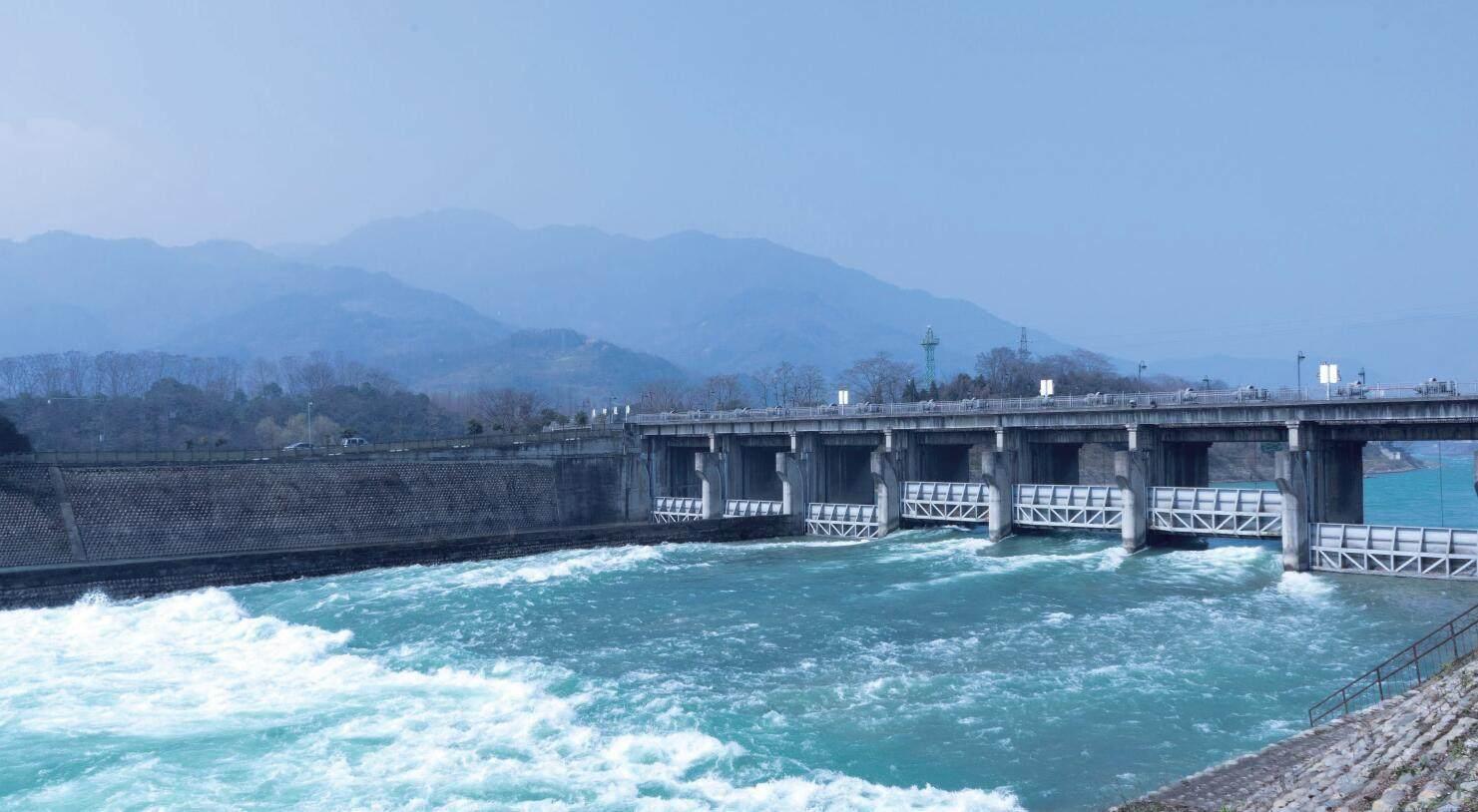
Jiangdu Water Conservancy Hub Project
2024-04-26 10:01:26
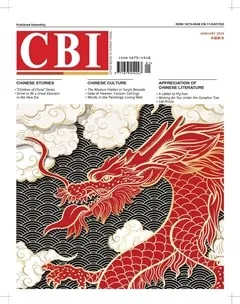
中國(guó)新書(英文版) 2024年1期


This series is a comprehensive introduction to the development of water conservancy engineering and technology in China over the century since the founding of the Communist Party of China. It covers the historical development, engineering scientific principles, stories of scientists, and significant achievements, reflecting the progress of the water conservancy sector and the contributions made by water conservancy workers toward building a strong water management nation. The series includes two volumes: A Hundred Years, A Hundred Projects and A Hundred Years, A Hundred Great Yus (禹).
Wu Zhongru
Wu Zhongru is a member of the Communist Party of China, an expert in hydraulic structures, an academician of the Chinese Academy of Engineering, a professor, and a doctoral supervisor. He has been engaged in research in the fields of hydraulic structures and safety monitoring for a long time.
Tang Hongwu
Tang Hongwu is a member of the Communist Party of China, an expert in the field of plain hydrodynamics and river and lake governance engineering, an academician of the Chinese Academy of Engineering, a professor, a doctoral supervisor, and currently the secretary of the Party Committee of Hohai University.
Xu Hui
Xu Hui is a member of the Communist Party of China, a professor, a doctoral supervisor, and former president of Hohai University. He has long been engaged in teaching and scientific research in the direction of agricultural water and soil engineering, water conservancy, and hydropower engineering.
A Large Water Conservancy Hub Connecting the Yangtze and Huai River Systems
Jiangdu Water Conservancy Hub Project is located in Jiangdu District, Yangzhou City, Jiangsu Province, downstream of the Yangtze River at the intersection of the Beijing-Hangzhou Canal, the new Tong Yang Canal, and the Huai River into the Yangtze River at the end of the Manda River, connecting the two water systems of the Yangtze River and the Huai River. This project combines a set of water transfer, water supply, irrigation, drainage, navigation, power generation, ecological enhancement, and other functions into one large water conservancy hub, serving as the starting point of the Jiangsu River to North Project and the East-Line Project of South-North Water Transfer.
The hub project consists of four large electric pumping stations, 12 large and medium sluice gates, three ship locks, two culverts, two fish passages, transmission and substation works, and drainage channels, of which the four pumping stations are equipped with a total of 33 sets of large vertical axial flow pump units with an installed capacity of 53 MW and a design pumping capacity of 40 m3/s. It is the largest electric drainage and irrigation project in China and even in the Far East.
Jiangdu Water Conservancy Hub Project was built in 1961 and completed in 1977. The Yangtze River water pumped by the project directly irrigates 200,000 hm2 of rice fields along the Beijing-Hangzhou Canal and the main irrigation canal in northern Jiangsu Province, including Jiangdu, Gaoyou, Baoying, Huaian, and Funing counties (cities). At the same time, water is lifted through Huaian, Zhaohe, Liu Shan, Xietai, and other terrace pumping stations to deliver water for drought relief in northern Huaian. When the northern Su lower river area is threatened by flooding, the Jiangdu drainage and irrigation station can pump water from Jiangdu, Gaoyou, and three other counties (cities) to reduce the water level in the polder area, to ensure the safety of the polder dike and high and stable agricultural production.
When there is more water coming from the Huaihe River, under the condition of satisfying irrigation and drainage and water for canal navigation, the reversible unit of Jiangdu No. 3 station can be started to generate electricity (the main pump is in generator condition) by using the relevant control gate, and its tailwater can be used for irrigation or discharged into the Yangtze River in the Lixia River area. When there is a water shortage for navigation on the Beijing-Hangzhou Canal and for towns along the canal trunk line, the Jiangdu drainage and irrigation station can be activated to supply water to the canal. The water is replenished to ensure water for shipping and towns, and it can even send river water to Xuzhou City and Lianyungang City.
Since its completion, the project has pumped and diverted river water for an average of 158 days per year, with an average annual pumping capacity of four billion m3, making great contributions to the overall progress of the national economy and social undertakings in northern Jiangsu Province. Party and state leaders have visited the project and have given high praise to it. It has also received guests from many countries and regions.
Jiangdu Water Conservancy Hub Project was reasonably planned and designed, with excellent construction quality and standardized scientific management. In 1982, it was awarded the National Quality Project and the National Golden Quality Award. In 2001, it was identified as the “National Water Conservancy Scenic Area” by the Ministry of Water Resources.
Li Yizhi
One Generations Sage of Water and Water Conservancy Pioneer
During Li Yizhis adolescence, Chinese people were suffering from troubles both domestically and internationally. He cared for the country and its citizens with great enthusiasm for saving China with science since his early childhood. He studied twice in Germany and always achieved top rankings in class. But he didnt graduate with a degree. He said, “I came all the way to Germany for knowledge, not a degree. Moreover, I am a government-sponsored student whose expenses are covered by the citizens. Every cent has to be saved, and wasting is unacceptable no matter what.” He taught his students, “To complete great works, not to become great officials. To be pragmatic in everything, not to chase after fame.” “Young people who study engineering should start developing the willingness to benefit the people and the world as students so that when they reflect on what they have learned daily, they can constantly think of how to help the general public.
Li Yizhi (1882--1938), whose given name was “Xie,” was born in Pucheng, Shaanxi Province. He was a water conservancy expert, educator, pioneer, and founder of modern water conservancy in China.
Li Yizhi was smart from a young age and was particularly good at mathematics. In 1909, he graduated from the Imperial University of Peking and was admitted to the Department of Civil Engineering of the Berlin Institute of Technology in Germany. He went back to China in 1911, returned to Germany two years later, and traveled to many European countries. After investigating the modern water conservancy projects in Europe, he deeply felt that Chinas water conservancy fell behind. He transferred to Danzig University in Berlin and majored in hydraulics.
After returning to China in 1915, Li Yizhi served as the dean and professor of Nanjing Hohai Engineering Specialized School (now Hohai University), the first institution of hydraulic higher education in China founded by Zhang Jian. Educating students at the school, which was located right next to Qingliang Mountain, he successfully trained a large number of modern Chinas earliest hydraulic engineering professionals, including Song Xishang, Sha Yuqing, Wang Huzhen, etc. He had made tremendous groundbreaking contributions to the educational cause of hydraulic engineering in modern China. He compiled and wrote textbooks himself, such as Hydraulic Engineering, Hydraulic Engineering Experiments, Practical Hydraulics, etc. Following his advocation, the school led the compilation of some classic textbooks widely spread in public, filling in the blanks in hydraulic education at the time. He translated a variety of foreign hydraulic monographs, actively introduced advanced Western hydraulic technology, and initiated many hydraulic professional terms that are still in use. He also attached great importance to summarizing the water control experience of the ancient working class of our country. He connected the knowledge from China and the West while researching and teaching his students hydraulic engineering. He also extensively collected both Chinese and Western books on river regulation and made various river engineering models while paying great attention to creating opportunities for students to practice. He often took students to different rivers and reached for field visits.
Li Yizhi was a doer in water conservancy who benefited the entire society. In 1922, he left Hohai Engineering Specialized School and returned to his hometown in Shaanxi Province, where he served as director of the Shaanxi Water Conservancy Bureau and Chief Engineer of Weibei Hydraulic Engineering Bureau. The famous water diversion and irrigation project “Eight Irrigation Districts in Guanzhong” was led and planned by him during this period. The Jinghui Canal project he led was the first large-scale irrigation project constructed utilizing modern science and technology. Li Yizhi pioneered transforming Chinese water conservancy from the traditional to the modern era. He was the founder of modern hydraulic science and technology in China. He established Chinas first water resources laboratory and the first hydraulic laboratory. When he served as the chairman and chief engineer of the Yellow River Conservancy Committee, he advocated the concurrent development of the upper, middle, and lower reaches, and proposed the general plan and specific measures for regulating the Yellow River. He was the first water conservancy expert who brought up the idea of “comprehensive water control.”
Li Yizhi devoted his whole life to the undertakings of Chinas water conservancy. As he lay dying, he repeatedly stated, “We should look forward to the new generation and continue working on river regulation following my simple will with scientific approaches and discussions by steps. For water conservancy projects that are still in progress or havent started, manpower and financial resources shall be exhausted to complete them over a short period.”
Century Series on Water Conservancy
Wu Zhongru, Tang Hongwu, Xuhui
Hohai University Press
June 2021
226.00 (CNY)