Skills of Writing
2024-04-02 15:18:35
初中生世界·七年級(jí) 2024年2期
同學(xué)們,經(jīng)過一個(gè)學(xué)期的英語學(xué)習(xí),你的書面表達(dá)能力提升了嗎?來看看自己有沒有掌握下列升格小技巧吧。
[學(xué)會(huì)審題]
在動(dòng)筆之前,要先審題。從體裁(記敘文、議論文、說明文、應(yīng)用文等)、人稱、時(shí)態(tài)語態(tài)、段落安排(開頭、主體、結(jié)尾)去分析,去構(gòu)思。
[圍繞要點(diǎn)]
寫作文時(shí),一定要緊緊圍繞所給要點(diǎn)、材料或圖畫,不要偏題。如果“文不對(duì)題”,寫得再多也是廢話,英語評(píng)分標(biāo)準(zhǔn)中最重要的一點(diǎn)就是“要點(diǎn)齊全”,同學(xué)們一定要根據(jù)要點(diǎn)遣詞造句。
[選擇句型]
要注意長(zhǎng)短句的結(jié)合,合理使用復(fù)合句、并列句或名言、諺語,為文章增色。
[安排段落]
所寫文章要合理安排段落,多數(shù)采用總—分—總結(jié)構(gòu),開頭一段先總引出話題,中間一段或兩段詳細(xì)進(jìn)行敘述,最后一段要進(jìn)行總結(jié)或提出希望。每一段的開頭或最后一句又可以對(duì)本段進(jìn)行概括(叫作本段的主題句)。
[過渡自然]
英語作文評(píng)分標(biāo)準(zhǔn)中還有一條是要“語言連貫,條理清楚”。所以,要合理使用一些關(guān)聯(lián)詞、插入語,如:in my opinion, besides, whats more等。
[寫后檢查]
寫完后要認(rèn)真檢查,看看有無拼寫錯(cuò)誤,還要避免語法和詞匯錯(cuò)誤。
此外,還有幾個(gè)小建議:
1.學(xué)會(huì)鑒賞范文,取長(zhǎng)補(bǔ)短。看看范文是怎么構(gòu)思、怎么遣詞造句、怎么安排段落、怎么寫開頭結(jié)尾、怎么過渡的。平時(shí)也要多看、多分析、多背誦優(yōu)秀作文。
2.堅(jiān)持寫日記、周記。要保證每周至少寫一篇英語作文,堅(jiān)持不懈,養(yǎng)成良好的寫作習(xí)慣。這樣,同學(xué)們的英語表達(dá)能力、英語綜合運(yùn)用能力自然而然也就提升了。
3.作文寫好了,可與同學(xué)互改,改別人的作文也是一種很好的訓(xùn)練。作文寫好了,同學(xué)改過還要交給老師點(diǎn)評(píng),知道自己好在什么地方、哪些地方還需要改進(jìn),這樣進(jìn)步就更大了。
下面,讓我們?cè)賮砭毾鹿P吧。
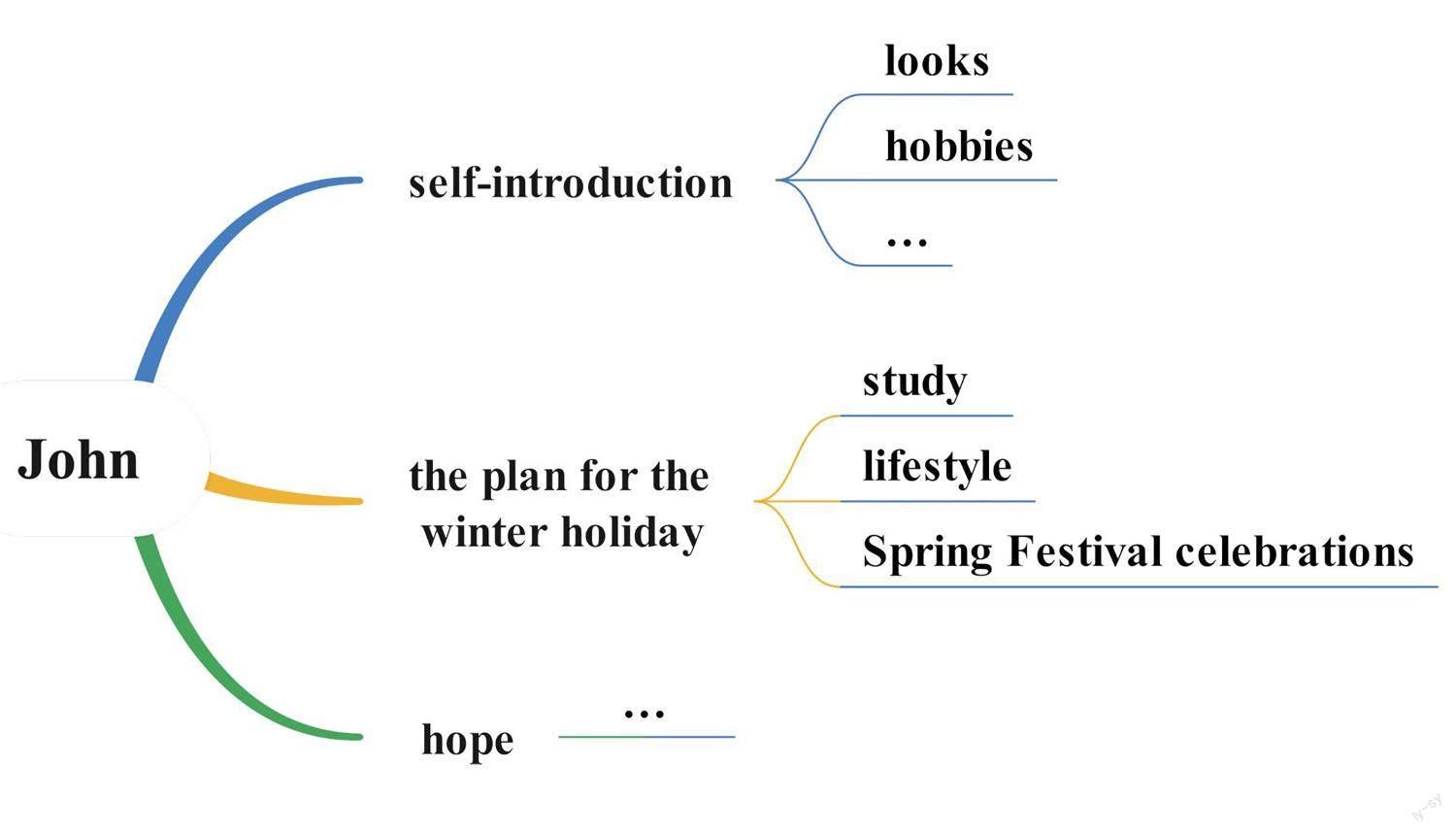
假如你是七年級(jí)學(xué)生李剛,英文名叫John。英國(guó)交換生Tom將于下學(xué)期到你校學(xué)習(xí)。為提前適應(yīng)中國(guó)生活,他將于今年寒假提前到達(dá)中國(guó)并借住在你家,和你共度寒假。請(qǐng)根據(jù)以下要點(diǎn),用英語寫一封信向其介紹自己以及寒假計(jì)劃,表達(dá)對(duì)Tom的歡迎。
Dear Tom,
I am John. Im very glad to learn that you will live with me in the winter holiday.
Im strong and tall. I like playing basketball very much. I am a member of our school basketball team. I always play basketball for an hour a day. In my free time, I love listening to music.
I have a plan for the winter holiday. At first, we will study. You need to master Chinese. And I must learn more English words. Next, we will have a good lifestyle. We will get up at 7:30. For breakfast, we will have milk and bread. We will have some fish and vegetables for lunch and dinner. And we shouldnt have too many cakes or sweet. At last, the Spring Festival is coming. We will get new clothes and red packets from my parents. We will have a party to celebrate the Spring Festival.
Last but not least, I hope we will have a good time.
Best Wishes!
Yours
John
此處可以適當(dāng)補(bǔ)充聽音樂的好處,可以使語言更自然、豐富。
at? first,at last用詞不當(dāng),英語中表示順序的詞常為first,next,last等。
關(guān)于春節(jié)的慶祝活動(dòng),可以用更生動(dòng)的語言表達(dá)出對(duì)春節(jié)的喜愛和期盼之情,如可以寫一寫演出、燃放煙花、走親訪友等慶祝活動(dòng)。
表達(dá)hope的部分,內(nèi)容還可以再豐富些,更好地表達(dá)出希望兩人能夠度過一個(gè)愉快的寒假的心情。
信的結(jié)尾可以加上“Im looking forward to seeing you”之類的句子,以表明對(duì)交換生到來的期盼。
Dear Tom,
I am John. Im very glad to learn that you will live with me in the winter holiday.
Im strong and tall. I like playing basketball very much, so I always play basketball for an hour a day. Now I am a member of our school basketball team. In my free time, I also love listening to music because it can help me relax after a busy day.
I want to share my plan for the winter holiday with you. As students, study must come first. So you need to master Chinese while I must learn more English. Next, it is important for us to have a good lifestyle. Every day, we can get up early to do exercise together. I also plan to eat more fruit and vegetables to keep healthy. Last, the most important thing is to celebrate the Spring Festival. We will have a lot of fun, like wearing new clothes and getting red packets. I am sure you will also enjoy letting off fireworks and visiting relatives with us.
I hope you will spend a wonderful winter holiday in China and we will enjoy ourselves.
I am looking forward to seeing you soon! I cant wait!
Yours
John
(江蘇省泰州市汪群初級(jí)中學(xué) 劉蕓汐)
本文是一篇寫給交換生的書信作文,文章的語言表達(dá)符合書信的寫作要求,全文思路結(jié)構(gòu)清晰,層次分明。進(jìn)行自我介紹時(shí),小作者使用了so, because之類的關(guān)聯(lián)詞,使文章銜接更自然。介紹寒假計(jì)劃時(shí)使用“I want to share my plan for the winter holiday with you”一句引出整個(gè)寒假計(jì)劃。接著使用first...next...last將寒假安排娓娓道來,宛如行云流水,整篇文章一氣呵成。升格作文中增加了一些細(xì)節(jié)描寫和表達(dá)情感的句子 ,使文章語言更加靈動(dòng),字里行間充滿了對(duì)寒假生活的期盼。
猜你喜歡
中學(xué)生數(shù)理化·七年級(jí)數(shù)學(xué)人教版(2023年3期)2023-03-21 00:44:54
保健醫(yī)苑(2022年5期)2022-06-10 07:47:26
學(xué)校教育研究(2020年13期)2020-07-07 09:31:30
作文評(píng)點(diǎn)報(bào)·小學(xué)五、六年級(jí)(2017年19期)2017-05-23 20:14:53
作文評(píng)點(diǎn)報(bào)·低幼版(2017年19期)2017-05-23 14:48:28
作文評(píng)點(diǎn)報(bào)·高中版(2017年15期)2017-04-15 18:54:11
作文評(píng)點(diǎn)報(bào)·高中版(2017年13期)2017-04-15 17:58:45
小學(xué)生導(dǎo)刊(低年級(jí))(2016年2期)2016-02-24 23:02:11
冶金經(jīng)濟(jì)與管理(2015年1期)2015-02-28 21:08:52
小天使·五年級(jí)語數(shù)英綜合(2014年5期)2014-06-25 05:22:42