印度的非正式資源回收體系推動社會走向循環建造
2024-01-27 19:38:34迪皮卡拉古凱瑟琳沃爾夫
世界建筑 2024年1期
迪皮卡·拉古,凱瑟琳·德·沃爾夫
在發展中國家迅速崛起的過程中,建筑和建材廢料都呈指數級增長,原來線性的建材廢料管理體系必須向循環利用的體系轉變。在印度,從事建材回收再利用的企業雖然主要是未正式注冊的地方性企業,但它們為國家的經濟增長做出了巨大貢獻。本文研究了孟買和班加羅爾的建材回收行業涉及的利益相關方和回收流程,重點關注這兩座城市目前的建材資源采購和貿易模式。
通過大量的包括實地考察和訪談在內的田野調查,我們發現印度存在一個高度網絡化的非正式的建材回收體系。在孟買的達拉維地區,有超過 250,000 名工人從事建材回收再利用行業,拾荒者每天能收集 60~90kg 的廢料。班加羅爾的該行業規模相對較小,但情況也很類似,從業者大約有11,000 人。他們的工作帶來了巨大的經濟效益,木材、聚氯乙烯管、玻璃和鐵桿等常見可回收材料的價格較低就說明了這一點。盡管非正式部門的物流和工作環節排放的溫室氣體明顯少于正式部門,但由于數據收集不完善,非正式部門的存在究竟減少了多少碳排放仍然難以準確計算。為了充分挖掘非正式回收供應鏈的碳減排效益,政府、政策制定者和研究人員必須開發針對具體材料的碳排放影響因子和方法論,從而對這些非正式體系中建材產生的碳排放進行生命周期分析。
本研究的一個重要發現是,建立幫助人們共享技能和搭建職業網絡的在線平臺等數字化手段,可以有效促進建材回收再利用行業的發展,形成一個更加包容、高效的生態系統。然而,這一行業的從業者往往面臨許多挑戰,包括污名化、危險的工作條件以及法律和社會保障的缺乏。此外,較低的工作報酬和廣泛的社會阻力等因素也對這些非正式體系構成了威脅,讓它們失去了一些能夠培養行業長期價值的重要機會。
因此,本文呼吁形成有組織的支持行動和公共政策,以增強非正式的建材回收再利用體系的有效性。政策制定者應該將這些體系納入正式的建材廢料管理辦法之中,確保從業者在法律保護、金融普惠、工作培訓等方面得到支持。未來,本研究將擴展到其他國家,例如在南非,非正式的“影子供應鏈”在建材回收中發揮著重要作用。與非正式部門中的這些“氣候企業家”合作,有助于推動社會向循環經濟轉型,讓更多人有尊嚴地工作,并踐行全球可持續發展的關鍵目標。
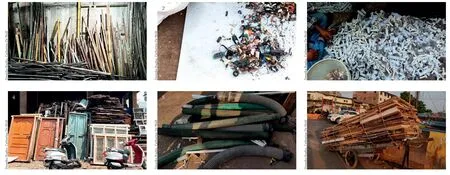
1-6 在非正式的建筑回收再利用體系中收集的不同類型的再生材料 Different types of reclaimed materials collected in the informal reuse ecosystems
As developing countries progress,the exponential increase in construction and demolition waste necessitates a shift from linear to circular waste management systems.India's material reuse and recycling businesses are primarily unregistered and locally run yet they contribute significantly to the country's economic growth.This paper examines the stakeholders and processes involved in the reuse of construction elements in Mumbai and Bangalore,focusing on their current models of resource procurement and trade.
Extensive fieldwork,including site visits and interviews,shows that a strongly networked informal material reuse ecosystem exists in India.In Mumbai's Dharavi,over 250,000 workers are employed in the reuse and recycling industry,with waste pickers collecting 60~90kg of waste daily.Bangalore's smaller industry,employing about 11,000 workers,demonstrates a similar pattern.These practices offer significant economic benefits,as seen in the lower prices for commonly reused materials such as wood,PVC pipes,glass,and iron rods.Although the informal reuse sector's logistics and processes emit significantly fewer greenhouse gas emissions than those of formal sector practices,exact calculations of the sector's emissions reductions remain elusive due to poor data collection.To fully realise the carbon benefits of these supply chains,it is essential for governments,policymakers,and researchers to develop material-specific emissions factors and methodologies for conducting life cycle analyses of emissions originating from waste in such informal ecosystems.
The study highlights that digitalisation can enhance the sector by offering online platforms for sharing skills and building professional networks,leading to a more inclusive and efficient ecosystem.However,workers in this sector face challenges including stigmatisation,hazardous working conditions,and a lack of legal and social security.The absence of adequate compensation,along with widespread resistance,poses a threat to informal ecosystems,depriving them of crucial opportunities to foster long-term value.
Thus,the paper advocates for organised support and public policies to enhance the informal reuse ecosystem's effectiveness.Policymakers are encouraged to integrate these systems into formal waste management strategies,ensuring legal protection,financial inclusion,and training for workers.In future steps,this research will be extended to other countries,including South Africa,where informal shadow supply chains play a significant role in material reuse.Engaging with these "climate entrepreneurs" in the informal sector can help transition towards a circular economy and contribute to dignified livelihoods,aligning with key global sustainability objectives.
猜你喜歡
中等數學(2022年2期)2022-06-05 07:10:50
中學生數理化·七年級數學人教版(2021年11期)2021-12-06 05:38:48
新世紀智能(數學備考)(2020年11期)2021-01-04 00:38:16
小學生學習指導(低年級)(2020年6期)2020-07-25 02:31:36
中國外匯(2019年17期)2019-11-16 09:31:14
小學生學習指導(低年級)(2018年9期)2018-09-26 05:59:44
瘋狂英語·新讀寫(2018年2期)2018-09-07 09:32:10
數學小靈通·3-4年級(2017年6期)2017-06-22 11:28:50
現代企業(2015年1期)2015-02-28 18:43:18
新高考·高一物理(2014年1期)2014-09-18 01:26:07