為實(shí)現(xiàn)聯(lián)合國17項(xiàng)可持續(xù)發(fā)展目標(biāo)的建筑
——研究的作用
2024-01-27 19:38:32梅特拉姆斯加德湯姆森馬丁塔姆克
世界建筑 2024年1期
梅特·拉姆斯加德·湯姆森,馬丁·塔姆克
科學(xué)賽道是為國際建筑師協(xié)會(huì)2023 哥本哈根世界建筑師大會(huì)奠定知識(shí)基礎(chǔ)的關(guān)鍵部分。通過6 個(gè)專題討論小組,我們探討了建筑及其實(shí)踐如何成為實(shí)現(xiàn)聯(lián)合國可持續(xù)發(fā)展目標(biāo)的一部分。我們的目標(biāo)是了解建筑研究和設(shè)計(jì)整合如何通過批判性思考及其應(yīng)用來行動(dòng),在塑造我們的社會(huì)方面發(fā)揮獨(dú)特的作用。本文將介紹科學(xué)賽道的目標(biāo)、關(guān)注點(diǎn)和觀點(diǎn),我們講述了如何通過6個(gè)小組的工作,使17 項(xiàng)聯(lián)合國可持續(xù)發(fā)展目標(biāo)在建筑實(shí)踐和研究中變得易于理解和操作;我們?nèi)绾螄@國際建筑師協(xié)會(huì)2023 哥本哈根議程,在研究和實(shí)踐中建立起一個(gè)廣泛的國際社區(qū);我們?nèi)绾钨|(zhì)疑建筑研究的傳播模式,以找到新的模式來捕捉和傳播建筑知識(shí)文化的廣度。
The Science Track has been key to creating the knowledge foundation for the UIA 2023 CPH World Congress.Across six panels we explored how architecture and its practices can be part of achieving the UN Sustainable Development Goals.Our aim has been to understand how architectural research and design integration bears unique agency in shaping our societies through critical thought and its applied action.In this article the ambitions,concerns and perspectives of the Science Track are introduced.We recount how we built the aim of making the 17 UN SDGs accessible and operational for architectural practice and research through the six panels,how we established a wide-ranging international community in research and practice around the UIA 2023 CPH agenda and how we wanted to question the model of architectural research dissemination to find new models that captures and communicates the breadth of knowledge cultures in architecture.
0 引言
2022 年秋天,作為國際建筑師協(xié)會(huì)2023 哥本哈根世界建筑師大會(huì)籌備工作的一部分,我們邀請(qǐng)小組主席、MASS 設(shè)計(jì)集團(tuán)建筑師克里斯蒂安·貝尼馬納來到哥本哈根為我們的師生進(jìn)行演講。其中,他概述了盧旺達(dá)在過去50 年人口增長后土地使用的巨大變化。他通過地圖說明,我們已經(jīng)越過了一個(gè)臨界點(diǎn),現(xiàn)有的社會(huì)基礎(chǔ)設(shè)施無法簡(jiǎn)單地拓展或?qū)ζ溥M(jìn)行優(yōu)化以支撐目前的新形勢(shì)。他強(qiáng)調(diào),我們不能再建500 所大學(xué)或600 家醫(yī)院,相反,我們需要進(jìn)行系統(tǒng)性變革,重新思考什么是大學(xué)、什么是醫(yī)院,需要思考我們的機(jī)構(gòu)、基礎(chǔ)設(shè)施和社區(qū)如何才能改變其滿足需求、獲得服務(wù)的方式,因此也需要思考建筑、實(shí)踐、嵌入式知識(shí)和產(chǎn)品如何才能成為推動(dòng)變革的方法。
國際建筑師協(xié)會(huì)2023 哥本哈根世界建筑師大會(huì)“可持續(xù)的未來——不讓任何一個(gè)人掉隊(duì)”科學(xué)賽道的6 卷論文集共收錄了296 篇論文,這些論文調(diào)查、展示和論證了如何在建成環(huán)境中實(shí)現(xiàn)變革。通過探討建筑如何幫助實(shí)現(xiàn)聯(lián)合國可持續(xù)發(fā)展目標(biāo),論文集收集了全球社會(huì)的研究和實(shí)踐成果。這些論文共同探討了建成環(huán)境的未來,以及作為行動(dòng)和知識(shí)的設(shè)計(jì)如何為建筑及其服務(wù)的社區(qū)發(fā)揮新的作用。
在兩年半的時(shí)間里,我們與科學(xué)委員會(huì)的專家小組主席和特別顧問共同努力,實(shí)現(xiàn)了科學(xué)賽道的愿景。這個(gè)過程是一次教育,不僅有助于我們理解可持續(xù)發(fā)展目標(biāo)、設(shè)計(jì)創(chuàng)造的變革力量或建成環(huán)境的廣泛社會(huì)作用,還有助于我們以開放的心態(tài)看待建筑學(xué)的多種思考立場(chǎng),以及建筑學(xué)在不同知識(shí)文化和觀點(diǎn)之間的互動(dòng)、交流和發(fā)展中所發(fā)揮的關(guān)鍵作用。論文中呈現(xiàn)的豐富觀點(diǎn)和見解是科學(xué)委員會(huì)17 名成員、296 篇錄用論文中的656 位作者、750 多篇投稿論文中的1486 位作者以及536 位同行評(píng)審者共同努力的結(jié)果,是他們使這一項(xiàng)目成為可能。
0 Introduction
In the autumn of 2022,as part of the preparations for the UIA World Congress of Architects 2023 Copenhagen we invited Panel Chair and MASS Design Group architect Christian Benimana to Copenhagen to speak to our collegiate and students.In his introduction he outlined the dramatic land use change in Rwanda following the country's population growth over the last 50 years.Pointing to the maps he argued that we have passed a tipping point and that our given societal infrastructures can not simply be extended or optimised to support this new situation.We can not build 500 universities or 600 hospitals,he said,instead we need systemic change to rethink what a university is,what a hospital can be.We need to question how our institutions,infrastructures and communities can change in the way they address those in need and what access can be,and therefore also how architecture,its practices,embedded knowledge and products can be methods of instigating change.
The six proceedings for the Science Track of the UIA World Congress of Architects 2023 Copenhagen Sustainable Futures -Leave No One Behind -contain a total of 296 papers investigating,showcasing and arguing for how change can be imagined across the built environment.By asking how architecture can help achieving the UN Sustainable Development Goals,the proceedings collect research-and practice-based results of a global community.Together they ask what the future of the built environment can be and how design as action and as knowledge can create new roles for architecture and the communities it serves.
During two and half years we have worked together with the Scientific Committee's Panel Chairs and Special Advisors to form a vision for the Science Track.The process has been an education.Not only in our understanding of the SDGs,the transformative power of design creation or the wider societal role of the built environment,but also in keeping our minds open to the many positions that architecture can be thought through and its critical role in engaging -interfacing,informing and developing -different knowledge cultures and perspectives.The richness of perspectives and insights presented in the papers are the result of an enormous collective undertaking by the 17 members of the Scientific Committee,the contributing 656 authors of the 296 accepted papers,the 1486 authors of the more than 750 paper submissions and the 536 peer reviewers that have all made this project possible.
1 Platform
The UIA World Congress 2023 Copenhagen starts with an ambition.Pitched in 2017,only one year after the launch of the UN Sustainable Development Goals,the central nerve is the articulation of the profound agency of architecture and how it plays an acute role in achieving the SDGs.In the congress,the Science Track is given a particular role.Initiated early in the planning process,the aim has been to place the Science Track at the heart of the congress in order to collect its underpinning knowledge foundation and shape its criticality through a broad outreach to a global community.Sustainability,like architecture,is a wicked problem.Its solutions are dependent on the way we ask,the methods we use and the contexts in which we work.To ask how architecture can be part of the dynamic fulfilment of the UN SDGs is to ask: who are the communities we design with and for,what is the knowledge we draw upon and how can its sharing change how we think about what our built environment can be.
One of the central drivers in our preparatory work for the Science Track has been the realisations of the blindness of the UN SDGs to the agency of architecture.The SDGs seek to steer behaviour both through impacting legislation as well as wider societal value sets.They establish priorities and galvanise efforts across communities by identifying targets and providing shared yard sticks in the form of indicators.In doing so they inscribe a world view of its defining actors;the governmental bodies,industries and communities that can be leveraged upon to instigate change.And in this world view architecture is strangely absent.At present,none of the UN SDGs declare targets that directly articulate architecture as a driver for change nor are there any indicators that evaluate its role.The built environment is only mentioned as a driver for resilient communities but without real value setting of the role of planning and design.This despite the extensive and complex impact architecture holds on human and more-than-human wellbeing;the way we live our lives,shape equity and use our resources.
1 平臺(tái)
國際建筑師協(xié)會(huì)2023 哥本哈根世界建筑師大會(huì)以雄心壯志開始。2017 年,在聯(lián)合國可持續(xù)發(fā)展目標(biāo)發(fā)布僅一年之后,大會(huì)的核心是闡明建筑的深遠(yuǎn)影響,以及建筑如何在實(shí)現(xiàn)可持續(xù)發(fā)展目標(biāo)方面發(fā)揮重要作用。在大會(huì)中,科學(xué)賽道被賦予了特殊的角色。早在規(guī)劃過程中就已啟動(dòng),目的是將科學(xué)賽道置于大會(huì)的核心位置,以收集其基礎(chǔ)知識(shí),并通過向全球社區(qū)的廣泛宣傳來塑造其關(guān)鍵性。可持續(xù)性與建筑學(xué)一樣,是棘手的問題。其解決方案取決于我們提出問題的方式、使用的方法和工作的環(huán)境。要問建筑學(xué)如何才能成為聯(lián)合國可持續(xù)發(fā)展目標(biāo)動(dòng)態(tài)實(shí)現(xiàn)的一部分,就要問:我們的社區(qū)與誰共創(chuàng)、為誰設(shè)計(jì),我們吸收了什么知識(shí),知識(shí)共享如何改變我們對(duì)建成環(huán)境的看法。
我們?yōu)榭茖W(xué)賽道所做準(zhǔn)備工作的核心驅(qū)動(dòng)力之一,就是意識(shí)到聯(lián)合國可持續(xù)發(fā)展目標(biāo)對(duì)建筑領(lǐng)域的忽視。可持續(xù)發(fā)展目標(biāo)旨在通過影響立法和更廣泛的社會(huì)價(jià)值體系來引導(dǎo)行為,通過確定目標(biāo)和以指標(biāo)的形式提供共同的衡量標(biāo)準(zhǔn),來確定優(yōu)先事項(xiàng)和激勵(lì)各社區(qū)的努力。在此過程中,它們?yōu)槠涠x的行動(dòng)者(政府機(jī)構(gòu)、行業(yè)和社區(qū))設(shè)定了一個(gè)世界觀,可以利用這些行動(dòng)者來推動(dòng)變革。而在這一世界觀中,卻匪夷所思地缺少了建筑。目前,聯(lián)合國可持續(xù)發(fā)展目標(biāo)中沒有任何一項(xiàng)目標(biāo)直接將建筑作為變革的驅(qū)動(dòng)力,也沒有任何指標(biāo)對(duì)建筑的作用進(jìn)行評(píng)估。建成環(huán)境只被作為建設(shè)韌性社區(qū)的一個(gè)驅(qū)動(dòng)因素,但卻沒有對(duì)規(guī)劃和設(shè)計(jì)的作用進(jìn)行真正的價(jià)值設(shè)定。盡管建筑對(duì)人類和超越人類的福祉,對(duì)我們的生活方式、公平的形成和資源的使用,有著廣泛而復(fù)雜的影響。
我們認(rèn)識(shí)到這一點(diǎn),并以此為總體目標(biāo),利用大會(huì)來提高共識(shí)。論證并展示建筑如何有能力改變我們理解和構(gòu)建周圍世界的方式,以及建筑作為一種直接參與立法、行業(yè)和建筑所在社區(qū)的情景實(shí)踐,如何成為實(shí)現(xiàn)變革的直接方式。
2 愿景
科學(xué)賽道圍繞6 個(gè)小組展開。這6 個(gè)專題討論小組的愿景是就建筑如何參與實(shí)現(xiàn)可持續(xù)發(fā)展目標(biāo)闡明6 個(gè)不同的觀點(diǎn),同時(shí)加強(qiáng)它們之間的相互聯(lián)系。這些專題討論會(huì)在一定程度上與現(xiàn)有領(lǐng)域相吻合,同時(shí)又提出了新的建議。通過匯集建筑學(xué)研究、實(shí)踐與教育領(lǐng)域原本零散的知識(shí),激發(fā)新的視角、新的聯(lián)盟和具體的行動(dòng)。科學(xué)委員會(huì)在闡述小組討論時(shí),提出了一些中肯而富有啟發(fā)性的問題,這些問題對(duì)該領(lǐng)域提出了挑戰(zhàn),并將可持續(xù)發(fā)展目標(biāo)定位為積極的目標(biāo)。這些問題構(gòu)成了6 卷論文集中每一卷的章節(jié),詢問建筑知識(shí)的創(chuàng)造如何創(chuàng)新建筑的思維、設(shè)計(jì)和制作。
(1)氣候適應(yīng)設(shè)計(jì)
全球社會(huì)都在緊急行動(dòng)起來,適應(yīng)地球不斷變化的氣候。作為人類最常見的棲息地,我們的建成環(huán)境應(yīng)以可持續(xù)和可再生的方式與地球生態(tài)系統(tǒng)和氣候相互作用。氣候適應(yīng)設(shè)計(jì)強(qiáng)調(diào)以人為本,通過多種形式的研究、知識(shí)和行動(dòng),提供高技術(shù)和低技術(shù)解決方案,使建筑、社區(qū)、景觀、城市和地區(qū)具有再生能力、復(fù)原能力和適應(yīng)氣候變化影響的能力。
(2)資源反思設(shè)計(jì)
設(shè)計(jì)塑造了我們的世界,從居住的地方到每天使用的物品。隨著我們?cè)絹碓揭庾R(shí)到地球資源的有限性,從開發(fā)性的設(shè)計(jì)思想轉(zhuǎn)變?yōu)榛謴?fù)性、再生性和循環(huán)性的設(shè)計(jì)思想就變得至關(guān)重要。反思資源的設(shè)計(jì)研究了建筑中的資源利用方法;可持續(xù)性如何挑戰(zhàn)我們的材料實(shí)踐基礎(chǔ),以及它們?nèi)绾坞S之改變。
(3)韌性社區(qū)設(shè)計(jì)
具有抗災(zāi)能力的社區(qū)能夠預(yù)測(cè)、適應(yīng)并從逆境中恢復(fù)。氣候變化、全球大流行病和許多國家的政治動(dòng)蕩揭示了社會(huì)、經(jīng)濟(jì)和環(huán)境的不平等,威脅著全世界的社區(qū)。這些斷層對(duì)窮人、有色人種、種族或民族邊緣化群體以及婦女的影響尤為嚴(yán)重。抗災(zāi)社區(qū)設(shè)計(jì)鼓勵(lì)創(chuàng)新的解決方案,促進(jìn)發(fā)展其適應(yīng)和恢復(fù)所需的知識(shí)和技能。
(4)健康設(shè)計(jì)
建筑與健康密不可分。從醫(yī)院和療養(yǎng)場(chǎng)所的直接設(shè)計(jì)到基礎(chǔ)設(shè)施和城市規(guī)劃的戰(zhàn)略設(shè)計(jì),建筑影響著個(gè)人和社區(qū)的身心健康。為健康而設(shè)計(jì)提出了建筑學(xué)如何將健康重新視為一個(gè)設(shè)計(jì)問題。土地權(quán)如何影響健康生活,立法、規(guī)劃和建筑如何影響不平等和用水,單體建筑以及醫(yī)院、診所和社區(qū)建筑等市政建設(shè)如何與當(dāng)?shù)丨h(huán)境和生態(tài)協(xié)調(diào)運(yùn)作,為所有人創(chuàng)造安全健康的空間。
For us this realisation has led to the overarching aim of using the congress to build awareness.To argue for and demonstrate how architecture has the ability to afford change in the way we understand and construct the world around us and therefore how it as a situated practice engaging directly with both legislation,industry and the communities in which architecture takes place can become a direct way of effecting change.
2 Vision
The Science Track is formed around six panels.The vision of the six panels is to articulate six differentiated perspectives onto how architecture can be part of achieving the SDGs while reinforcing their interconnectedness.The panels are in part mapped to existing fields while at the same time suggesting new.By bringing together otherwise fragmented knowledge across the breadth of architecture's research and practices,the aim is to bring together knowledge across research,practice and education to provoke new perspectives,new alliances and concrete action.In articulating the panels,the Scientific Committee asks pertinent and provocative questions that challenge the field and position the SDGs as active goal posts.These questions form the chapters of each of the six proceedings volumes asking how architectural knowledge creation can innovate the thinking,design and making of architecture.
(1) Design for Climate Adaptation
With profound urgency,global communities are acting and adapting to the earth's changing climate.Our built environment,the most common habitat of humans,should interact with the earth's ecosystems and climates in a sustainable and regenerative way."Design for Climate Adaptation"emphasises people,multiple forms of research,knowledges and action for high and low-tech solutions that make buildings,neighbourhoods,landscapes,cities,and regions regenerative,resilient and adaptive to climate change impacts.
(2) Design for Rethinking Resources
Design shapes our world,from the places we live in to objects we use every day.As we grow more aware of the limits of our planet's resources shifting from an exploitative to a restorative,regenerative and circular design ideology becomes fundamental."Design for Rethinking Resources" examines approaches to resourcefulness in architecture;how sustainability challenges the foundations of our material practices and how they can change with it.
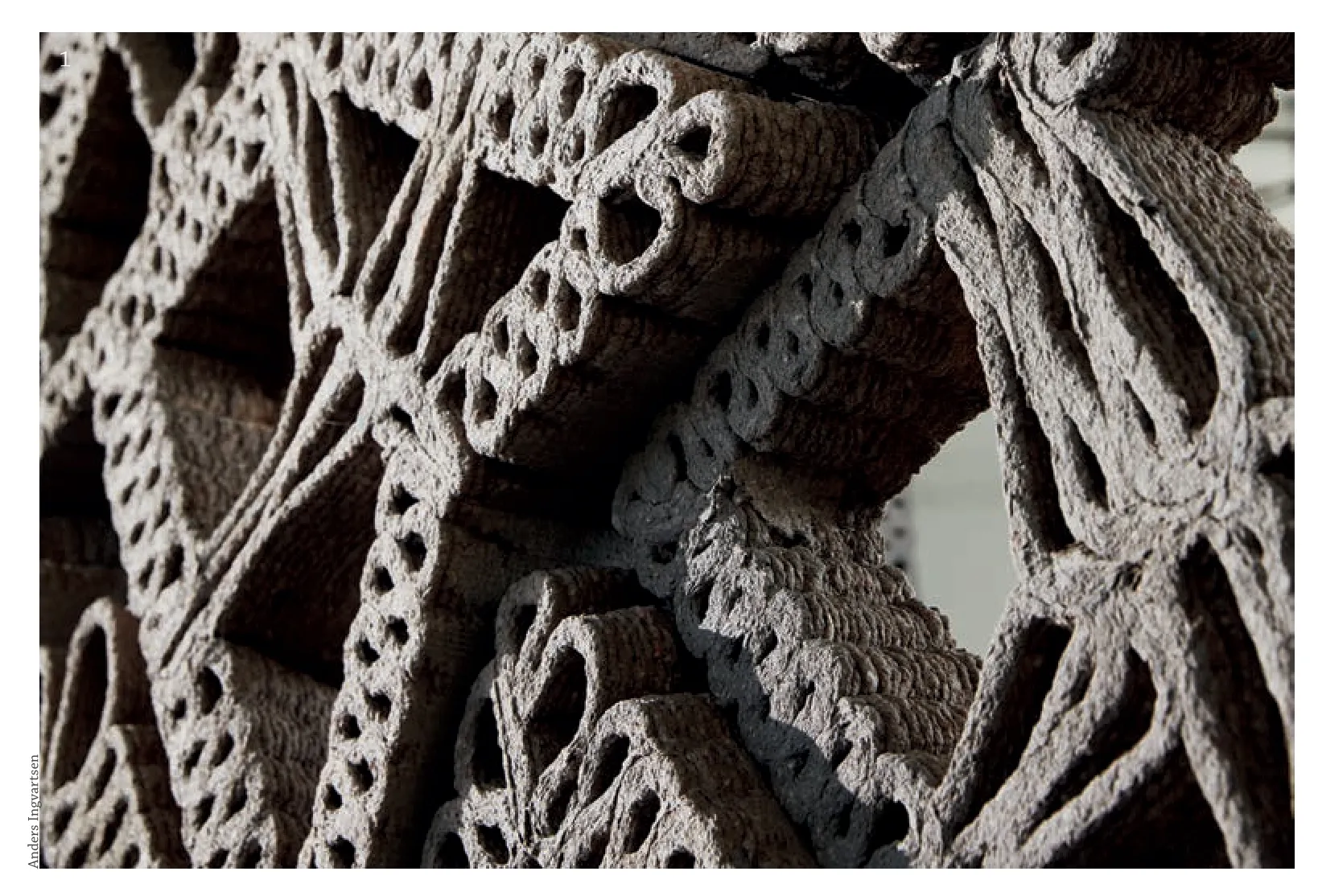
1 纖維素圍護(hù)結(jié)構(gòu),來源:丹麥皇家建筑藝術(shù)學(xué)院 | Mette Ramsgaard Thomsen,Martin Tamke,Gabriella Rossi,Ruxandra Chiujdea,Konrad Sonne,Ariel Lim,Ellen Lau,Paul Nicholas Cellulose Enclosures,Credit: CITA,The Royal Danish Academy | Mette RamsgaardThomsen,Martin Tamke,Gabriella Rossi,Ruxandra Chiujdea,Konrad Sonne,Ariel Lim,Ellen Lau,Paul Nicholas
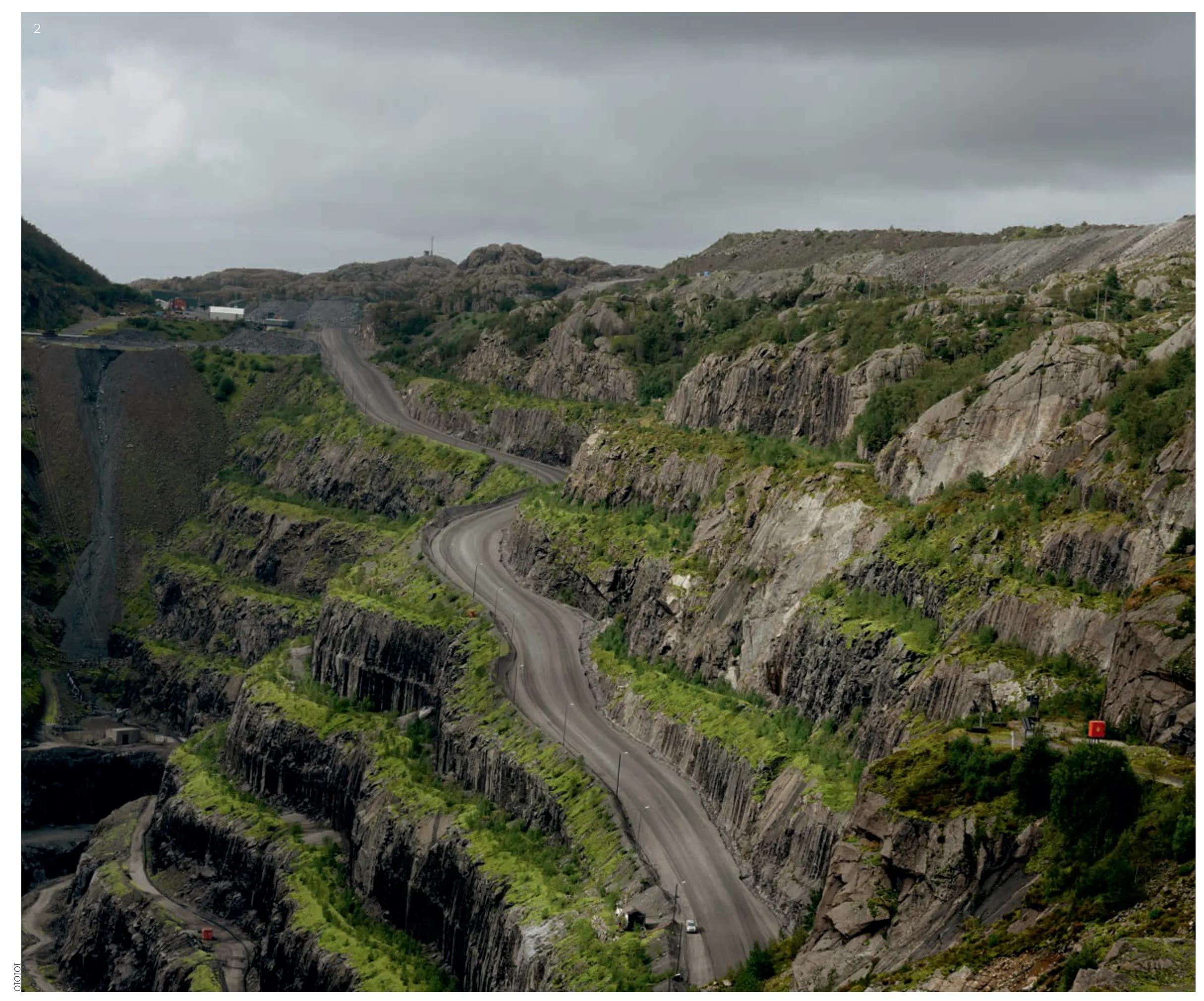
2 英格麗德·哈蘭德與斯蒂安·羅西的論文《升級(jí)再造的地方主義——土工聚合物混凝土的美感》中的圖片 Image in Upcycled Regionalism: The Aesthetics of Geopolymer Concrete by Ingrid Halland and Stian Rossi
(5)包容性設(shè)計(jì)
任何人都不應(yīng)該因?yàn)樽约旱纳矸莼蛉毕荻诓话踩⒉皇孢m或不方便的情況下體驗(yàn)空間。可持續(xù)性,就其最全面的定義而言,離不開集體行動(dòng)。包容性設(shè)計(jì)旨在批判性地界定我們究竟排斥了哪些人以及排斥的原因,從而有條不紊地制定戰(zhàn)略,減輕這種排斥。
(6)變革伙伴關(guān)系的設(shè)計(jì)
變革伙伴關(guān)系的設(shè)計(jì)旨在認(rèn)識(shí)到國家、公共空間、公民社會(huì)和私人領(lǐng)域之間的不對(duì)稱關(guān)系,從而為現(xiàn)有的權(quán)力結(jié)構(gòu)找到新的平衡點(diǎn)。通過對(duì)普遍主義本體論的挑戰(zhàn),它探討了建筑和建成環(huán)境如何通過地方治理,空間營造實(shí)踐,想象多元政治、社會(huì)和生態(tài)可持續(xù)未來的情景,在創(chuàng)造關(guān)愛的土壤方面發(fā)揮重要作用。
3 關(guān)鍵立場(chǎng)
兩年半的籌備工作是一次鼓舞人心的經(jīng)歷,通過這次經(jīng)歷,我們見證了建筑思維在行動(dòng)中的力量——其批判性和創(chuàng)造性思想的交織,以及其面向未來的內(nèi)在創(chuàng)造力。作為策劃這項(xiàng)工作的一部分,我們確定了一系列關(guān)鍵立場(chǎng),以此來理解建筑思維與聯(lián)合國可持續(xù)發(fā)展目標(biāo)之間的關(guān)聯(lián)。
(3) Design for Resilient Communities
A resilient community anticipates,adapts to,and recovers from adversity.Climate change,the global pandemic,and political upheavals in many countries have revealed social,economic,and environmental inequalities that threaten communities worldwide.These fault lines disproportionately impact the poor,people of colour,the racially or ethnically marginalised and women."Design for Resilient Communities" encourages innovative solutions and facilitates the development of knowledge and skills necessary for adaptation and recovery.
(4) Design for Health
Architecture and health are inseparable.From the direct design of hospitals and places for healing to the strategic design of infrastructures and city planning,architecture affects physical and mental health of individuals and communities."Design for Health" asks how architecture can reconceive health as a design issue.How land rights impact healthy living,how legislation,planning and building impacts inequality and access to water and how single buildings and the civic construction of hospitals,health clinics and community buildings can operate in unison with local environments and ecologies to create a safe and healthy space for all.
(5) Design for Inclusivity
No individual deserves to experience space in a manner that is less safe,less comfortable or less accessible as a result of their identity or challenges.Sustainability,in its most holistic definition,cannot be achieved without a collective act."Design for Inclusivity" aims to critically define the constructs and categories of who exactly we are excluding,and why,in order to mindfully develop strategies to mitigate this exclusion.
(6) Design for Partnerships for Change
"Design for Partnerships" is about recognising the asymmetrical relationships between states,public spaces,civil societies and private domains to find new balances for the existing power structures.By challenging the ontology of universalism,it examines how architecture and the built environment can play an essential role in creating a ground for care through local governance,space making practices,imaginaries and scenarios of plural(istic) political,socially and ecologically sustainable futures.
3 Critical Positions
The two and half years of preparation has been an inspiring experience through which we have witnessed the power of architectural thinking in action -its interweaving of the critical and the creative ideation as well as its inherent inventiveness orientation towards the future.As part of the curation of this work we have defined a series of critical positions by which to understand the correlation between architectural thinking and the UN SDGs.
A first position has been to challenge the inherent anthropocentrism and perceived lack of hierarchy between the goals;the Tabula Rasa effect as Johan Rockstr?m names it[1].The SDGs have been criticised for failing to recognise that planetary,people and prosperity concerns are interconnected[2].In forming the six panels of the Science Track we seek to position a rupture to the modernist axiom that the environment is situated outside of us.Instead,we understand the SDGs as a balancing between planetary and human needs which needs to be holistically addressed.
A second position is the critical appreciation that the SDGs retain an adherence to an underlying model of growth.The Science Track asks what the future practices of architecture can be,what the ethical roles of architectural design are and how architecture knowledge can create change in how architecture is produced both within and without of models of growth.It seeks to identify who the partners of architecture practice can be both through grassroot community action and through industry-based models.
A third position is the challenge of the embedded universalism within the SDGs.The SDGs maintain a universalism that is common to the UN system and underlies much of UN's work.However,this fundamentally modernist position of understanding sustainability as "a problem to be solved" and placing agency with legislation leaves questions of agency,voice and power unchallenged.
第一種立場(chǎng)是質(zhì)疑固有的人類中心主義和目標(biāo)之間缺乏層次的看法;約翰·羅克斯特倫稱之為“白板效應(yīng)”[1]。有人批評(píng)可持續(xù)發(fā)展目標(biāo)未能認(rèn)識(shí)到地球、人類和繁榮問題之間的相互關(guān)聯(lián)[2]。在組建科學(xué)賽道的6 個(gè)小組時(shí),我們?cè)噲D打破現(xiàn)代主義的公理,即環(huán)境是在我們之外的。相反,我們將可持續(xù)發(fā)展目標(biāo)理解為地球與人類需求之間的平衡,需要全面解決。
第二種立場(chǎng)是批判性的贊賞,認(rèn)識(shí)到可持續(xù)發(fā)展目標(biāo)仍然堅(jiān)持一種基本的增長模式。科學(xué)賽道提出的問題包括:未來的建筑實(shí)踐會(huì)是怎樣的?建筑設(shè)計(jì)的倫理作用是什么?建筑知識(shí)如何在增長模式之內(nèi)和之外改變建筑的生產(chǎn)方式?它試圖通過基層社區(qū)行動(dòng)和以行業(yè)為基礎(chǔ)的模式,確定誰可以成為建筑實(shí)踐的合作伙伴?
第三種立場(chǎng)是對(duì)可持續(xù)發(fā)展目標(biāo)中內(nèi)含的普遍性的挑戰(zhàn)。可持續(xù)發(fā)展目標(biāo)保持了聯(lián)合國系統(tǒng)所共有的普適性,這也是聯(lián)合國大部分工作的基礎(chǔ)。然而,這種將可持續(xù)性理解為“一個(gè)有待解決的問題”并將機(jī)構(gòu)置于立法層面的基本現(xiàn)代主義立場(chǎng),使得機(jī)構(gòu)、發(fā)言權(quán)和權(quán)力問題未受到質(zhì)疑。科學(xué)賽道試圖通過小組討論及其相關(guān)的子問題將這一批評(píng)納入其中,引發(fā)人們對(duì)建筑本身的人文主義傳統(tǒng)的中立性的反思,并堅(jiān)持質(zhì)疑建筑是如何由人建造、為人服務(wù)的。
對(duì)普適性的挑戰(zhàn)也導(dǎo)致了對(duì)知識(shí)傳播科學(xué)實(shí)踐的審視。論文征集活動(dòng)有意鼓勵(lì)不同知識(shí)和實(shí)踐孤島之間的交流和學(xué)習(xí)。這可以通過不同的出版形式來實(shí)現(xiàn),其中包括科學(xué)知識(shí)生產(chǎn)以及基于設(shè)計(jì)的知識(shí)生產(chǎn),口述歷史、視覺文章等敘事形式,以及基于對(duì)話的交流和論證論文。這些形式的目的是擴(kuò)大跨學(xué)科知識(shí)交流的可能性,并吸納學(xué)術(shù)和專業(yè)話語中不常見的聲音。
第四種立場(chǎng)也是最后一種立場(chǎng)是將可持續(xù)發(fā)展目標(biāo)理解為不斷變化的世界的一部分。可持續(xù)發(fā)展目標(biāo)提出了一個(gè)長達(dá)14 年的項(xiàng)目。任何如此長的項(xiàng)目都需要建立審視自身基本價(jià)值觀和核心概念基礎(chǔ)的方法。氣候變化的影響不斷加劇和累積、新型冠狀病毒大流行的后果、世界資源的持續(xù)緊張,以及烏克蘭等地戰(zhàn)爭(zhēng)的爆發(fā),都對(duì)全球社會(huì)產(chǎn)生了深刻而不平等的影響[3]。參與可持續(xù)發(fā)展目標(biāo)就是將目標(biāo)與對(duì)需求和手段的不斷變化的理解聯(lián)系起來。這意味著要致力于持續(xù)解決變革的背景和手段問題。在科學(xué)賽道中,我們通過對(duì)前沿研究、現(xiàn)實(shí)世界案例研究和近期重要論點(diǎn)的介紹,將重點(diǎn)放在具體和可操作的方面,從而促進(jìn)對(duì)可持續(xù)發(fā)展目標(biāo)的理解。這一重點(diǎn)將可持續(xù)發(fā)展目標(biāo)與多種多樣的建筑實(shí)踐以及建筑所處的不同地點(diǎn)聯(lián)系起來。本書的視角、方法和手段都很寬泛,力求體現(xiàn)系統(tǒng)性變革所需的解決方案空間的廣度;特意包含了不同的聲音和不同的風(fēng)格,以展示創(chuàng)造這種變革的不同參與者、不同的知識(shí)流和不同的機(jī)構(gòu)。
4 視角
大會(huì)科學(xué)賽道的成果是一部6 卷的會(huì)議文集,對(duì)建筑如何參與實(shí)現(xiàn)可持續(xù)發(fā)展目標(biāo)進(jìn)行了廣泛而多樣的詮釋。在各個(gè)章節(jié)中,我們可以看到廣泛的調(diào)查,探討誰是社區(qū)、誰是參與者以及建筑生產(chǎn)的手段是什么。他們?cè)谠O(shè)問:我們?nèi)绾嗡茉旖ㄖ季S的方法及其相關(guān)技術(shù)?如何傳播這些方法以及分享這些方法的結(jié)果是什么?
會(huì)議文集記錄了當(dāng)下的時(shí)代。作為研究分支,它們是更大的知識(shí)創(chuàng)造路線的一部分。我們舉辦世界建筑師大會(huì)的目的是促進(jìn)新的討論和交流,從而實(shí)現(xiàn)跨部門和跨地域的協(xié)同增效,但很顯然,這一對(duì)話的全部潛力才剛開始顯露出來。世界建筑師大會(huì)恰逢可持續(xù)發(fā)展目標(biāo)過半之際。可持續(xù)發(fā)展目標(biāo)于2016 年啟動(dòng),預(yù)計(jì)在2030 年完成,我們需要從規(guī)劃和推演過渡到行動(dòng)。因此,科學(xué)賽道的工作具有緊迫性。我們的愿望是,這項(xiàng)工作不以各自的成果來限定,而是努力將其作為未來交流與合作的起點(diǎn)。我們希望,在這里創(chuàng)建的是一個(gè)由致力于后代福祉的行動(dòng)者組成的社區(qū)。我們希望,這個(gè)項(xiàng)目的遺產(chǎn)將是我們能夠堅(jiān)持這一承諾,并使其利益相關(guān)者不斷壯大,從而使這些主張成長為可付諸行動(dòng)的變革。□(會(huì)議論文請(qǐng)見鏈接https://link.springer.com/conference/uia)
The Science Track seeks to incorporate this criticism through the panel calls and their associated sub-questions by provoking reflection on the perceived neutrality of architecture's own humanist traditions and insist on the query of how architecture is produced,by people and for people.
The challenge to universalism has also led to a review of the scientific practice of knowledge dissemination.The call for papers deliberately encourages exchanges and learnings across different knowledge and practice silos.This is effected through differentiated publication formats that include scientific knowledge production as well as design-based knowledge production,narrative formats such as oral history,visual essays,as well as dialogue-based exchanges and argumentative essays.The aim of these formats is to expand the possibility of transdisciplinary knowledge exchange and include voices that are not commonly part of academic and professional discourse.
The fourth and final position is to understand the SDGs as part of a changing world.The SDGs set out a 14 year long project.Any project of that length needs to build in methods of reviewing its own fundamental value sets and core conceptual foundation.The intensifying and accumulating effects of climate change,the aftermath of the COVID-19 pandemic,the continued stress on the world's resources and outbreaks of wars such as in the Ukraine have deep and unequal repercussions on global communities[3].To engage with the SDGs is to correlate the goals to a changeable understanding of both needs and means.It is to commit to a continual address of both the contexts and instruments of change-making.In the Science Track our focus on the concrete and the actionable through presentations of cutting-edge research,real world case studies and near future focussed arguments,argue for a situated understanding of the SDGs.This emphasis contextualises the SDGs within the multiple and diverse practices of architecture as well as the disparate places in which architecture takes place.The perspectives,methods and means are purposefully broad.They seek to represent the breadth of the solution space needed for the systemic change needed.They also purposefully include different voices and different styles to make present the different actors,different knowledge streams and different institutions that create this change.
4 Perspective
The result is a six-volume proceedings tracking a wide and multifarious interpretation on how architecture can be part of achieving the SDGs.Across their individual chapters we see a breadth of enquiries asking who the communities are,who the actors are and what the means of architectural production are.They ask how we can shape the methods of architectural thinking as well as their associated technologies,how they can be distributed and what is the consequence of their sharing.
The proceedings instantiate a moment in time.As research strands,they are part of larger trajectories of knowledge creation.Where our aim for the World Congress was to facilitate new discussions and exchange enabling synergy across silos and geographies,it is clear that the full potential of this conversation is only just beginning.The World Congress coincided with the halfway mark of the SDGs.Launched in 2016 and with a projected completion date of 2030,we need to transition from a place of planning and speculating to one of action.The work of the Science Track is therefore marked by a sense of urgency.The desire is to define the effort of this work not in terms of their individual results,but more as a launch pad for future exchange and collaboration.We hope that what is created here is a community of dedicated actors all with a shared stake in the wellbeing of future generations.Our hope is that the legacy of this project will be that we can retain this commitment and grow its stakeholders to mature these propositions into actionable change.□ (Please find full paper via the link https://link.springer.com/conference/uia)
猜你喜歡
北方建筑(2021年6期)2021-12-31 03:03:54
文苑(2020年10期)2020-11-07 03:15:36
現(xiàn)代裝飾(2020年6期)2020-06-22 08:43:12
小小藝術(shù)家(2019年6期)2019-06-24 17:39:44
中國工程咨詢(2017年12期)2017-01-31 02:56:40
今古傳奇·故事版(2016年15期)2016-09-07 06:57:32
少兒科學(xué)周刊·兒童版(2015年6期)2015-11-24 03:49:38
小雪花·成長指南(2015年3期)2015-05-04 00:04:37
聲屏世界(2015年5期)2015-02-28 15:19:47
四川黨的建設(shè)(2014年9期)2014-08-23 01:33:24